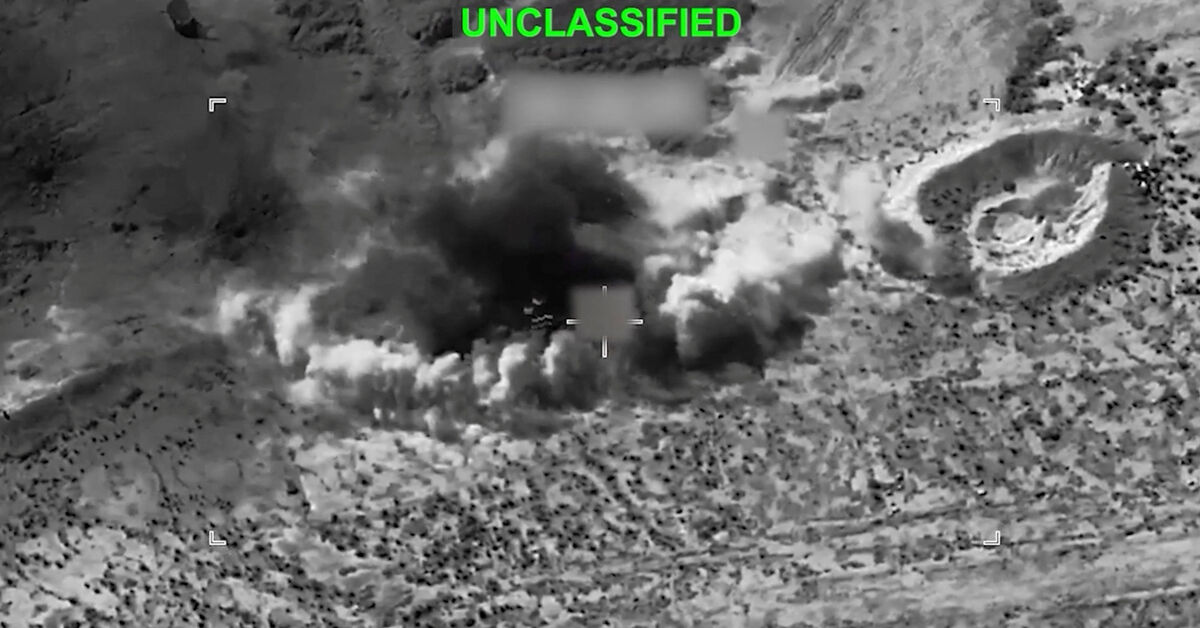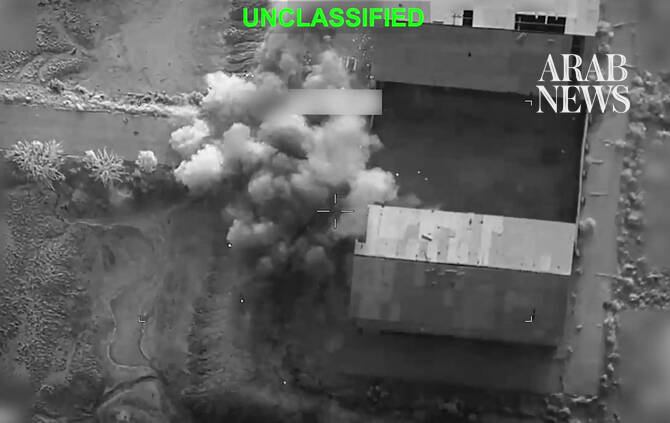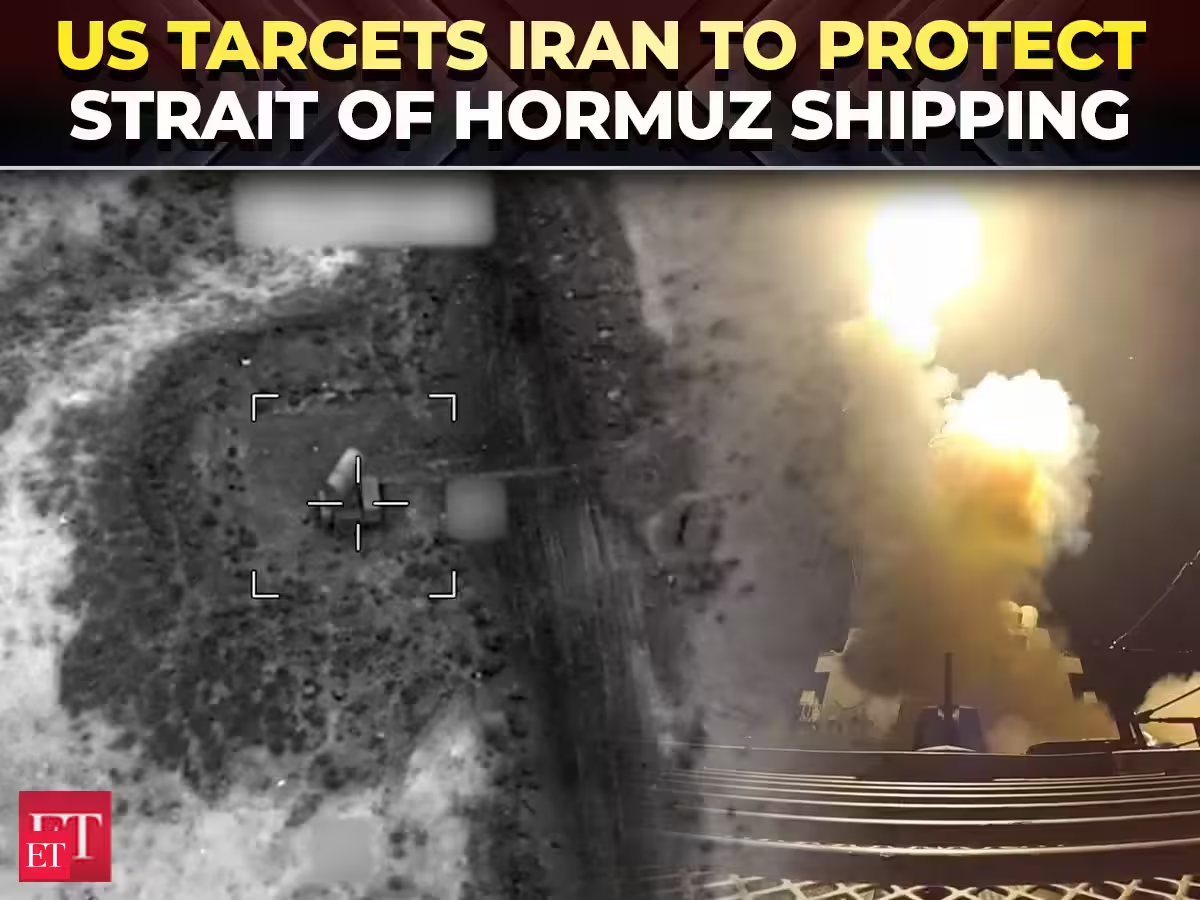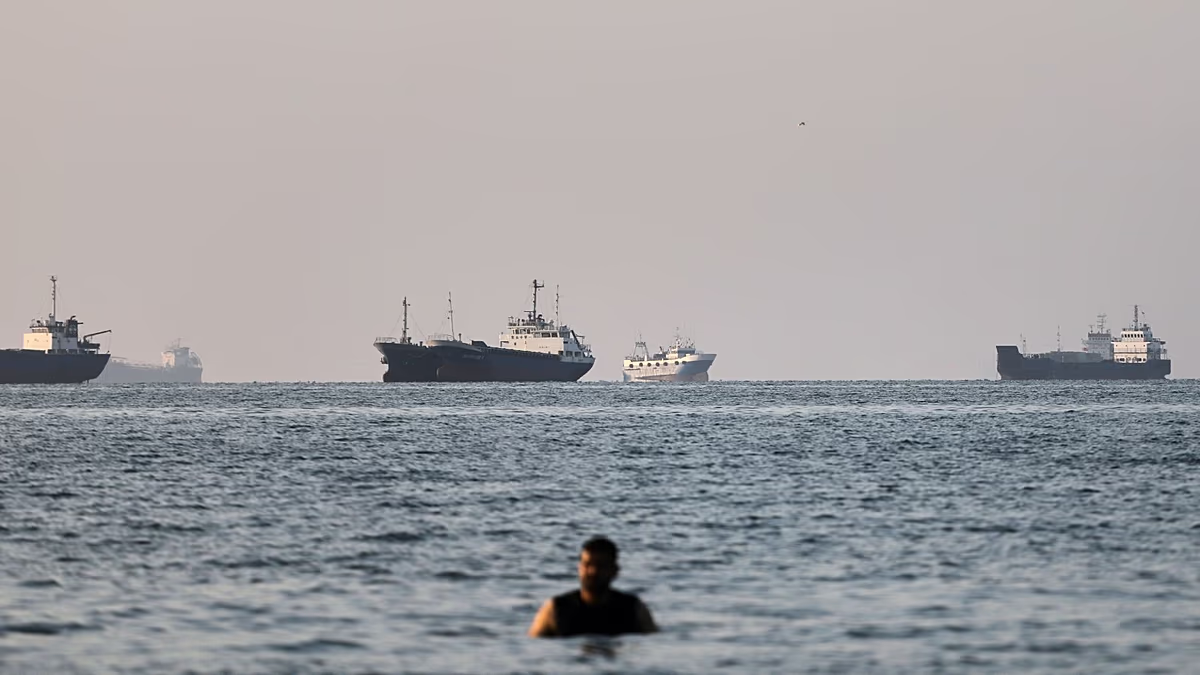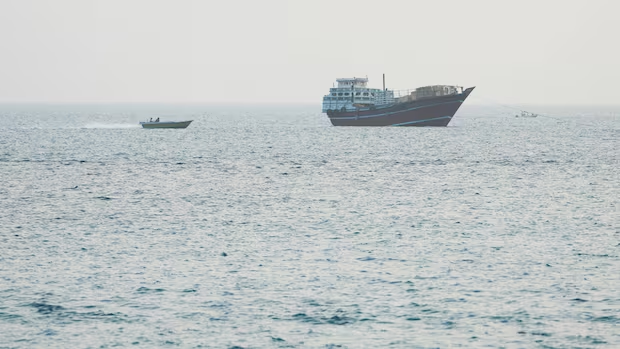
WorldThe U.S. said it had begun a new wave of strikes against Iran on Wednesday after reimposing a naval blockade of Iranian ports, while Tehran threatened to shut off more regional energy exports.Tehran threatens to block more vital seawaysThomson Reuters · Posted: Jul 15, 2026 7:22 AM EDT | Last Updated: 2 hours agoListen to this articleEstimated 4 minutesThe audio version of this article is generated by AI-based technology. Mispronunciations can occur. We are working with our partners to continually review and improve the results.U.S., Iran strikes continue for 5th straight day as Washington launches new wave of attacks3 hours ago|Duration 4:31The U.S. launched a new wave of attacks Wednesday after Iran targeted American military sites. U.S. Central Command says the latest strikes are meant to target and degrade Iran’s ability to attack commercial ships passing through the Strait of Hormuz.The U.S. said it had begun a new wave of strikes against Iran on Wednesday after reimposing a naval blockade of Iranian ports, while Tehran threatened to shut off more regional energy exports.The strikes mark the latest escalation of attacks and counterattacks launched by the two sides as they vie for control of the Strait of Hormuz, which carried about one-fifth of global oil and gas shipments before the war. "At 6 a.m. ET today, U.S. Central Command forces began launching a wave of strikes against Iran," the U.S. military said."The strikes are designed to further degrade military capabilities Iranian forces have used to attack commercial shipping in the Strait of Hormuz."Central Command said the 90-minute wave of strikes targeted defence and missile sites on Iran's Greater Tunb island.'End of America's evils' The U.S. also struck Iran late Tuesday, hitting dozens of military targets near the strait and Iranian coastal areas over seven hours.Iranian government spokesperson Fatemeh Mohajerani said at least 30 civilians had been killed in recent days due to the U.S. strikes on southern Iran, state media reported on Wednesday. Smoke rises from an explosion at an unknown location, during what U.S. Central Command said were strikes on Iran, in this screen grab taken from a handout video released on Tuesday. (Reuters)Iran's army said at least seven active-duty and conscript personnel were killed in overnight U.S. strikes on the Bampur military base in the country's southeast.In response, Iran's Islamic Revolutionary Guard Corps said on Wednesday it had struck U.S. military targets in the region, including in Bahrain, Kuwait and Jordan. It also threatened to shut off more regional energy exports, saying the U.S. "must brace for the closure of all other export corridors that benefit the U.S. and its allies."Analysts have said Iran has been signalling it may use its Houthi allies in Yemen to shut the Bab el-Mandeb gateway to the Red Sea, opening a new front against Washington and putting two of the world's most vital energy arteries at risk.The narrow gateway links the Red Sea to the Gulf of Aden, through which Saudi oil exports and a substantial share of global shipping pass.Demonstrators hold placards denouncing U.S. President Donald Trump are shown at the Grand Mosalla in Tehran on Tuesday. (Majid Saeedi/Getty Images)Earlier on Wednesday, Kuwait's state news agency reported that a fire was brought under control at a site targeted in Iranian attacks. It was not immediately clear whether the fire was at the same site referred to in the IRGC statement.Jordan's air defence intercepted and shot down three ballistic missiles that entered the country's airspace from Iranian territory early on Wednesday.WATCH | Hostilities and oil prices rise:Oil prices jump as conflict between U.S., Iran escalatesJuly 14|Duration 3:01Hostilities threatening the Strait of Hormuz led the U.S. to renew attacks and reimpose its naval blockade in Iran Tuesday, with oil prices surging to four-week highs as a result.The war, which began with U.S. and Israeli strikes against Iran on Feb. 28, triggered Iranian attacks on Gulf states that host U.S. bases and caused major disruption to global energy supplies, raising fears of a surge in inflation. An interim ceasefire signed last month was meant to lead to further negotiations and a permanent truce, but a return to talks has faltered. The U.S. previously imposed a naval blockade for about two months beginning in April, lifting it when it appeared fighting would cease while talks continued.The IRGC also said on Wednesday that the Strait of Hormuz would remain closed until what it described as "the end of America's evils." The U.S. says Iran had attacked seven commercial ships over the last week, leading to nearly a dozen crew members being killed, missing or injured. India has said it has lodged a protest with Iran, as two of its citizens were among the sailors killed.U.S. President Donald Trump on Tuesday threatened to hit Iranian power plants and bridges next week unless Tehran resumes negotiations.WATCH | Toll or no toll?:Trump can’t make up his mind about tolls on the Strait of Hormuz | About ThatJuly 14|Duration 2:40Andrew Chang breaks down U.S. President Donald Trump's vacillating approach to charging ships transiting the Strait of Hormuz, and how both he and Iran skirt the illegality of tolls.
U.S. launches daytime strikes on Iran to assert control of Strait of Hormuz | CBC News
The U.S. said it had begun a new wave of strikes against Iran on Wednesday after reimposing a naval blockade of Iranian ports, while Tehran threatened to shut off more regional energy exports.
930 words~4 min read