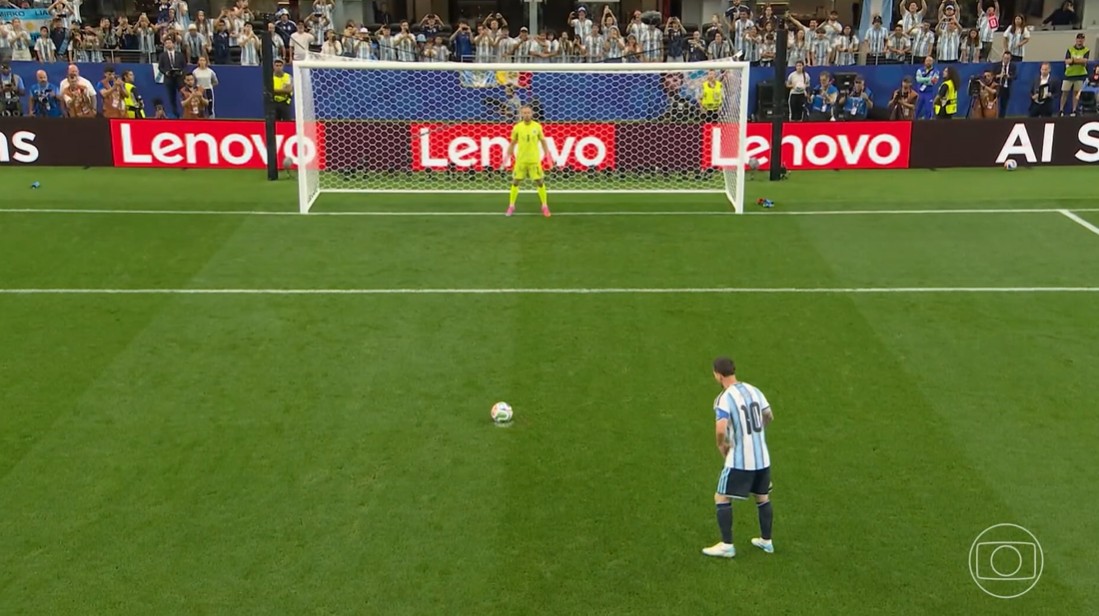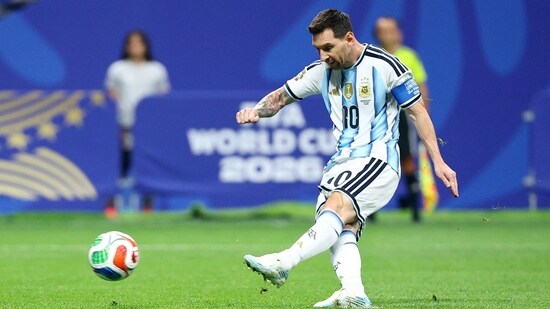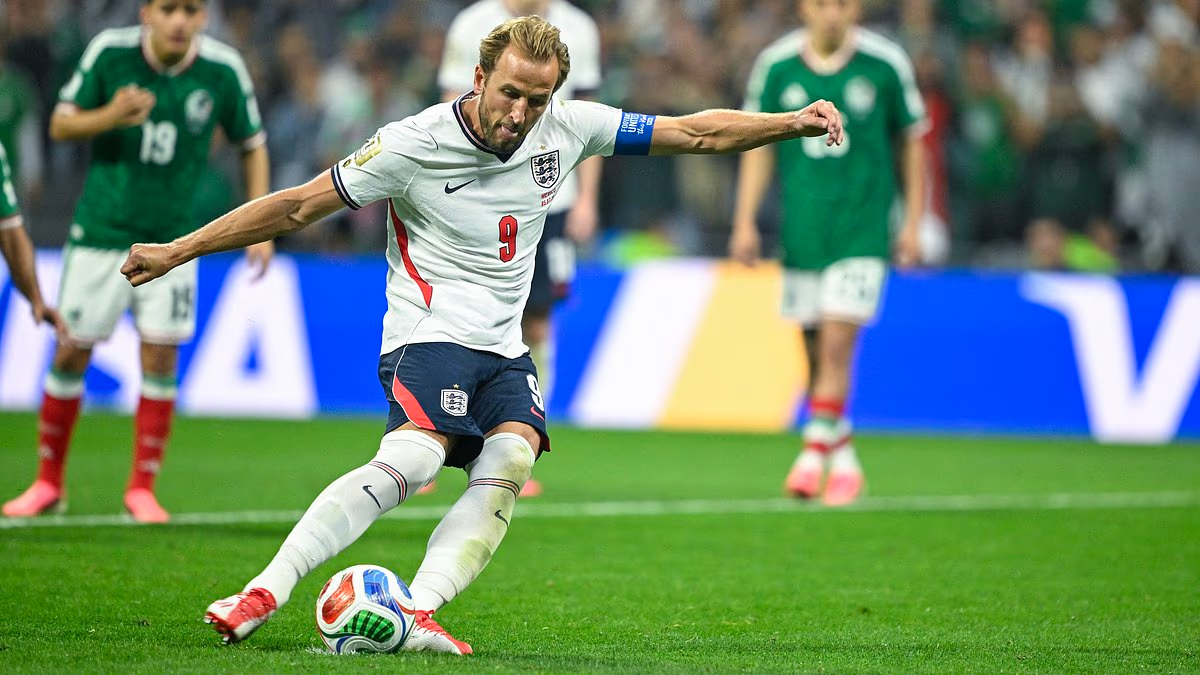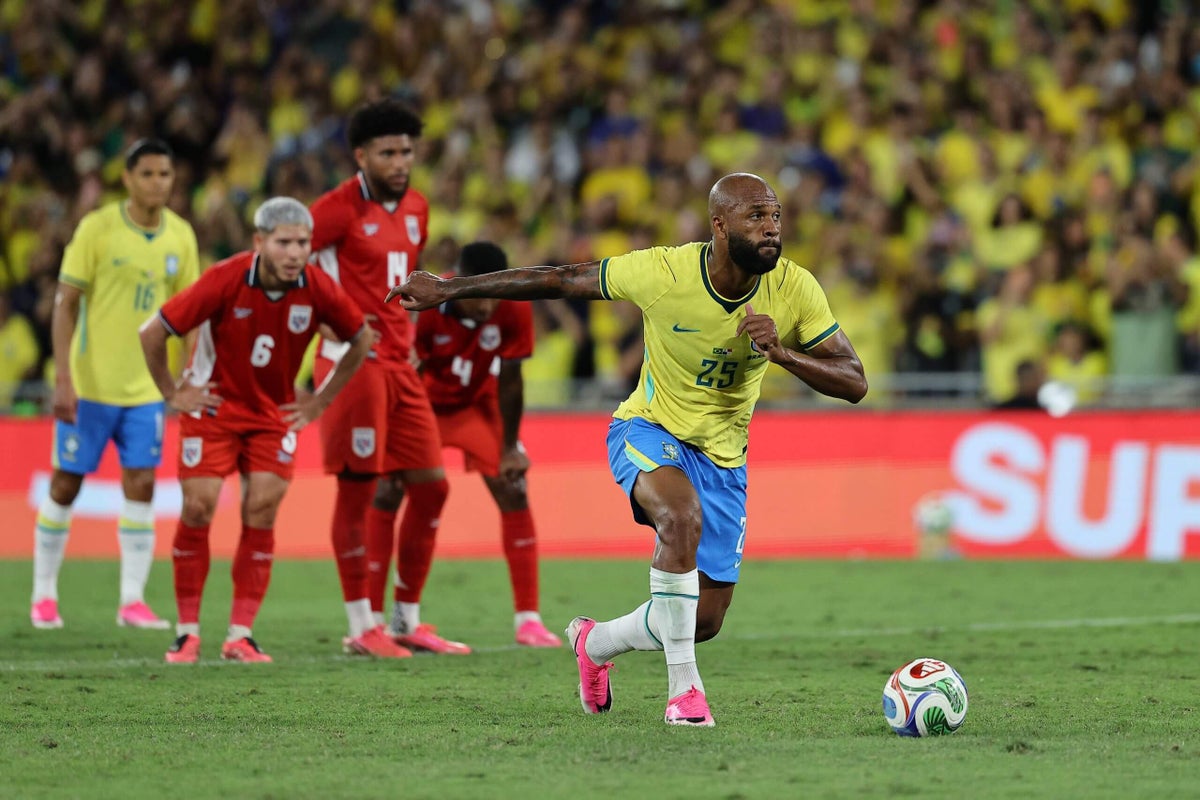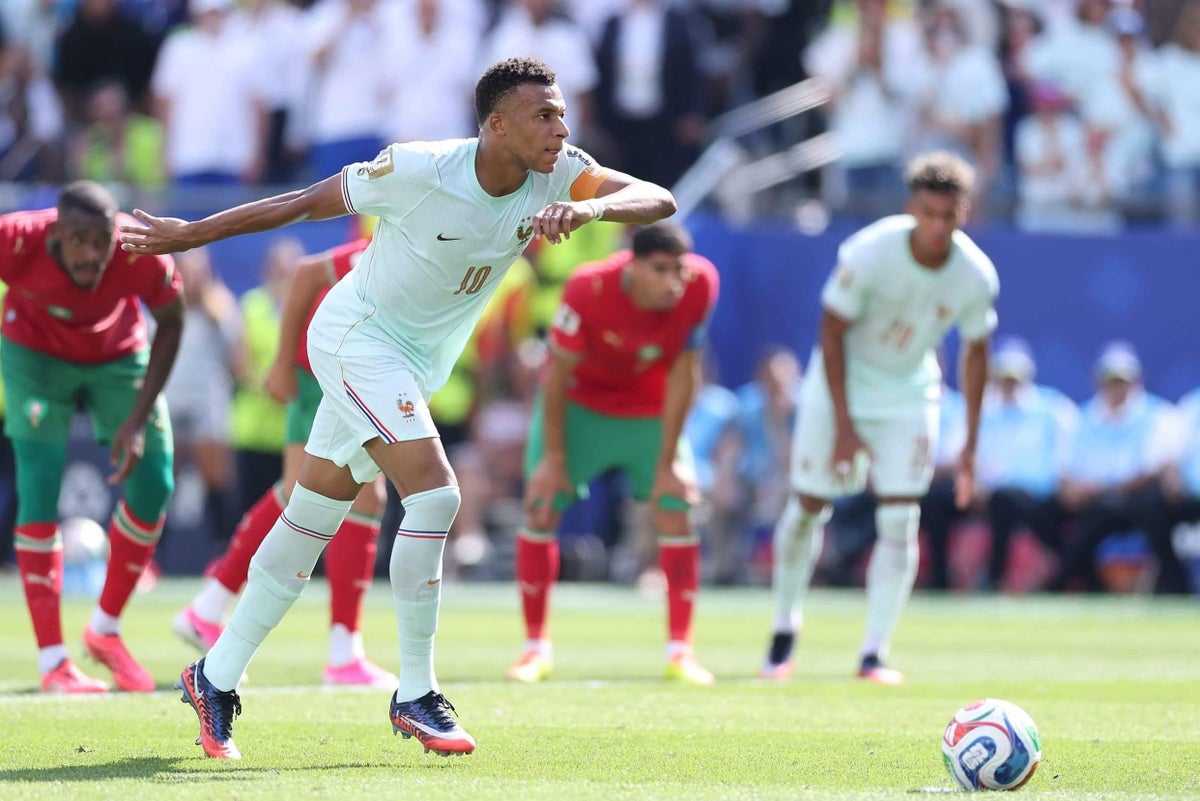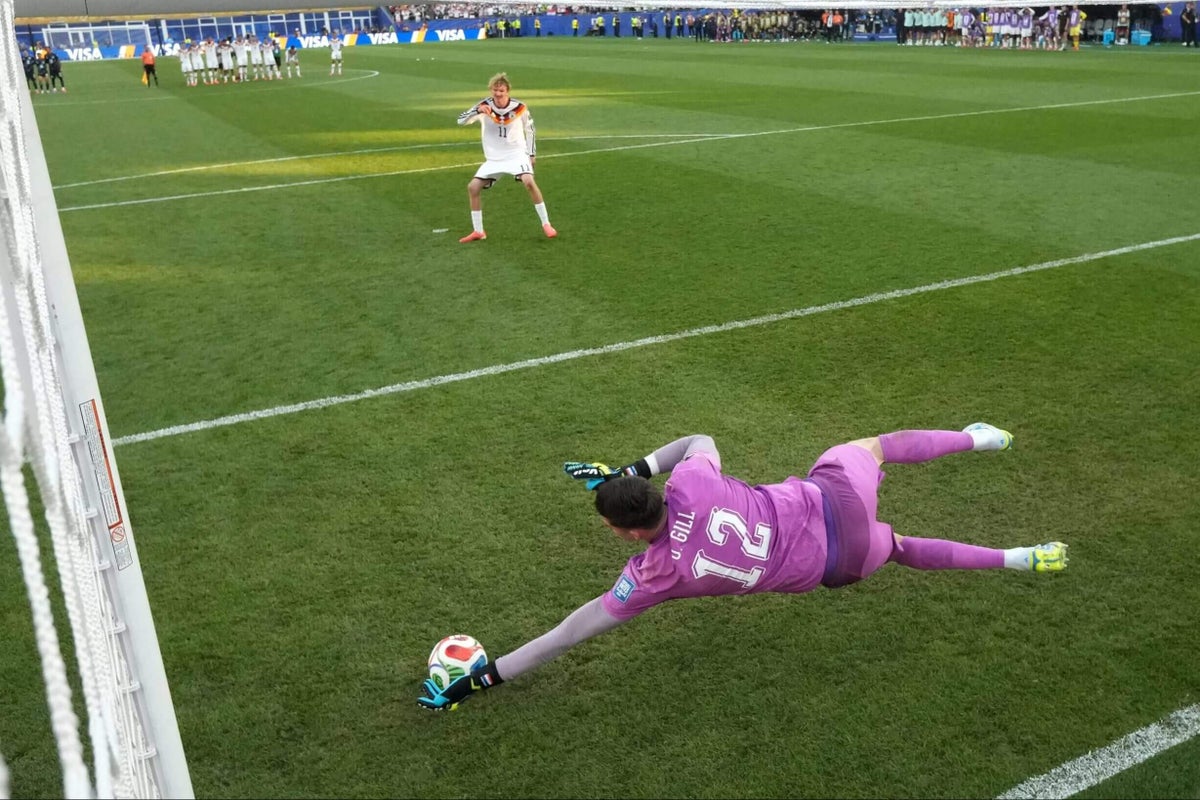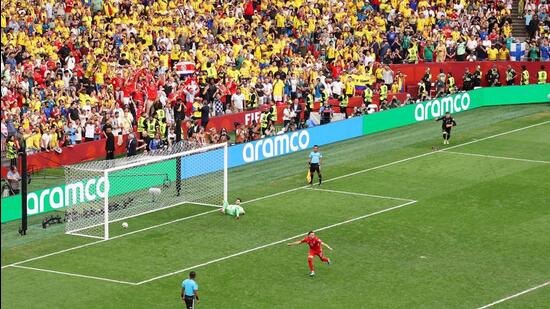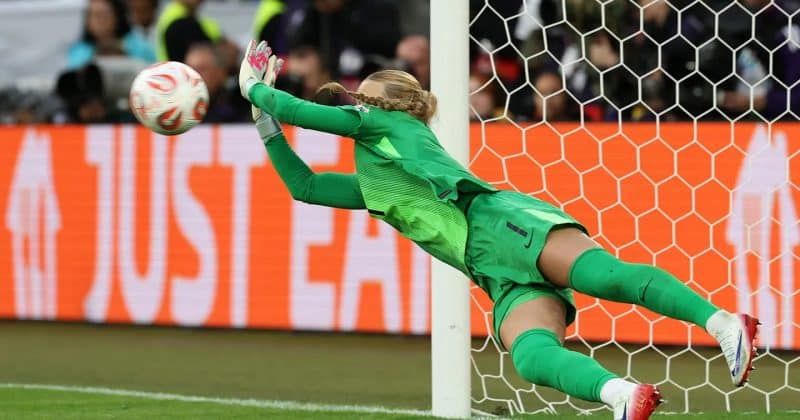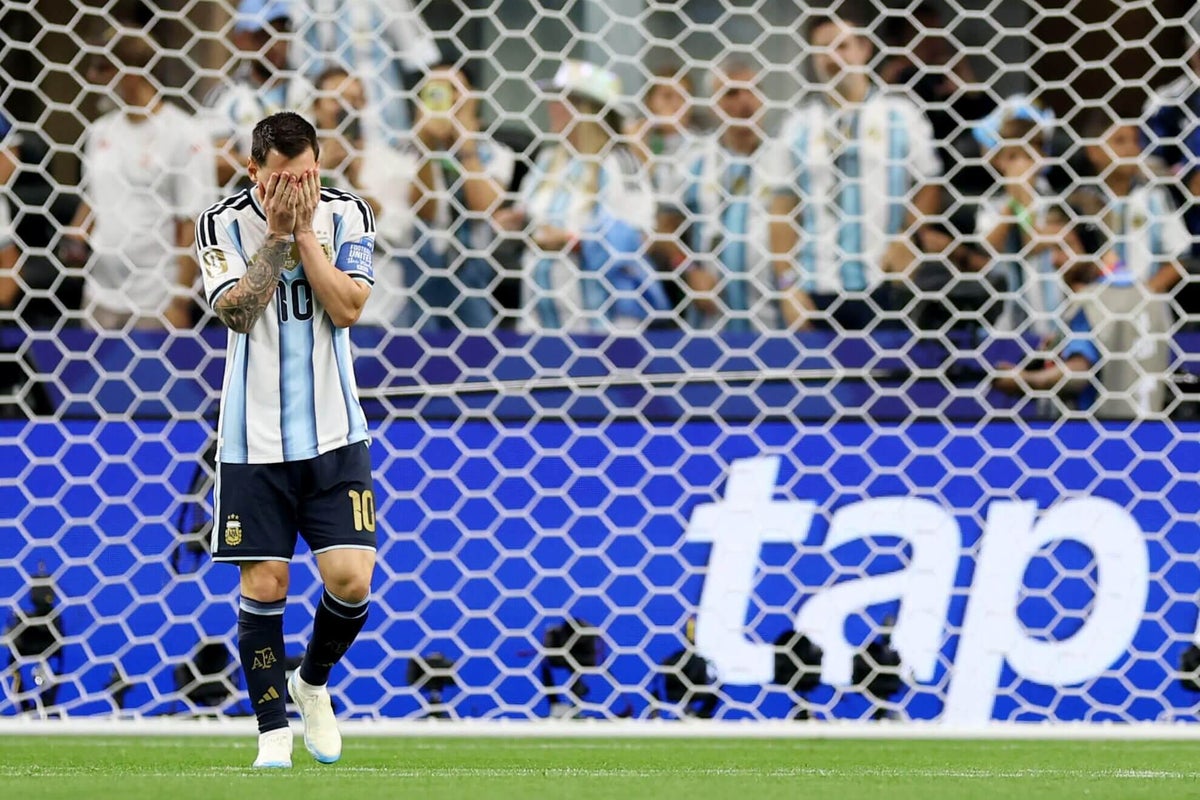
Geir Jordet is an industry-leading expert on penalties and the author of Pressure, a book about the psychology of shootouts. Jordet teaches and conducts research on psychology and elite performance at the Norwegian School of Sport Sciences and is part of The Athletic’s World Cup coverage this summer. Penalty kicks, particularly under highly stressful World Cup conditions, are a great laboratory for studying human behaviour under pressure.What do we know about the ways players, coaches and teams have conducted themselves for penalty kicks and during penalty shootouts in the 2026 World Cup so far?First, some of the fundamentals.In the 100 games before the semi-finals (i.e. excluding Mikel Oyarzabal’s penalty as Spain beat France last night), there have been 20 regular penalties, 14 of them successful and six missed.A 70 per cent success rate on regular penalties, keeping in mind the small sample size, is unusually low. Before the World Cup, 535 players had registered taking penalties in senior games, with an 81 per cent average conversion rate. So, when it matters most, these players, on average, deliver their worst.What about the penalty shootouts? We have had four of them, with 40 kicks, 25 goals and 15 misses. This gives a conversion rate of 62.5 per cent. That more goals are scored with regular penalties than in shootouts is quite common, probably a result of more specialist penalty takers taking regular penalties, and higher pressure on each kicker in shootouts.Moreover, the 62.5 per cent success rate in penalty shootouts is also unusually low. The average success rate in World Cup penalty shootouts (since 1982, 39 shootouts, 360 attempts) is 69 per cent. Only the last tournament in the US, in 1994, was lower with 62.1 per cent. However, since the all-time high conversion rate of 78 per cent in 2010, there has been a trend of progressively fewer goals, and the current rate is only marginally lower than in Qatar 2022 (63.4 per cent) and Russia 2018 (66.7 per cent).Let us go deeper and look at some trends and observations from these 60 penalty kicks on record so far…4 Messi World Cup Stats That Don't Make SenseChristopher HamillExperience countsA lack of skill and experience seems to have a negative impact on performance. In this World Cup, defenders have only scored 36 per cent of their penalties. We published papers on the liability of defenders in penalty shootouts 20 years ago, but teams are still using them in shootouts.Another observation is that 10 players without any registered previous senior-level penalty-kick experience have featured. Only half of them scored. Australia’s Harry Soutar and Lucas Herrington are examples, both defenders, and both with no previous penalty record — both missing against Egypt. Another example is Jonathan Tah, who ended up missing decisively for Germany in their shootout against Paraguay.Overall, players with some previous penalty experience (more than 10 kicks) have an average conversion rate of 75 per cent, while those with 10 or fewer have scored only 58 per cent. As one would think, players with little or no experience from the penalty spot, and in goalscoring situations, are probably less effective than those who have experience.However, there are always exceptions, and sometimes they tell a richer story.Staying with Germany, when Kai Havertz stepped up as the first taker in that shootout for Germany, he had previously scored 16 goals from 16 penalties. With this comes extra pressure, but more importantly, in my opinion, it gives opposing goalkeepers full access to data of previous kicks.A goalkeeper-dependent penalty taker such as Havertz always observes the goalkeeper in the final stage of his run-up, looking for the keeper to commit early so he can exploit that with a shot in the opposite direction. For Havertz’s penalty against Curacao, the keeper indeed moved early, allowing Havertz a simple goal to his left. For the shootout a couple of weeks after, Orlando Gill, the Paraguay goalkeeper, had clearly studied Havertz, because he did not commit early at all, forcing the Arsenal forward to pick a side without knowing where the goalkeeper would go. Gill guessed correctly and saved easily.Messi’s problemAnother exception is Lionel Messi: extraordinary player, ordinary penalty taker. Messi has missed his two penalties in this World Cup, against Austria and Egypt.Anyone can miss one or two, but for Messi, there is a pattern. Before the World Cup, he had taken 132 penalties and scored 78 per cent of them. We always expect Messi to be above average, but from penalties he is below average.Why?Messi’s struggles from the penalty spot are not new. In February 2022, I wrote an article in The Times of London entitled “Lionel Messi, excuse my impudence, but here’s how to take better penalties”. In my book from 2024, I have a separate chapter called “The Messi problem”. Since then, he has consistently continued to deliver average penalty performances, scoring 75 per cent of his past 20 attempts.Some people have argued it is a purely mental problem, that he does not deliver under this type of pressure. I don’t think it’s that simple. He has scored seven of nine penalties for Argentina in penalty shootouts, including two in the 2022 World Cup (in addition to a regular penalty kick in the final). When the pressure is on, Messi does not crumble, but rather continues to deliver his normal, relatively average, penalty performances. Normal is not bad. We just expect more from him.Rather, I think his problems have to do with his penalty skill. Messi has every single one of the components that would build fantastic penalty-taking skill, but he somehow doesn’t put them together correctly.In the past three or four years, he has started alternating his technique. Sometimes he uses a goalkeeper-dependent approach – observing the goalkeeper in the run-up (as he did against Austria); other times he uses the conventional goalkeeper-independent approach, deciding beforehand where to shoot (against Egypt).This is a positive development, as it enables him to be more unpredictable for goalkeepers, and is consistent with some of the world’s best penalty takers such as Harry Kane, Robert Lewandowski and Oyarzabal.Lionel Messi looks at the goalkeeper for his penalty against Austria, but at the ball against Egypt (below). Credits: Getty ImagesMessi’s problem is that he is not great at executing either of these two techniques.When he has decided beforehand, his precision and pace are decent, but not outstanding, meaning that if the goalkeeper picks the correct side, he will save it almost 50 per cent of the time. When Messi observes the goalkeeper, he uses a slow run-up, but no stutter movements to force the goalkeeper to react, which makes it easy for the goalkeeper to just remain standing, or even to take initiative with various fake movements, and the chance of a goal is lower than it needs to be.I look at Messi and I see an artist, capable of producing the most sophisticated moves possible on a football pitch and make it all look so easy. A penalty kick doesn’t require an artist, it requires a carpenter; someone who reliably and monotonously gets the job done.
World Cup penalty trends: Messi problems, Bounou bluffs and the best kick so far…
There's been an unusually low conversion of penalties at this World Cup. Our expert explains some of the reasons why
3,352 words~15 min read