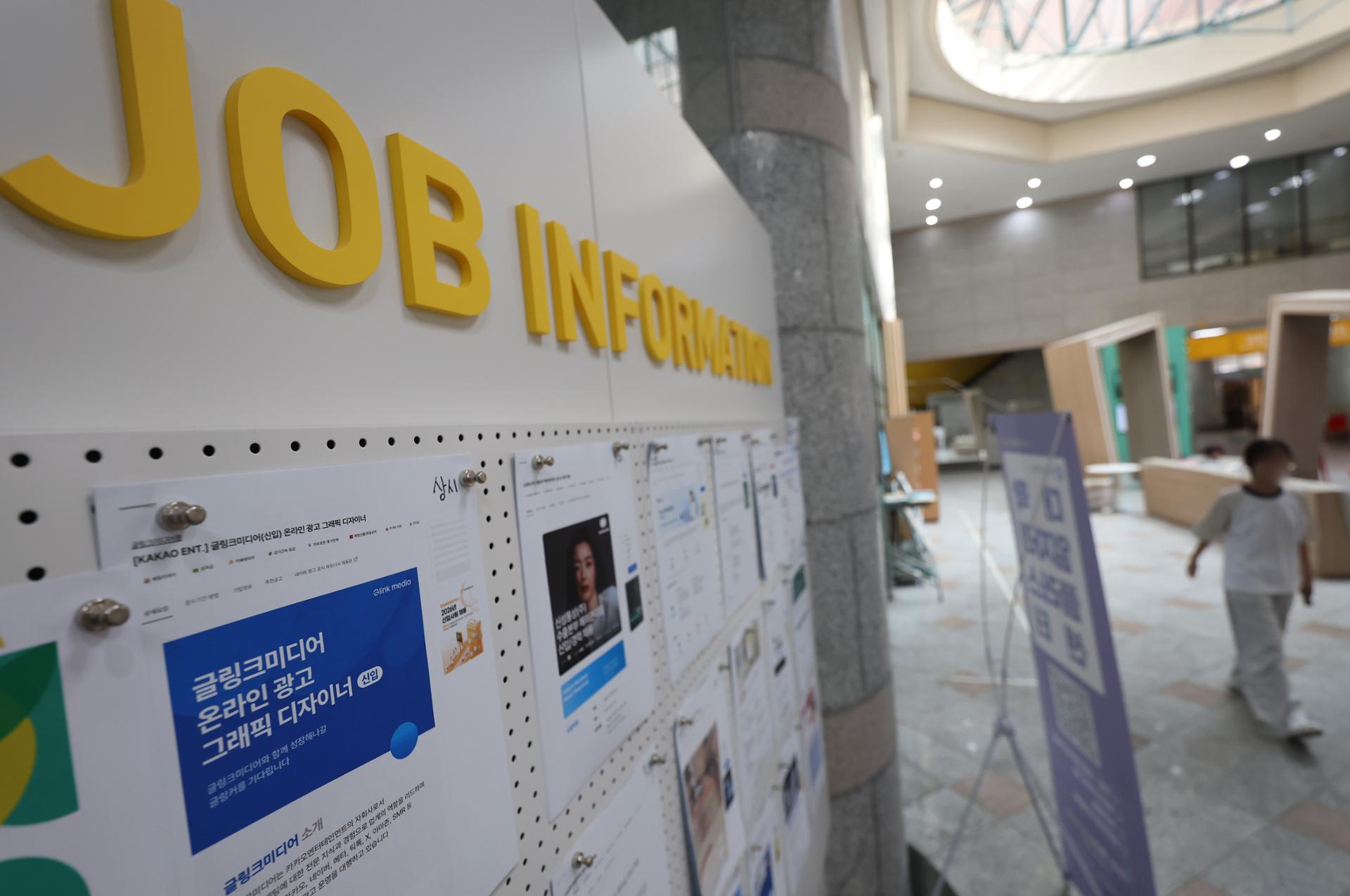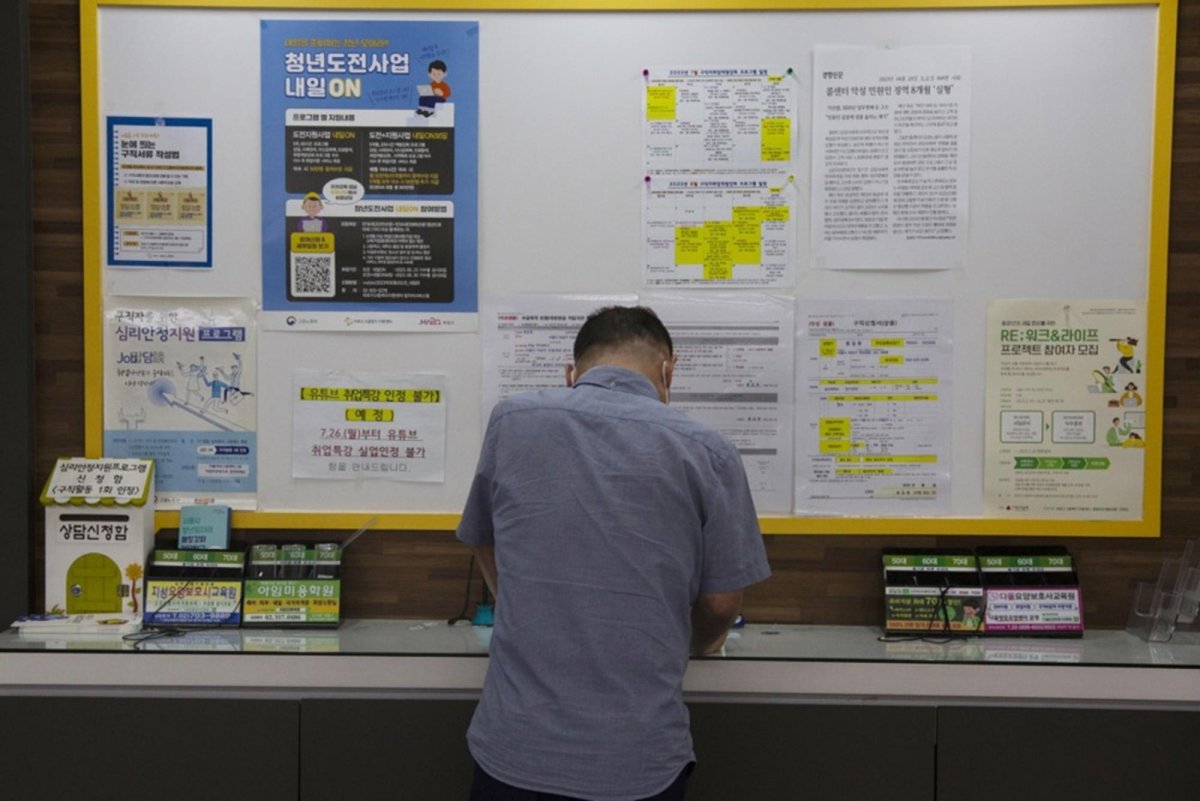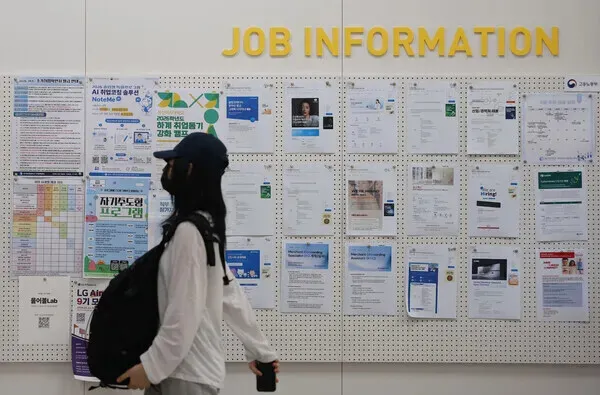
A person walks by a job information board at a college in Seoul in June. (Yonhap)
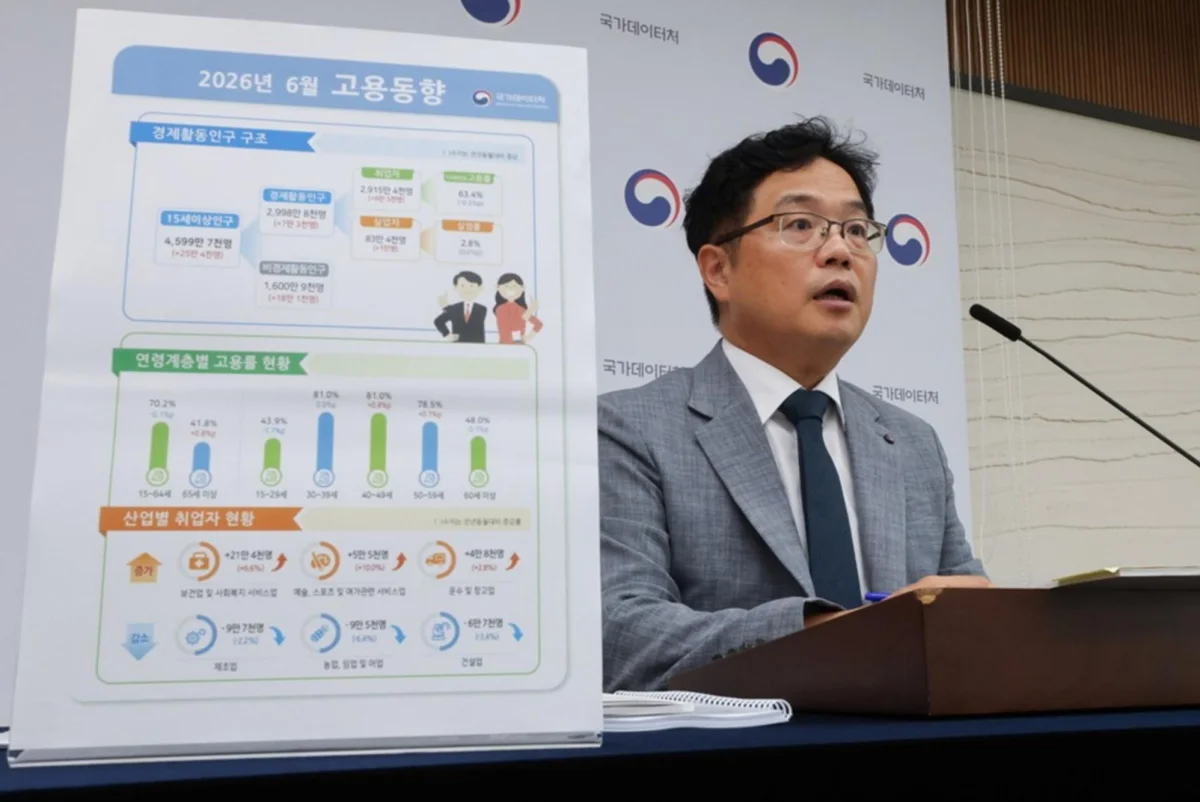
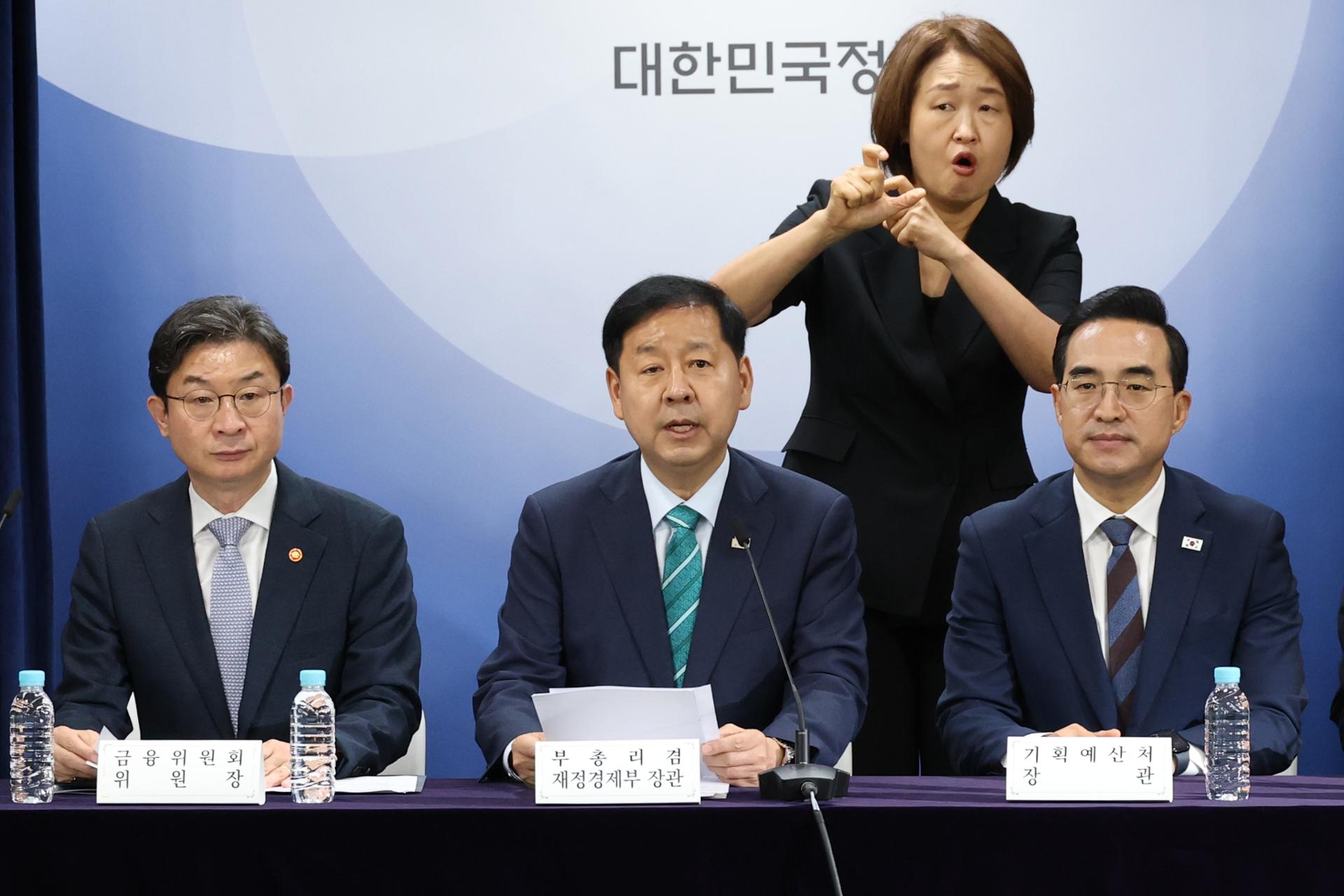
Despite sharply raising its economic growth forecast just six months after its initial announcement, the Korean government has slashed its jobs outlook. This seeming contradiction is explained by the slow recovery in industries oriented toward domestic demand, which tend to boost job creation, amid lopsided growth led by the chipmaking sector.Since not all industries are enjoying the benefits of economic growth, concerns about widening disparities in employment and income are gradually being realized. While the government has pledged to create 300,000 high-quality jobs through startups and other means by 2030, analysts are calling for a practical roadmap for stimulating job demand in the private sector.According to an economic growth strategy for the second half of 2026 published by the government on Tuesday, the number of employed persons this year is expected to grow by 150,000 from the previous year. Projected job growth is 40,000 lower than last year (190,000), as well as 10,000 lower than the government’s outlook in January (160,000).That’s a major jobs setback considering that the government’s projected real economic growth rate jumped an entire point to 3.0% over the same period. The government also predicted that employment would rise by 170,000 next year.The mismatch between jobs growth and economic growth is basically due to the capital-intensive nature of semiconductor fabrication, which requires large amounts of facility investment and produces fewer jobs than ordinary manufacturing.According to the Bank of Korea, the semiconductor industry’s employment multiplier was 2.4 jobs created directly or indirectly per 1 billion won (US$671,000) of final demand. That’s much lower than the average across the manufacturing sector (5.1), not to mention the all-industry average (8.2).“Our raised forecast for the real economic growth rate is mostly due to the semiconductor sector. But that sector doesn’t have a high employment multiplier, so there was only limited impact on job creation,” said Kang Gi-ryong, the deputy minister at the Ministry of Finance and Economy.The slow recovery in construction investment and softening domestic demand amid the US and Israel’s war with Iran are headwinds for the job market.The issue is compounded by the fact that the employment shock is concentrated on young people. In May, the employment rate among young people (aged 15-29) was 43.8%, a figure that has been steadily declining on a year-over-year basis since May 2024.In response, the government announced it will create at least 200,000 jobs for young people through 2030, with 100,000 each in the private and public sectors. The “entrepreneurship for all” program will also be expanded with the goal of creating at least 100,000 young startup founders. The government plans to release a fleshed-out “plan for the youth job recovery” sometime in the third quarter.But since domestic demand is softening and new jobs are being replaced by AI tools, it won’t be easy to devise a practicable policy capable of stimulating job demand in the private sector.Considering that 1,053,000 young people were without jobs in May (a figure that includes people who are unemployed, seeking work and inactive), it seems doubtful that 300,000 new jobs, even assuming such a goal is feasible, will radically transform the employment situation.While public sector jobs are easier for the government to create, there are challenges in that area as well. As of 2024, there were 2,875,000 public sector jobs, representing an increase of just 0.1% (1,000) from the year before. Over the same period, the number of public sector workers in their 20s decreased by 29,000.“Alarm bells are ringing with youth employment declining every month for over two years now. Since the government is offering fairly realistic goals, it needs to develop a policy roadmap that can provide meaningful assistance,” said Kim Yoo-bin, a senior research fellow at the Korea Labor Institute.One example suggested by Kim was restarting a defunct government program that matched savings by young people employed at small and medium-sized enterprises.By Park Su-ji, staff reporterPlease direct questions or comments to [english@hani.co.kr]