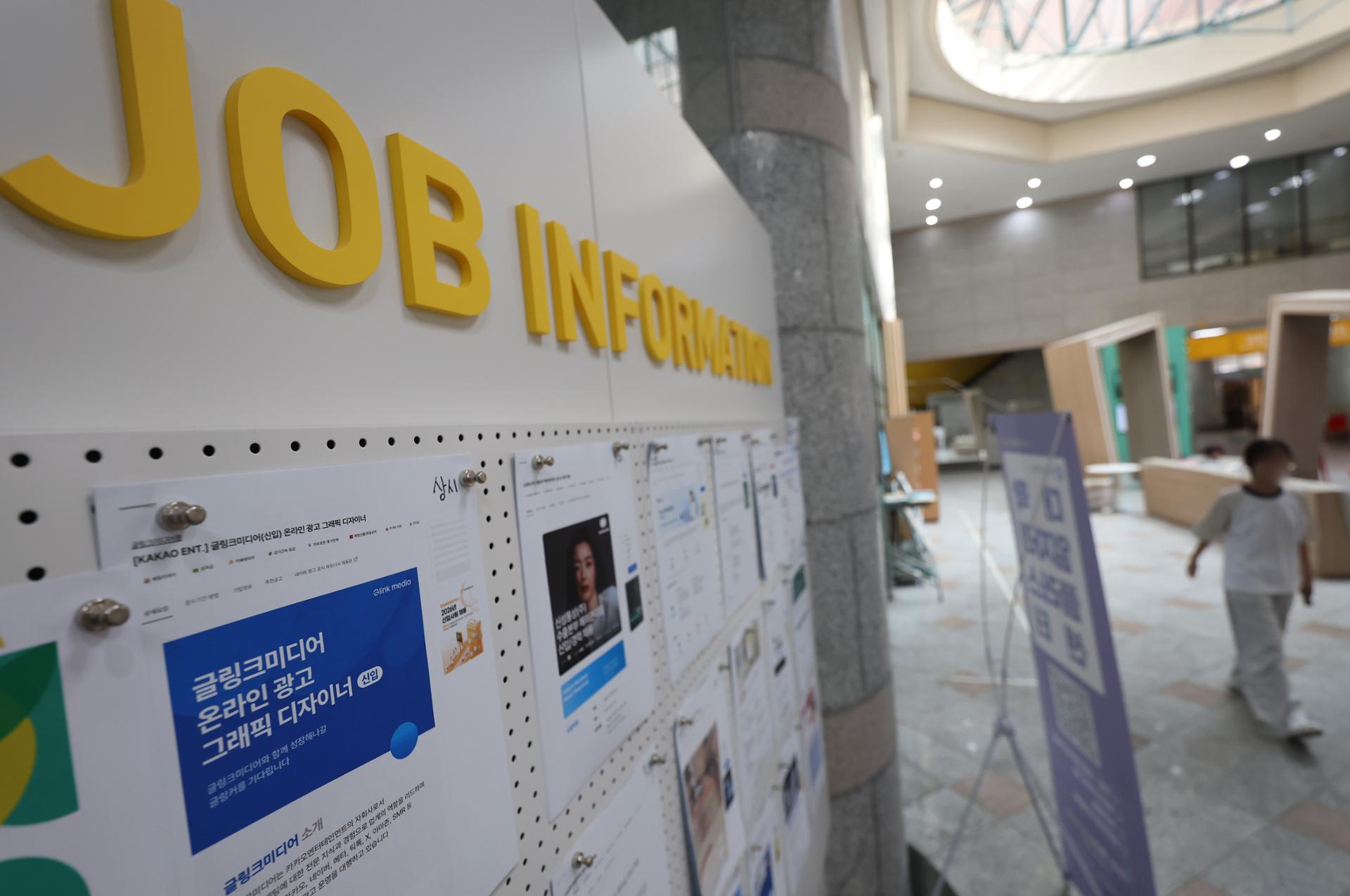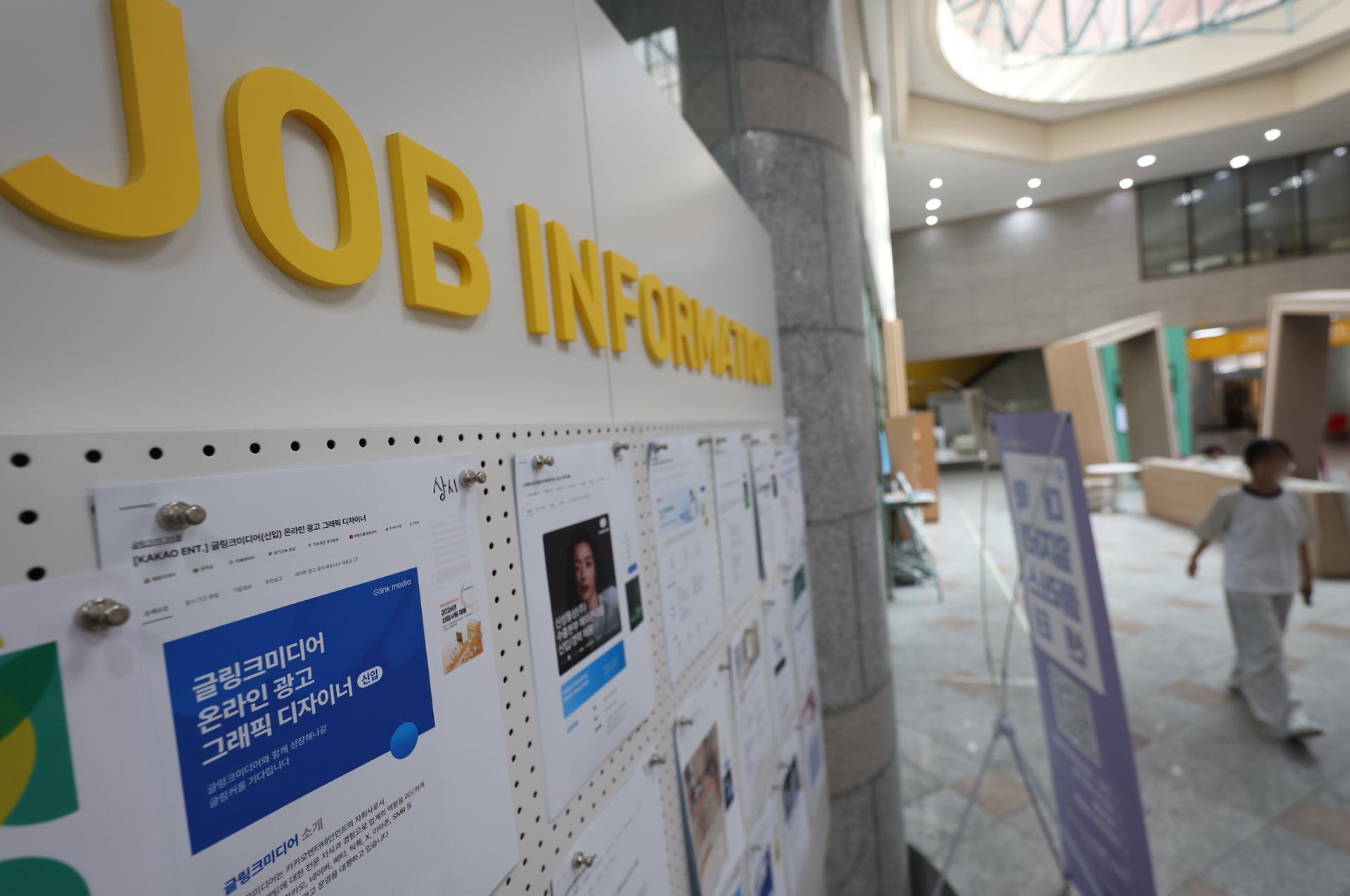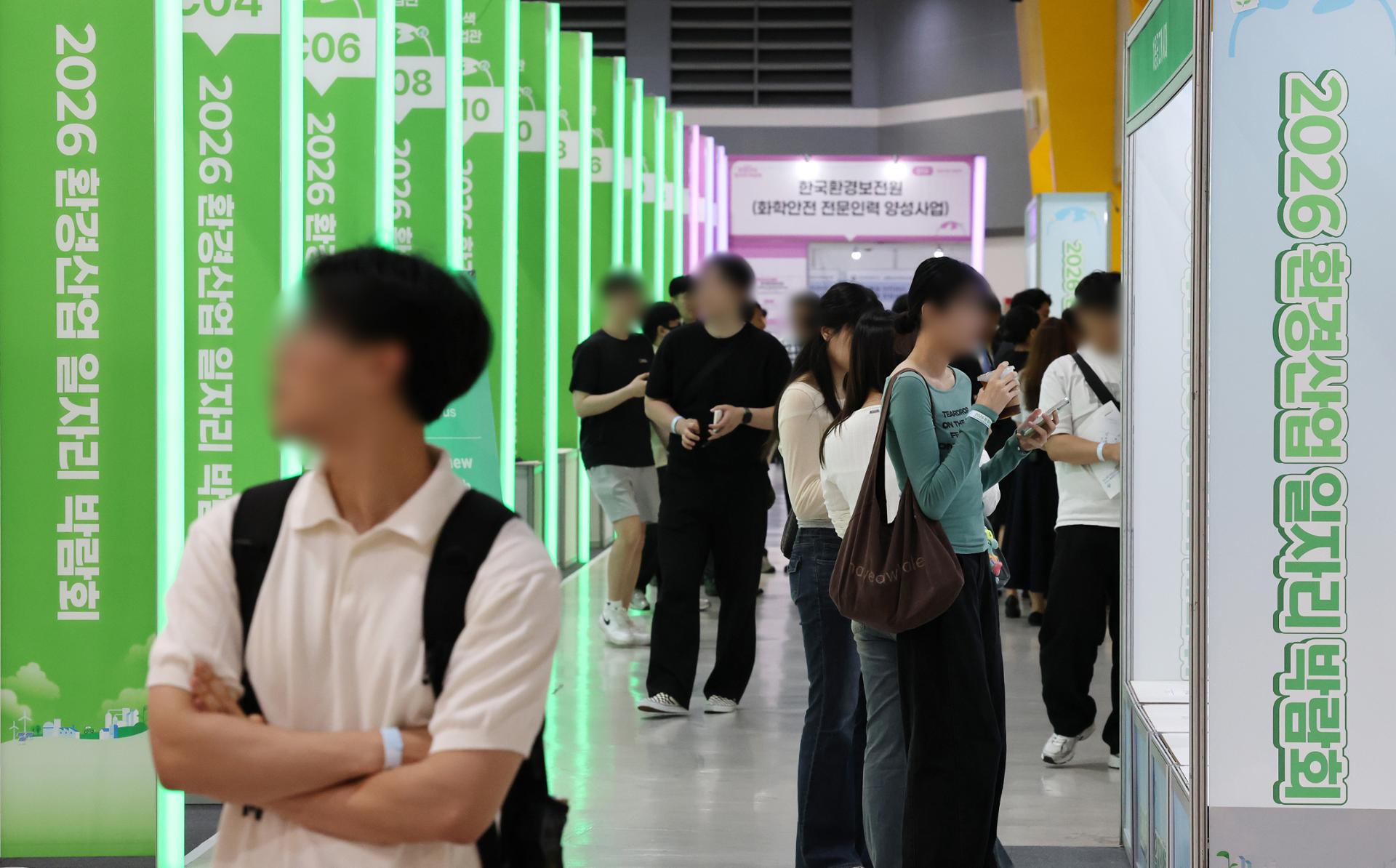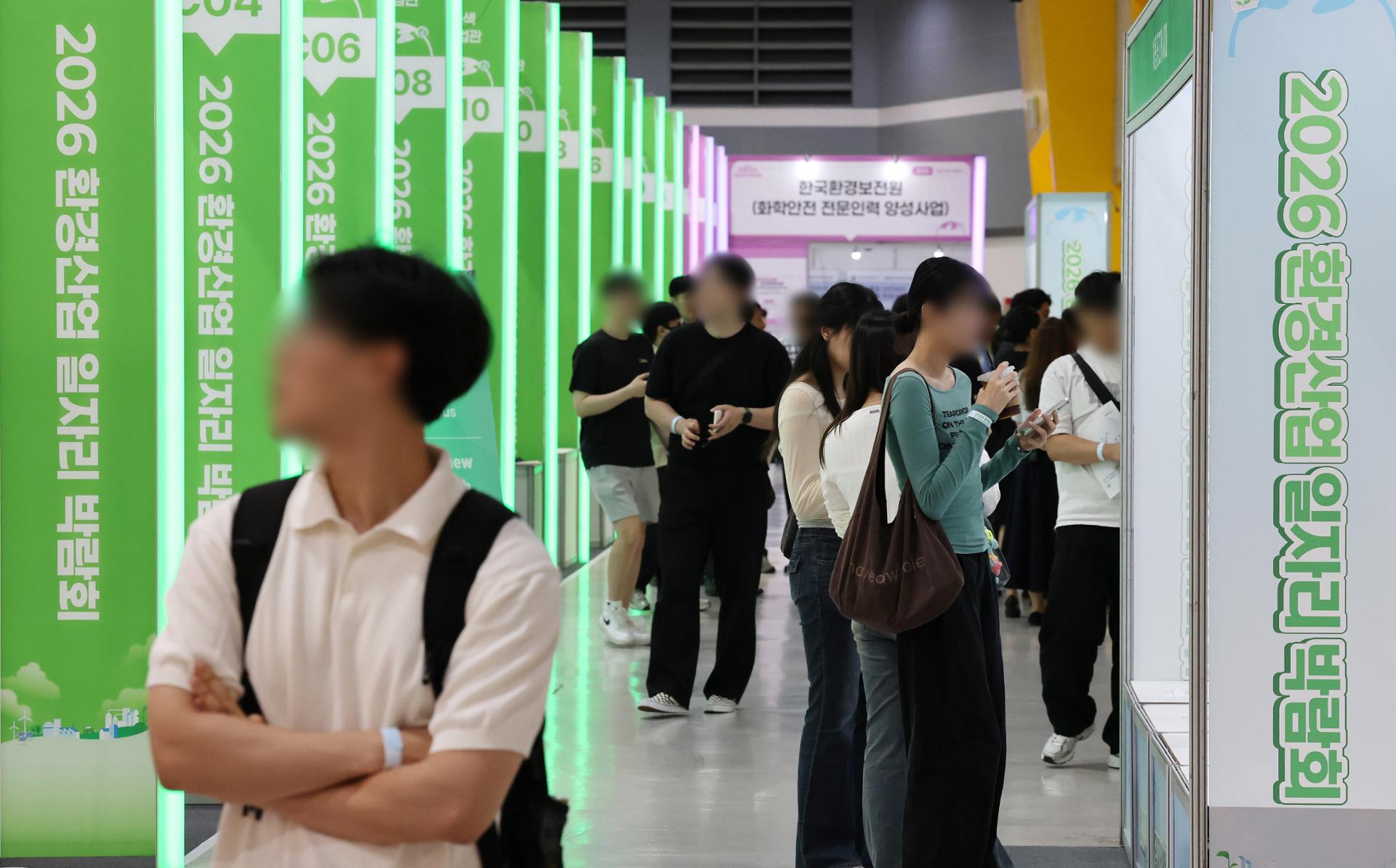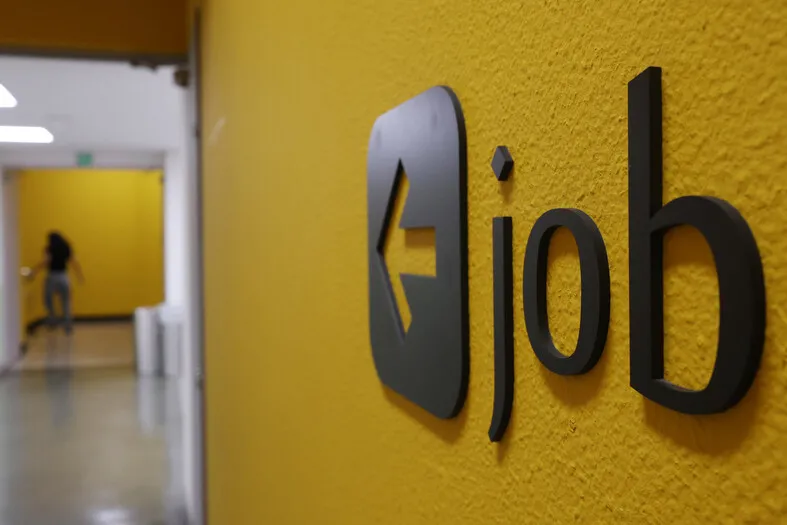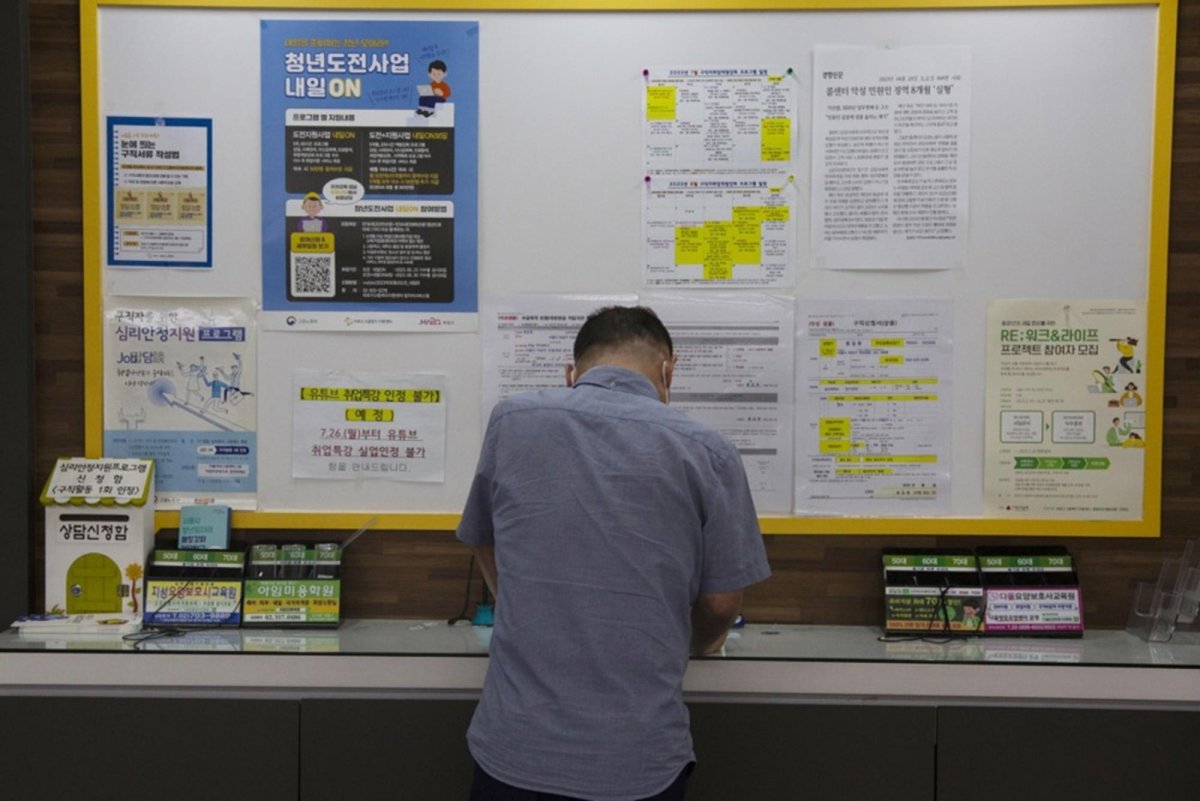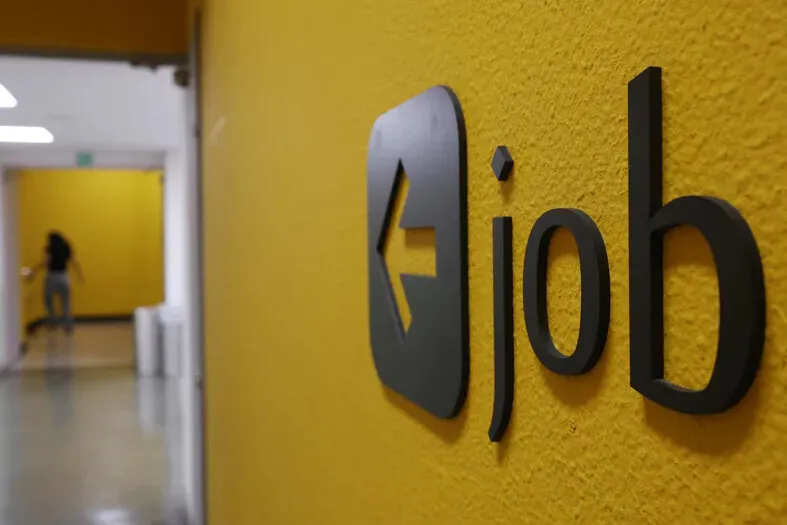
A sign for a career center at a university in Seoul on June 11, 2026. (Yonhap)
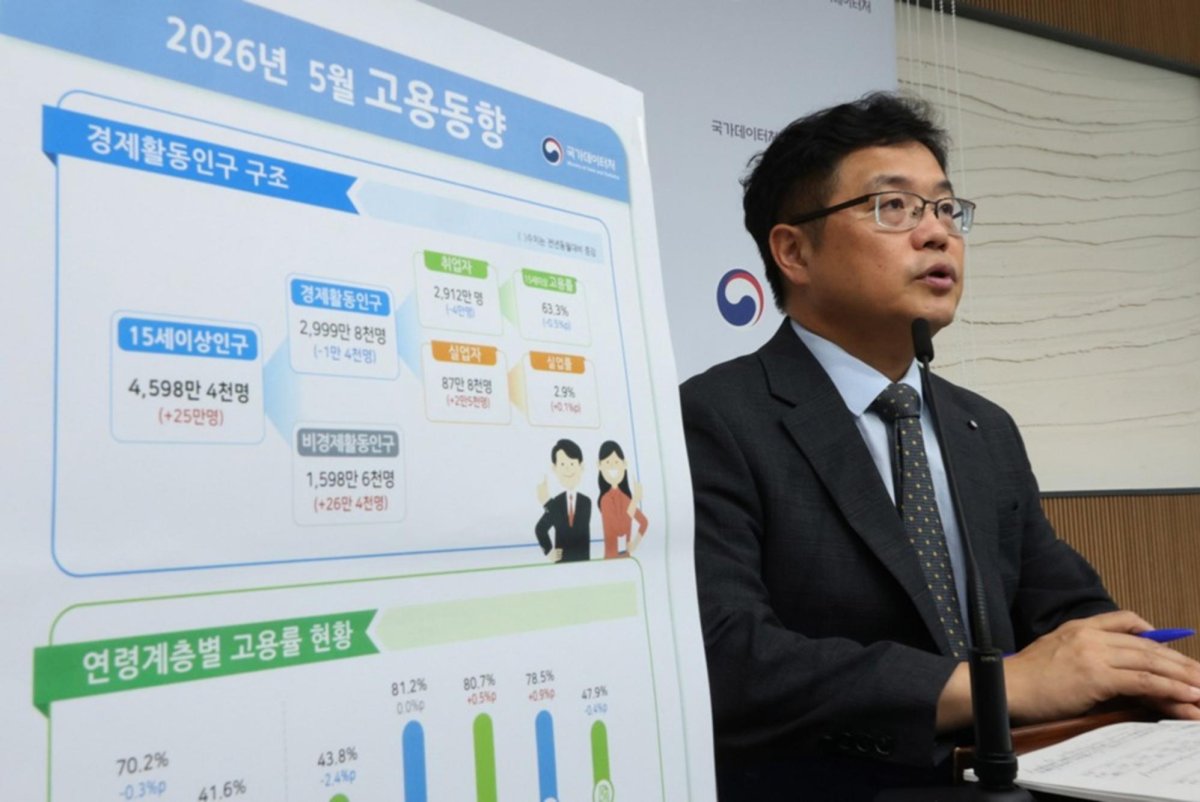
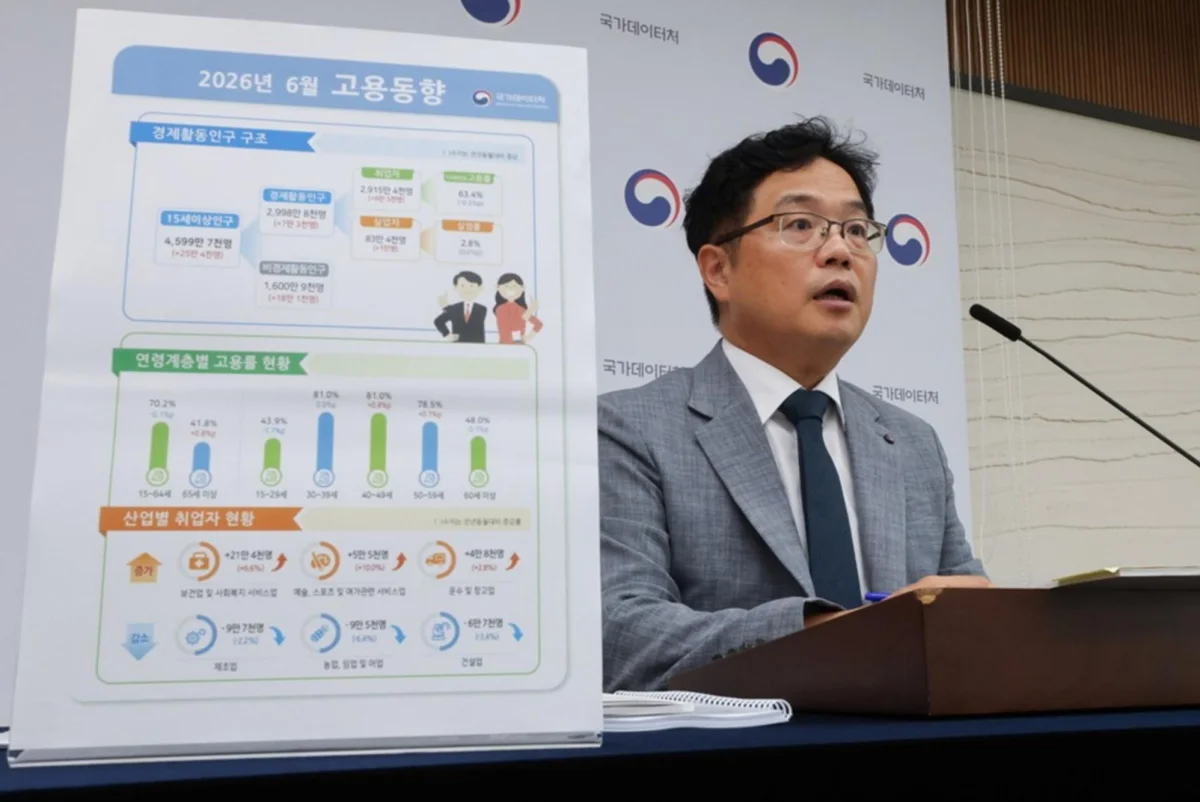
The Korean workforce has shrunk for the first time in a year and a half.The number of workers in the 15-29 age bracket fell by 255,000, marking the biggest downturn since January 2021, at the height of the COVID-19 pandemic.It seems evident that the employment market is being rattled by multiple factors, including the protracted conflict in the Middle East and the spread of artificial intelligence.With the job market entering a structural transformation, the government needs to shelve its business-as-usual approach and take more fundamental measures.According to May job figures released by Korea’s Ministry of Data and Statistics on Thursday, there are 29.12 million employed persons aged 15 and above in the country, down 40,000 from the same month last year.The number of employed persons rose by 108,000 in January and then by over 200,000 in February and March. But in April, growth slowed to 74,000 before reversing direction in May.This was Korea’s first workforce decline since December 2024, during the political chaos following then-President Yoon Suk-yeol’s unexpected declaration of martial law.The negative momentum appears to be due to rising oil prices amid the Middle East conflict, an unsteady supply of raw materials, and export troubles. Korea’s chipmakers are enjoying an unprecedented boom, but that sector isn’t a big job creator.The younger generation’s employment situation is particularly tenuous. The youth employment rate stood at 43.8%, down 2.4 points from a year before. The upshot is that jobs are shrinking even faster than the youth population.Aside from the Middle East conflict and companies’ preference for experienced workers, there’s another factor at work here: the AI shock appears to be hitting young people first.In an analysis of data from the National Pension Service, the Bank of Korea found that since ChatGPT was launched at the end of 2022, employment for young people has decreased more rapidly in industries that are heavily exposed to AI, even as employment for those in their 50s has risen.If opportunities to enter the labor market decrease even as wealth inequality increases, the younger generation will be hard-pressed on both the wealth and income fronts, which spells trouble for society in the future.This past April, the government announced a policy it calls the “Youth New Deal,” which seeks to provide job training and work experience to around 100,000 people. But considering that 400,000 young people aren’t even looking for work right now, a program on that scale is likely to have only a limited impact.There needs to be a huge expansion of job training and education fit for the AI transition. But at the same time, the government also needs to give young people direct income supplements to help them chart their own course.Other steps to take include diversifying drivers of growth beyond semiconductors to include shipbuilding, energy, and biotech and supercharging startups and the corporate ecosystem of materials, parts and equipment to facilitate more creation of high-quality jobs.In short, bolder, preemptive action needs to be taken before the job shock hardens into a structural problem.Please direct questions or comments to [english@hani.co.kr]