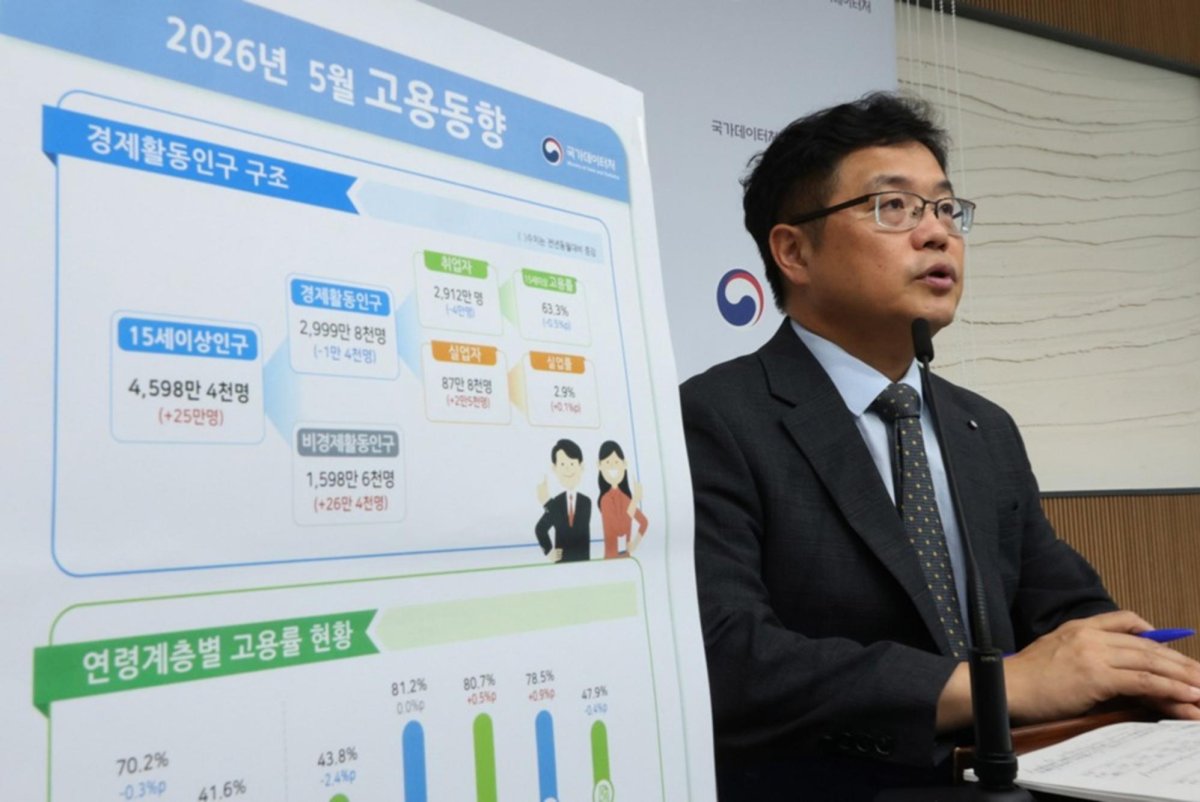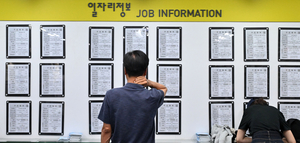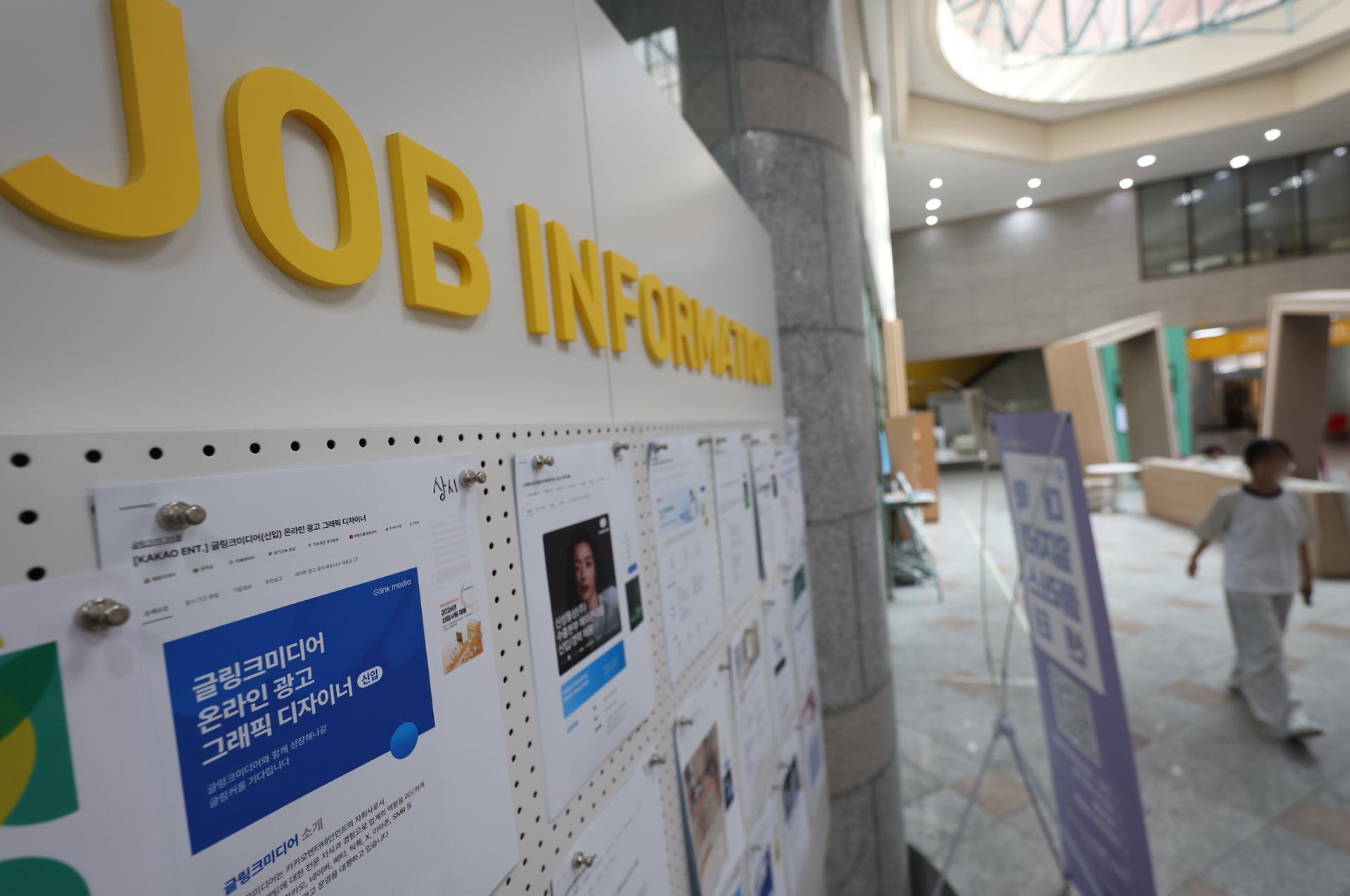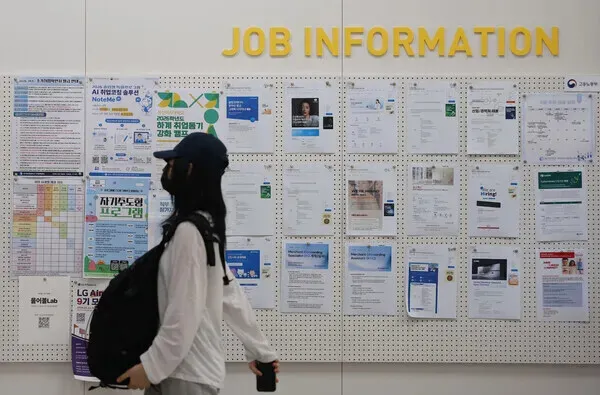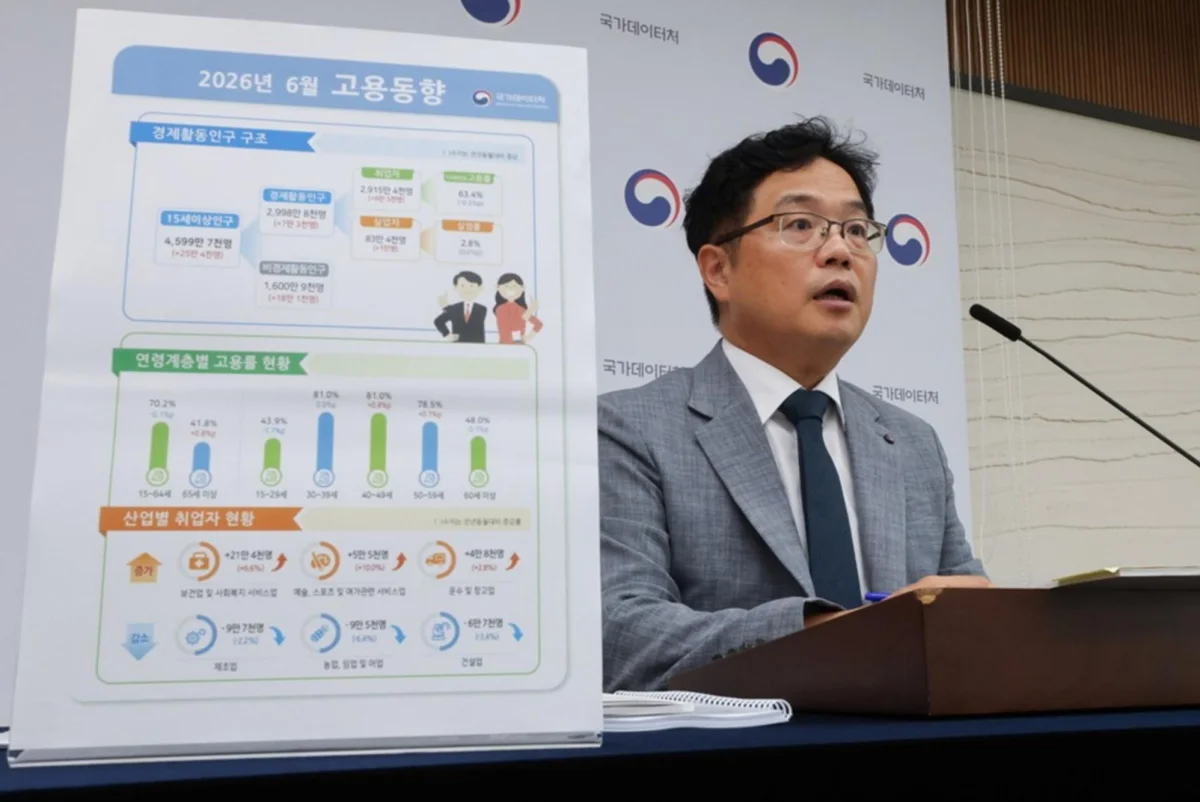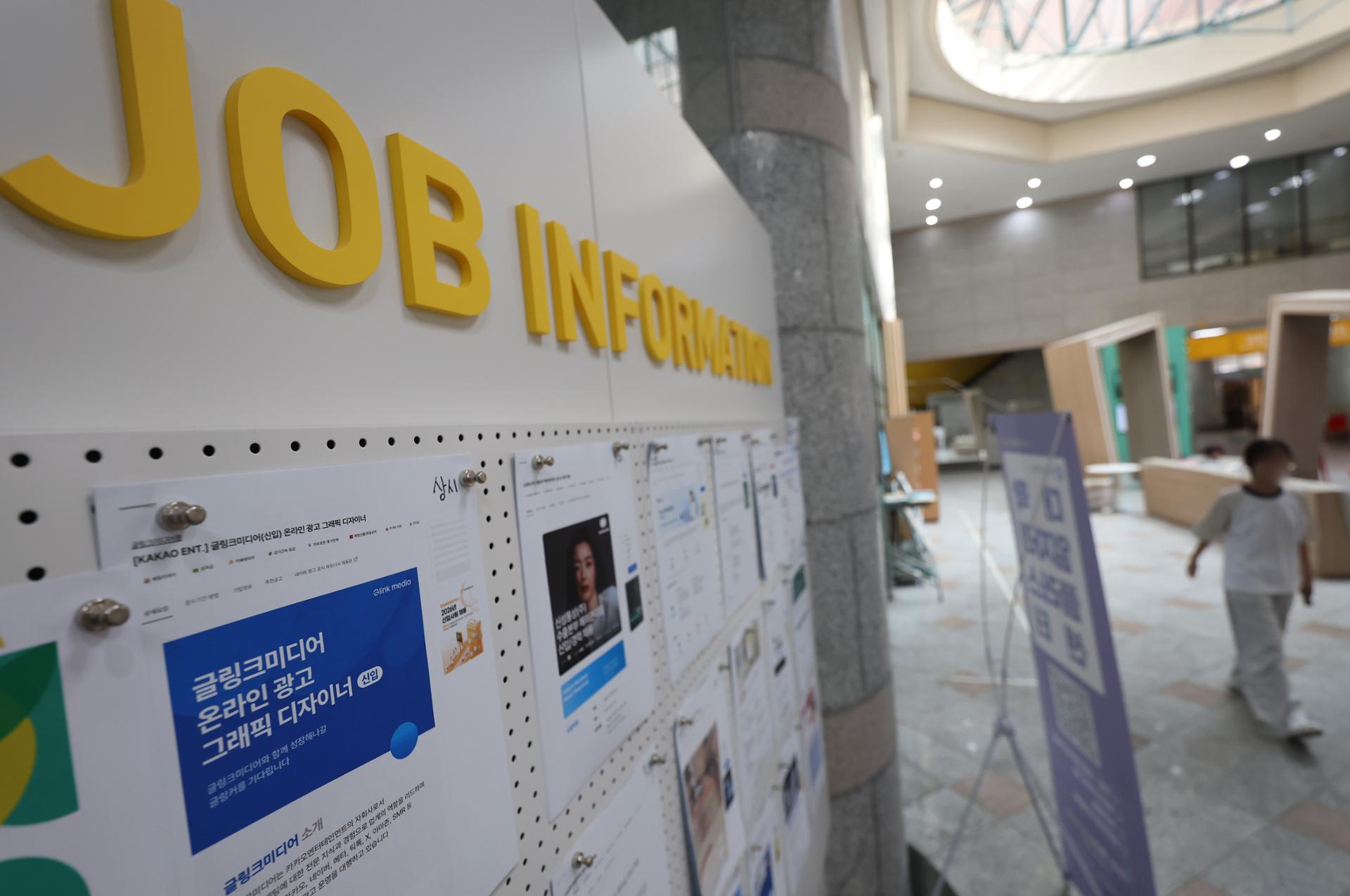
A bulletin board for job postings at a university in Seoul is shown in this June 11 photo. The employment rate fell in May for the first time in 17 months, according to the Ministry of Data and Statistics, Thursday. The number of employed people stood at 29.12 million in May, 40,000 less than the same period in 2025. YonhapDespite the rally of semiconductor-led exports and the nation's bourses, the country's employment rate declined in May for the first time in 17 months, according to the Ministry of Data and Statistics. The number of employed people stood at 29.12 million, 40,000 less than the same period in 2025. Perhaps most chillingly, the number of employed youth aged 15 to 29 fell by 255,000 compared to a year earlier. Ministry figures also showed a decline in employment for people in their 40s, while it rose slightly among those in their 60s. The decline in the country's employment rate 17 months ago was attributed to the downturn caused by former President Yoon Seok Yul's martial law declaration in December 2024. This time, however, the employment rate dropped even as the Korean economy grew under President Lee Jae Myung's administration on the back of artificial intelligence (AI)-led investment and expansion.The stellar May export figures of $87.7 billion and early June export figures (from June 1-10) that soared 86 percent over the same period of the previous year, are not transforming into jobs, especially for young Koreans. The nominal gross domestic product (GDP) growth in the first quarter, the highest in 50 years, did little to ease employment challenges. Labor Minister Kim Young-hoon pointed to the war in the Middle East and its impact on the labor market. The government should look into the latest jobs figures with concern that the bright lights of the semiconductor-led economy may be hiding the reality of growth without employment, keeping them from properly addressing imminent issues with the country's unemployment rate and consequent social and economic gaps, due at least in part to AI-led development. While the government has been announcing a series of related policies, recruiting new hires who will form the backbone of the country's labor and economic future ultimately falls to companies.The decline in employment levels for younger Koreans has also affected asset ownership, reflecting a wider gap between those in their 20s and 30s with older generations. The Bank of Korea announced that the portion of those in their 20s and 30s belonging in the lower 20 percentile range in net assets and income rose twofold in five years, from 7.9 percent in 2020 to 5. 2 percent in 2025.It is important that the expected anger and fear not only of missing out but also being left out in the AI-led era among this age group is addressed. The potential loss of hope in a job that can provide sufficient compensation to support a family at the same time the asset-rich multiply their wealth is not what the nation wants for the younger generation. The president's approval rating fell to 57 percent in the wake of an incident during the June 3 local elections when there was a shortage of ballots at polling places across the country. Voters in their 20s and 30s have shown high civic awareness of both their right to vote and their right to protest. Their civic spirit is high, but if they continue to be discouraged in both political and the economic arenas, Lee's administrative pledge to make Korea a top AI competitor whose benefits are shared by all will ring hollow. The fear of joblessness and an overall grim future among young Koreans is palpable. Policymakers must help businesses boost employment, where as their preemptive policies to smoothly transition its workforce toward AI paradigm should be more thoughtfully planned and implemented.
[ED] Economic rally should support youth employment - The Korea Times
Despite the rally of semiconductor-led exports and the nation's bourses, the country's employment rate declined in May for the first time in 17 mon...
TL;DRAI
South Korea's employment fell in May (−40k, −255k youth) despite 86% export growth and 50-year GDP high. AI-driven economic expansion without job creation signals talent shortage risk and generational inequality—critical signals for tech leaders' hiring and governance strategy.
634 words~3 min read