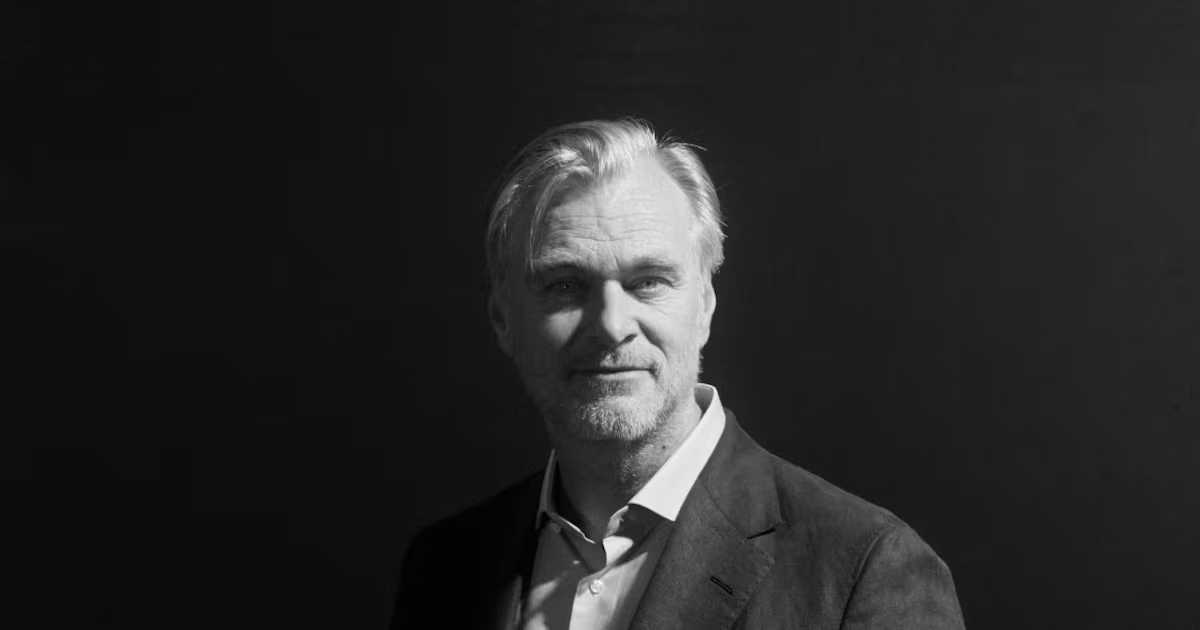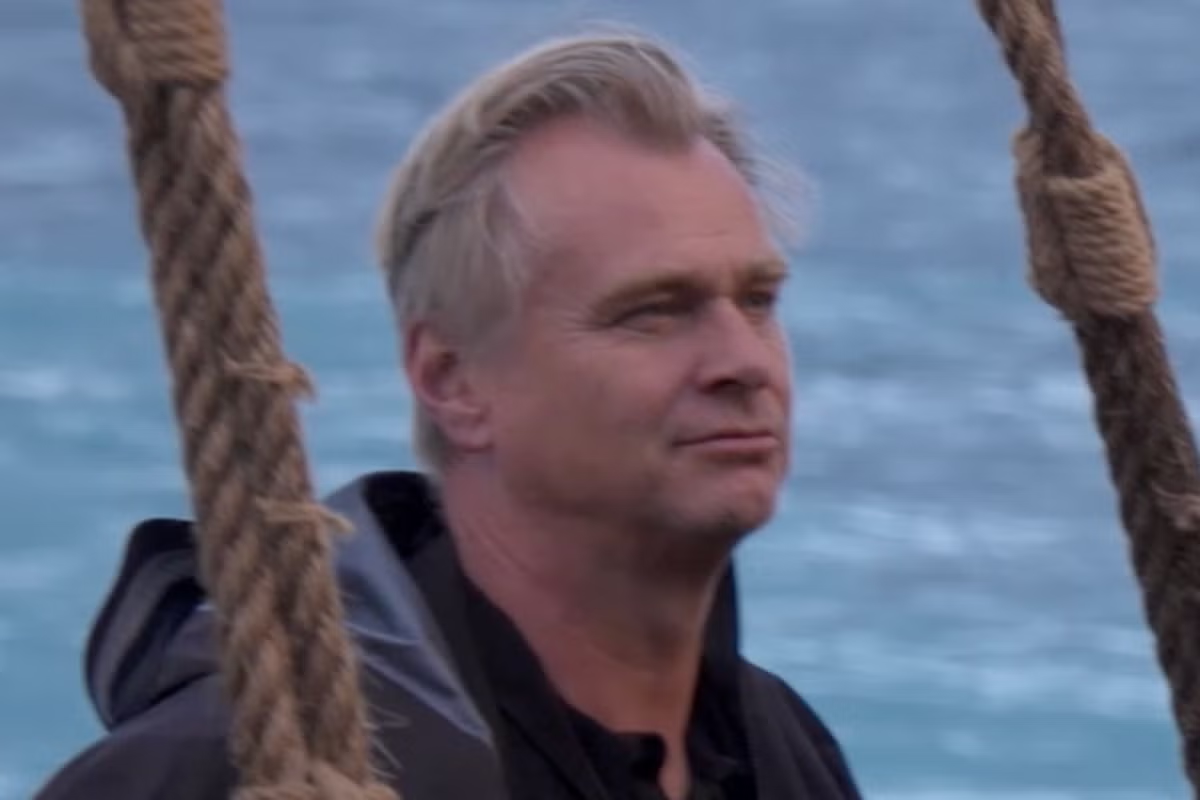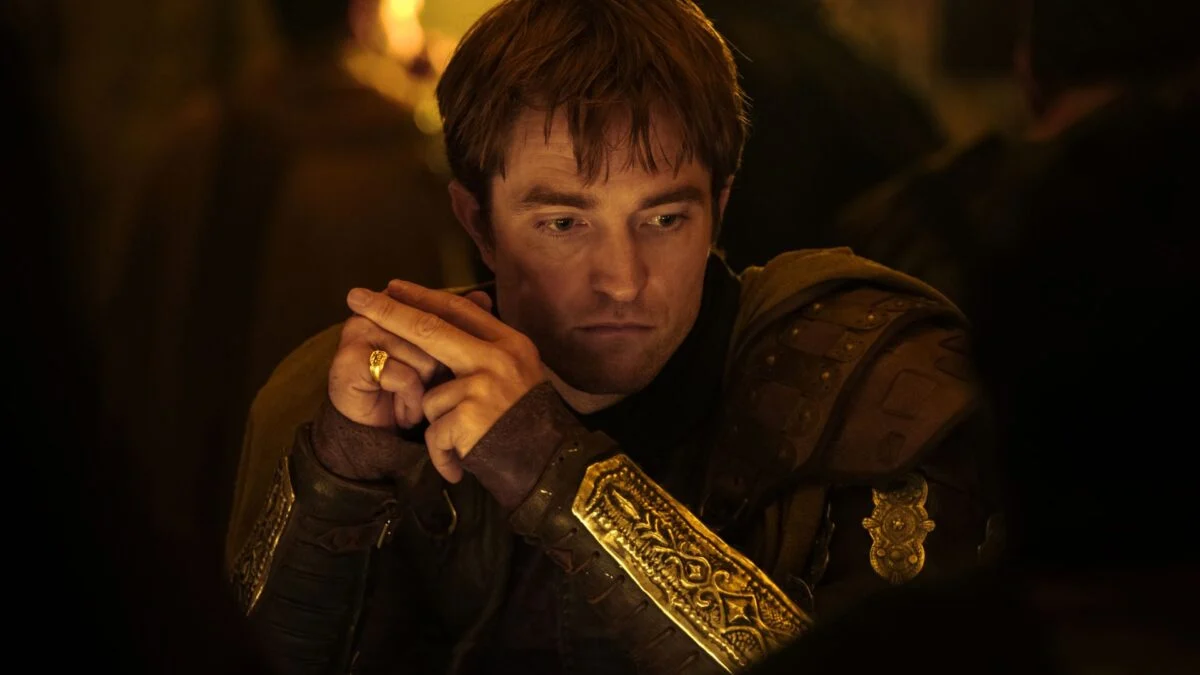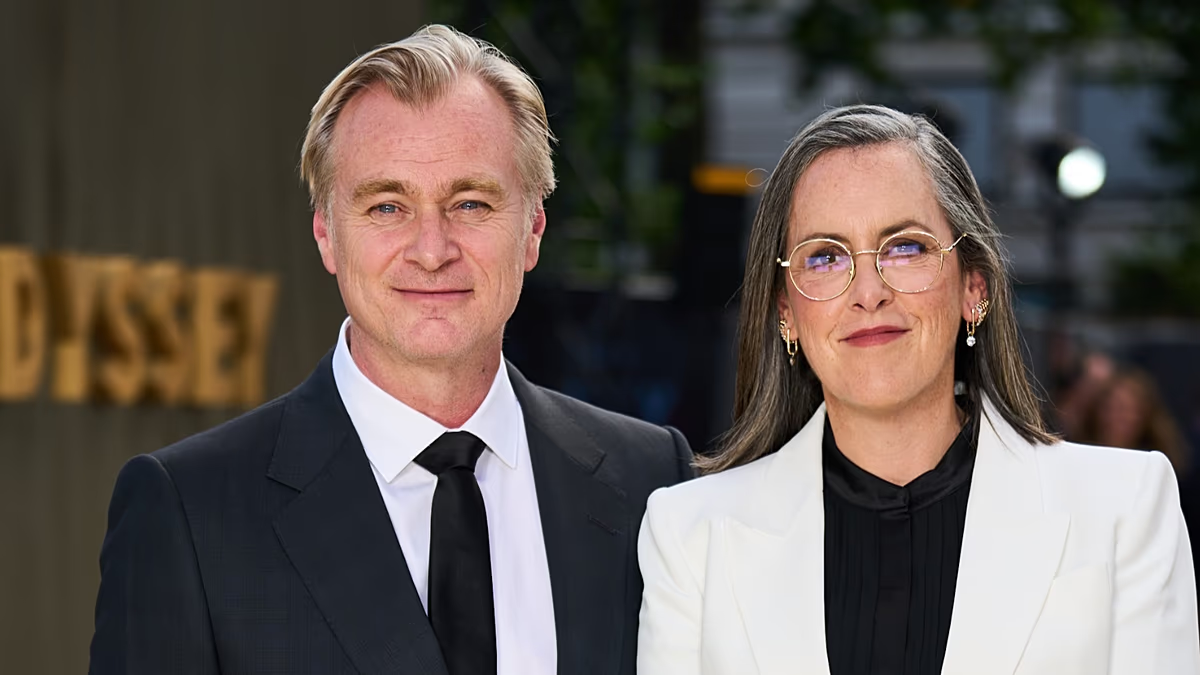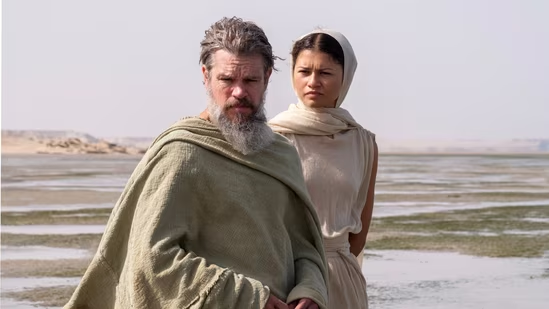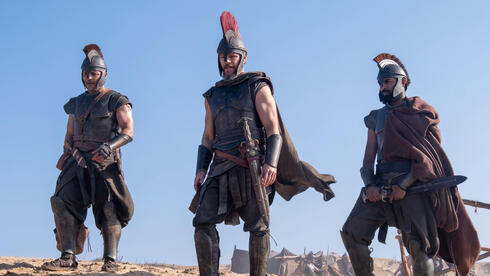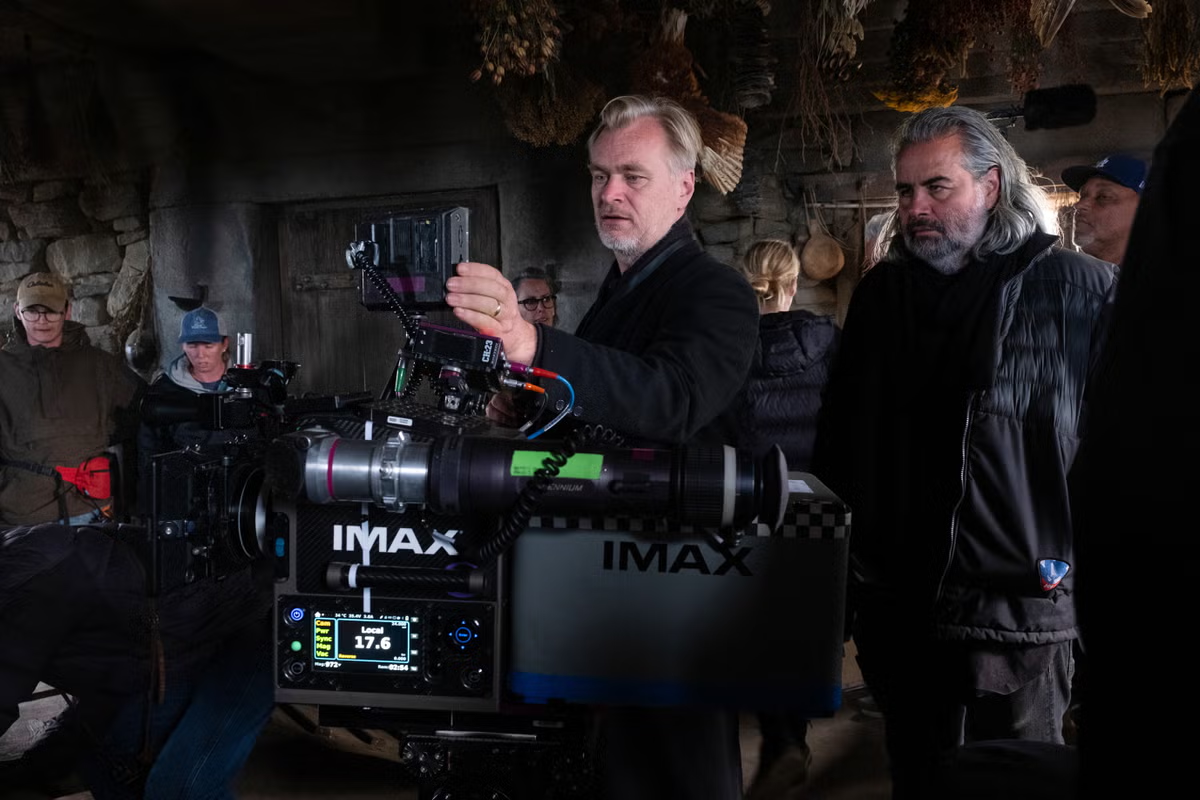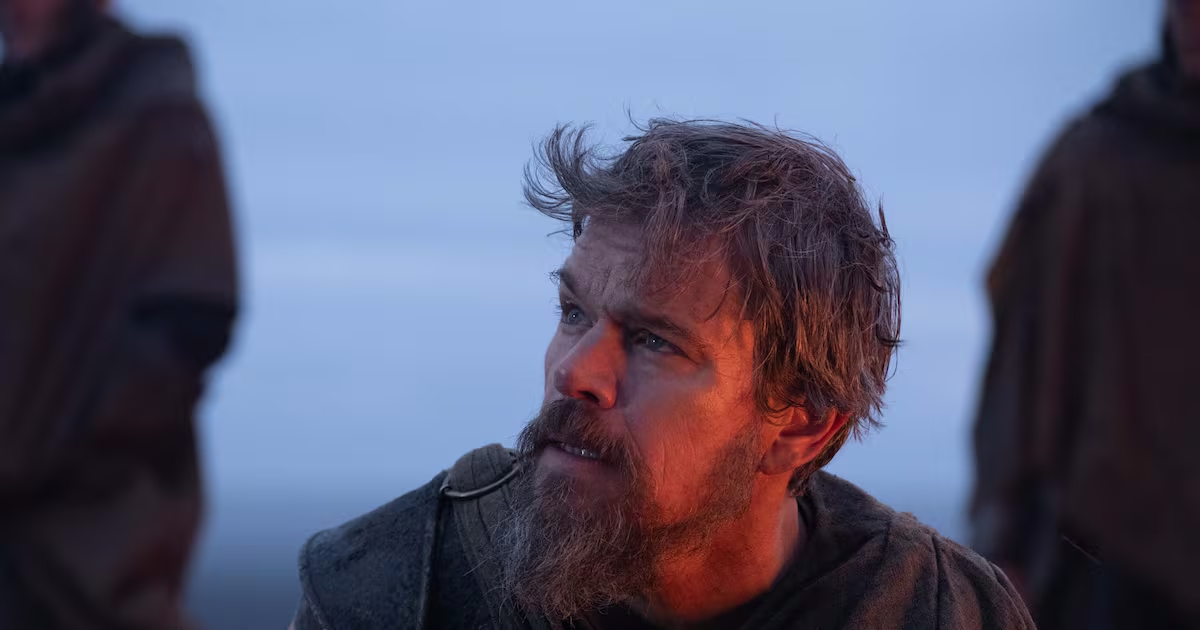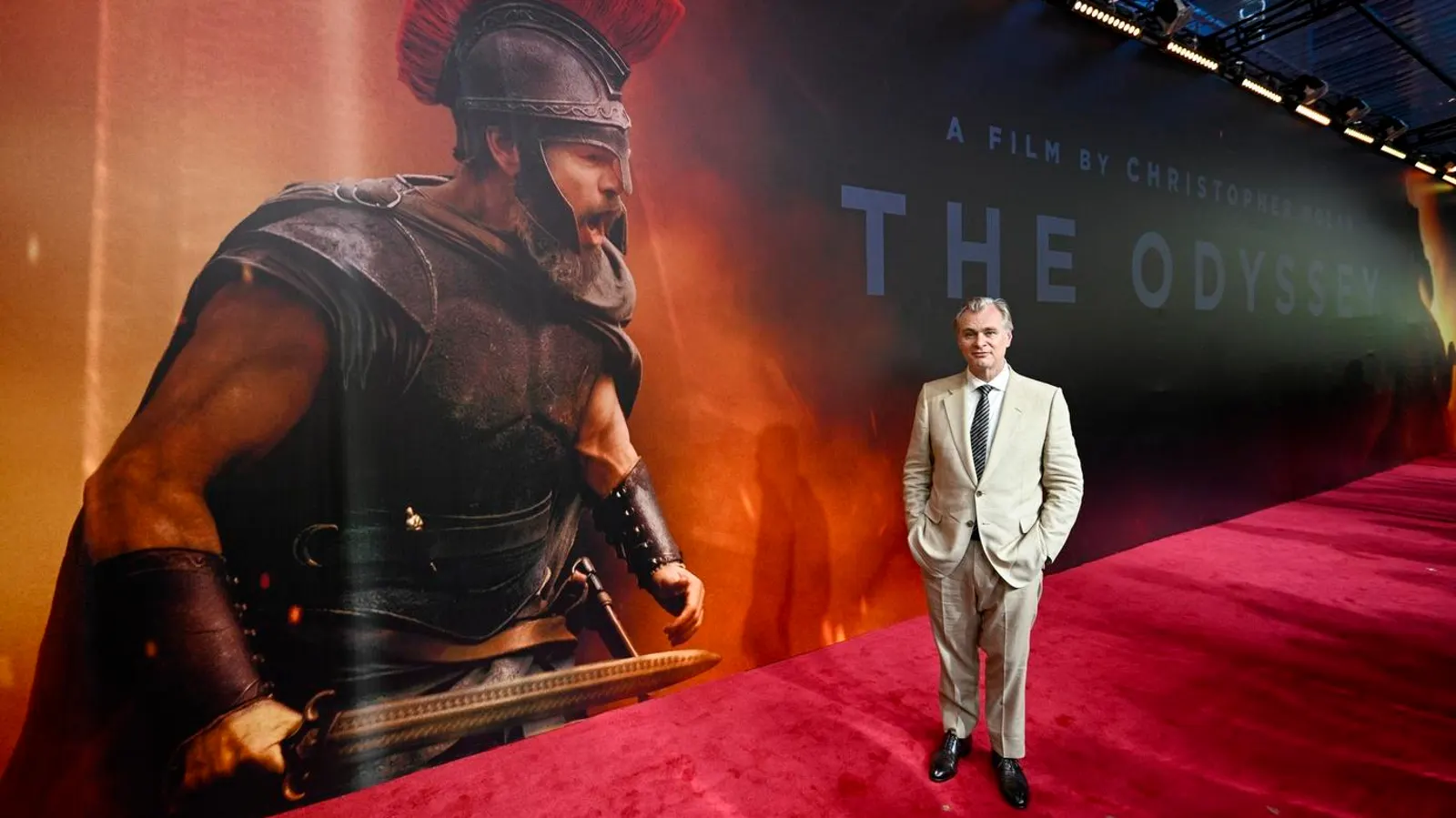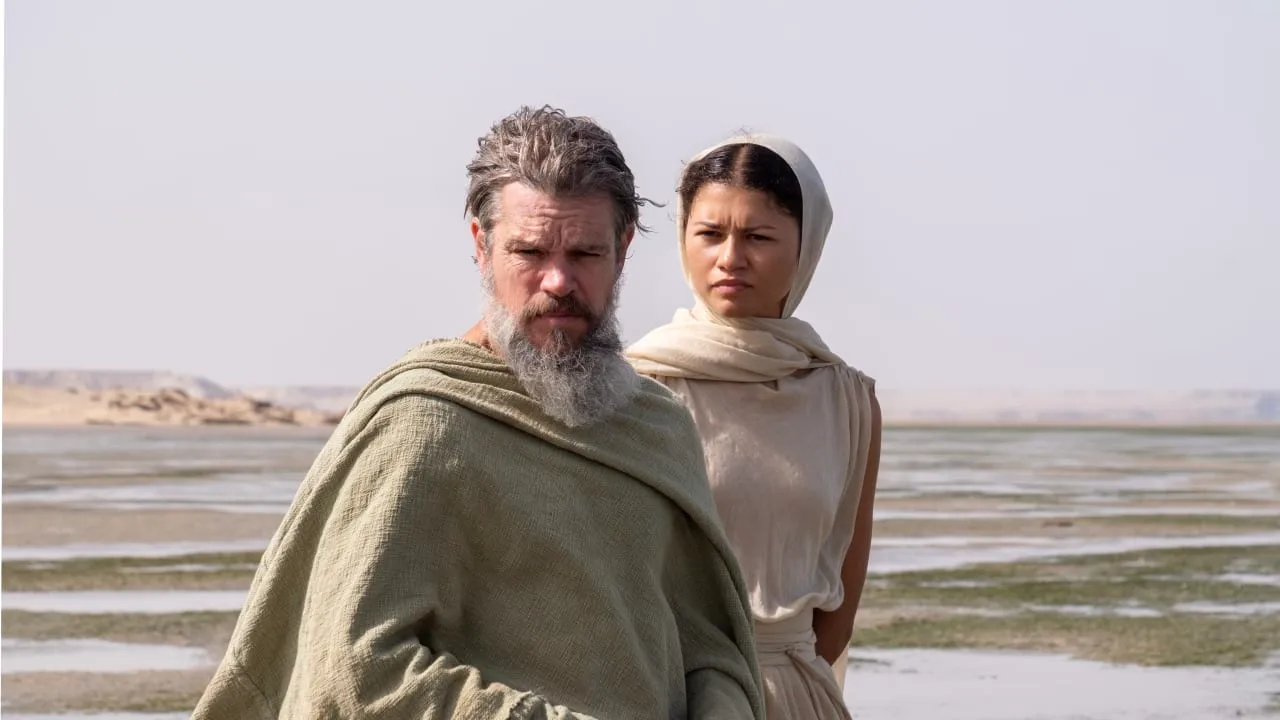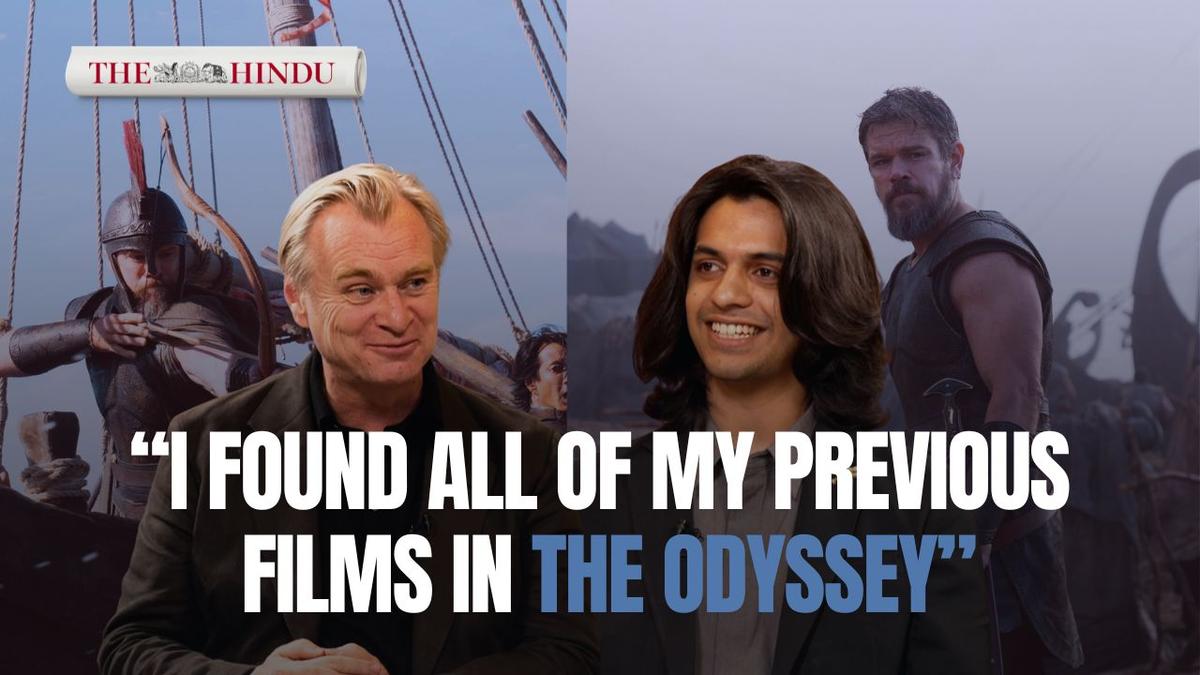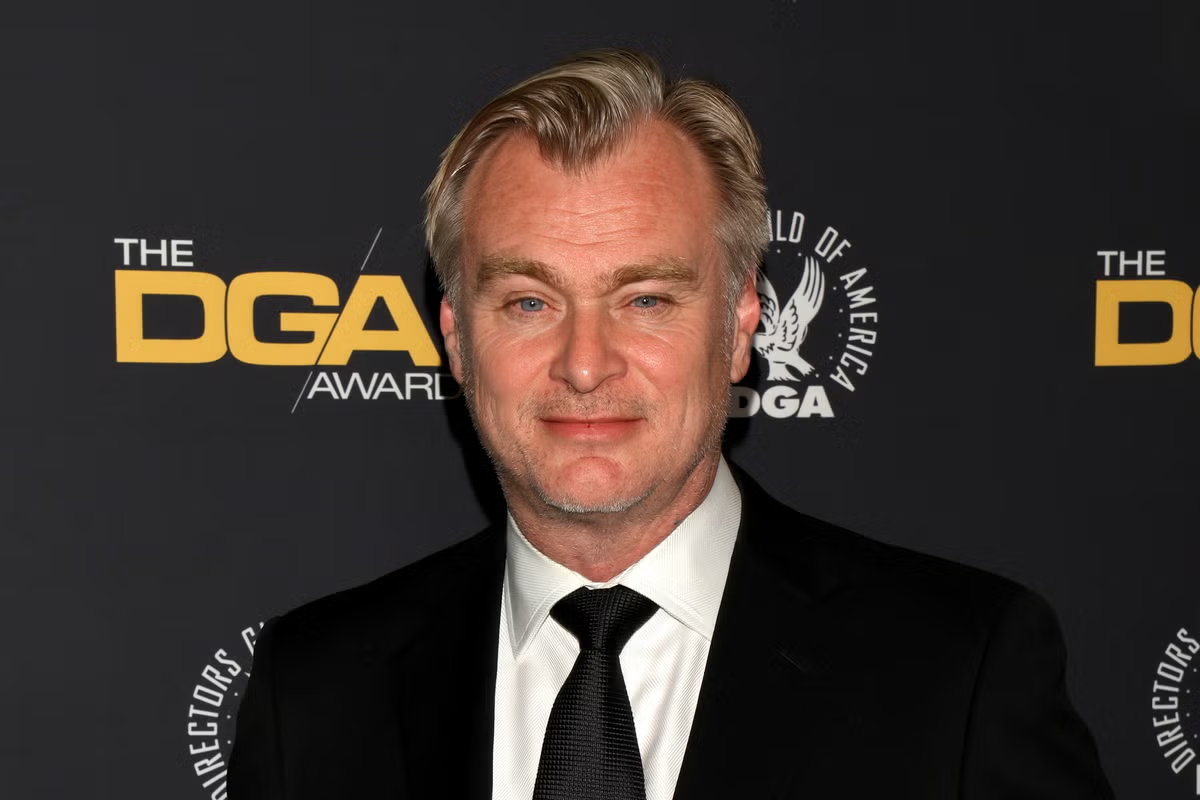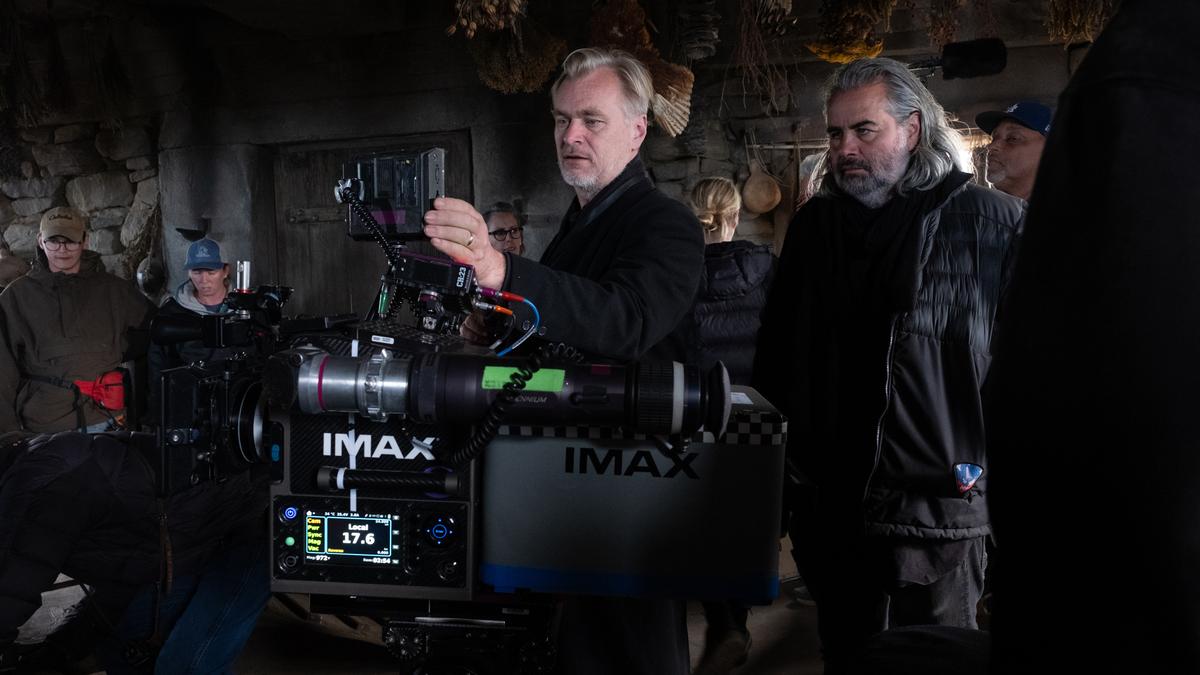
As if finding yourself in the same room as one of the most venerated filmmakers of the 21st Century was not daunting enough, no amount of mentally preparing to interview the Academy Award-winning mind behind Oppenheimer, Interstellar, Inception and several other contemporary cinematic landmarks could possibly brace you for how mesmerising Christopher Nolan’s steely blue eyes are up close. Once I finally snapped myself free from the spell of that impossible blue, it took a considerable amount of steadying the nerves to fully process the fact that I was sitting across from a childhood idol. My mind instinctively raced through the catalogue of wide-eyed cinematic wonder, every memory of witnessing his brand of movie magic on the biggest screen possible rushing back as though I were Cooper stumbling through the Tesseract itself. If only I could reach across that proverbial five-dimensional bookshelf and knock a single book loose, just enough to tell my teenage self that one day I’d be sitting across from the architect of those extraordinary worlds...But whatever improbable wrinkle in the space-time continuum finally indulged my early cinephilic fantasies, call it fate or qismat if you like, the acclaimed British-American filmmaker too seems to be wrestling with a similar sense of destiny through his long-awaited adaptation of Homer’s immortal homecoming epic, The Odyssey. The follow-up to his 2023 Best Picture winner Oppenheimer sees frequent collaborator Matt Damon stepping into the sandals of the battle-scarred Odysseus as he struggles to return home in the aftermath of the Trojan War, supported by a formidable ensemble that includes Tom Holland, Anne Hathaway, Robert Pattinson, Himesh Patel and several of contemporary Hollywood’s most recognisable faces. The Oscar-winning filmmaker was in Mumbai for his first-ever film premiere in India, along with Damon, Holland, and producer Emma Thomas, drawing droves of fans across the city during the Indian leg of the film’s global promotional tour last weekend. Ahead of The Odyssey‘s worldwide theatrical release this Friday, we discussed the formative influences that shaped his latest film, why the story felt like a culmination of his filmmaking journey, and how he continues to protect that first spark of cinephilic wonder while carrying the expectations of millions who now look to his work for that very same feeling.Excerpts:Welcome back to Mumbai. It’s been a minute since ‘Tenet’. Has your time here in the city so far brought back any memories since your last here?Christopher Nolan: Oh, very much. Just driving into the hotel from the airport, seeing some of the locations we shot at... the city’s changed a lot, but there’s so much that’s familiar. It’s such an amazing, vibrant place. It’s wonderful to be back here.‘The Odyssey’ is perhaps the most epic homecoming story ever told, and after finally getting to watch it yesterday, I was struck by how often your protagonists seem to be torn between this idea of a sense of duty and a yearning for home. Did finally getting to make it ever feel like this is what the Fates had in mind for you?Christopher Nolan: I mean, at the risk of sounding pompous, I think what you’re trying to get to as a filmmaker when you choose a project, you want to feel that there’s some kind of sense of destiny with that. You want to feel that your past and your past work has led you to the film you’re making. I think I felt that more on The Odyssey than any film I’ve made, partly because the story is a foundational literary epic of Western literature, and so in adapting it, I found all of my previous films. I found the homecoming narrative from Inception and Interstellar. I found the hero’s journey from the Dark Knight trilogy, the war story from Dunkirk. So much of what I’ve been doing in movies, in some way, comes from this story. So yeah, it did feel... It felt comfortable to me. It gave me confidence that I knew how to tell this story.While you’ve majorly credited Emily Wilson’s translation as your primary influence, I was wondering whether you had any fond memories of a particularly memorable English teacher or a professor, or even your mum, who I believe was also an English teacher at some point of time, who you would credit for stoking your first interest in ‘The Odyssey’Christopher Nolan: Well, I think one of my earliest memories of anything to do with The Odyssey is being at school at about — I think I was four or five years old — and seeing a play put on by the older kids, and it had aspects of Ulysses, as it was then called, being strapped to the masts to resist the Sirens. There was some version of the Trojan horse. I don’t remember much about it, it was a very long time ago, but that’s the first conscious memory I have of these story influences coming in. But like a lot of people in England and America, over time, through kids’ books, versions of The Odyssey itself, you absorb the things in the culture that have become kind of elemental. And then at school, studying the text for the first time and everything. But I actually found coming to the poem as an adult, with the view of adapting it for a screenplay — that was a very fresh experience for me, and I think like a lot of the audience, I wasn’t as familiar with it as I thought I was.I knew certain elements. I knew things like the Cyclops, or the Sirens, or these kinds of things. But reading the poem, it’s just this incredible adventure story, and I wasn’t that aware of the specifics of it. So trying to make a film that’ll work for somebody who’s really familiar with the story, and work for somebody who knows nothing about it, who’s just coming to it like any other film that you might only have seen a trailer or something.
Christopher Nolan interview on The Odyssey: Defying gods and protecting movie magic
Christopher Nolan speaks about his new movie, The Odyssey
1,893 words~9 min read