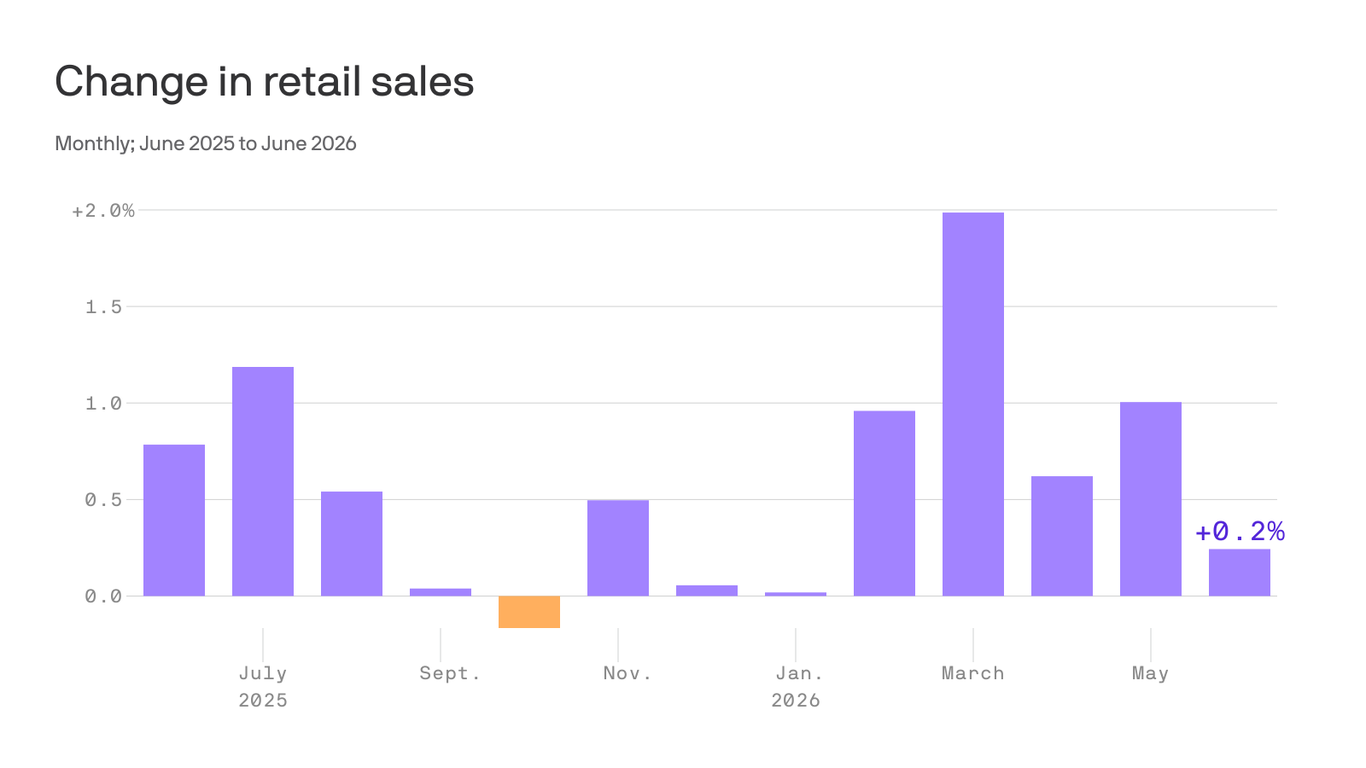
US retail and food services sales climbed in June, marking the fifth consecutive month of meaningful growth and delivering another round of data that suggests household spending is genuinely durable.
The headline number landed at a 1% gain for June, with the core measure excluding autos rising 0.7%. Inflation-adjusted retail sales increased 1.4%, which is the figure that actually matters. Nominal gains can be a mirage when prices are rising. Real gains mean people are buying more stuff, not just paying more for the same stuff.
What the numbers actually say
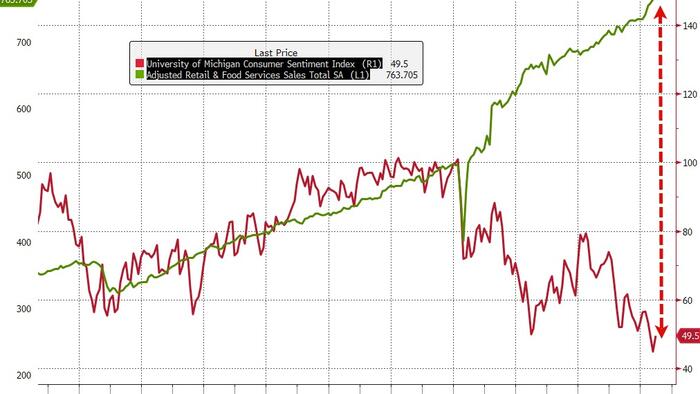
For context, May 2026 retail sales rose 0.9% month-over-month to $763.7 billion, beating forecasts that had penciled in a gain of just 0.5%. The pattern here is one of persistent upside surprises, which carries its own significance. When actual data keeps landing above economist estimates, it suggests the underlying models are anchored to a more pessimistic baseline than reality supports.
The National Retail Federation has forecast full-year 2026 retail sales growth of 4.4%, which would clear the 10-year average of 3.6% by a comfortable margin. Rising gasoline prices and shifting tax refund dynamics were flagged as headwinds in the broader spending environment, which makes the strength even more notable.