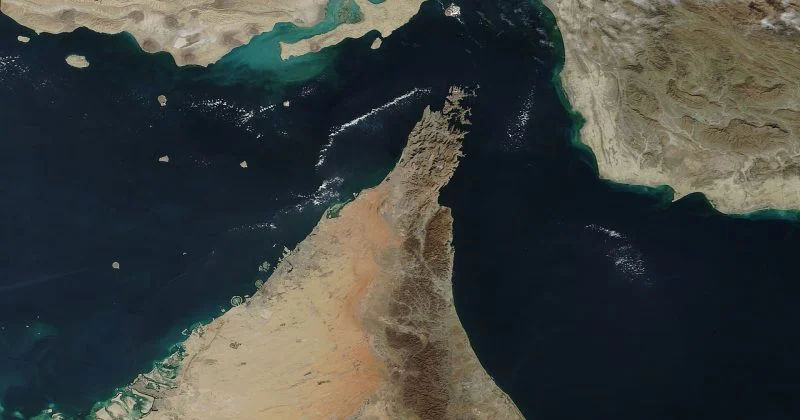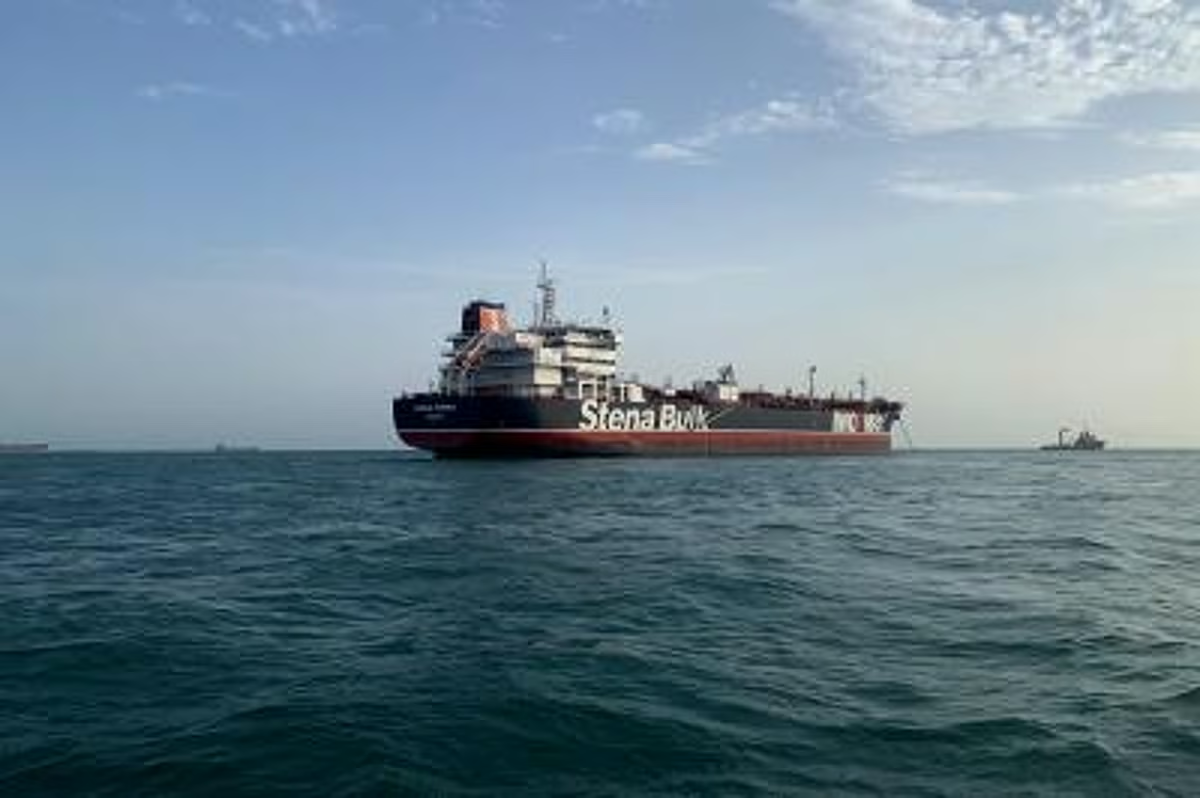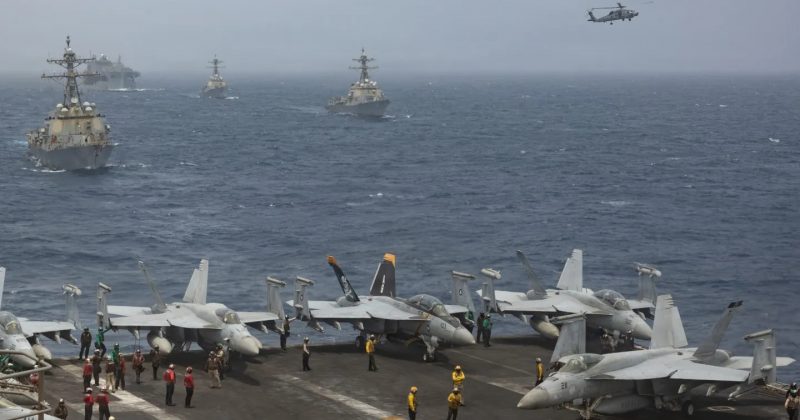
A proposed 20% charge on cargo passing through the Strait of Hormuz would violate the basic principles of international navigation, raise energy costs and undermine the stated purpose of restoring stability. It could also do more to accelerate the global energy transition than many conventional climate policies.Donald Trump’s proposal to charge ships 20% of the commercial value of cargo passing through the Strait of Hormuz is difficult to understand as an energy policy. The disruption of the strait has already driven up oil and gas prices, increased insurance premiums and forced governments to search for ways to restore normal trade. The apparent objective of months of military and diplomatic activity has been to reopen one of the world’s most important energy corridors and prevent a regional conflict from becoming a global economic crisis.Imposing a charge equivalent to one-fifth of the cargo’s value would achieve almost exactly the opposite. It would transform a temporary geopolitical disruption into a permanent structural cost, replacing the risk of an Iranian blockade with an American toll that could be just as damaging to energy markets. After spending enormous political, military and financial resources trying to preserve freedom of navigation, Washington would effectively begin charging the world for the freedom it claims to have restored.The idea is legally questionable, economically incoherent and strategically dangerous. From the perspective of the energy transition, however, it may be one of the most consequential policies the Trump administration has proposed.A Toll Measured in Hundreds of Millions Per DayBefore the conflict, approximately 21 million barrels of oil and petroleum products passed through the Strait of Hormuz each day. At an illustrative value of $70 per barrel, that represents cargo worth around $1.47 billion every day. Applying a 20% charge would therefore add approximately $294 million per day, or more than $107 billion annually, to oil shipments alone.The exact amount would fluctuate with prices and volumes. At $60 per barrel, the annual charge on oil would still approach $92 billion. At $80, it would exceed $122 billion. These figures exclude roughly 10 billion cubic feet of LNG that passed through the strait each day before the disruption, primarily from Qatar. Valued at a relatively conservative $10 per million British thermal units, the proposed charge on LNG would add another $7.5 billion annually.The resulting levy on oil and gas could therefore approach $115 billion per year under fairly moderate assumptions, before including petrochemicals, fertilizers, containerized goods and other commercial cargo. This would not be a conventional shipping toll based on the cost of providing a service or maintaining infrastructure. It would be an ad valorem charge on some of the most important commodity flows in the global economy.The comparison with climate policy is unavoidable. At the European Union’s recent carbon price levels, a charge of this magnitude would correspond to the annual cost of hundreds of millions of tonnes of carbon dioxide emissions. Yet unlike the European Emissions Trading System, the proceeds would apparently not be linked to decarbonisation, infrastructure investment or compensation for affected consumers. It would simply be the price of passing through a waterway that international law treats as open to transit.Replacing a Blockade With a TaxThe legal problem is unusually clear. Under the principles governing international straits, ships have a right of transit passage that bordering states should not obstruct. The International Maritime Organization has been explicit that there is no legal basis for a country to impose tolls, payments or discriminatory conditions on passage through an international strait.The United States is not itself a coastal state bordering Hormuz. Its claim to impose a charge would therefore be even more extraordinary than an attempt by Iran or Oman to levy one. Washington would effectively be asserting that military protection of an international shipping route creates a right to collect a percentage of the goods passing through it.That principle would have implications far beyond the Gulf. If naval protection creates a right to tax commercial cargo, other military powers could make similar claims around contested maritime routes. The distinction between securing freedom of navigation and monetizing control over navigation would become dangerously blurred.It would also make the entire intervention increasingly difficult to explain. The original justification for military action and naval deployments was that Iran could not be allowed to close or extort payment from an international waterway. Replacing an Iranian toll with an American one would make the conflict look less like a defence of free navigation and more like a dispute over who gets to collect the money.The Charge Would Not Stop at 20%Even if the charge were never implemented exactly as announced, the proposal itself could increase costs. Shipping companies, insurers and commodity traders do not price only confirmed events; they price uncertainty. A waterway subject to military confrontation, competing toll claims and rapidly changing access rules becomes more expensive long before the first invoice is issued.The direct 20% payment would therefore be only the beginning. War-risk insurance premiums would remain elevated, while shipowners could demand additional compensation for crews and vessels entering the region. Financing costs would increase because cargoes exposed to possible seizure, delayed payment or changing regulations would become riskier collateral. Traders would build larger margins into contracts, and buyers would seek supplies from routes not subject to arbitrary charges.For oil, some exports could be redirected through pipelines that bypass Hormuz, including routes connecting Saudi Arabia and the United Arab Emirates to terminals outside the Gulf. Those systems, however, have limited capacity and cannot replace the full volume normally passing through the strait. LNG faces even fewer alternatives because Qatar’s exports are overwhelmingly dependent on maritime access through Hormuz.The charge would therefore not merely transfer money from producers or traders to the United States. Much of it would eventually appear in higher prices for refiners, utilities, manufacturers and consumers. Producers would absorb part of the cost, shipping companies another part, but import-dependent economies would ultimately pay a substantial share.America’s Accidental Carbon Border TaxFrom a decarbonisation perspective, the proposal begins to look remarkably effective. Oil and LNG from the Gulf would immediately become less competitive relative to supplies that avoid the strait, while all fossil-fuel-consuming economies would receive a new incentive to reduce exposure to internationally traded hydrocarbons.Renewable electricity would not pay the Hormuz charge. Neither would nuclear power, domestic hydropower, batteries or energy-efficiency measures. Electric vehicles would become more attractive relative to combustion vehicles as oil costs rose, while heat pumps would offer greater protection against volatile LNG prices. Industrial electrification, renewable hydrogen and alternative feedstocks would gain value not because their underlying technology had suddenly changed, but because the geopolitical premium attached to fossil fuels had increased.This is precisely how a carbon price is supposed to function. It changes relative costs and encourages consumers and investors to move away from carbon-intensive energy. The proposed Hormuz charge would be far less rational and much more disruptive than a properly designed carbon tax, but its market signal could be stronger because it would arrive suddenly and affect an enormous volume of internationally traded energy.The administration has withdrawn from the Paris Agreement, constrained federal support for clean energy and attempted to halt wind projects. Yet those interventions may pale beside a policy capable of adding more than $100 billion annually to the cost of Gulf oil and gas. Climate policy advocates spent decades trying to make fossil fuels reflect more of their external costs. Trump may now achieve something similar by treating a strategic waterway as a revenue opportunity.The Fastest Route to Demand DestructionThe oil and gas industry can absorb moderate taxes when prices are high and production costs are low. A 20% charge on commercial value is different because it rises automatically with the value of the cargo. When oil prices increase, the absolute toll rises with them, reinforcing rather than moderating the shock.This creates a potentially destructive feedback loop. Disruption raises oil prices, higher prices increase the toll, the toll makes shipments more expensive, and greater uncertainty pushes insurance and financing costs higher still. Consumers then reduce demand, governments accelerate diversification and investors begin questioning whether new production dependent on Hormuz will remain commercially viable over its full operating life.Not every Gulf project would immediately become unprofitable. Saudi Arabia, Qatar and the United Arab Emirates possess some of the world’s lowest-cost hydrocarbon resources, and a portion of the charge could be passed on to consumers. Nevertheless, long-term investment decisions are based not only on extraction costs but also on market access, political stability and confidence in predictable trading rules. A permanent or recurring 20% levy would damage all three.The greatest effect might therefore be felt not in current production but in future capital allocation. Importing countries would have another reason to invest in domestic electricity generation and reduce fuel imports, while producers would face growing pressure to develop alternative export routes or diversify their economies. The measure would accelerate the very transition away from hydrocarbons that the administration claims to oppose.A Climate Policy Disguised as Energy DominanceThere is an obvious contradiction at the centre of the proposal. The United States has repeatedly presented lower oil prices as a strategic and economic objective. It has encouraged production, pressured exporters and argued that affordable energy is essential for controlling inflation. Charging 20% of the value of cargo crossing Hormuz would undermine that objective more directly than almost any renewable-energy mandate or conventional carbon tax.It would also expose the weakness of defining energy security primarily through military control of supply routes. A navy can escort tankers, clear mines and deter attacks, but it cannot make imported fossil fuels immune to political decisions. Once access to energy depends on a narrow maritime chokepoint, every new conflict, toll or insurance premium becomes part of the final price.Renewables offer a fundamentally different form of security because their fuel does not need to pass through a strait. Solar panels do not require naval escorts, and wind farms do not pay war-risk premiums. Their output varies, and their integration requires grids, storage and flexibility, but their operating costs are not determined by which government controls a shipping lane thousands of miles away.For that reason, supporters of the energy transition may eventually look back on the proposed Hormuz charge with unexpected gratitude. By making one of the world’s largest oil and gas corridors structurally more expensive, unpredictable and legally contested, the administration could accomplish more for renewable energy than many carefully designed climate programmes.Withdrawing from Paris and obstructing wind projects may slow the transition at the margins. Making a fifth of global oil shipments substantially more expensive could accelerate it at the centre. If the proposal is implemented, Donald Trump may inadvertently become one of the most effective carbon tax advocates the world has ever seen.By Leon Stille for Oilprice.comMore Top Reads From Oilprice.comU.S. LNG Exporter Reaps Windfall as Middle East Turmoil Drives Fees HigherOil Prices Jump After Iran Attacks Commercial VesselsUS Crude Oil, Product Inventories Fall Even As Hormuz Traffic Begins to Flow
Trump’s Hormuz Toll Could Upend Global Energy Trade | OilPrice.com
A proposed 20% U.S. toll on cargo transiting the Strait of Hormuz could add more than $100 billion a year to global oil and gas trade, driving up energy costs, inflation, and shipping expenses.
1,821 words~8 min read