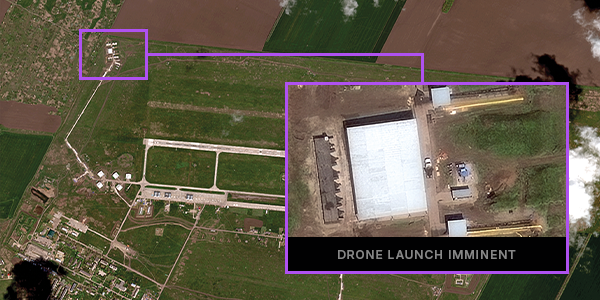
Europe stands at a defining moment for sovereign intelligence. The next disruption—whether driven by adversarial aggression, cyberattack, supply chain pressure, or natural disaster—will test more than the ability to collect information. It will test whether nations and coalitions can understand what is happening in real time, share that understanding securely, and act before conditions change.
That requirement is moving space-based intelligence from a specialized capability to a core element of national resilience. Satellites help governments monitor military activity, track threats across borders, support disaster response, and protect critical infrastructure. Paired with aerial systems and ground-based data, they can create a constantly updated view of the physical world.
But more sensors do not automatically produce more clarity. Across defense, security, logistics, and infrastructure, organizations are managing enormous volumes of data from systems that were not designed to work together. The result is a familiar gap: the data exists, but the operational picture does not.
Sovereignty depends on the system, not just the hardware
Many sovereign space strategies still begin at the sensor layer. The logic is understandable: if a nation owns the satellite, it controls the data. If it controls the data, it controls the outcome.