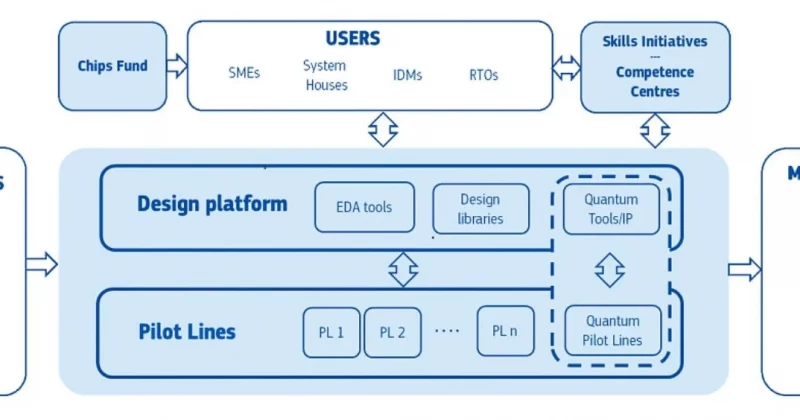
The European Commission just gave Germany the green light to pour €659 million in state aid into four new semiconductor facilities. The move is the latest in a growing stack of approvals under the European Chips Act, the EU’s grand plan to stop depending on Asia for the tiny silicon rectangles that power basically everything.
Europe’s chip strategy takes shape
The European Commission previously approved €920 million for an Infineon facility in Dresden, along with €76 million for QuantumDiamonds’ advanced testing equipment in Munich. On top of that, €288 million has been directed toward two separate supply-chain projects designed to reduce the EU’s dependence on non-European chip suppliers.
Germany has attracted well over a billion euros in semiconductor-related state aid since 2024. The country is positioning itself as the anchor of Europe’s chip manufacturing ambitions, leveraging its existing industrial base and companies like Infineon to build out production, research, and development capabilities.
The European Chips Act explicitly allows member states to provide financial aid for the establishment of first-of-a-kind semiconductor facilities, promoting local production capability.