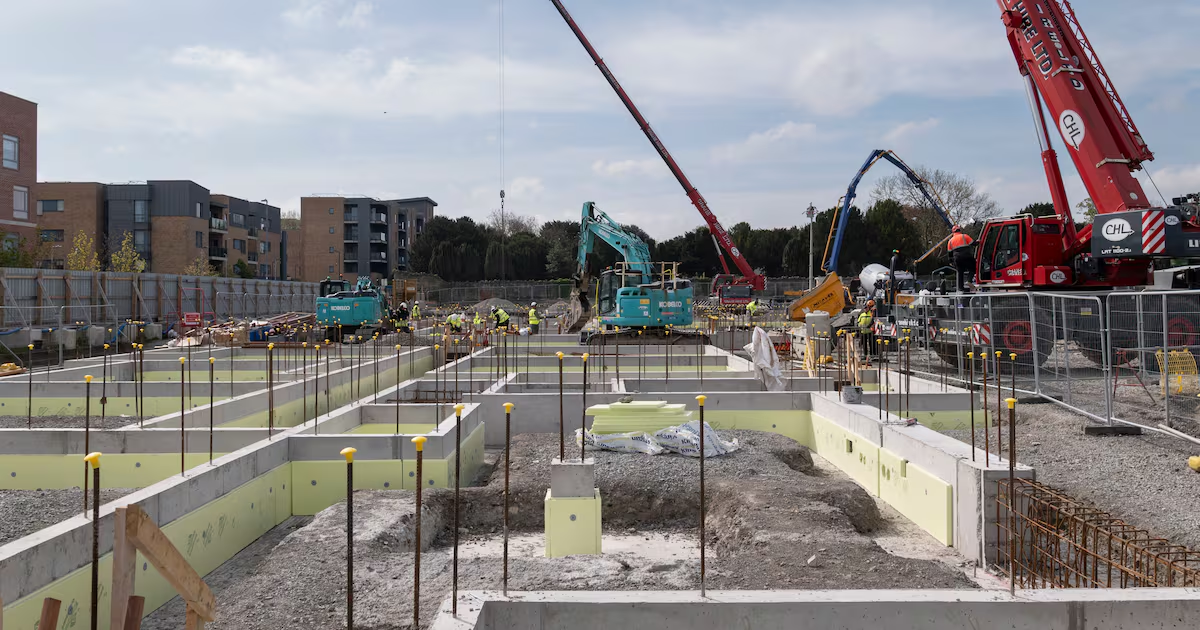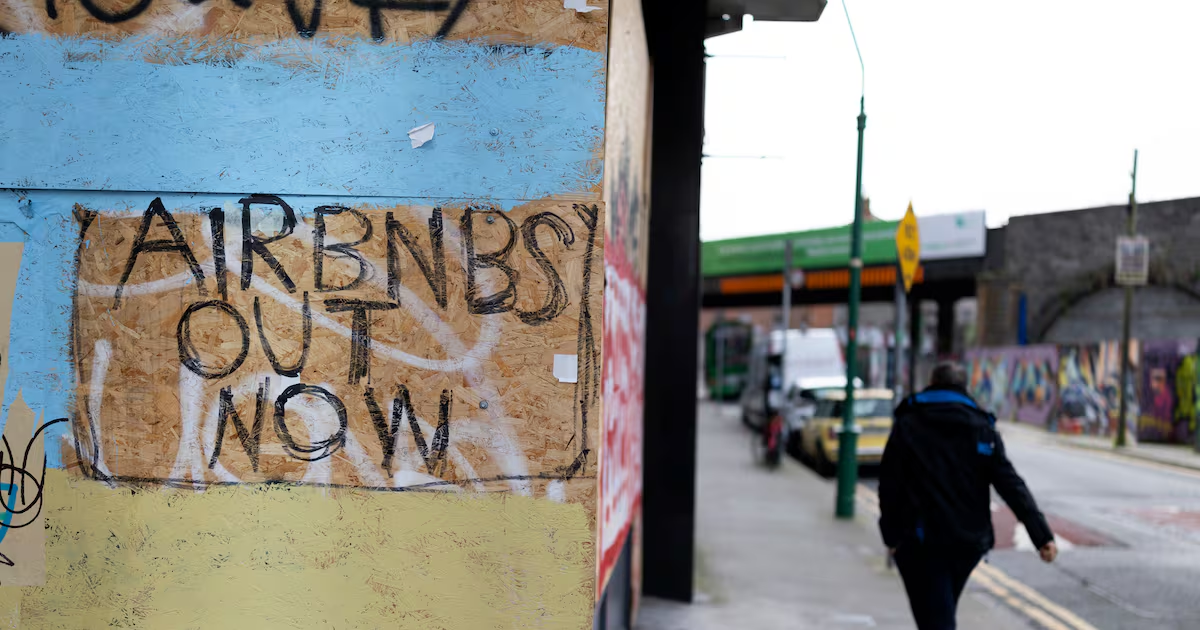
Cost rental is a form of intermediate housing introduced for households who earn too much to be eligible for social housing, but not enough to afford private rents. The Government wants to build 2,000 cost-rental units a year. It is used across Europe, most famously in Austria.But Ireland has been here before.In the 1920s, Dublin Corporation started building houses at scale for the working classes. These would be let at “economic rents”, meaning one that met all the costs of construction, maintenance and corporation loan repayments. Marino (1927) and Cabra East (1931), both on Dublin’s north side, are examples of “economic rent” housing.At the time, civil servants adopted an approach of lower standards for what they saw as the lower orders. “Halls, parlours, hot-water systems and back entrances” were “unnecessary luxuries for former slum dwellers”, they wrote to each other, Mary Daly recalls in The Buffer State: The Historical Roots of the Department of the Environment. (Considering that 80 per cent of cost-rental and social housing is sourced today from the private sector, the historical resonance was hard to ignore when, in 2025, the current Government removed balcony requirements, and weakened light, ventilation, space and other standards for new private housing developments.) In the 1920s, hot-water systems and bathrooms were omitted from some Marino housing but retrofitted two years later. Costs were still considered excessive, which would necessitate high economic rents.Rather than charging tenants high rents, the new houses were instead sold to council house applicants immediately when finished. The first residents of Marino and Cabra East were council-mortgaged homeowners from day one. My father, a civil servant, bought his first house from a council and got the mortgage from it too.The contemporary Irish version of economic rent – known these days as cost rental – is available to households with a net income of €66,000 or less in Dublin and €59,000 or less elsewhere. Monthly cost rents can be no more than 35 per cent of the household’s net income. Rents are set at the cost of construction and maintenance, but also at least 25 per cent below market rents. This arbitrary rule, which is not in the legislation, ties them to market fluctuations.There is no provision for covering costs if rents fall, which is an aim of the Government. This is despite the inconvenient fact that an increased supply of private rental accommodation depends on rents continually rising. In research published in April, the Economic and Social Research Institute found that cost rents are on average 30 per cent below market rents, at just under €1,500 per month. The Land Development Agency (LDA) charges €1,635 a month for a two-bed in Belmayne, Co Dublin. Dublin City Council intends to charge €1,695 cost rental for a two-bed in O’Devaney Gardens. Rents are reviewed every year using a formula linked to inflation.Although it can be difficult to compare across jurisdictions, in Vienna – where cost rental is available for everybody, not just lower-income households – the equivalent cost rent is about €700 a month. [ Why are rents in Ireland at record levels?Opens in new window ]In 2025, councils, the LDA and Approved Housing Bodies (AHBs), completed 2,347 cost rentals, one quarter of the total affordable housing delivery output. Councils built 247 of them. There are now 4,739 cost-rental tenancies nationally. As my research found with social housing, most AHB cost-rental properties were so-called turnkeys purchased from private developers, “further tying cost rental to the private market”, according to analysis by Prof Michelle Norris and colleagues in University College Dublin.In April, Ireland’s largest AHB, Clúid Housing, said it cannot provide an agreed 40 cost-rental units on Dublin City Council land in Cabra West due to rising costs, and specifically future maintenance costs.Back to Vienna, where about €42 per month (55c per sq m) is allocated for management and maintenance for a 75sq m apartment for the first 30 years, after which it rises to €150 (€2 per sq m). Simultaneously, the total monthly cost rent reduces significantly as the building’s original borrowings are repaid – so the €150 a month remains a small percentage of outgoings.In Ireland, that maintenance figure is typically 20-30 per cent of the monthly cost rent. The LDA allocates 40 per cent of its rents to cover management and maintenance. To put it another way, the portion set aside per unit for management and maintenance in Ireland is €300-€600 a month. Local authorities spent €150 per month per unit on maintaining their housing in 2024.[ Is the cost-rental housing model broken?Opens in new window ]If management and maintenance was charged at the Viennese rate, average cost rents would be around €1,000.High rents preclude households from being able to save and potentially buy their own home, meaning they could end up in a lifelong cost-rental trap. And later in life, when cost-rental tenants retire and are on a State or other pension paying a €1,500 rent on an income of €1,300 a month, they will need to be subsidised by the taxpayer through the Housing Assistance Payment scheme.There is an alternative. If the cost-rental model cannot be implemented properly, then why not do the logical thing – like Marino and Cabra – and allow potential tenants to purchase cost-rental properties?The monthly repayment on a 35-year, €300,000 mortgage from a retail bank is €1,171; on €350,000 it is €1,386. Both are less than the average cost rental, particularly the LDA’s. The Government’s Local Authority Loan Scheme has a maximum term of 30 years, which makes it more expensive: repayments on €300,000 are €1,440, and €1,680 on €350,000. As with the Affordable Purchase Scheme, the State could take a percentage equity stake in the property instead of a deposit. It could also limit any future sale to those on the affordable purchase waiting list or back to the council or AHB, which would ensure perpetual affordability.This would address several issues: lifelong security of tenure, as the tenants would now be homeowners; affordability on retirement, as the mortgage would be paid off; and immediate return of outlay for cost-rental providers, allowing them to build more. It would be a cost-saving investment in society, not a financial burden.[ Residents, not tourists, are the best way to re-energise our citiesOpens in new window ] Cost rental could have a role in addressing the Irish housing crisis, but not as we have done it. Pegging rents to the market, buying housing from the market, outsourcing management to the market and ensuring short repayment periods has made the Irish version very expensive. The State building and selling housing to citizens is not new or novel, but it has been very successful and would prove extremely popular.Lorcan Sirr is a senior lecturer in housing at Technological University Dublin
Lorcan Sirr: What Vienna and Marino can teach Ireland about making housing affordable
The lesson from Austria is that tenants here pay too much for cost rentals. But as the past examples of Marino and Cabra showed, there is a better solution
1,123 words~5 min read