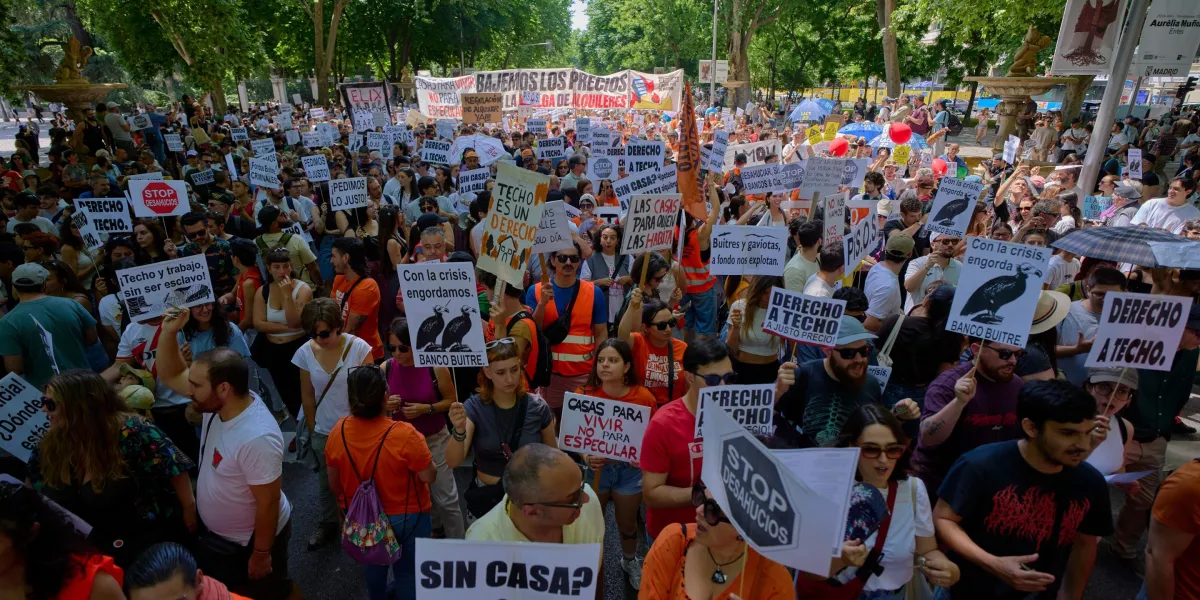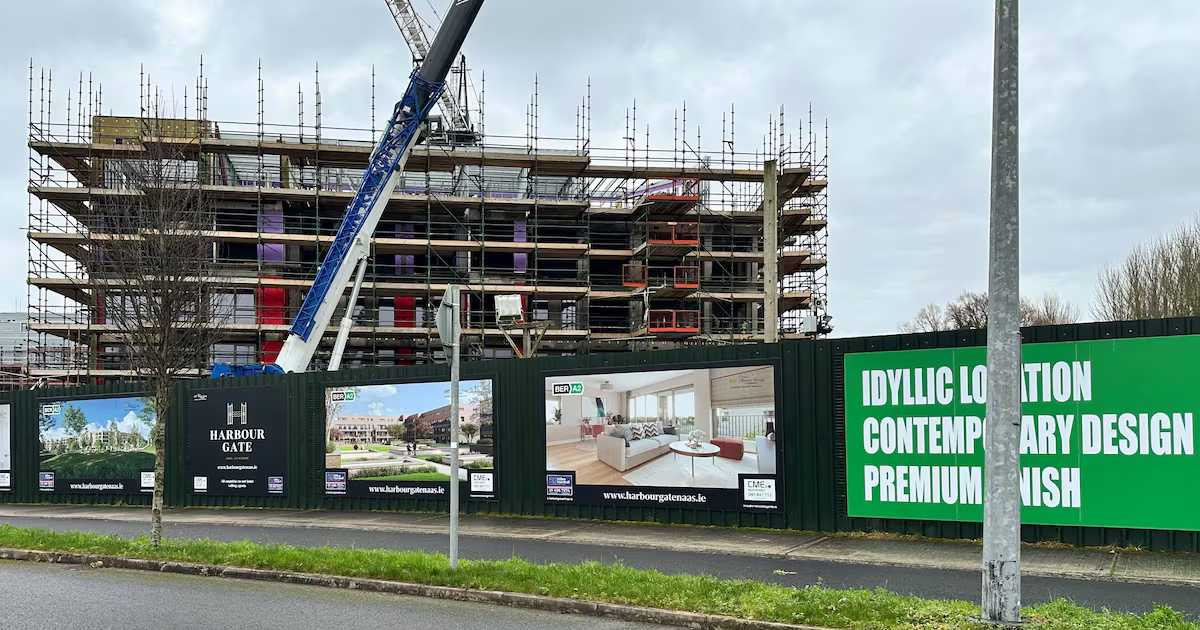
Ireland’s housing crisis is escalating. Rents rose 4.4 per cent in the first quarter alone, the same amount as the whole of last year. Rents are now 7.8 per cent higher than a year ago, 40 per cent above pre-Covid levels and a staggering 81 per cent higher than a decade ago. The latest Daft report, relating to new tenancies, shows the average monthly rent for a two-bedroom apartment stands at €2,176. Supply is critically low. On May 1st, across the entire country with a population heading towards 5.5 million, there were only 2,374 homes available to rent nationwide, down 4 per cent year-on-year and the third-lowest May figure since 2006. This year, despite the rising population, total listings are running at roughly half the 2015–2019 average when the population was 4.7 million. Today there are 700,000 more people living here than in 2016. There are simply too many people looking for not enough houses. The obvious long-term solution is to boost housebuilding (supply) and temper immigration (demand) until the system can cope with all the people looking for non-existent homes. Rather than focus on rent as the problem, rents should be seen as a sort of warning system, like coolant in a car engine. When the coolant light goes on, the engine is overheating. Similarly, rents are telling you that the system is overheating and the solution is not to try to adjust the rents - with subsidies to renters such as the Housing Assistance Payment (Hap) - but to fix the system. Unfortunately, the State is obsessed with the warning signs - rents or prices - because this is what people experience day to day and is politically immediate. A properly functioning administration would logically focus on balancing demand for homes to supply and make serious decisions on planning and immigration accordingly. There is no sign of such thinking. [ In the middle of a housing crisis, why are our town centres so empty?Opens in new window ]In the meantime, due to the dysfunctional nature of the housing market, changes to the way rents are set is a having profound effect. In recent months the transition to a new rent control system, which allows landlords to reset rents to market levels at the end of a tenancy, is pushing up prices dramatically as landlords adjust rents upwards to realign previously capped rents with the rapidly overheating market. Tenants are seeing significant overnight spikes in previously stable rents. This brings us to the issue of Airbnb in particular and short-term rental platforms in general, such as booking.com, trivago and other bespoke estate agents. The Irish Times reported earlier this year that there were now roughly four times more short-term lets than long-term rentals available in Ireland. The charity Threshold says more than 8,600 homes were advertised as short-term lets nationwide in March, compared with 2,100 homes listed on Daft.ie as private rentals. In the middle of an acute housing crisis, is it clever to have most housing stock set aside for Airbnbs and short-term rentals for tourists? [ David McWilliams on how social media giants are making billions from fake adsOpens in new window ]Despite mounting evidence of a conflict between Airbnb tourists and the average renter, the Government has done little to tackle this. Now the EU – also suffering from housing crises in its cities – has introduced short-term rental regulation, which has forced the Government’s hand. The resulting Short-Term Letting and Tourism Bill requires that every host letting a property for 21 nights or under to register with Revenue. It also bans any new planning permission for short-term let apartment blocks in towns with a population above 20,000 . Government figures suggest the regime could return about 10,000 properties to long-term use. Though, as always in Ireland, a six-month delay has been announced. Why? Political pressure, no doubt. Where might that pressure come from? To answer this question, we need to go a bit deeper into the numbers. Fáilte Ireland estimates there are roughly 30,000–32,000 short-term let properties across the State. This amounts to about 32,665 listings across 137,656 bed spaces, generating approximately €338 million in annual revenue for 21,257 unique hosts. When you break it down, it’s not surprising that most short-terms rents cluster in tourist hotspots, inner-city Dublin, Galway, and along the Wild Atlantic Way. Interestingly, the rural picture is dominated by Kerry. The Dingle Peninsula, Killarney and Kenmare account for more than 2,600 listings despite a combined population of under 30,000. Typically, who are these short-term rent landlords, big guys or small guys? Initially, Airbnb was marketed as someone offering a room in his or her place for a tourist, almost to couch-surf. That’s changed. These days the Airbnb market is split between lots of people renting out a single property and few renting out lots of property. Eight out of 10 hosts, or 17,009 people, are renting out one property, typically making a bit of income on the side. The remaining 20 per cent of hosts renting out multiple listings are running more of a business. And at the top, just 45 landlords control 8 per cent of all listings or 2,606 properties – that’s close to 60 properties each. In addition, 1,038 hosts account for 25.7 per cent of the market between them. There are two parallel markets: one for small, let’s call them part-time hosts, accounting for roughly 52 per cent of listings; and one for investors and commercial operators accounting for 48 per cent of all short-term lets. This latter group is disproportionately concentrated in tourist hot-spots and has the most to lose from any moves to limit the short-term rental market. It would be surprising if the foot-dragging in Ireland towards tightening the short-term rentals market is not related to lobbying by these bigger players, not least as many politicians are also landlords. [ Demolition of 52 partially completed Tipperary houses ‘unfathomable’, says developerOpens in new window ]In contrast, Barcelona has introduced the most aggressive legislation against short-term rentals. Over the past decade rents in the city rose 68 per cent and house prices 38 per cent. The city announced last year that it would strip licences from all 10,101 of its tourist apartments by November 2028, using a 2023 Catalan law focused on municipalities with a declared housing crisis. Spain’s Constitutional Court upheld the plan in March 2025, dismissing property rights challenges. Enforcement is unusually well-resourced with 70 dedicated staff, including inspectors and trackers. Listings are already trending downward. The rental problem in Ireland can’t be explained by the Airbnb effect alone; our inability to build at scale, after years of underbuilding following the crash, plus the significant surge in immigration, are the most significant reasons for the national rent squeeze. However, like Barcelona, specific areas and cities are impacted. Given that the State has targeted Dublin 1 as a priority for development and that residents not tourists give any city life, it might be a good idea to limit short-term lets in inner city Dublin as part of the overall regeneration package, giving the city a chance to re-energise itself with people living there and not just passing through.
David McWilliams: Residents, not tourists, are the best way to re-energise our cities
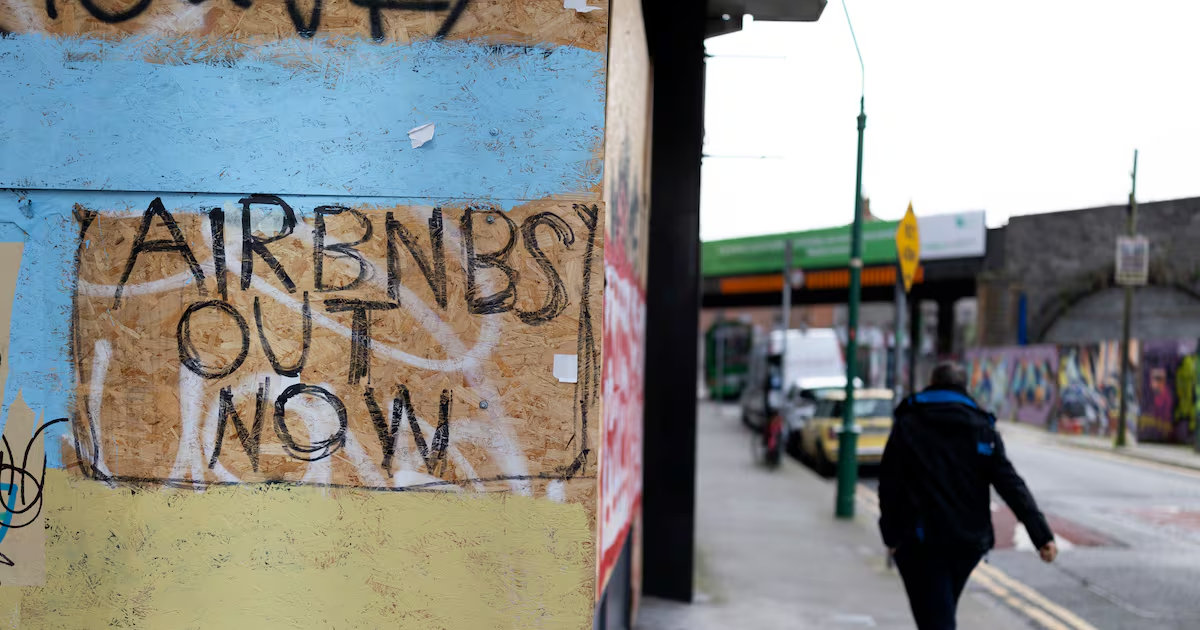
In the middle of an acute housing crisis, is it clever to have most housing stock set aside for Airbnbs and short-term rentals?
1,193 words~5 min read