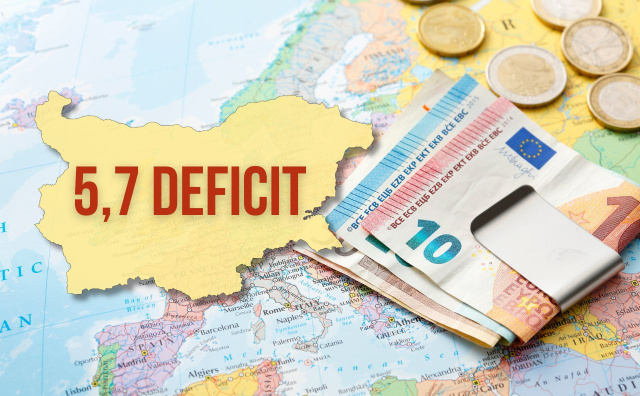
Bulgaria's record 5.7% deficit has launched a national search for a villain and three candidates dominate the conversation: Prime Minister Rumen Radev, the euro, and Brussels, but the timeline supports none of them. What it supports instead is a less satisfying conclusion, which is that the crisis was written into Bulgarian law over the past five years by nearly every political force in the country and the current government is simply the one in office now that the bill has arrived.
Rumen Radev's government has been in office for barely half a year, while the deterioration it presides over is measured in half a decade. According to the European Commission, the consolidated deficit rose from 3.0% of GDP in 2024 to 3.5% in 2025, and the Commission's spring forecast projected 4.1% for 2026 on unchanged policies, months before the current cabinet submitted anything to parliament. The Commission's language is unmistakable: spending on pensions and public sector wages has driven a persistent widening of the deficit since 2022, financed through short-term and ad hoc measures rather than structural ones. A deficit that has been building since 2022 cannot be the invention of a cabinet formed at the start of 2026.