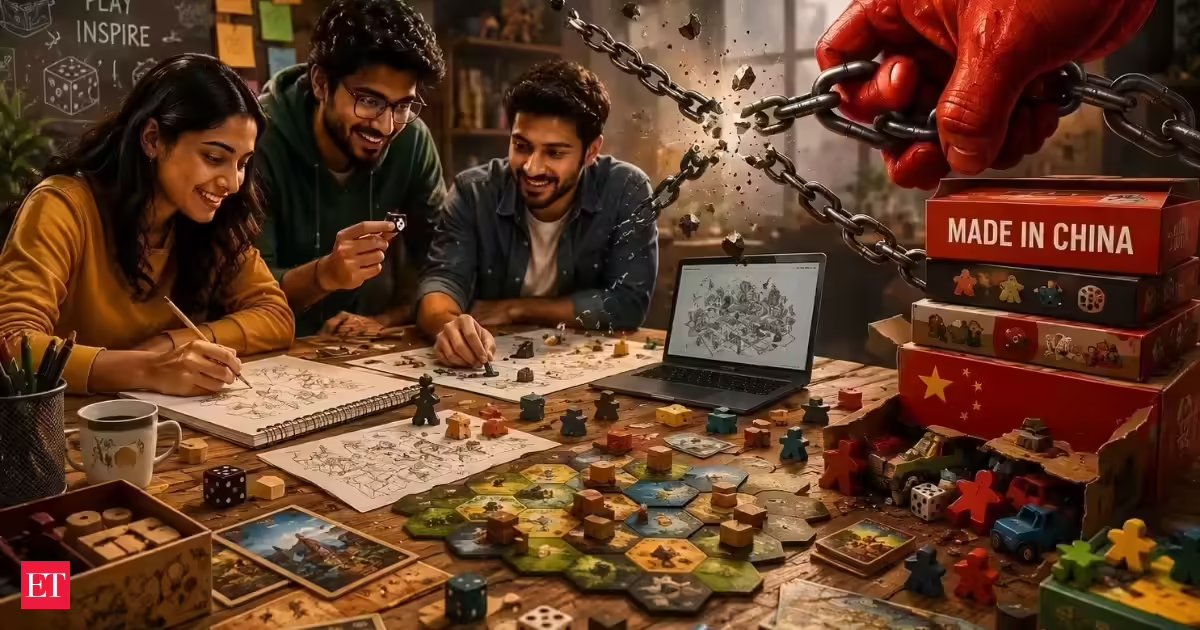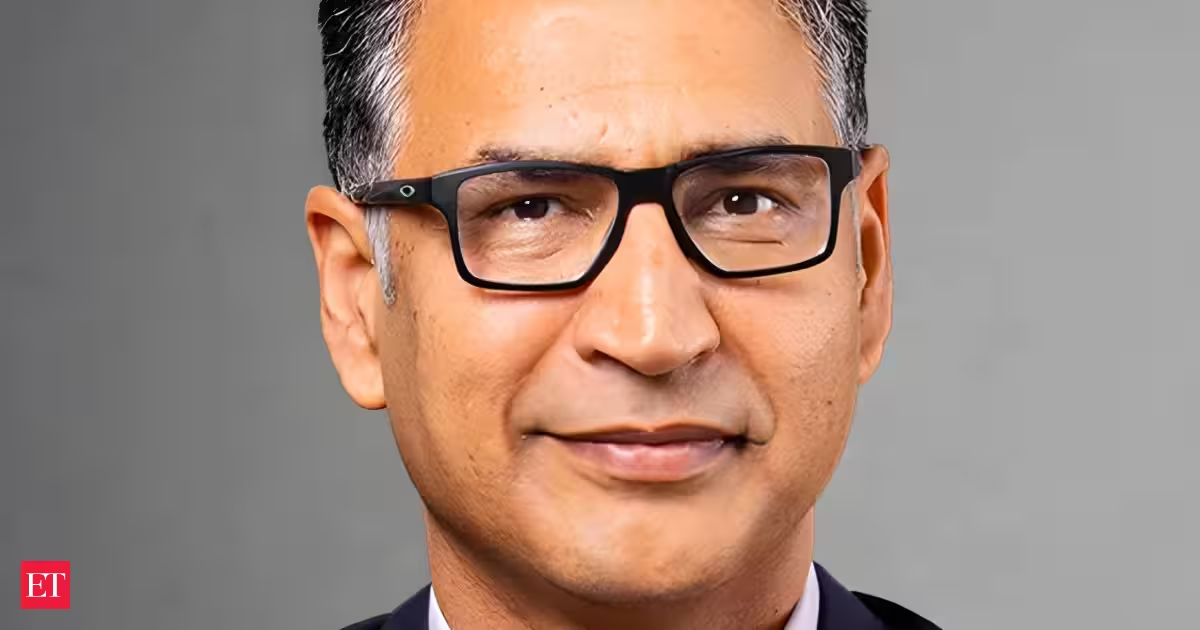
As childhoods shift from playgrounds to interactive touch screens, toy companies might have been expected to be among the first casualties. Instead, rising screen time is making Indian children buy more toys, according to a top executive of Mattel.For the world's second-largest toy maker, digital content is inspiring children to recreate the worlds they experience online, driving demand for everything from dolls and race cars to castles and collectables.“That shift in consumer behaviour, coupled with India's rising incomes and the world's largest child population, is making the country one of Mattel's most important long-term growth markets," Sanjay Luthra, global chief commercial officer, told ET in an exclusive interaction.Also Read: Indian toy market holds strong growth potential: China Toy Association ChairThe company sees India as a market where rising disposable incomes, rapid smartphone penetration and evolving retail infrastructure are converging to create a significant long-term opportunity.While the US remains Mattel's largest market, Luthra said India stands out for both its consumer potential and its role in the company's future supply chain.India's domestic toy market is projected to reach $5 billion by 2034."The Indian consumer is not much different," he said. "The play patterns are evolving the same way."What makes India unique, according to Luthra, is that it is "at its inflection point", with purchasing power and organised retail continuing to expand alongside one of the world's youngest populations.Mattel is also strengthening India as a manufacturing base, with products made here increasingly serving global markets.India's toy exports reached $186 million in FY26, with locally manufactured toys now shipped to 153 countries. On the other hand, toy imports have fallen by 71% since 2019."India is one of the key supply chain hubs for Mattel," Luthra said. "Whatever we manufacture here, we also take to the rest of the world."The maker of Barbie and Hot Wheels has identified a fundamental shift in how children play.According to Mattel, digital media and physical play have become complementary rather than competing forces. Instead of replacing toys, online storytelling is encouraging children to build entire worlds around the characters they watch."If earlier, a child had one Barbie doll, today she wants the castle, the horse, the cart and the pet she has seen in the stories online," Luthra said.Also Read: Free trade agreements to give major boost to toy exports: IndustryThis behavioural shift is also changing the lifecycle of a toy consumer. While children may be moving on to beauty, fashion and social media earlier than previous generations, Luthra said they are engaging more deeply with brands during that time before eventually returning to the category.That return is fuelling one of the fastest-growing segments in the toy industry–adult collectors. According to Mattel, adult fans and collectors now account for about 27% of the global toy market and are growing at 12-13% annually. Luthra expects India to mirror that trend as disposable incomes rise and organised retail continues to mature.This was seen with Barbie’s exclusive collaboration with Anita Dongre for a Diwali Barbie launched in 2024. “We wanted to sell it over a seven-month period, but we were sold out in two days," he said.The shift in consumer behaviour is also reshaping Mattel. Once primarily a toy maker, it is now positioning itself as an intellectual property and entertainment company, using films, YouTube content, live experiences and licensed consumer products to keep consumers engaged long after they leave the toy aisle."It's all about storytelling," Luthra said. The Barbie movie, he added, served as the blueprint for building brands that extend far beyond toys. The same strategy is now being replicated across franchises such as Hot Wheels through digital content like Let's Race and experiential events including the Hot Wheels Legends Tour.
Digital content is driving demand for physical toys in India, says Mattel
Rising screen time is surprisingly increasing toy purchases among Indian children. Digital content inspires children to recreate online worlds, boosting toy sales. India's growing incomes and young population make it a significant future market. Mattel is also strengthening India as a global manufacturing and supply chain hub. This shift positions Mattel as an intellectual property and entertainment company.
612 words~3 min read