in Film | July 13th, 2026 Leave a Comment
I admit, I sometimes pay a premium at a certain dinner theater chain with a lobby-slash-bar designed to look like classic indie video stores of yore. It’s not only the padded recliners and half-decent grub that keeps me coming back. Nope, it’s the rules. Printed on the menu are a list of disruptive behaviors that will get you unceremoniously tossed out—no refunds and no backsies.
I’ve never seen it happen. Given what people put down for tickets, dinner, drinks, and/or a babysitter, it’s unlikely many risk blowing the evening. But knowing that the theater takes silence seriously brings serious moviegoers peace of mind. What is a movie, after all, without the all-important dialogue, music, and sound cues?
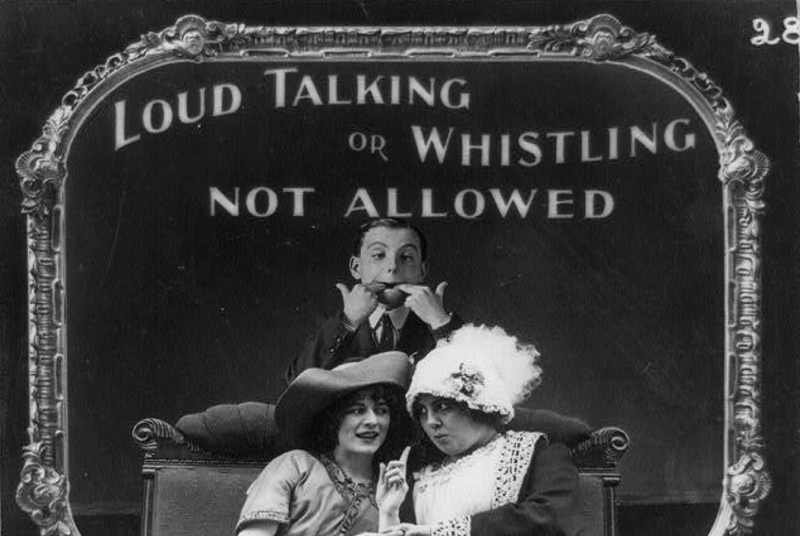
Well, it’s silent film. And even then, when movies were sound-tracked with live accompaniment and dialogue appeared on title cards, people worried very much about distractions. It just so happens that talking and texting (obviously) were the least of early audience’s concerns.
For one thing, the cinema was a place where classes, races, sexes, and ages “mixed much more freely than had been Victorian custom,” notes Rebecca Onion at Slate. There were the usual concerns about corruption of the “delicate sensibilities” of ladies.