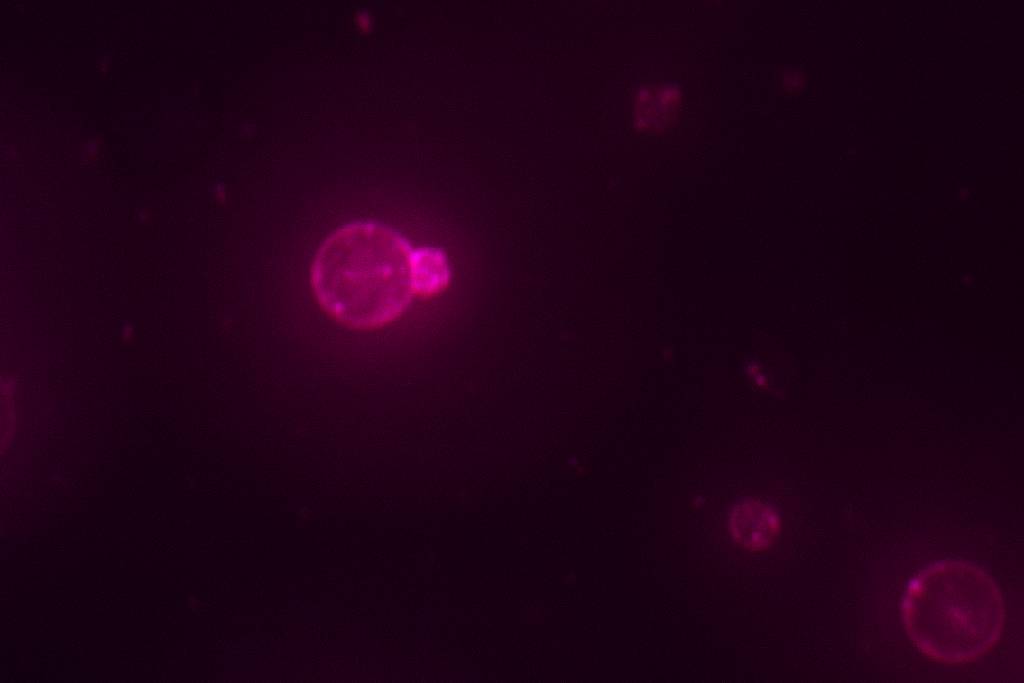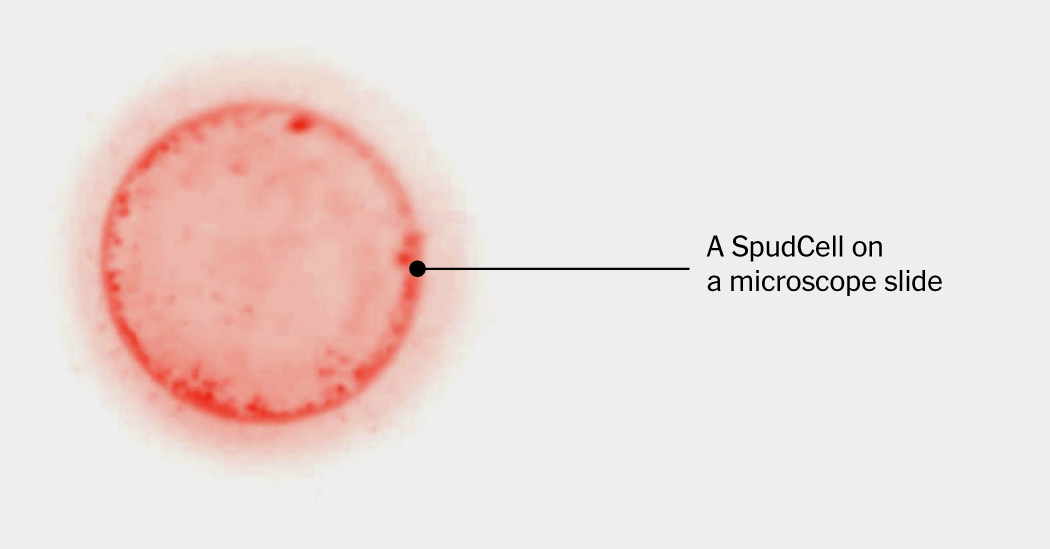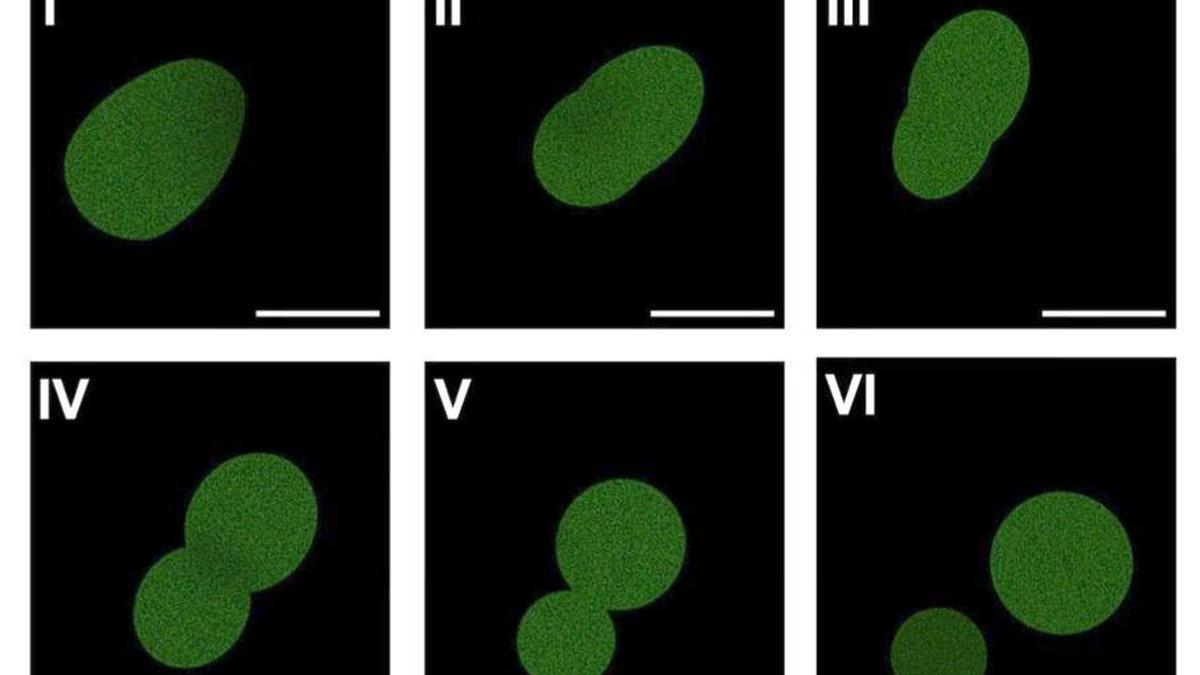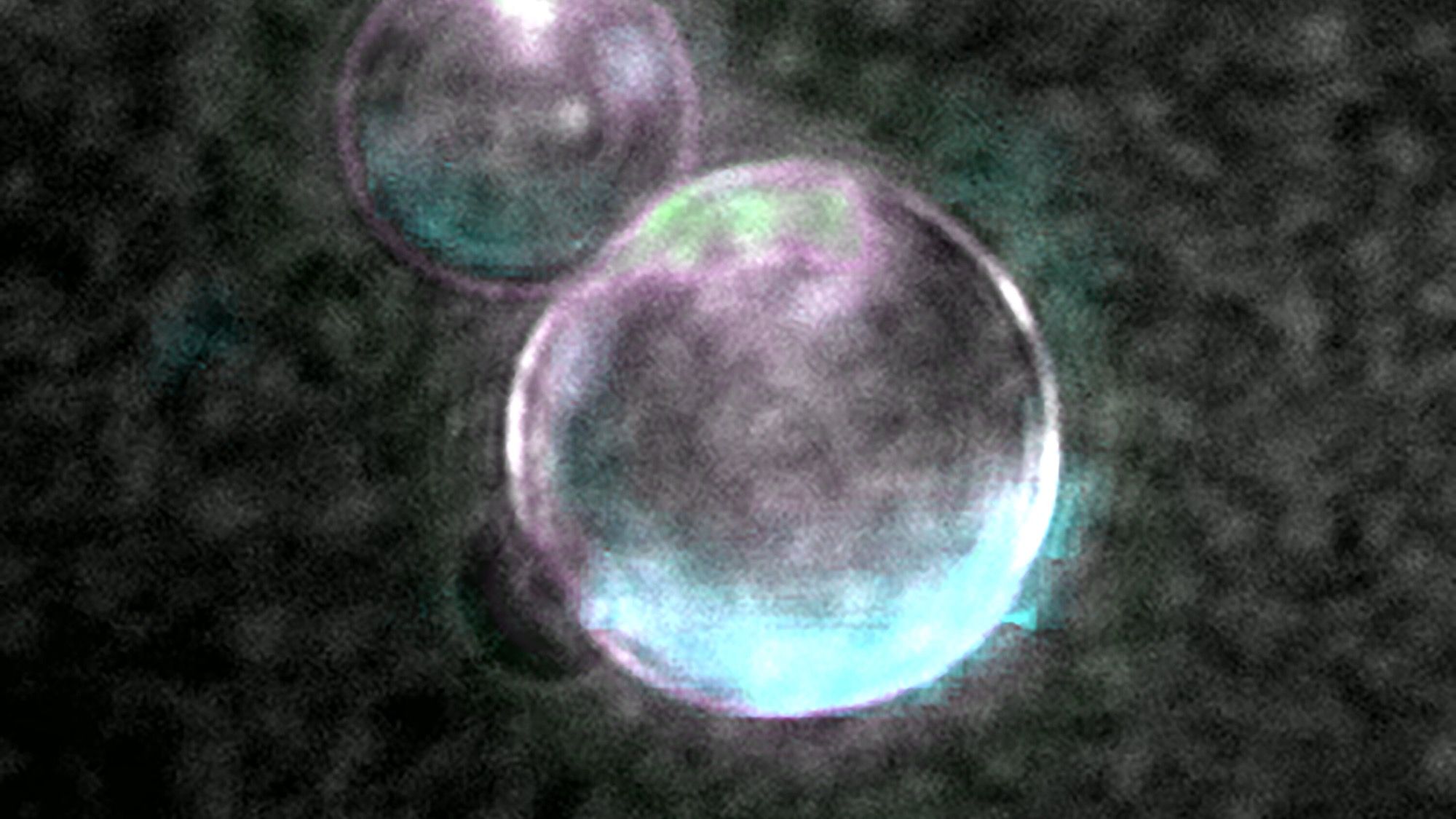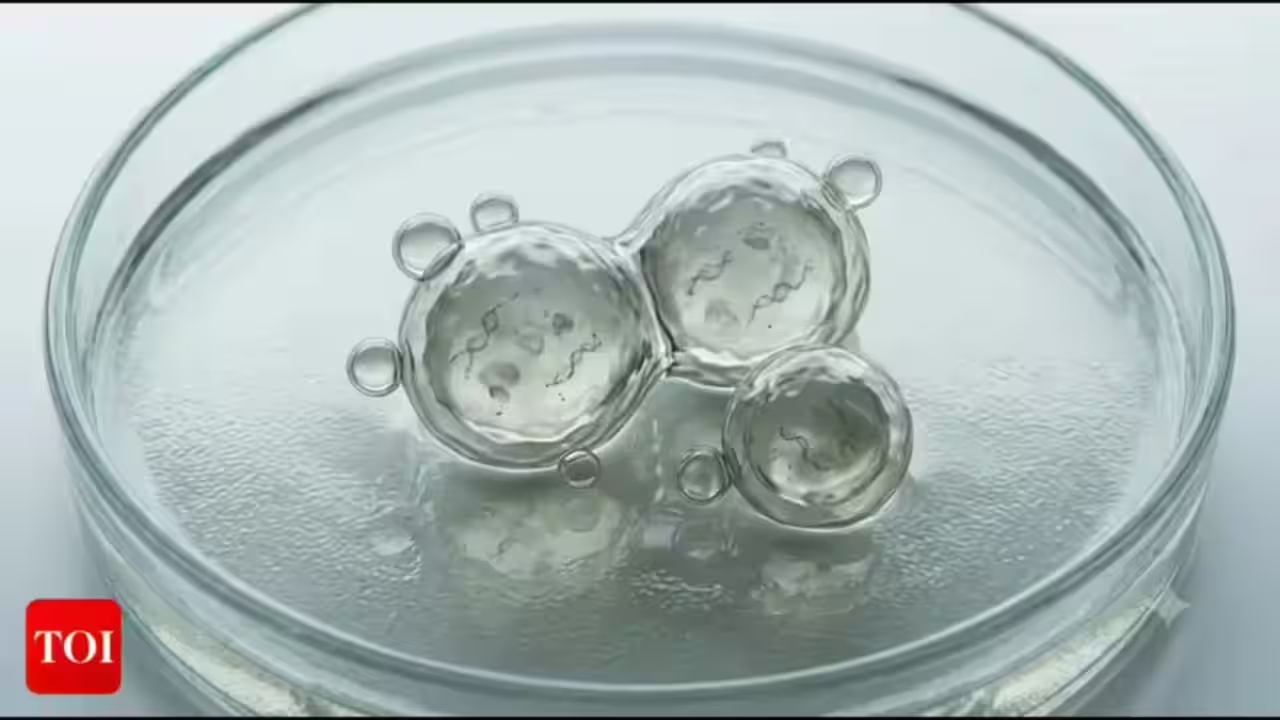
(AI generated image)Scientists at the University of Minnesota say they have built a synthetic cell that can feed, grow, copy its DNA and divide. Some versions also appear to perform better than others, allowing a basic form of selection.The cell, called SpudCell, is not being presented as “life created in a lab”. Not yet. But it is an important step in the effort to understand which parts and processes are needed for something lifelike to begin.SpudCell is a synthetic cell-like system built from non-living chemical parts. It has a fatty outer covering, called a liposome, which works like a simple cell membrane. Inside it, researchers placed a small DNA genome and the molecular machinery needed to read that DNA.The work has been posted as a preprint — it has yet to undergo formal peer review.The paper describes SpudCell as a “chemically defined” synthetic cell. Simply put, the researchers know what went into it and in what amounts. Unlike a natural cell, which is the result of billions of years of evolution, SpudCell is a stripped-down model that scientists can take apart, test and rebuild.Why is is important?SpudCell is not the first artificial or synthetic-cell project. What makes it different is the way it was made.Earlier attempts often started with living cells. Scientists then stripped away genes one by one to find the smallest set a cell needed to survive. SpudCell takes the opposite route. It starts with non-living components and tries to build cell-like behaviour from the bottom up.The scientists say SpudCell can perform several functions associated with life: it can take in supplies, grow, copy its genome, divide and undergo selection (where versions that work better are more likely to survive and multiply). That makes it more than a passive bubble carrying DNA. But it is still not a bacterium, which is a living organism with far more internal machinery and far more independence. SpudCell remains a lab-built system that shows some behaviours of life.How does spudcell ‘feed’ itself?SpudCell does not eat and feed like a natural cell. It has only limited metabolism, which means it cannot make many of the ingredients it needs to generate energy and keep going.So researchers supplied it with “feeder liposomes” — tiny supply packets carrying enzymes, ribosomes, small molecules and lipids. Ribosomes help build proteins. Lipids help build the cell’s outer covering.The important part is that SpudCell is not merely refilled from outside. Its DNA helps make a membrane protein. That protein acts like a docking hook, helping SpudCell merge with the feeder liposomes. When they merge, SpudCell receives supplies and more membrane material, which helps it grow.Put simply, SpudCell carries instructions that help it get supplies. That link between genetic instruction and cell-like behaviour is one reason this work has the scientific community so excited.Why do five generations matter?A one-time chemical reaction is not enough to resemble life. A cell-like system must copy information and pass enough of it to the next generation.The team demonstrated five generations in which SpudCells were fed, grew, copied DNA and divided. Early generations relied on mechanical division using membrane filters, while later experiments also showed genetically encoded division driven by proteins produced by the cells themselves. The study says newly made DNA was detected after each generation and that researchers used a “generation counter” to show that the same cell line went through repeated rounds of feeding.Natural cells usually divide with the help of an internal support system called the cytoskeleton (the cell’s internal scaffolding — a network of tiny fibres that gives the cell shape, organises its parts and helps pull it apart during division). SpudCell lacks a cytoskeleton. Instead, proteins produced by the system accumulate on the membrane, generating mechanical stress that helps split it. The researchers describe this as genetically encoded division without a cytoskeleton.Unlike natural cells, the system still required laboratory assistance, and this is not as smooth or reliable as natural cell division. But it shows that synthetic cells may not have to copy every natural process exactly. Some cell-like functions may be possible through simpler engineered routes.Selection, but not evolutionOne of the strongest claims in the SpudCell work is selection. Researchers made one version of the cell better at feeding. Because it fed better, it grew better. Because it grew better, it produced more daughter cells. Over several generations, that version became more common.But this is not full “Darwinian evolution”. The useful change was introduced by the researchers. It did not arise spontaneously inside the synthetic cell population. SpudCell shows selection, but Darwinian evolution would require useful mutations to arise within the cells and then spread.So, is spudcell alive?The safest answer is no — not in the ordinary sense. The project FAQ says SpudCell’s makers do not claim to have built life. It also notes that there is no single agreed definition of life. SpudCell performs behaviours often used to separate living things from inert matter — feeding, growth, genome replication, division and selection — but it remains far simpler than any natural cell.It is not self-sufficient. It depends on carefully controlled lab conditions and regular external supplies. It cannot yet make its own ribosomes, and its metabolism is limited. It also lacks the internal organisation that natural cells use to divide their contents reliably between daughter cells.Its inheritance is imperfect too. The study says that after five generations, 30% of analysed cells contained the complete genome. Future versions would need to pass DNA and other cell contents more reliably to daughter cells.That is why SpudCell is best described as a major prototype, not as a living organism.Has this been done before?Artificial-cell research goes back decades. Thomas Ming Swi Chang, a Canadian scientist, reported artificial cells in 1957 using ultrathin polymer membranes. That work helped open the field of artificial cells and later medical applications, but those artificial cells were not biological cells carrying out a full cell cycle.A closer comparison is the J Craig Venter Institute’s minimal-cell work. JCVI created a synthetic bacterial cell in 2010 and later developed JCVI-syn3. 0, a minimal synthetic bacterial cell with 531,000 base pairs and 473 genes. But that work started from existing living cellular machinery.SpudCell’s claim is different: it is built from non-living parts from the bottom up.What next? what next?Future SpudCell versions would need to make more of their own machinery, especially ribosomes, and find better ways to divide and pass DNA reliably into daughter cells.SpudCell doesn’t create life from scratch, but demonstrates that several hallmarks of living systems can emerge when non-living components are assembled the right way, providing a powerful platform for studying how life works and how it may have begun.
Scientists move closer to creating ‘life in a lab’
Scientists at the University of Minnesota say they have built a synthetic cell that can feed, grow, copy its DNA and divide. Some versions also appear to perform better than others, allowing a basic form of selection.
1,103 words~5 min read