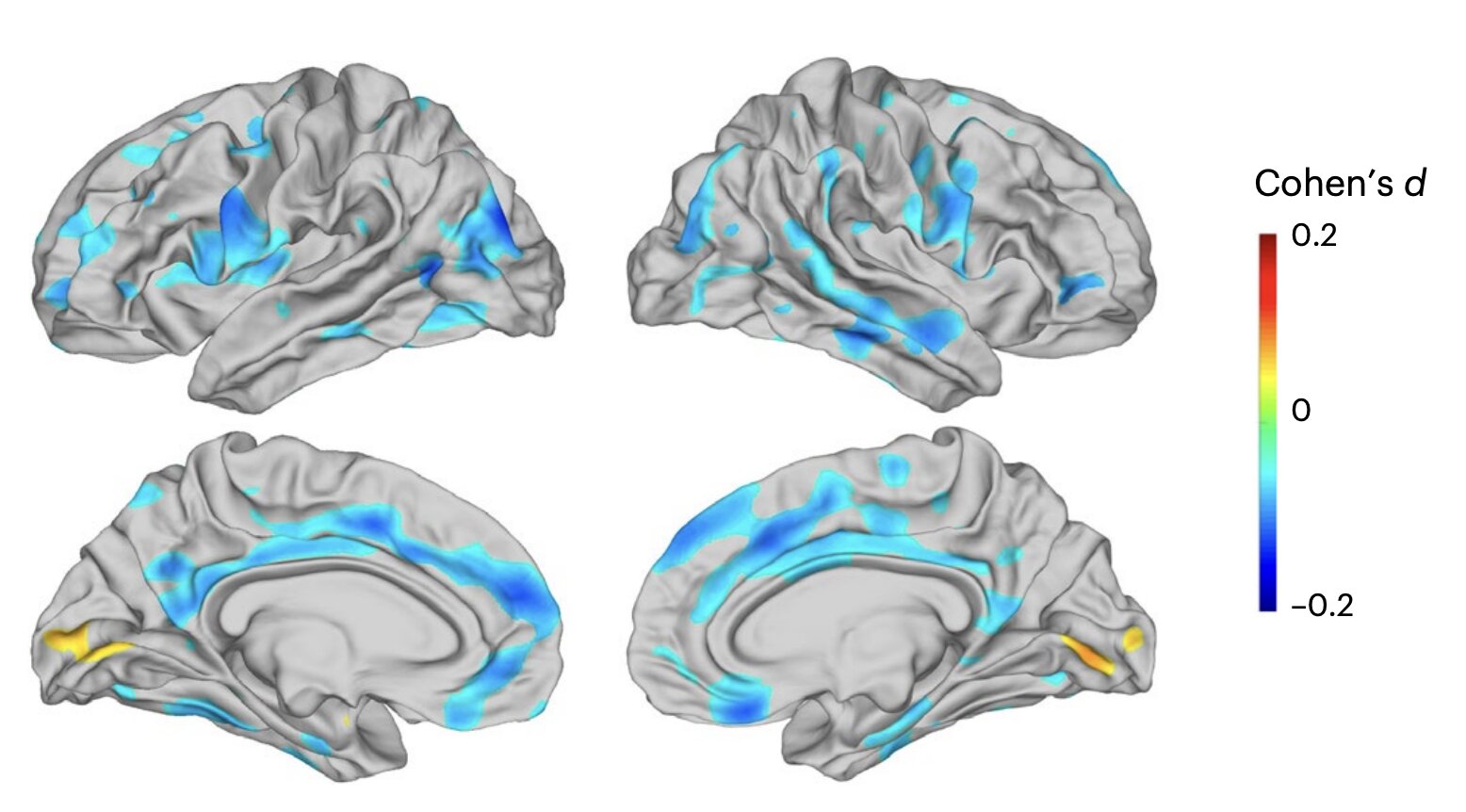
Major depressive disorder (MDD) is a severe, clinical type of depression, a more broadly defined mood disorder associated with a persistent feeling of sadness and a loss of interest.MDD places a great strain on the populace and national framework. At least 10 percent of people in the US will experience it once in their lives. Additionally, MDD causes more than US$210 billion in healthcare costs and lost productivity. Since MDD is a complex disorder, affected by a murky mix of genetic, psychological, and biological factors, distinguishing its subtypes may be critical for designing effective treatment strategies.To better constrain the underlying mechanisms of MDD, a new study (which is yet to be peer-reviewed) has examined biologically distinct subtypes of MDD based on their opposing, atypical energy-related symptoms (AERS).Perhaps most importantly, this paper presents an immunometabolic framework that addresses an overarching diagnostic discrepancy.
"Current diagnostic criteria treat opposite symptom directions as equivalent; weight gain or loss, and increased or decreased sleep, each count toward a single diagnosis," the researchers explain.While this has improved standardization, it may have facilitated ineffective one-size-fits-all healthcare techniques and delayed treatment progress.As the researchers note, "individuals with the same MDD diagnosis manifest different symptom profiles that may represent the expression of partially distinct pathophysiological pathways."To constrain these cases, they performed three genome-wide association meta-analyses, comprising more than 460,000 total individuals of European ancestry, comparing three MDD subtypes.These include AERS+, comprising hypersomnia (extreme sleepiness) with weight gain, and AERS-, comprising insomnia with weight loss, as well as a 'middle-ground' Uncategorized MDD exhibiting a mix of symptoms.