Strait of Hormuz: In the crossfire
| Photo Credit:
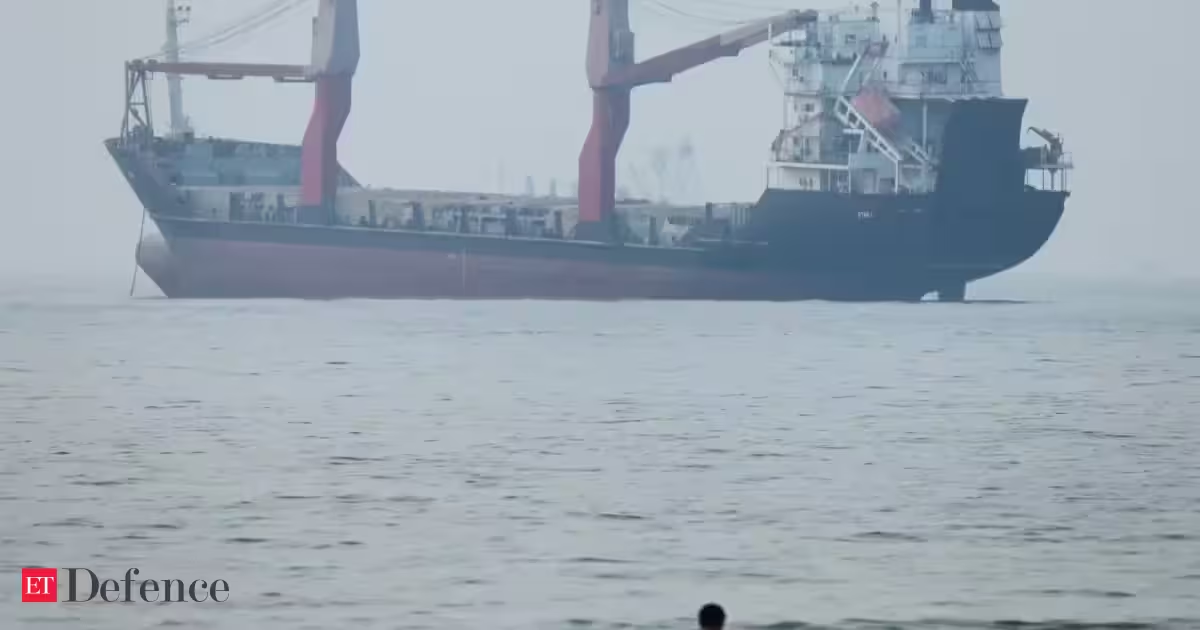
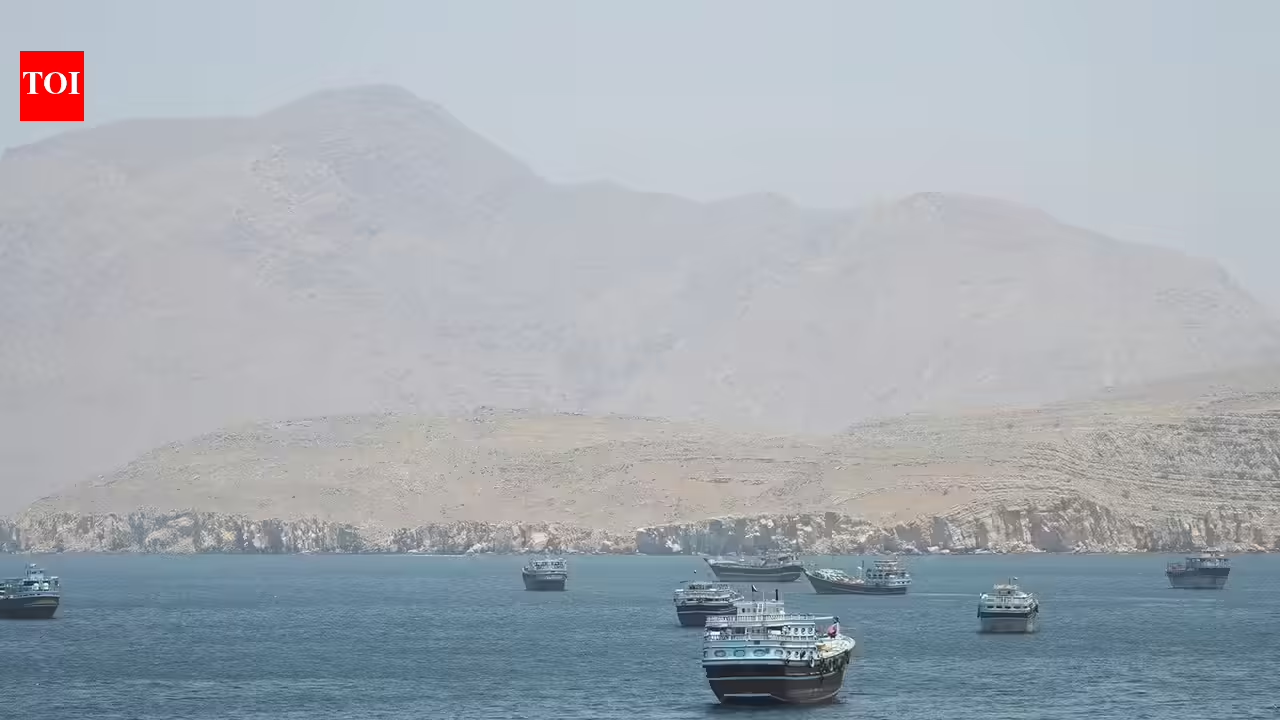
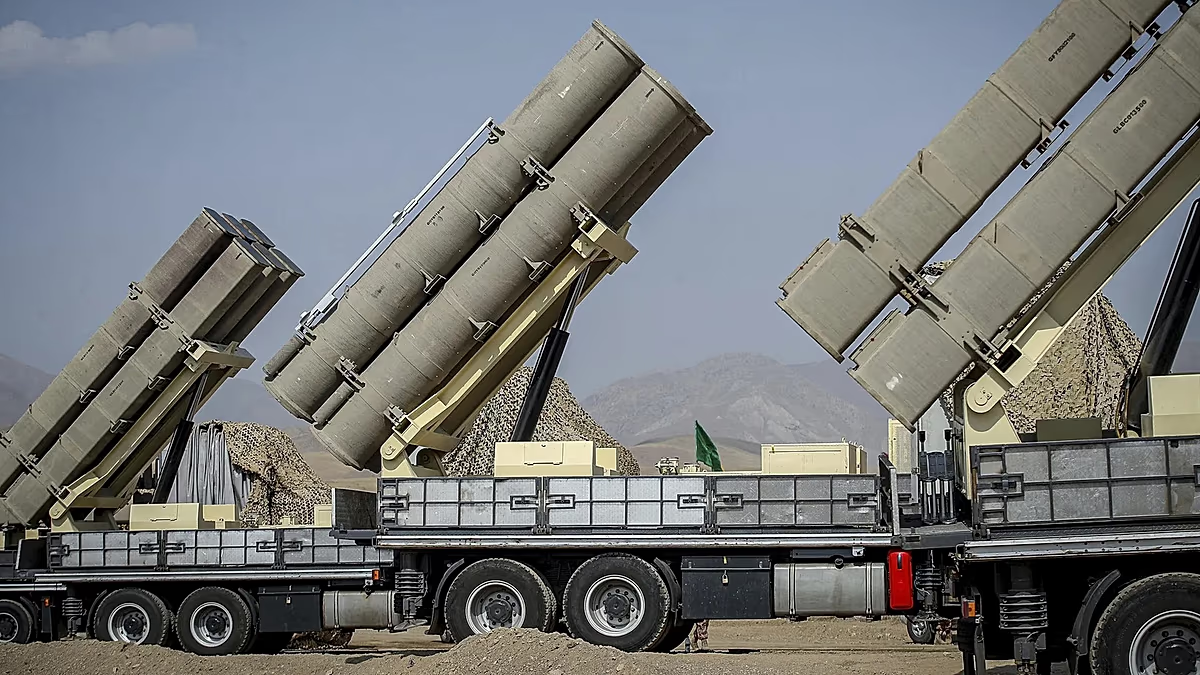
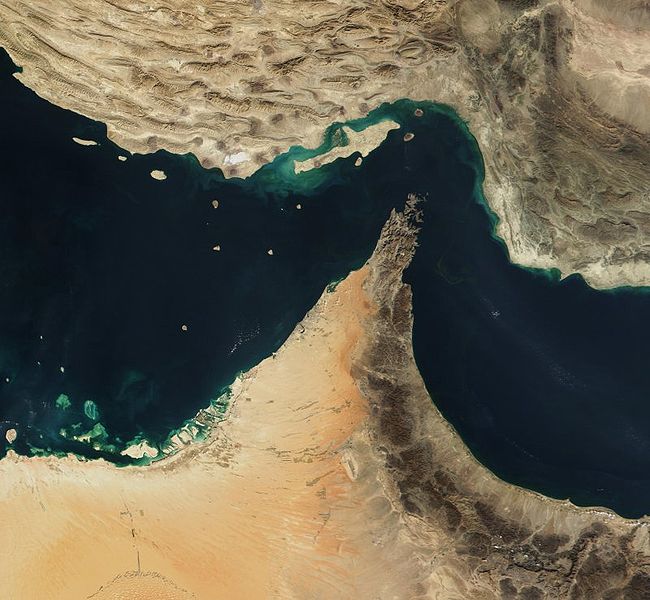
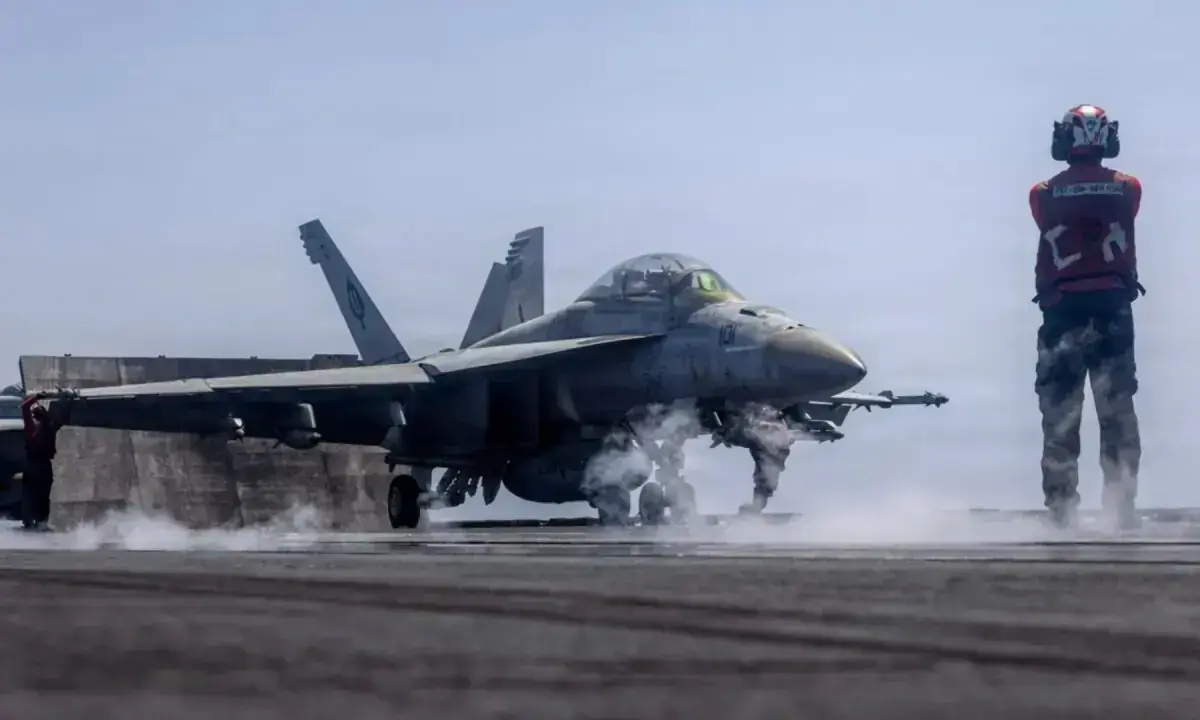
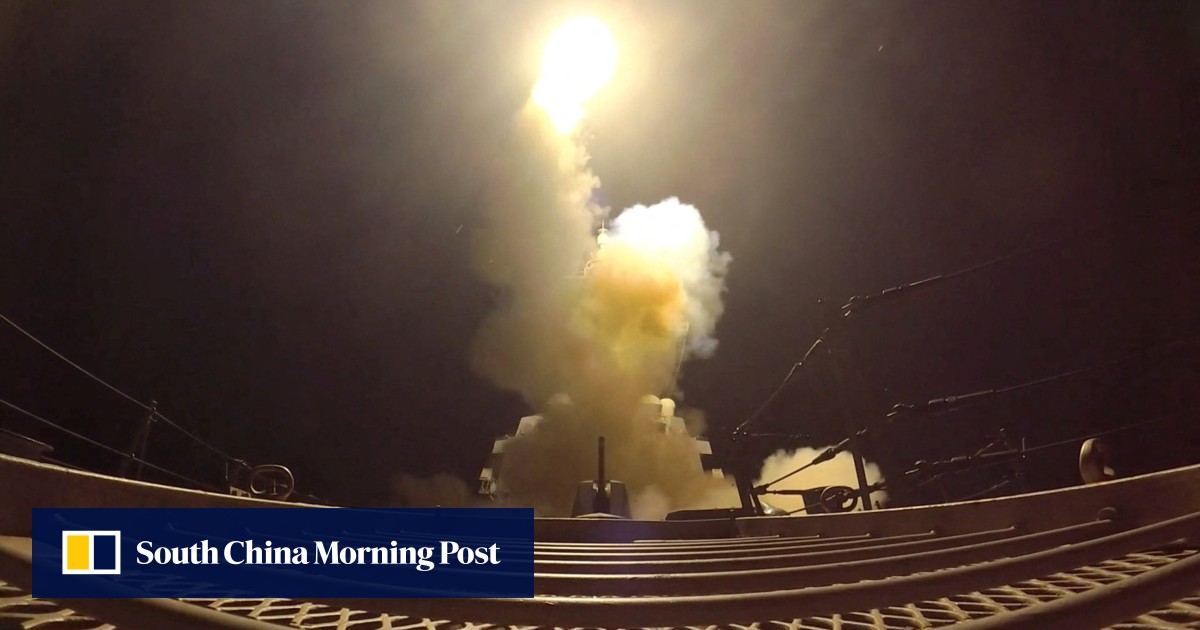
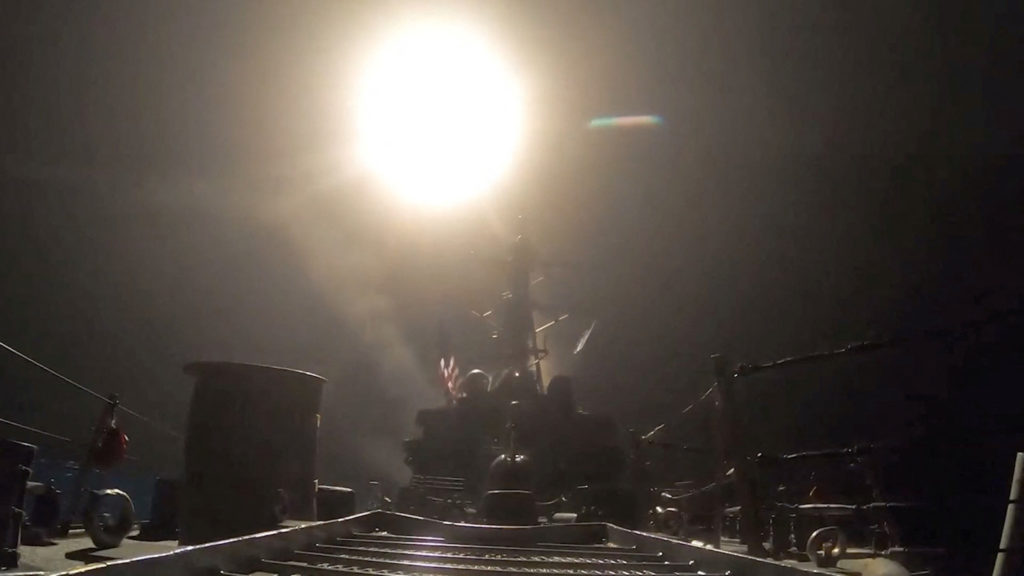
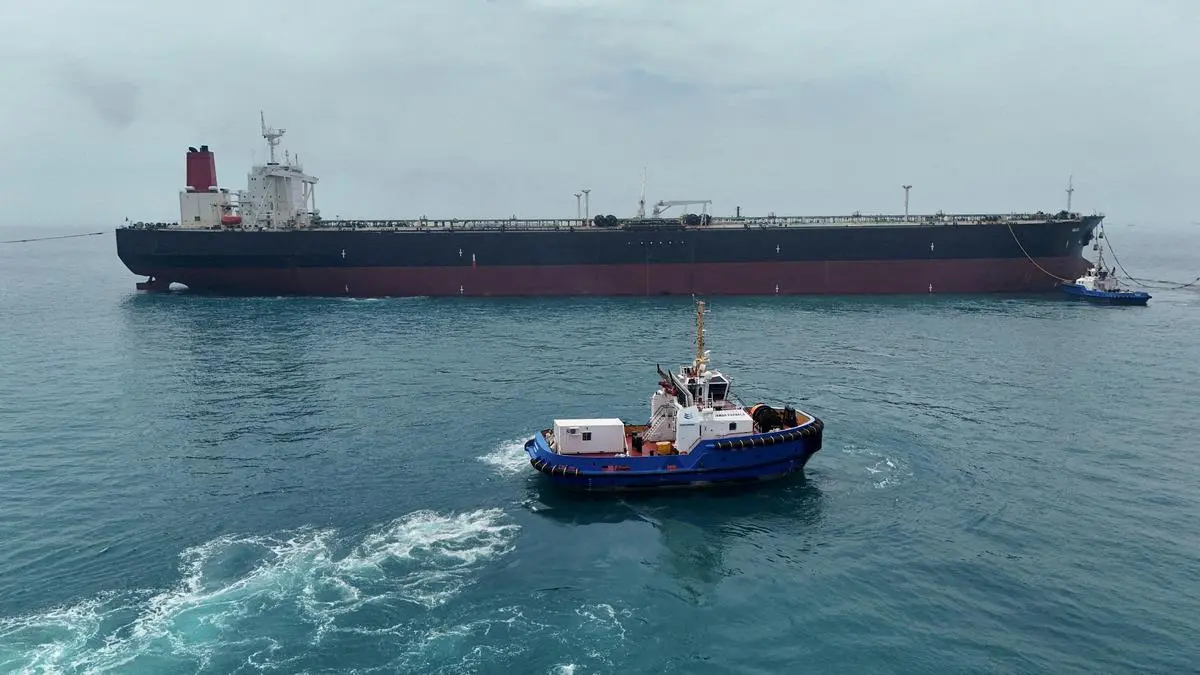
It did not take US President Donald Trump much time to respond to Iran’s attacks on commercial shipping in the Strait of Hormuz. According to him, the ceasefire is “over” and that the US could resume its naval blockade and hit civilian infrastructure. The Central Command (Centcom) unleashed missiles across three Iranian provinces, the 60-day waiver on oil exports are off, and the Islamic Revolutionary Guard Corps (IRGC) attacked American military sites in Kuwait and Bahrain, all of which did not sit well with oil markets.The sudden escalation in the Middle East is taking place at a time when word was put out that Round Two of peace talks between Washington and Tehran is set to begin in Pakistan. Iran has not acknowledged its hand in the attack on shipping in the Hormuz, nor has it denied it.On the one hand, some have seen the latest development as a calculated move on Iran’s part to project its power and leverage over energy supplies. To say attacks on oil tankers are going to jack up prices in the market is a no-brainer.In flexing its muscles in the Hormuz, Iran perhaps wishes to show it is the boss of that international waterway. What cannot be missed is during the ongoing talks between Iran and Oman over the Hormuz, tankers are preferring to use Oman’s side of the Hormuz for safe passage. On more than one occasion Washington has said that it will not allow collection of tolls or any levy as service charge.If Iran’s intention is to cripple energy markets by driving up prices and at the same time choke the vital waterways, there is no doubt that such a move could be self defeating. In the lifting of the US sanctions on oil, there was a brief respite for the Iranian economy which is said to be on the verge of collapse. The unrest in Iran early this year was triggered by the worsening economic situation, which later turned its focus on human rights. It is difficult for any regime to keep talking of people’s resilience amidst empty supermarket shelves.Iran power struggleThat brings up the question of a power struggle in the ruling elite of Iran with the moderates, who are seen as negotiating with the US, increasingly challenged by the hardliners among the clerics and the IRGC, long seen as the custodian of the Islamic Revolution of 1979 that led to the flight of the Shah from Iran.There is a growing perception that the US and Israel, after wiping out the top civilian and military leadership during the early days of the war, have ended up strengthening the hand of the hardliners, with more extreme elements now calling the shots.In all the chatter about economic disruption and power struggle being the reasons behind the sudden spurt in attacks on commercial shipping, another angle could not be totally discounted: Tehran deliberately keeping the attention on the Hormuz to deflect the focus from its nuclear programme which has generally been passed off the ultimate objective in the peace process.In all the buzz about attacks on tankers, clearing of mines in the Hormuz, strikes and attacks on neighbours, the issue now pushed to the background is the nearly 500 kg of Uranium — enriched or otherwise — nuclear dust, safe keeping, the International Atomic Energy Agency, parameters of a new deal with sunset clauses and so on.But Israel has been quite uneasy about the ongoing talks between Washington and Tehran. So the chances of Iran trying to divert attention from nuclear issues to the Hormuz, or trying to position itself as the sole protector of the Gulf and its waterways, remain slim.The writer is a senior journalist who has reported from Washington DC on North America and United NationsPublished on July 11, 2026