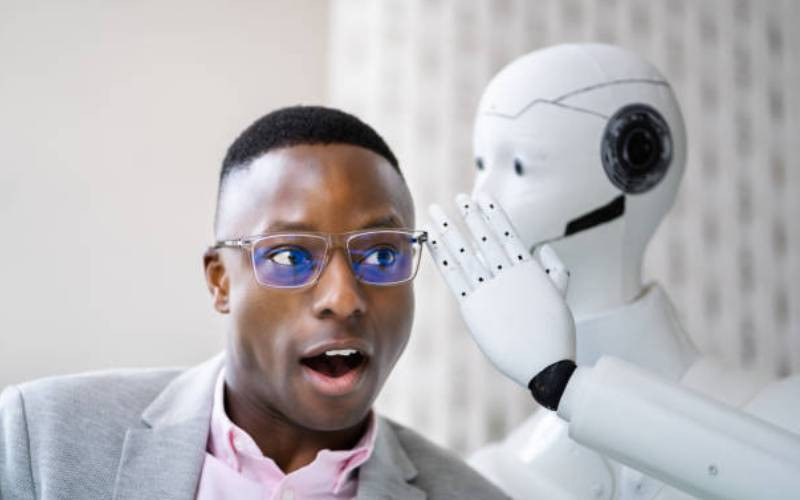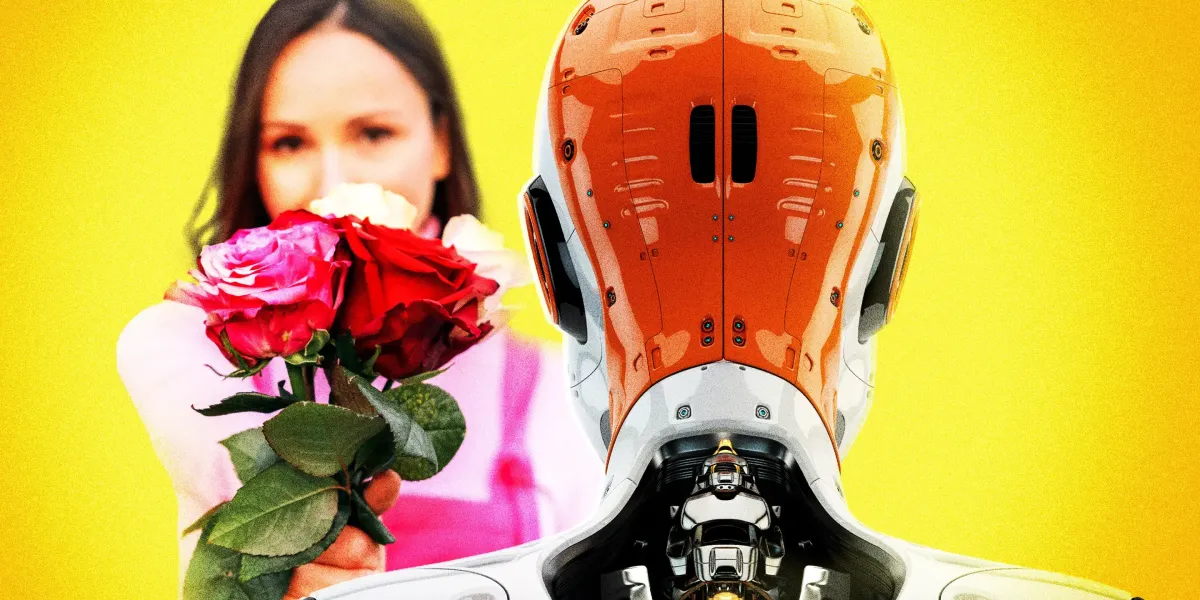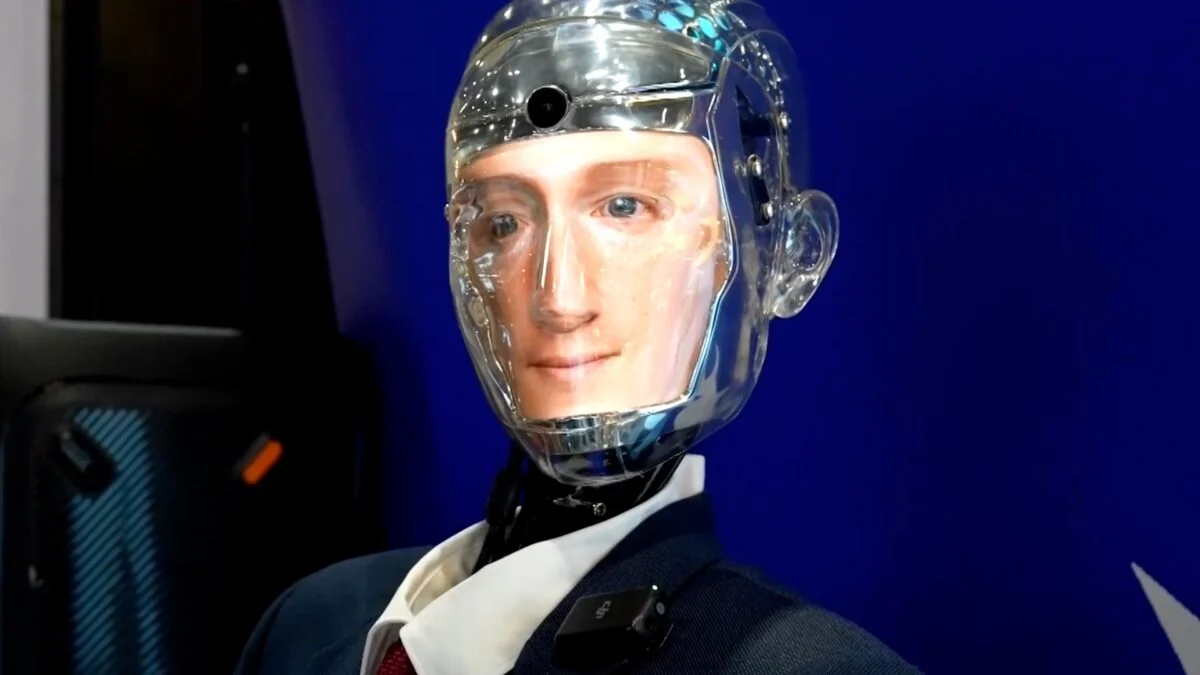
Sci-fi authors and AI researchers have dreamed for decades of a day when interacting with humanoid robots will feel natural, perhaps even indistinguishable from chatting with another flesh-and-blood human being. And although we now have access to chatbots that routinely trick people into believing that they’re conscious beings, we still seem to be a long, long way away from living amongst embodied, truly humanlike robots. At the United Nations’ AI for Good Global Summit in Geneva this week, visitors could meet and mingle with Robert the Robot, a six-foot-something Tesla Optimus lookalike wearing a suit and tie, whose digital screen-for-a-face would alternate with images of Trump, Obama, and Mark Zuckerberg. Robert (not to be confused with Robby the Robot, the iconic character from the 1956 film Forbidden Planet) was built by a Swiss robotics firm called RB Labs, and designed to mimic the subtleties of nonverbal facial cues that make up every human-to-human interaction—even if we’re not consciously aware of them. “In the future, we think it will be important to communicate with a robot and for humans to receive information from its expressions, like seeing a smile to know if it’s happy or not,” RL Labs cofounder Robin Kranbroekers told Reuters in recorded interview, while in the background, Robert, seen wearing a digital mask of Trump’s visage like Leatherface, stared blankly at some point just off-camera. “So if I make [Robert the Robot] do something silly right now, I don’t think people will mistake him for the real Donald Trump. I don’t believe we’re falling into that uncanny valley trap.”
Finally, a Robot Designed to Make Chatting With Mark Zuckerberg Feel Natural
There are lots of reasons to be wary of AI impersonating humans, but this probably isn't one of them.
656 words~3 min read