El Niño is slowly strengthening and will probably continue to do so for the remainder of 2026
| Photo Credit:
K K Mustafah
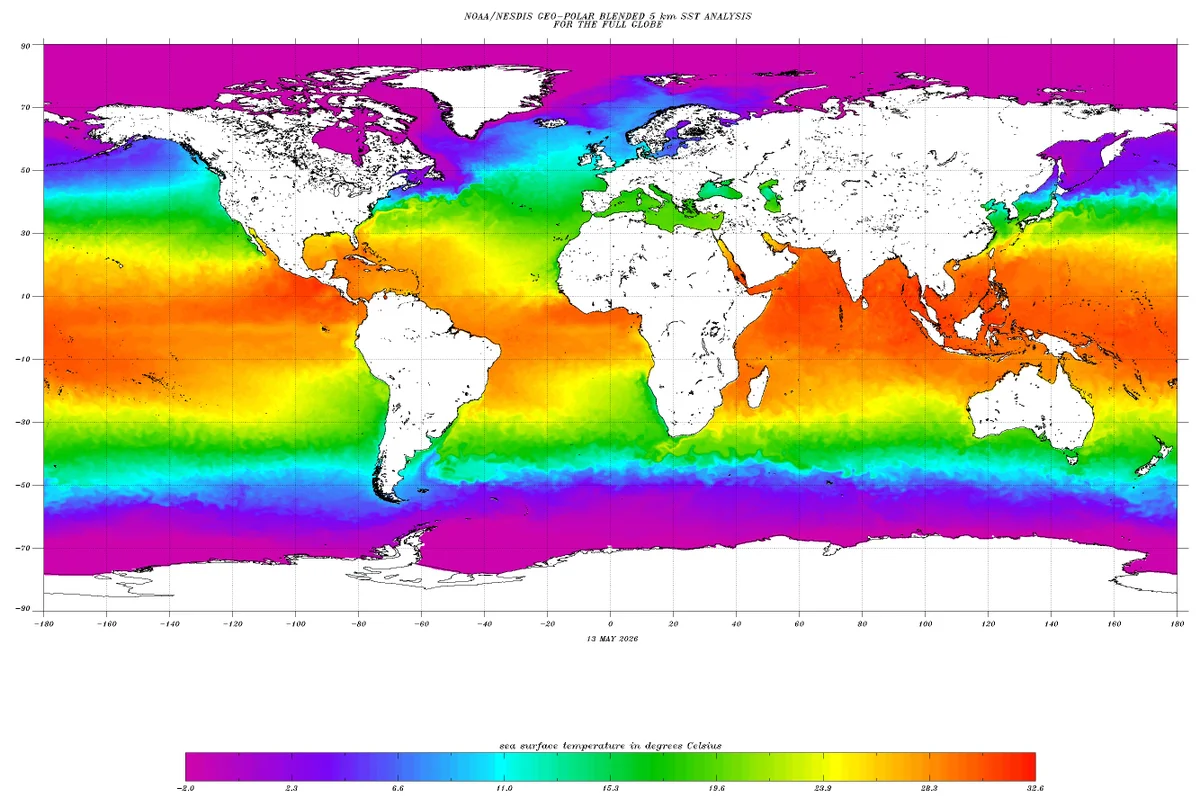
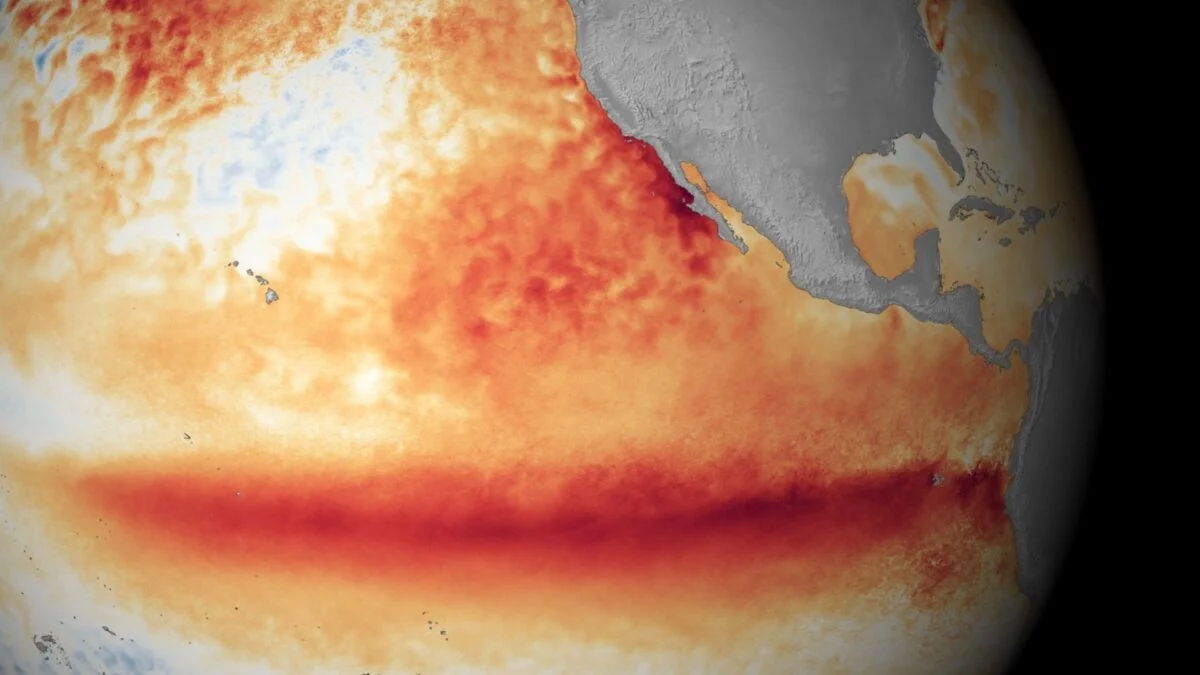
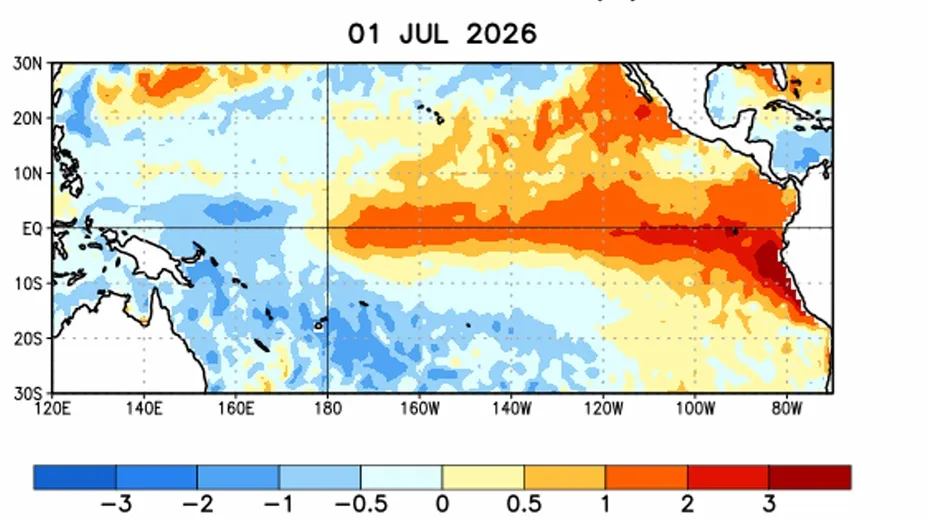
The latest report from the US National Oceanic and Atmospheric Administration’s (NOAA) Climate Prediction Center (CPC) shows that El Niño is slowly strengthening and will probably continue to do so for the remainder of 2026.There is now an 81 per cent chance of a very strong El Niño developing during October-December that would rank among the largest El Niño events in the historical record back to 1950.El Niño persists and will strengthen through the end of the year, the report said, with a 97 per cent chance it will continue through early spring 2027.Warming SignalsAccording to the report, El Niño continued to strengthen during the past month, with a broad area of sea surface temperature anomalies greater than +1.0°C across the central and eastern equatorial Pacific.The latest weekly Niño-3.4 index value was +1.2°C, while the westernmost (Niño-4) and easternmost (Niño-1+2) indices were +0.5°C and +2.7°C, respectively.Ocean PulseThe equatorial subsurface temperature index (averaged between 180° and 100°W) increased as a downwelling Kelvin wave deepened the thermocline and raised temperatures in the eastern Pacific.A downwelling Kelvin wave is an ocean wave that propagates eastwards along the equator. This underwater pulse of warm water is triggered by weakening trade winds or westerly wind bursts, and it deepens the thermocline and feeds El Niño events.A thermocline is the transition layer between the warmer mixed water at the surface and the cooler deep water below the ocean.Wind AnomaliesIn the western and central equatorial Pacific, there were low-level westerly wind anomalies and upper-level easterly wind anomalies. The report said convection was enhanced over the central and east-central equatorial Pacific and suppressed over Indonesia.The traditional and equatorial Southern Oscillation indices were negative. Collectively the coupled ocean-atmosphere system reflected a strengthening El Niño, the report added.Niño OutlookThe North American Multi-Model Ensemble (NMME) forecast suggests that El Niño will intensify through 2026. Model predictions, and a strong coupling between oceanic and atmospheric circulation across the Pacific, provide a high degree of confidence that El Niño will continue into early 2027.Ocean-atmosphere coupling refers to the coupled dynamics of the ocean surface temperature and circulation and the overlying atmosphere. Changes in ocean temperature can affect the atmosphere. The atmosphere can then affect wind patterns and ocean temperatures. This interaction can strongly influence weather patterns around the globe.Published on July 10, 2026