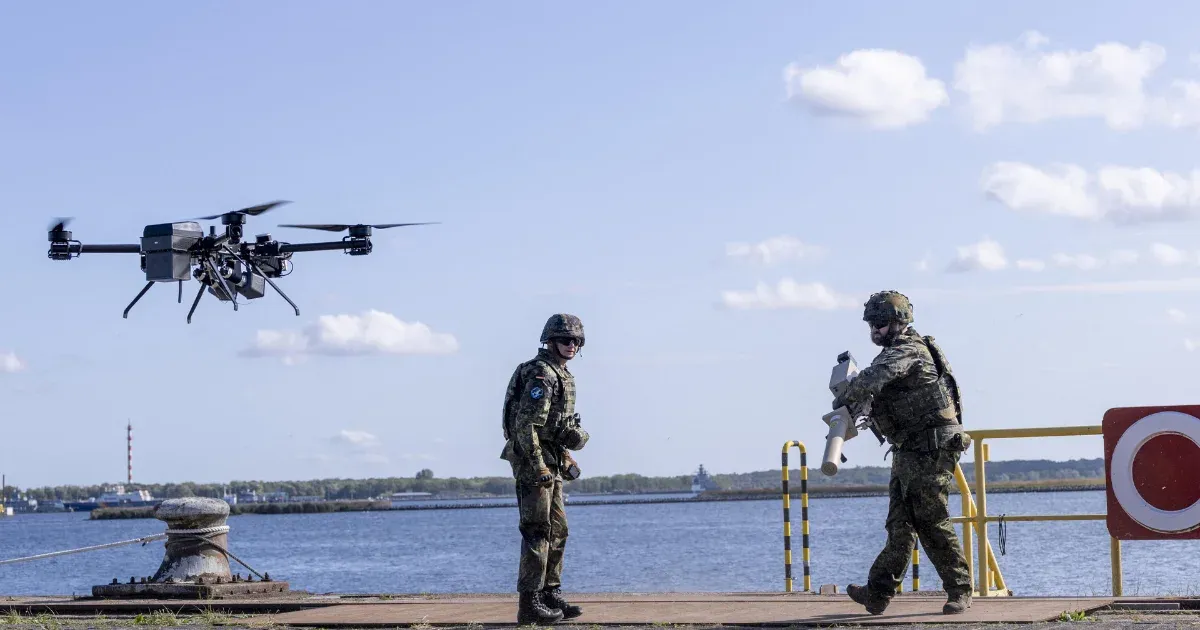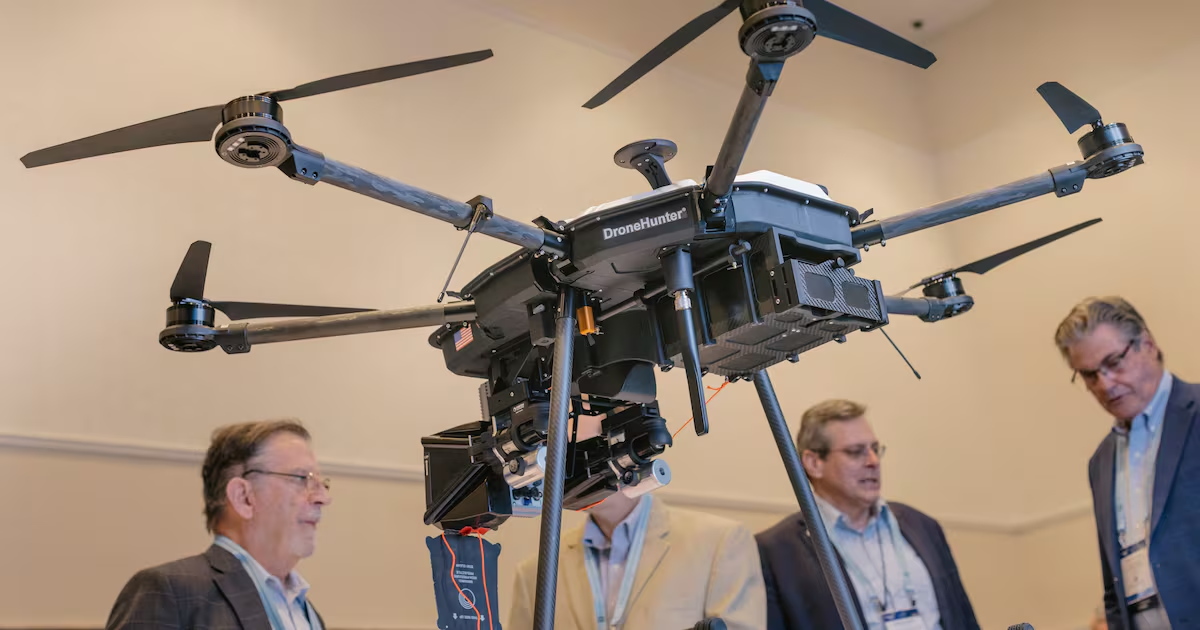
Drones operated by artificial intelligence (AI) and equipped with nets will be deployed in response to airborne threats during the EU presidency.These counter-unmanned aerial systems weapons will be deployed at Casement Aerodrome, west Dublin, during the arrival of high-level dignitaries for EU summits, The Irish Times has established. The DroneHunter technology is manufactured by Fortem Technologies, a US company owned by a consortium including the arms manufacturer Lockheed Martin.If an unidentified drone is detected in the vicinity of Casement, soldiers will attempt to block its signal using jamming devices, forcing the drone to the land. If that fails, a Drone Hunter will be deployed to track the threat.These are quadcopter drones that can launch in seconds. They track rogue drones before firing a net at them. The captured drone then floats to the ground by parachute before being recovered for evidence.The Defence Forces drones can operate entirely autonomously using AI, according to the company’s website. However, operators from the Artillery Corps will be able to take control at any stage.Defence officials decided on this “soft-kill” option due to fears that the use of missiles could pose a danger to civilians or overhead aircraft.The Drone Hunter weapons will be integrated into the Sky Warden system, which was acquired from the French arms manufacturer MBDA, according to French news and current affairs outlet La Lettre. The system, which cost almost €20 million, has already been installed at Casement. Sky Warden detects and tracks hostile aircraft and drones up to 8km away.The Defence Forces is also acquiring Mistral missiles, which are designed for short-range air defence. These missiles, which are also made by MBDA, will also be deployed during presidency events but not at Casement, sources said. They replace the ageing RB70 air defence missile systems acquired from Sweden.The new systems represent a significant upgrade to Irish air defence systems. This programme was long planned, but aspects of it were accelerated following a drone incursion over Dublin Bay during the visit of Ukrainian president Volodymyr Zelenskiy last December.An investigation into the incident has been completed, but the Government has not released the results. Nor has it officially named any suspects.Some of these new air defence systems rely on the latest technology, including AI and advanced jamming systems. However, security services have also been forced to rely on more basic responses to potential threats.During events last week linked to the EU presidency, including another visit to Dublin by Zelenskiy, two Air Corps helicopters, with the call signs Wolf One and Wolf Two, were deployed on patrol. They were armed with door-mounted machine guns to shoot down rogue drones.One of the Air Corps’ propeller-driven PC-9 trainer aircraft, equipped with machine guns and rockets, also patrolled the skies while a maritime patrol aircraft, with the call-sign Kraken, inspected civilian ships off the coast in case they were used as platforms to launch hostile drones.In addition, France sent a naval frigate equipped with anti-aircraft missiles to the waters off Dublin and Cork during the events. French ships will also be deployed during future events, sources said.
AI-powered drones to guard Irish skies during Ireland’s EU presidency
Technology uses AI to gauge threats and can capture rogue drones and bring them to ground
509 words~2 min read