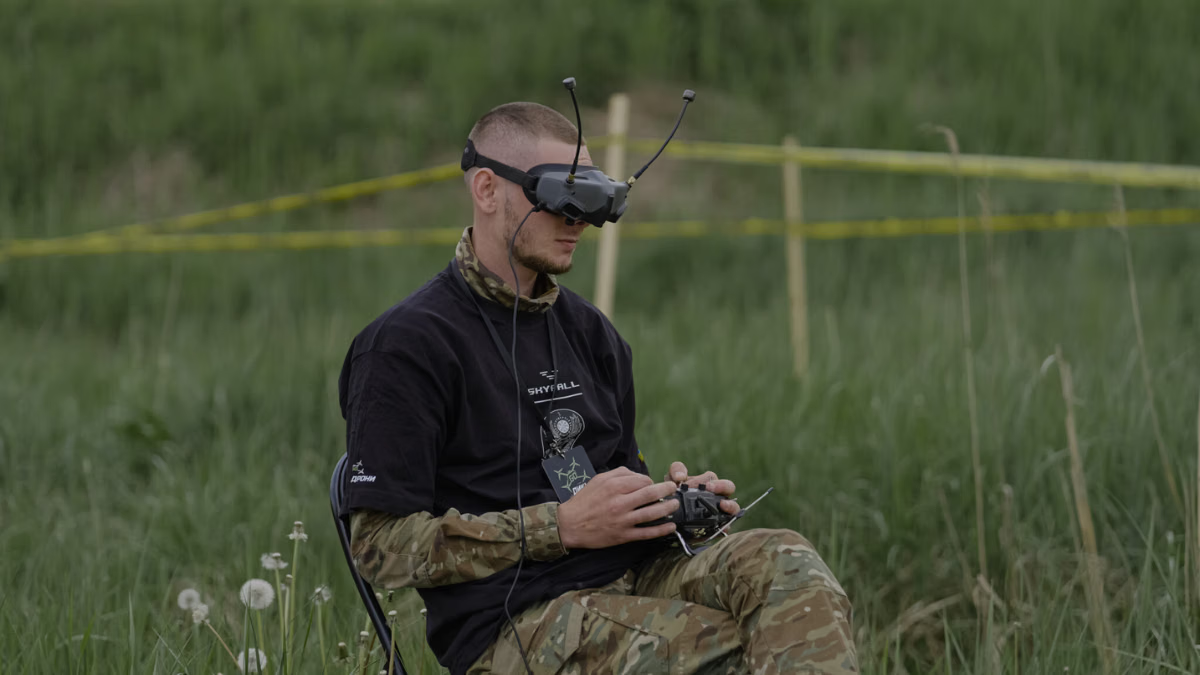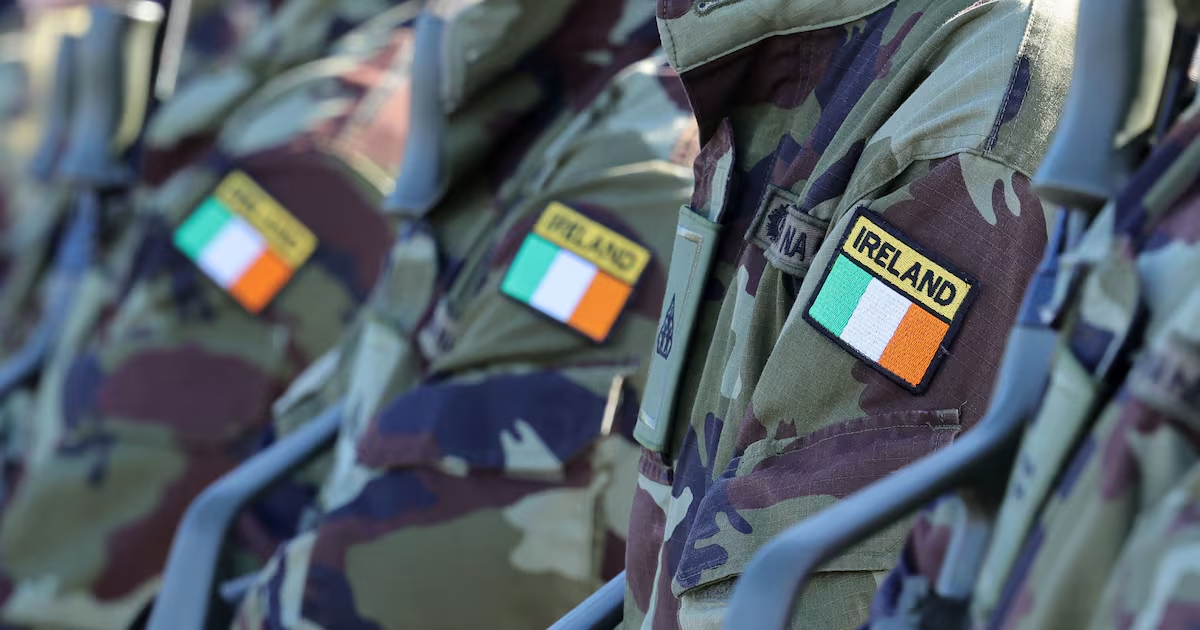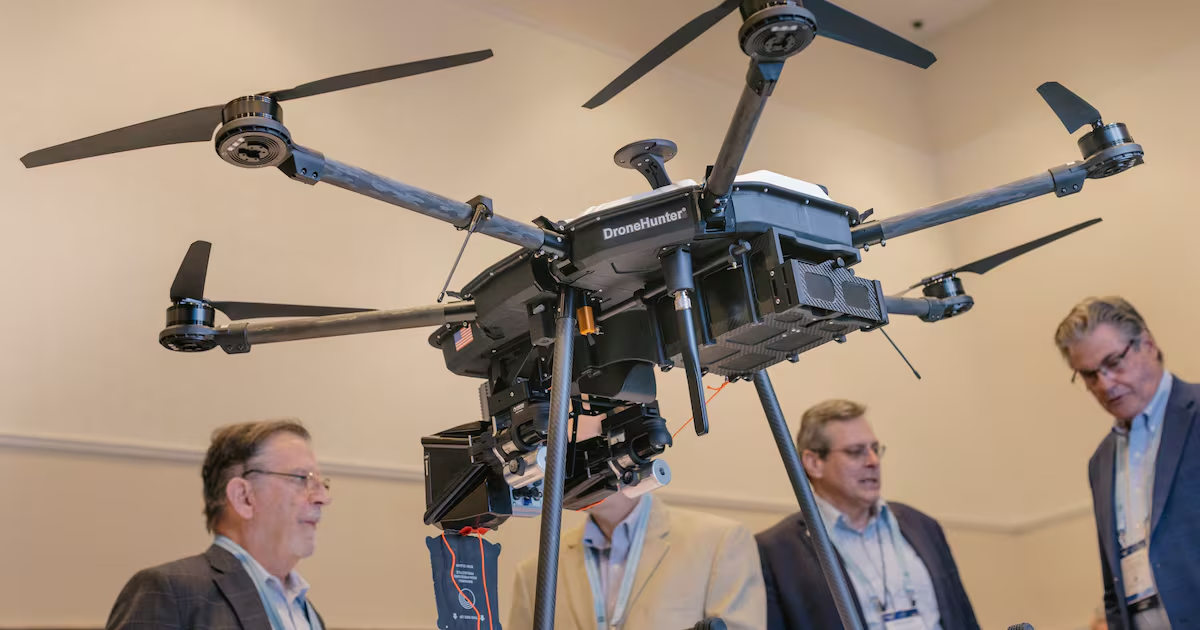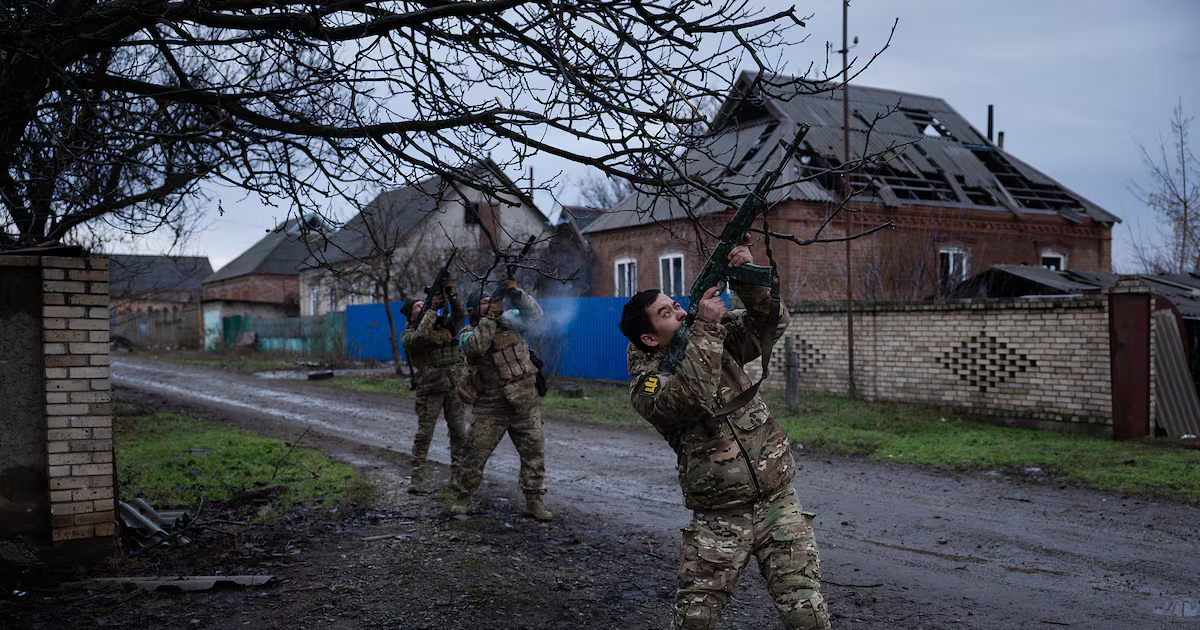
The four-year-old war in Ukraine has shown how the nature of conflict has fundamentally changed – a lesson now being learned by the Irish Defence Forces.Off-the-shelf drones costing a few hundred euro, operated by minimally trained conscripts, can easily destroy advanced weapons systems costing many millions of euro. Soldiers rarely fight face to face; in January a report from Latvia’s intelligence agency estimated up to 80 per cent of causalities on both sides in Ukraine arose from drone attacks.Drones also account for more civilian deaths than any other weapon, according to the United Nations. Elsewhere in Europe, cheap drones have shut down airports for days at a time and pose a continuing threat to power plants and energy infrastructure.Ireland has not been immune. Last December, the crew of an Irish naval ship in Dublin Bay observed five drones overhead, near where the aircraft of Ukrainian president Volodymyr Zelenskiy had passed earlier that night. In Lebanon, Irish peacekeepers frequently encounter Israeli drones. During one incident last October, an Israeli drone dropped a grenade a short distance from Irish troops.Now the Defence Forces is using the lessons learned from these theatres of conflict to devise its first anti-drone – or “counter unmanned aerial systems (C-UAS)” programme.Work on programme to protect Irish troops from drones at home and abroad has been continuing for some time. But the incident in Dublin Bay last year, combined with Ireland’s assumption of the EU presidency from July 1st, has focused minds.During the six-month presidency, dozens of world leaders will fly in to the Air Corps headquarters at Casement Aerodrome. Even a single unarmed drone could severely disrupt this operation and cause huge reputational damage to Ireland. In response, the Government earmarked €19 million for a system capable of jamming rogue drones around the facility. An FPV drone at the Swiss Army's Drones and Robotics Defence Competence Centre near Glarus-Sud. Photograph: Harold Cunningham/AFP via Getty Images However, it was soon realised this would not be enough. Some modern drones are capable of piloting themselves using artificial intelligence. Others can be controlled by long fibre-optic wires. Jamming, or “soft-kill”, systems would be useless in these cases.In response, the Defence Forces will rely on a layered approach. Using the new system, air-defence batteries of the Artillery Corps will be able to detect and track drones in the vicinity. A commander will then decide to “neutralise (soft kill) or destroy (hard kill) [the target] depending on the threat and wider context of the operational environment,” a Defence Forces spokesman said.Various “hard kill” options are being rolled out. In the Air Corps, helicopter crews are being trained to shoot down drones using door-mounted machine guns, while two PC-9m turboprop aircraft are being fitted with weapons systems specifically designed for C-UAS.These are basic aircraft which are mainly used for training. Their slow speed makes them unable to intercept hostile aircraft but ideal for use against low-level, slow-moving drones.At sea, naval crews are undergoing training in the use of ships’ 20mm guns to take down low-flying drones similar to those those spotted in Dublin Bay last December. They will eventually be issued with new “airburst” ammunition which will automatically detonate when near its target. In time, naval ships will be equipped with new primary “Super Rapid” cannons from Italy capable of shooting down drones, aircraft and even missiles. On Monday, Minister for Defence Helen McEntee announced a “government to government” deal with Italy on acquiring advanced military technology.The Army’s fleet of Mowag armoured personnel carriers recently completed a refit in which many of them were fitted with remotely operated Bushmaster 30mm cannons. In future, these will also be equipped with anti-drone ammunition.Finally, individual soldiers are being issued newly purchased shotguns as a last-resort measure against drones. Once thought of as a military anachronism, shotguns have proven themselves to be effective anti-drone weapons in Ukraine. In the UK, soldiers even take part in clay pigeon shooting to hone their anti-drone skills.Underpinning all of this is a new training programme for soldiers to allow them to quickly identify and track drones in the field.These skills and equipment will be used during the EU presidency but will also become a core part of Defence Forces doctrine in the years ahead, both on-island and during increasingly dangerous overseas peacekeeping missions.
Drone wars: Irish Defence Forces watching the skies as EU presidency set to begin
Lessons learned from Ukraine and Middle East are informing Ireland’s strategy for developing defence systems
712 words~3 min read