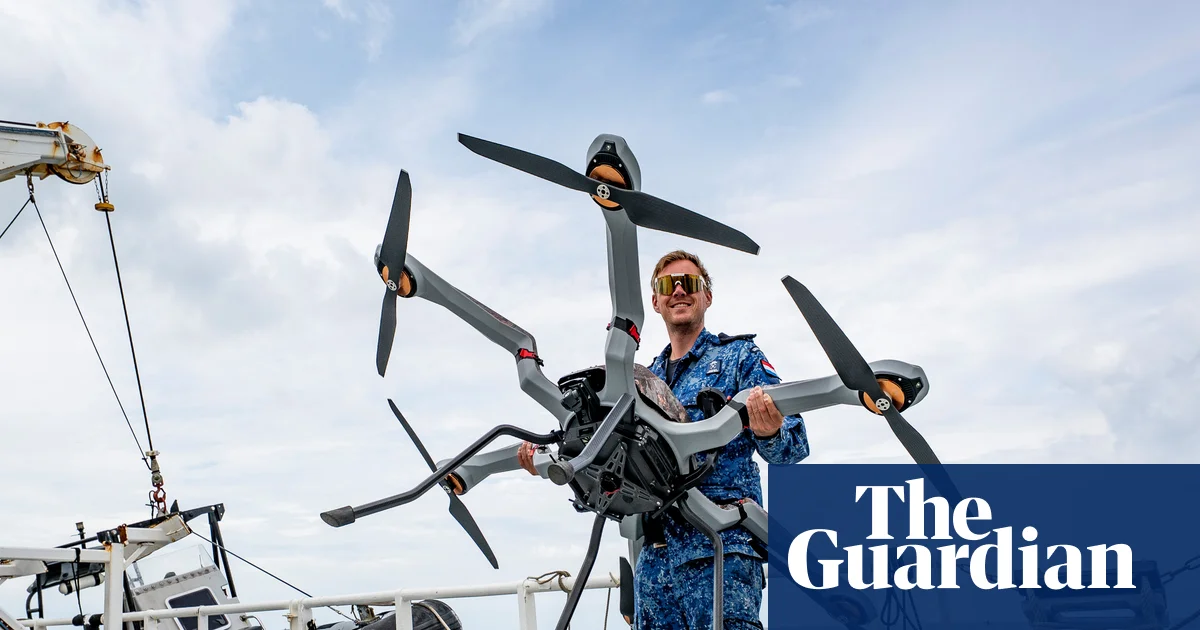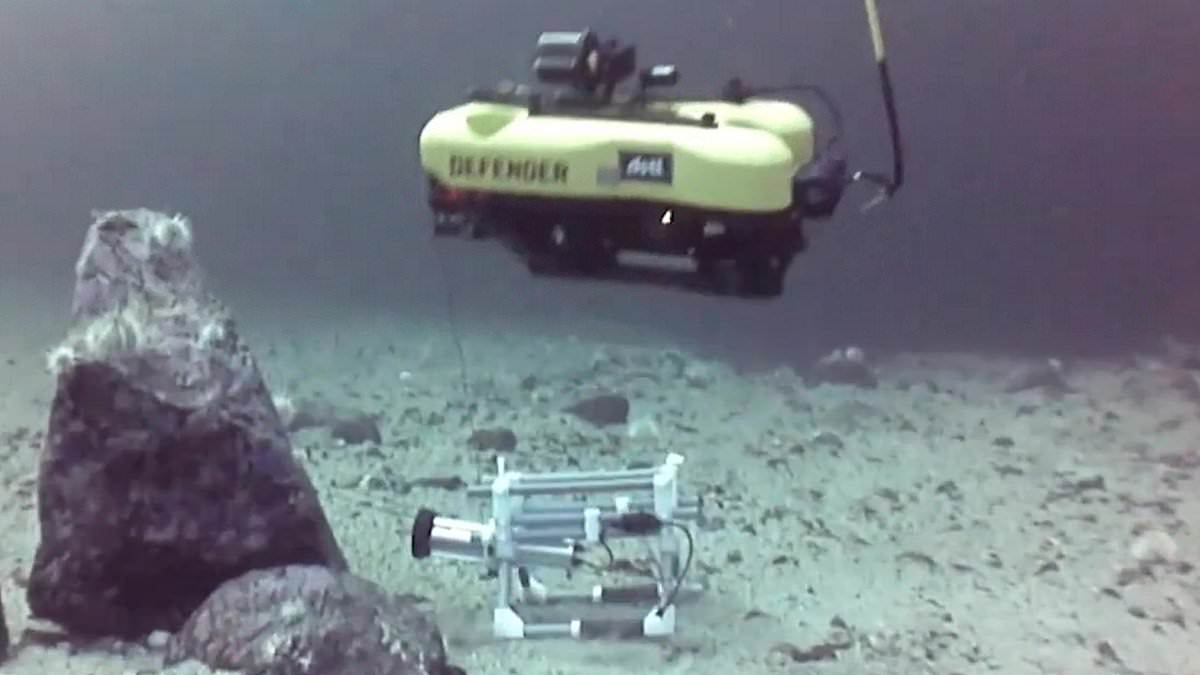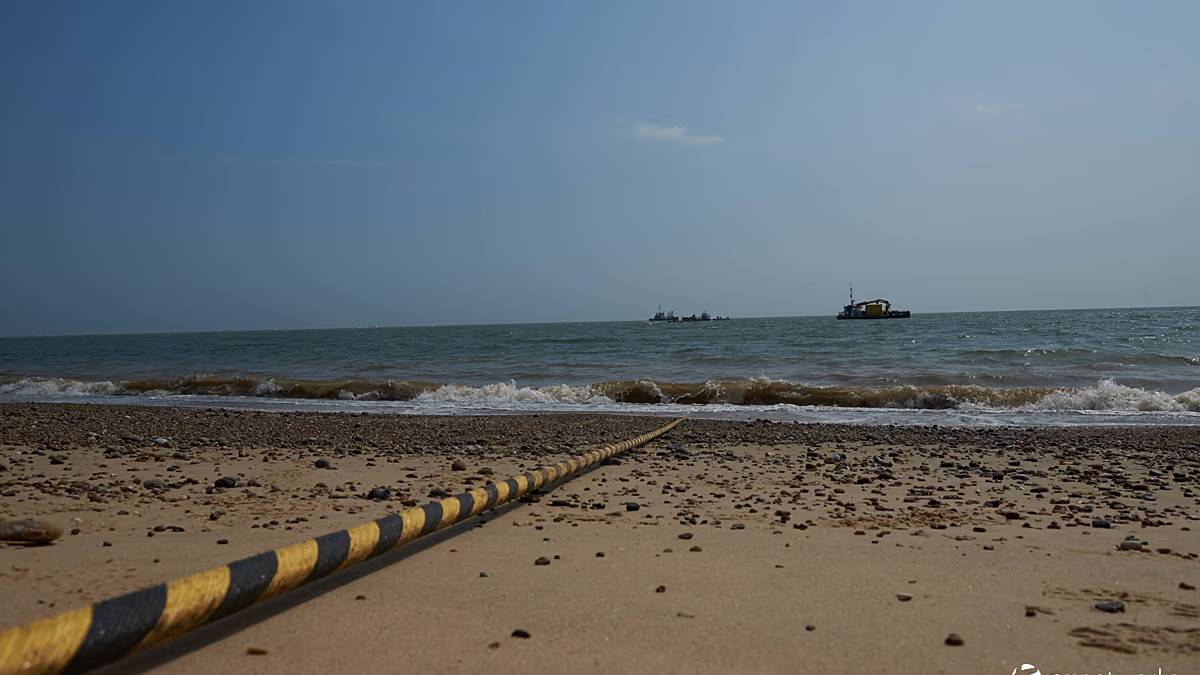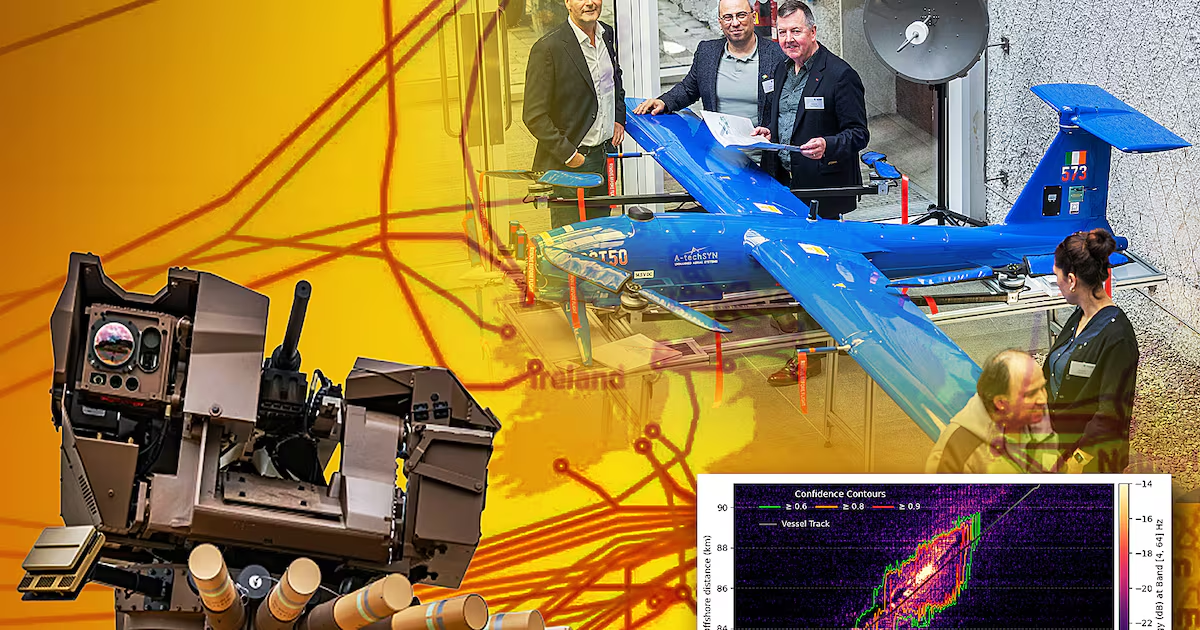
Last October, in the waters between Dublin and Holyhead, a large ship spent the day undertaking a series of unusual manoeuvres.First, it turned off its automatic identification system, in effect making it invisible to other ships. It then began sailing at slow speed in a zigzag pattern over the CeltixConnect-1, a fibre-optic cable connecting Ireland and Britain.The cable, a critical piece of infrastructure, is one of the main conduits of internet communications between the two islands.Normally, such behaviour by a “dark vessel” in the vicinity of a vital communications cable would immediately trigger alarm bells on both sides of the Irish Sea. Similar manoeuvres had been observed by the Russian spy ship Yantar during previous visits to Irish-controlled waters.This time however, there was no cause for concern. The ship in question was the Irish Naval Service’s LÉ William Butler Yeats. Its job that day was to field test a revolutionary piece of technology that uses artificial intelligence to detect threats to subsea cables.The technology, known as Sea-Scan, is one of several ways the Defence Forces is leveraging AI technology to bolster national security and make up for a lack of personnel and military assets.The LÉ William Butler Yeats docked in Dún Laoghaire harbour. Photograph: Barry Cronin Sea-Scan works by using the undersea cables themselves to monitor the ocean, says Marco Ruffini, a project lead and professor in Trinity College Dublin’s School of Computer Science and Statistics. It is being developed in co-operation with the Naval Service and recently received funding from the Department of Defence.A signal is run through the cable and bounces off nearby objects in the water. “It’s like having a microphone every 10 metres,” says Ruffini.An AI programme then interprets this data and tells the user the size, speed and direction of the vessel, he says. “The AI basically looks at the vibrations and says: ‘Yes, I see something there’.” Naval authorities can then use this information to send ships or aircraft to inspect the area.. Sea-scan signals detecting ships . It is early days, but initial tests are promising. The system can detect ships up to 2km away with a high degree of accuracy and during last October’s trial run, Sea-Scan was able to detect the Yeats every time it passed over the cable.At one point the crew tried to fool the system by deploying a smaller boat behind the Yeats, essentially using the larger vessel to disguise its signal. The AI system was able to distinguish both vessels.[ Cartels likely to see remote corners of Ireland as access route to Europe, says senior gardaOpens in new window ]It was also able to detect when the Yeats dropped its anchor near the cable.More broadly, the Defence Forces is using AI to monitor the Republic’s exclusive economic zone (EEZ) – an area seven times the size of its land mass, stretching about 370km west of the Irish coastline into the North Atlantic Ocean. Due to manpower shortages, the State can send just two of its eight ships to sea at a time. Even if it could deploy its entire fleet, the Naval Service would be unable to fully monitor the EEZ with ships alone. It is now looking to fill this gap using satellites and, in time, AI-powered drones.It recently provided funding for the Guard Project, a fleet of low-cost, semi-autonomous “long endurance offshore systems”, which can be deployed from ships in rough seas and stay airborne for up to 17 hours.“They travel 100km so that gives you significant range,” says project lead Gerard Dooly, a codirector of the Centre for Robotics and Intelligence Systems in the University of Limerick. The primary intended use of the system is in detecting vessels attempting to smuggle drugs into the State, Dooly says. “If everything’s going smoothly, all we do is we input our way points, input our map and click ‘start’. From start to finish, the drone is flying itself.”The Defence Forces is also increasingly using AI to analyse the data fed back by satellites, drones and ships. Last month, a senior naval officer confirmed to an Oireachtas committee that the Defence Forces was employing AI to monitor the dramatic increase in Russian shadow-fleet vessels – an estimated 500 ships used by Russia to evade international sanctions – passing through Irish-controlled waters. This is used to supplement the work of existing analysts, Irish Naval Service officer Commander Brian Matthews says. [ Attacks on undersea cables could cut off Ireland from global internet, Government warnedOpens in new window ]“We would never have enough analysts to do that level of work,” he says.Matthews confirmed AI would be used to analyse the “inordinate amounts of data” that will be gathered in future as part of a planned sub-sea surveillance programme.Worldwide, AI is becoming integral to how militaries operate. This can sometimes have disastrous consequences. During its war in Gaza, Israel heavily employed AI systems to recommend targets for air strikes, resulting in huge numbers of civilian casualties, according to a report by an Israeli investigative news outlet, +972 Magazine.AI target-selection systems have also been blamed in part for the US bombing of a school in Iran in February which killed up to 180 people, most of them children.Technologies such as Sea-Scan and the Guard Project provide information, not lethal force. However, Irish defence authorities are examining the purchase of other semi-autonomous systems which are likely to attract significant controversy.Earlier this year, Minister for Defence Helen McEntee announced a “government-to-government” deal with France to upgrade the Defence Forces’s armoured vehicle fleet and significantly expand the protection and firepower available to Irish soldiers.Under the deal, worth an estimated €600 million, Ireland will purchase hundreds of armoured vehicles developed under France’s Scorpion Programme.The Department of Defence says the French programme is “currently the only available programme capable of delivering the full range of capabilities required”.What was not mentioned was that the Scorpion programme is far more than a collection of modern armoured vehicles.[ Half of workers say they are expected to use new technology without adequate trainingOpens in new window ]Central to the project is a suite of AI-powered sensors and communications systems which link individual vehicles and soldiers. These systems are capable of automatically identifying a target and its location before pointing the vehicle’s weapons at the perceived threat. They can even recommend what type of weapons are best suited to eliminate the target.This “slew-to-cue” system moves the turret “so that it basically aims precisely at the threat – no humans will have to be involved in any of this”, says defence analyst Michael Shurkin.In theory, the system is also capable of firing on the target autonomously. However, no military, including France, has used it in such a way. The system still requires a human to press the “fire” button.The Department of Defence has remained silent on whether it will be acquiring the autonomous technology as part of the Scorpion deal. Last week, a department official told an Oireachtas Committee it was in “preliminary discussions” with France on the programme and that the details could not be discussed publicly for “security reasons”.Use of semi-autonomous lethal equipment could potentially weaken the State’s position as a leading voice on the international stage against the use of AI weapons.The department says it remains committed to pursuing an international treaty regulating “lethal autonomous weapons systems (LAWS)”.However, a spokesman says it would be “inappropriate” to provide details on any plans to purchase the semi-autonomous French systems.Shurkin, a former policy analyst with the CIA, says militaries are increasingly turning to AI systems to speed up decision making and reaction time to threats. “In modern warfare, and this is something that the Israelis are dealing with, there is a pressure to speed the process up, to automate more and offload more responsibility and thinking and cognitive work on to computers and off the shoulders of a commander,” he says.“But the more you automate, the more likely you are to screw up by, I don’t know, putting a Tomahawk [missile] into an Iranian school.”
Robots in the military: how the Defence Forces is using AI to cover shortfalls in resources and personnel
Technology is being deployed by Irish military to detect threats to key underwater cables and monitor Russian ‘shadow-fleet’ vessels
1,332 words~6 min read