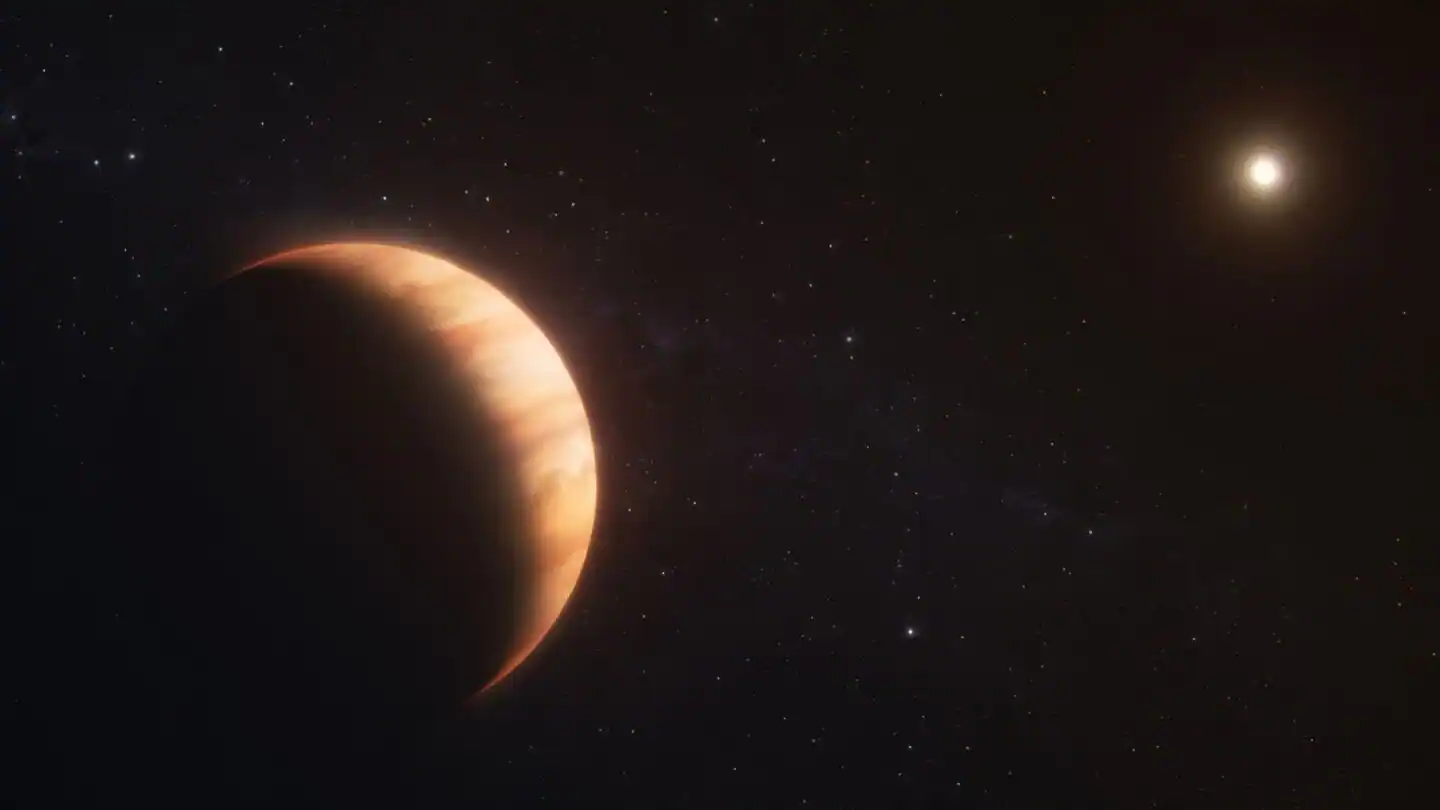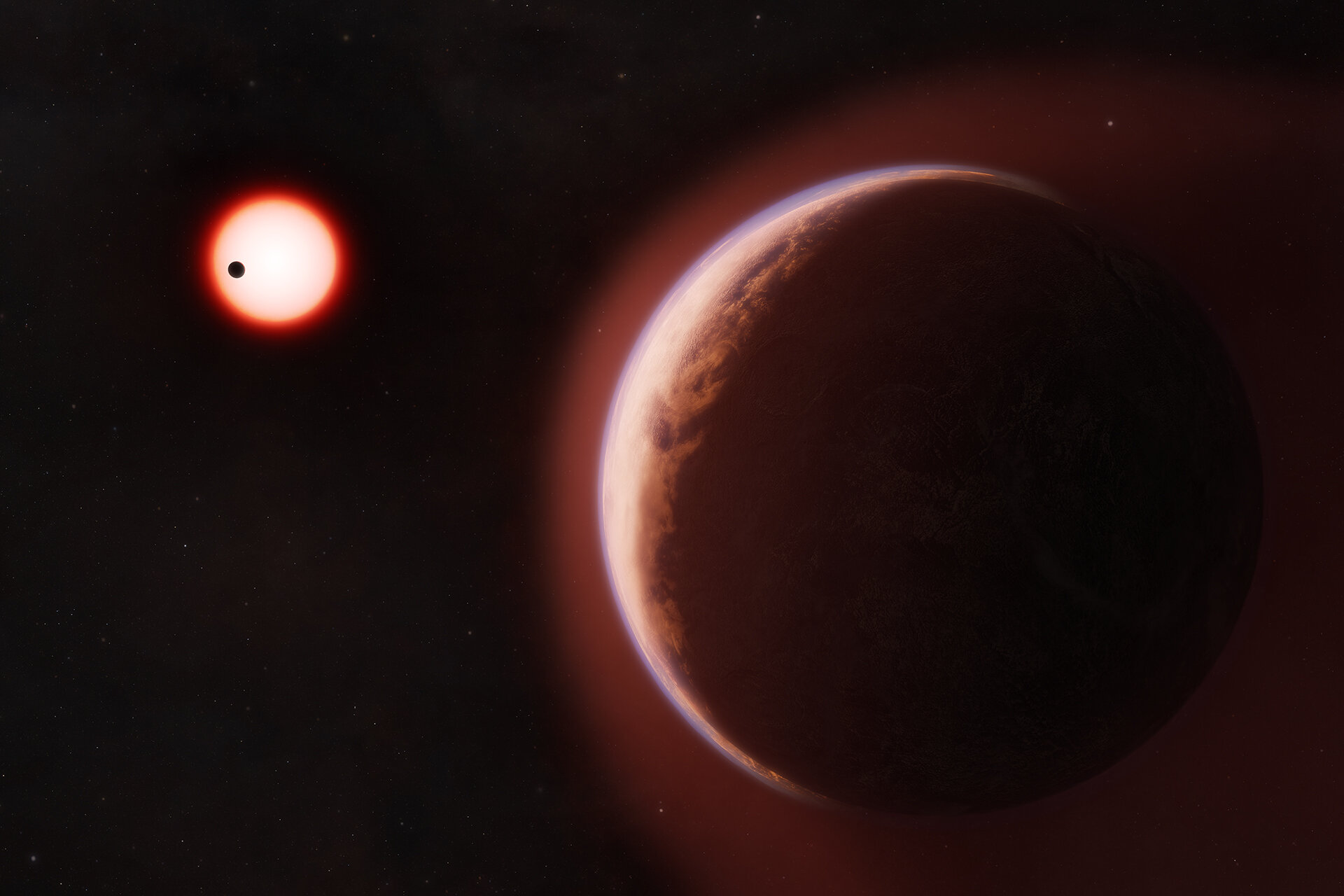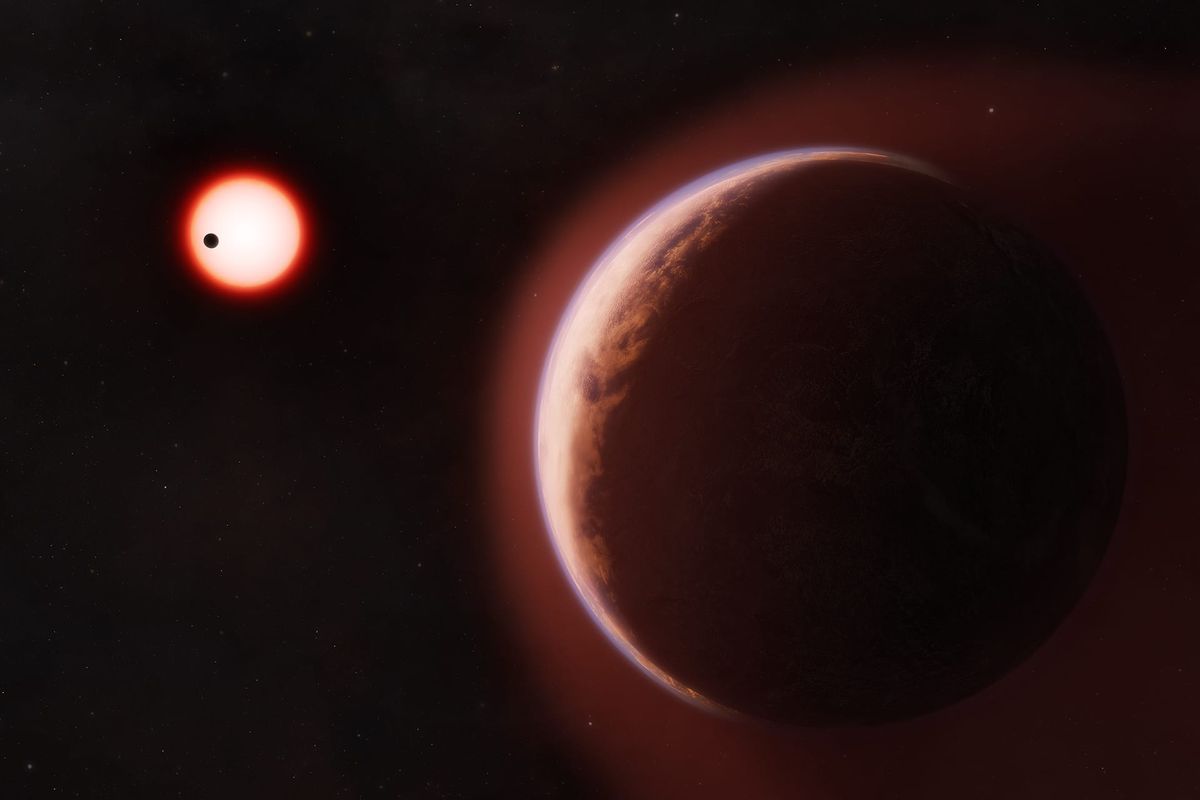
LHS 3844b is an exoplanet just slightly larger than Earth that orbits the red dwarf star LHS 3884, located 48.5 light years from our solar system. Unlike Earth, it is tidally locked, meaning it rotates once on its axis in exactly the same amount of time it takes to orbit its star. As a result, one hemisphere experiences constant, blistering daylight while the other remains in permanent darkness so cold it approaches absolute zero (zero Kelvin).
At first glance, such an extreme environment seems completely inhospitable. Daytime temperatures can reach roughly 1,000 to 2,000 Kelvin, while the night side is so cold that particle motion effectively stops. Yet new research suggests these worlds may not be as hostile to life as they appear.
"Just looking at the extreme temperatures on the day and night sides -- like 1,000-2,000 Kelvin on the day side and absolute zero on the night side -- might lead one to conclude these exoplanets are too harsh for life. But," says Daisuke Noto, a postdoctoral researcher in Hugo Ulloa's Penn GEFLOW Lab at the University of Pennsylvania, "life might find a way."
In a study published in Nature Communications, Noto and collaborators from the Japan Agency for Marine-Earth Science and Technology and Hokkaido University found that "such exoplanets may be more tolerant of sustaining life as 'tidal locking' can contribute to maintaining moderate thermal environments locally by distributing heat flux laterally."