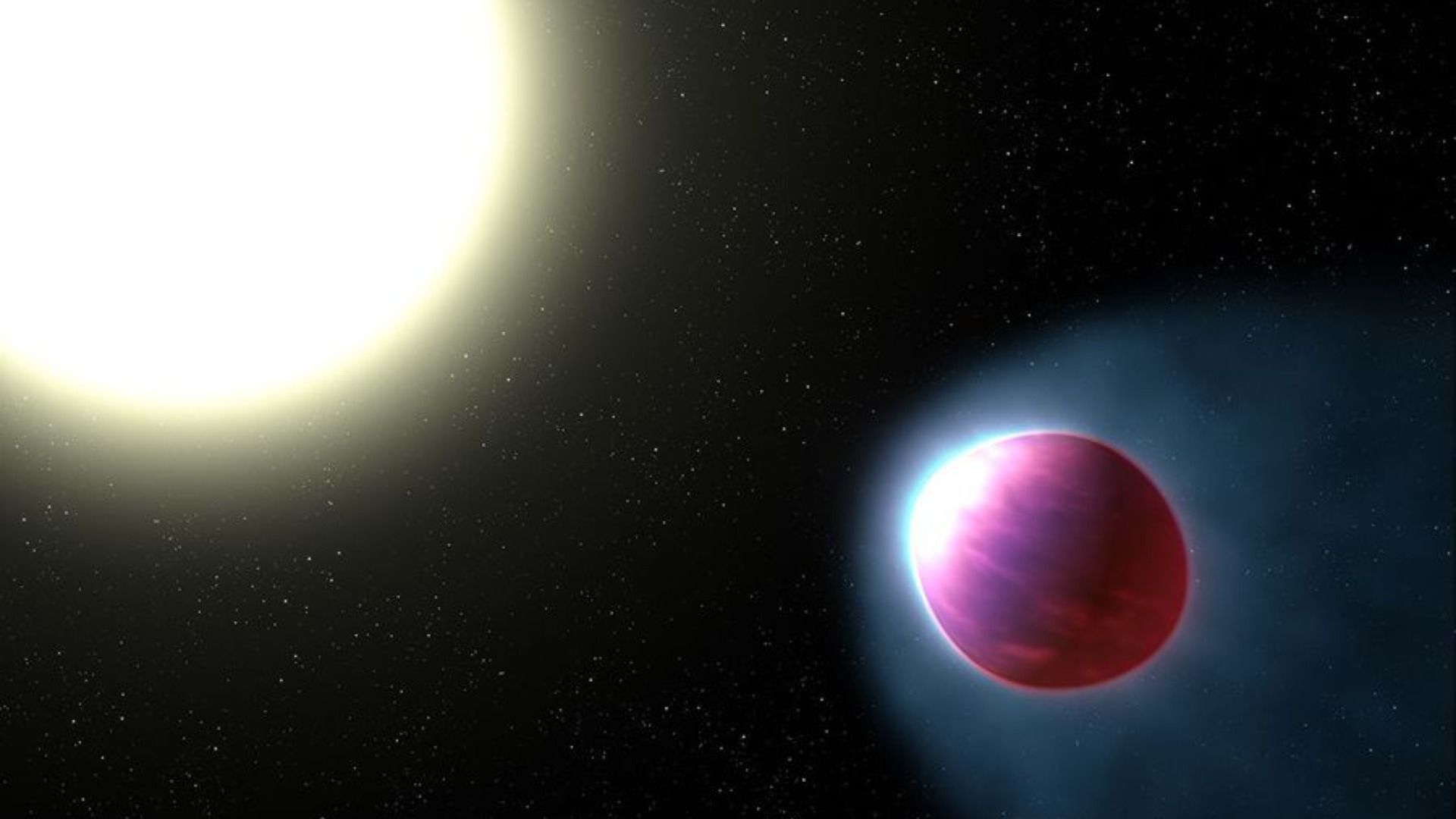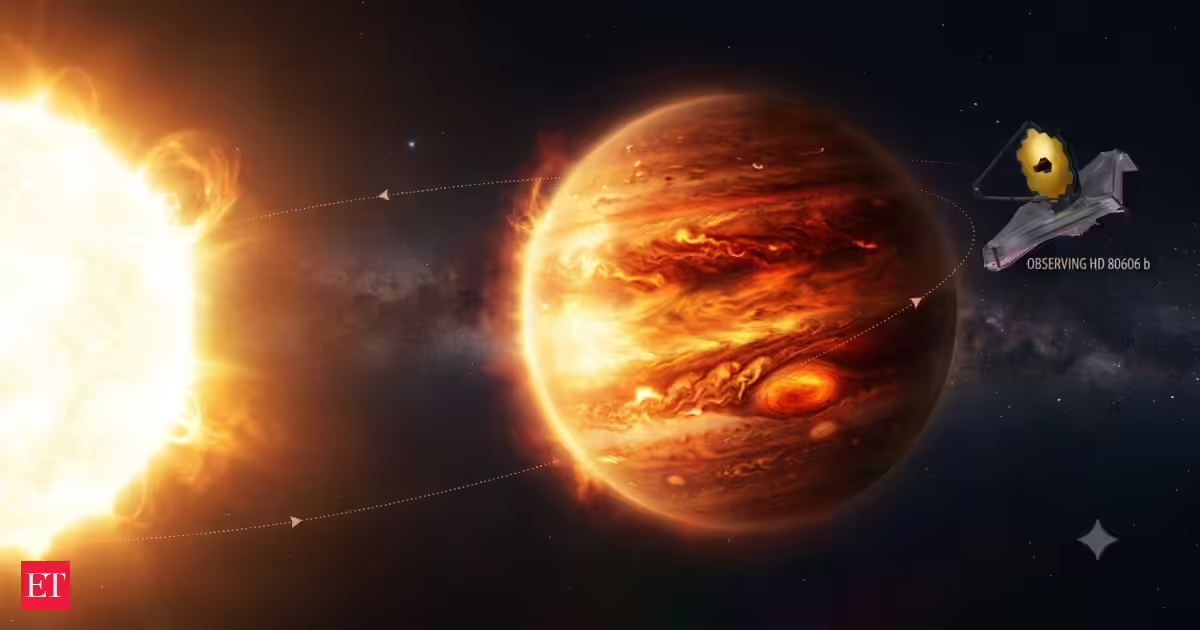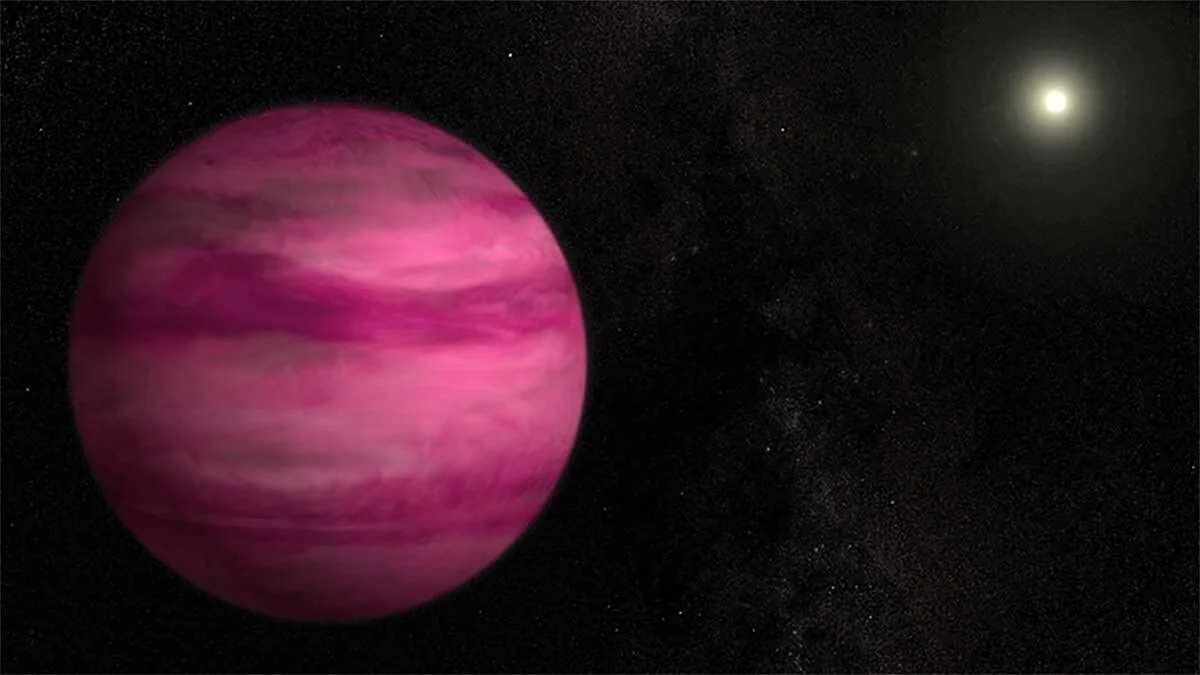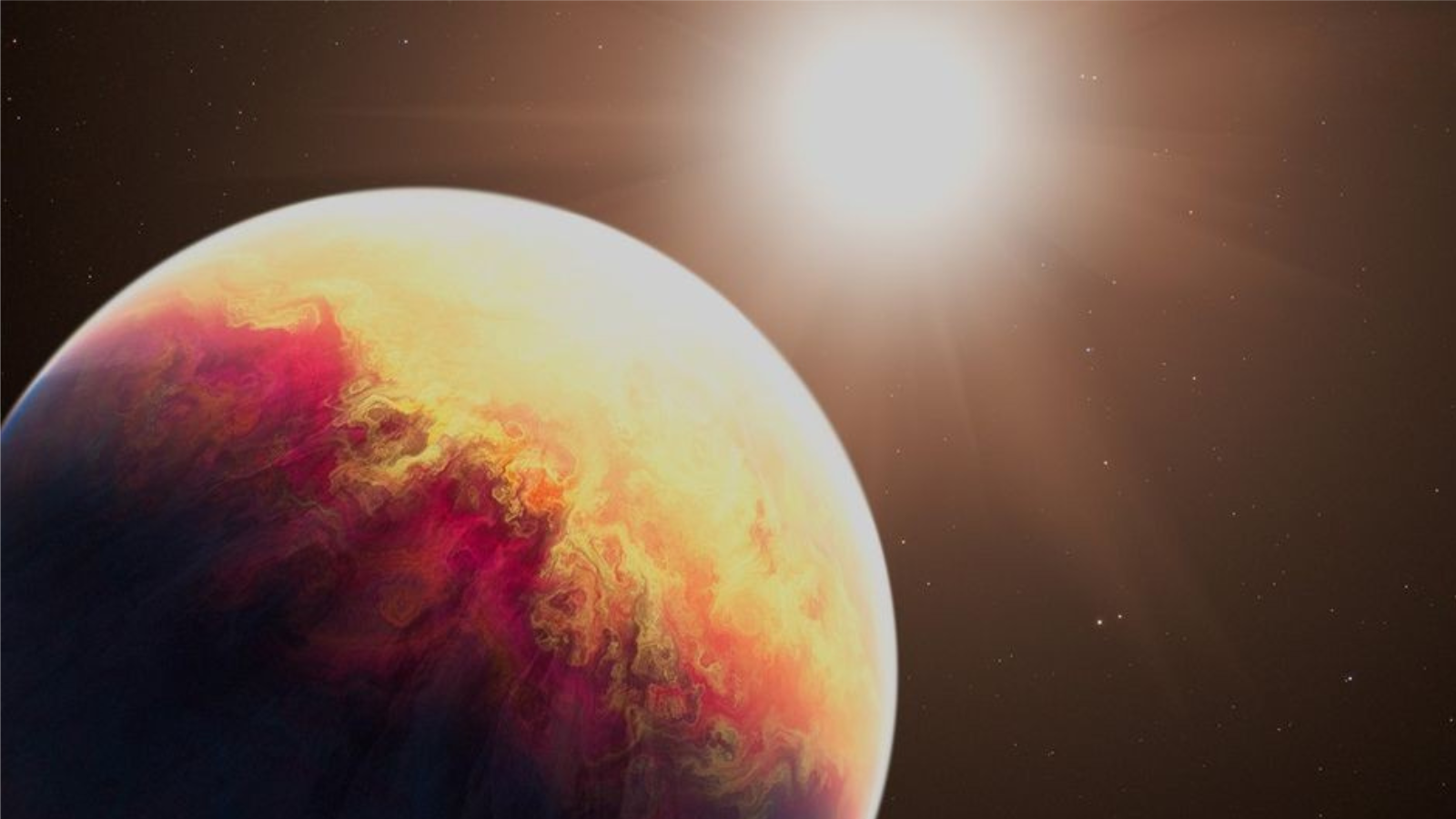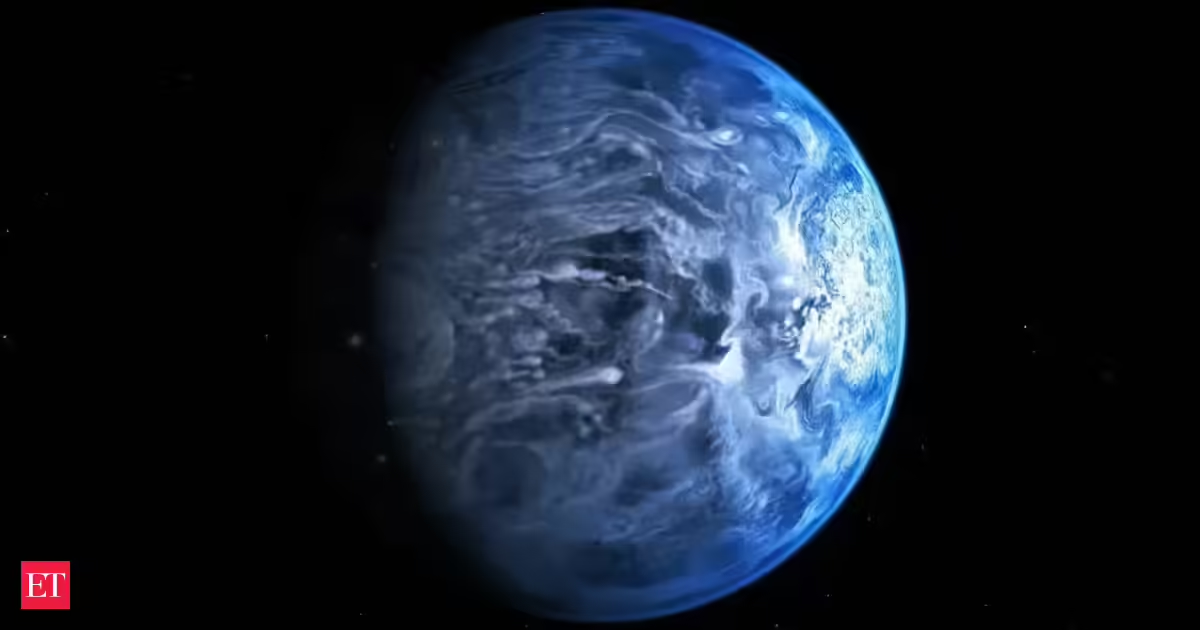
A new planet 'HD 189733b', located about 63 light-years from Earth, has left the scientists stunned and its striking blue colour has earned comparisons to Earth. Scientists believe this 'alien' blue planet is one of the most hostile places ever discovered. The planet completes an orbit around its star in just over two days, meaning a year there lasts less than a weekend on Earth. Researchers believe the planet experiences scorching temperatures, supersonic winds, and even rain made of molten glass.ALSO READ: Dream vacation turns into nightmare: Traveller spends days in coma, then slapped with $147,000 medical bill after more than a year. Why Is This Planet Blue?The blue hue of HD 189733b caught astronomers' attention in 2005 and observations from NASA's Hubble Space Telescope revealed that the planet appears as a deep cobalt blue when viewed in visible light. But it has nothing to do with oceans or water. Scientists believe the blue appearance comes from silicate particles in the planet's atmosphere, which scatter blue light more effectively than red light, creating the planet's striking colour. The same silicate materials may also be responsible for one of the planet's most terrifying weather phenomena.ALSO READ: IRCTC new website launch date announced by Ashwini Vaishnaw A World Where It Rains Molten GlassAccording to researchers, the atmosphere of HD 189733b may contain tiny silicate particles that condense into molten droplets. These droplets are believed to fall as glass rain rather than water rain. But the rain doesn't fall straight down.The planet is battered by winds that can reach around 7,000 kilometers per hour, fast enough to sweep the glass sideways across the atmosphere. Temperatures Hotter Than a FurnaceHD 189733b is classified as a "hot Jupiter" — a gas giant that orbits extremely close to its parent star. Because of this close orbit, daytime temperatures can soar above 930 degrees Celsius, hot enough to melt many materials found on Earth. Some observations suggest temperatures may approach or exceed 1,000 degrees Celsius in parts of the atmosphere.One of the Most Extreme Worlds Ever FoundAstronomers discovered HD 189733b in 2005, and it has since become one of the most studied exoplanets outside our solar system. Its extreme weather, unusual atmosphere, and vivid blue color have made it a favorite target for researchers trying to understand how alien worlds form and evolve.While the planet may resemble Earth's famous "Blue Marble" from afar, the similarities end there. Instead of oceans, clouds, and rain, this distant world offers blistering heat, hurricane-force winds, and storms of molten glass — a reminder that some of the universe's most beautiful places can also be its most dangerous.
This 'alien' blue planet rains molten glass and a year here is less than a weekend, scientists are stunned
Scientists are stunned by HD 189733b, a blue planet 63 light-years away, resembling Earth but far more hostile. Orbiting its star in just two days, it endures scorching temperatures, supersonic winds, and glass rain. Its striking blue color stems from silicate particles scattering light, not oceans. This 'hot Jupiter' offers a stark reminder of the universe's dangerous beauty.
TL;DRAI
HD 189733b orbita in 2 giorni con piogge di vetro fuso, venti a 7.000 km/h e temperature >930°C a 63 anni-luce da Terra. Alimenta ricerca in astrofisica computazionale e AI per simulazione ambientale, uno dei mondi più estremi e studiati nel genere.
436 words~2 min read