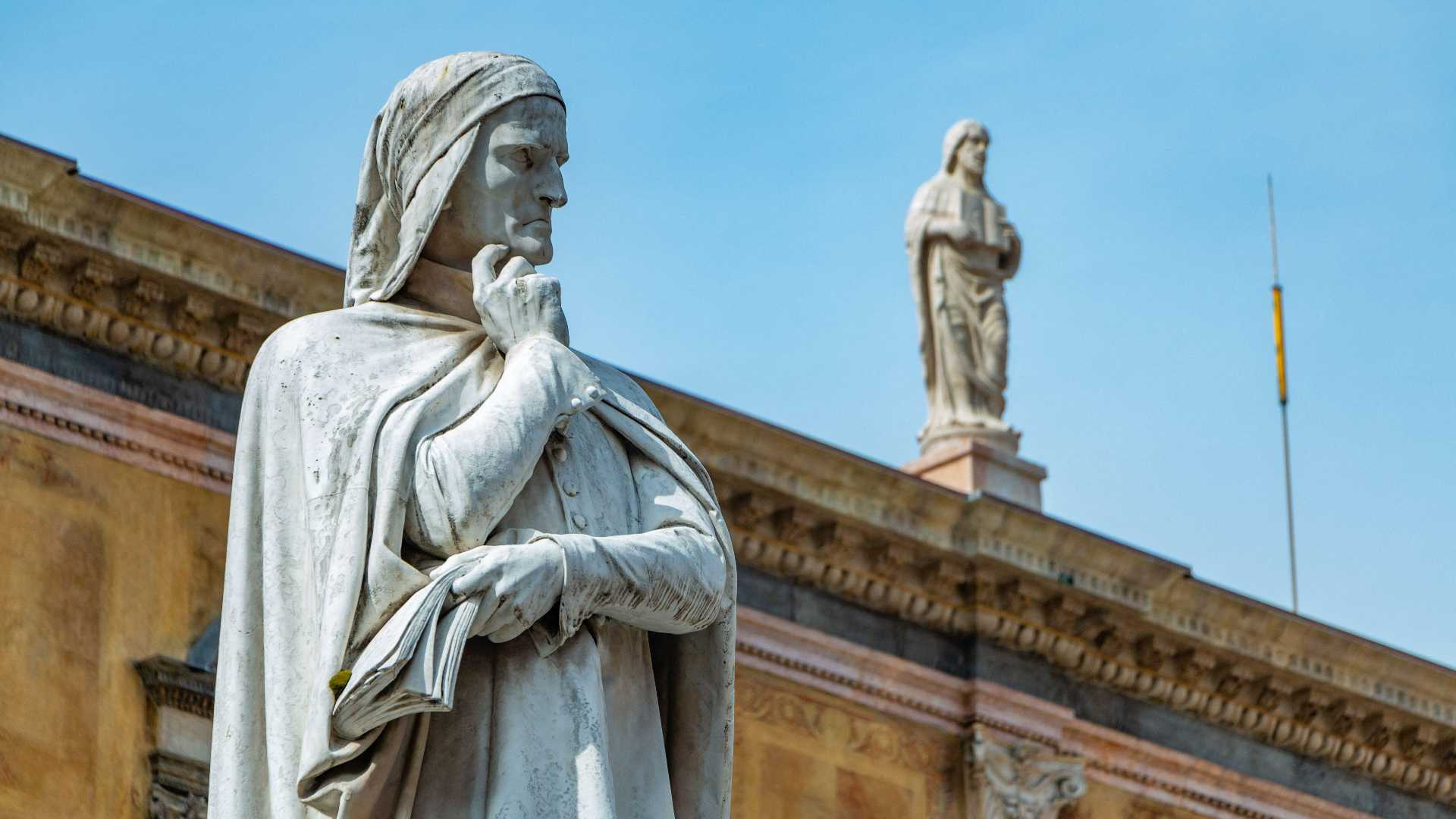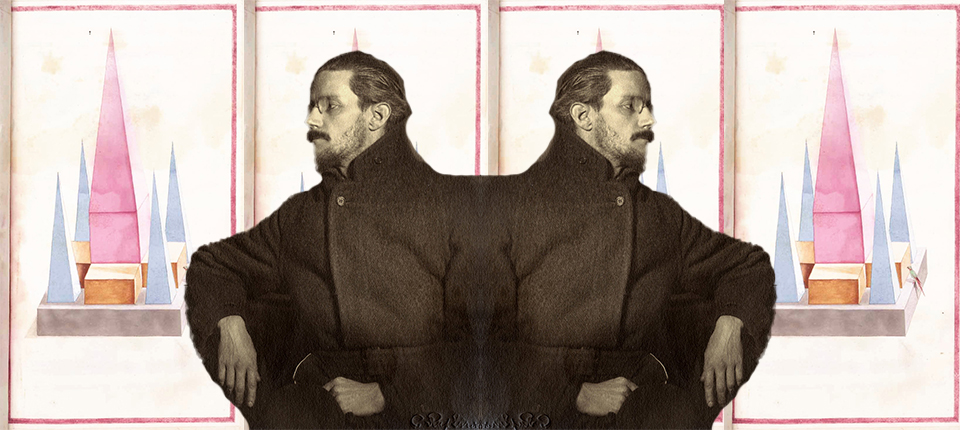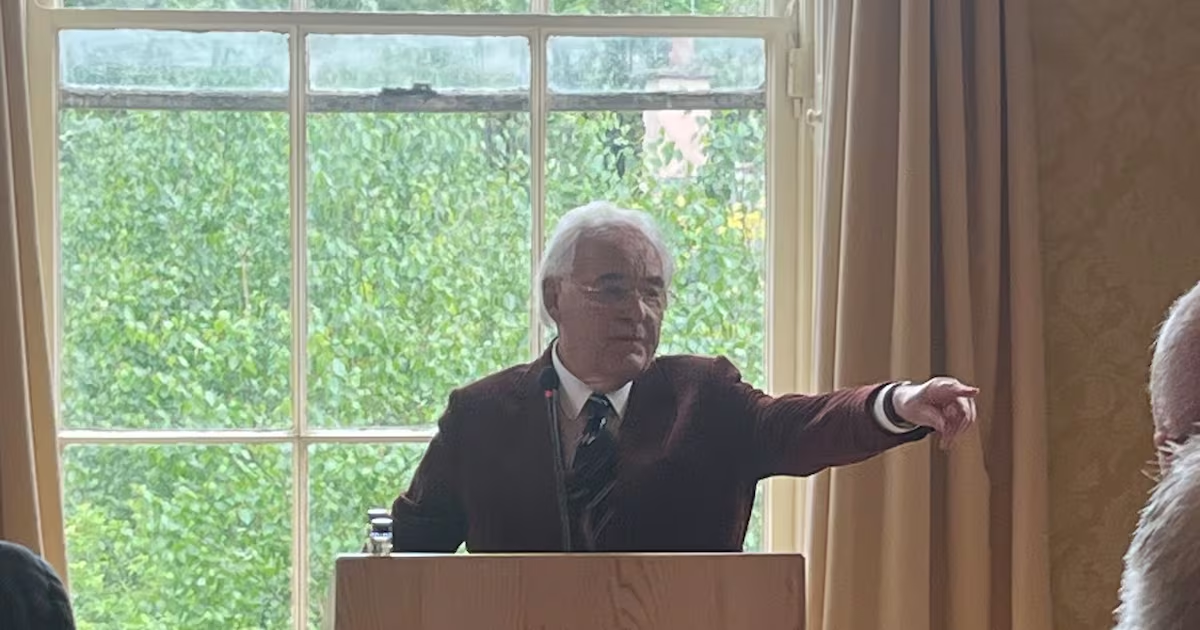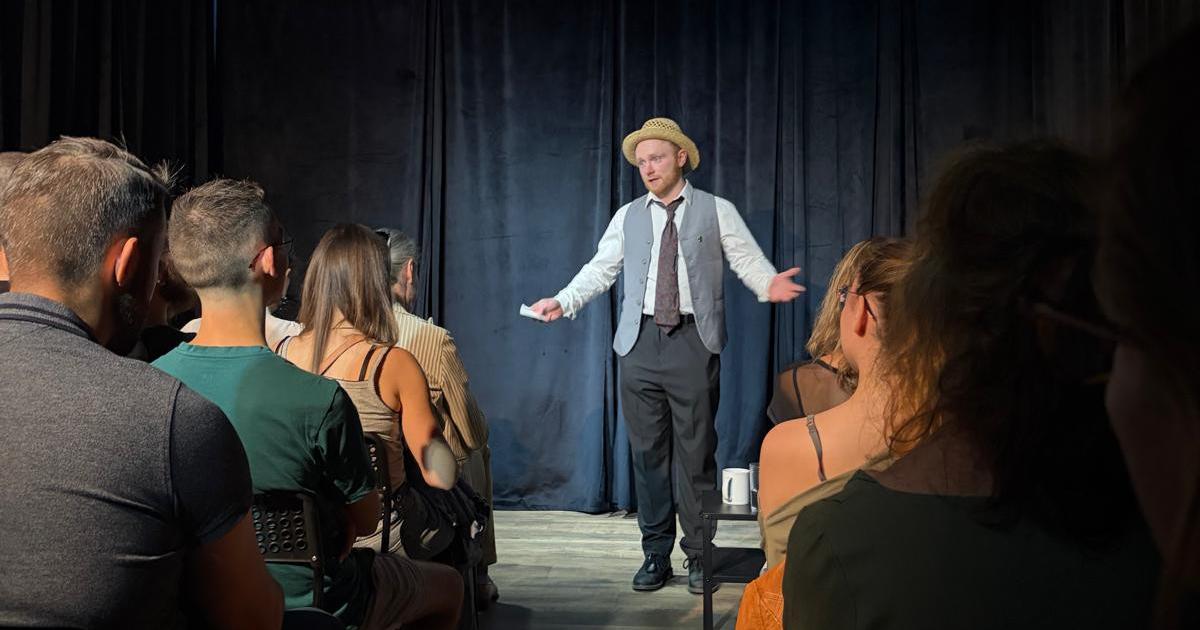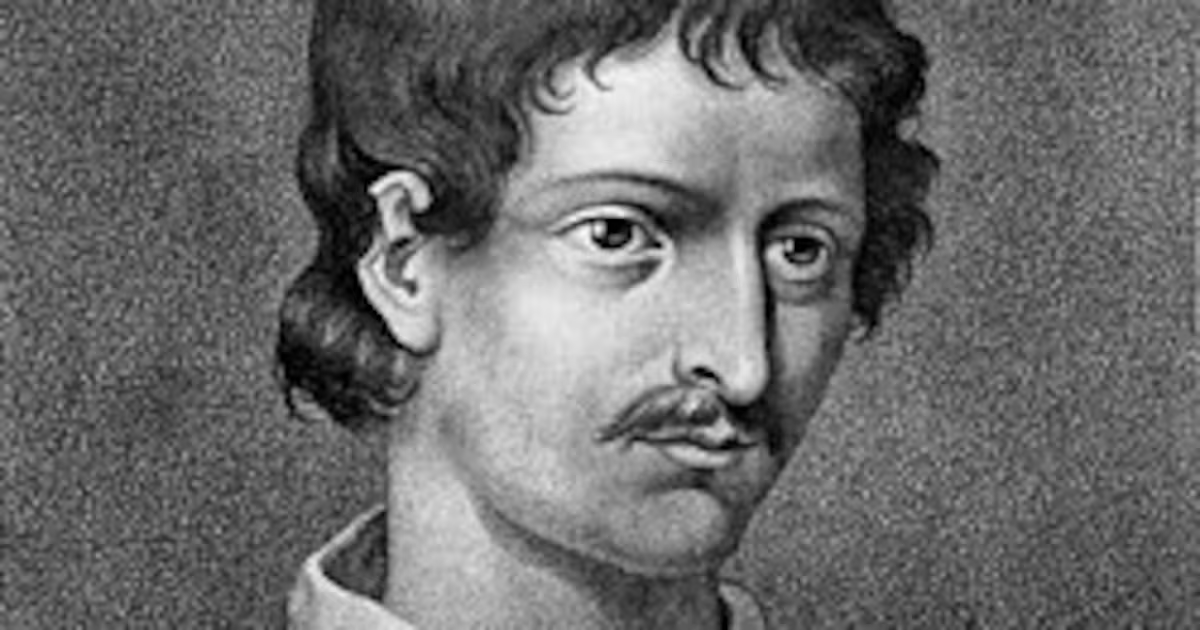
When James Joyce was promoting his “Work in Progress” (eventually to become Finnegans Wake) in 1929, he gathered around him 12 apostles to help spread the word.Among them was Samuel Beckett, soon to be an important writer himself but then newly out of college and teaching in Paris, where he had become Joyce’s friend and acolyte.Not only was the young man happy to help explain his fellow Dubliner’s genius to the world, he dutifully accepted Joyce’s suggestion for the title of his contribution to a collection of essays on the WIP.As Beckett biographer Anthony Cronin put it, Joyce “ran a tight ship”. Although the critical symposium was Sylvia Beach’s initiative, Joyce’s micromanagement included even dictating the number of dots between the names in Beckett’s title: “Dante… Bruno. Vico.. Joyce”. The dots pedantically represented the number of centuries between and since the lives of the great Italian writers to which the WIP’s author was placing himself as successor.The second man on the list, Giordano Bruno (1548-1600), had been one of the great discoveries of Joyce’s time studying Italian in UCD between 1898 and 1902.Considered a heretic in his own life, Bruno was burned at the stake in Rome and remained a controversial figure long afterwards. By the 1890s, a rehabilitation campaign was under way, including a statue at the place where he died.Still, the notoriety lingered. When the student Joyce expressed admiration for Bruno’s ideas, his affable Italian lecturer, the Jesuit Father Charles Ghezzi, felt the need to remind him that Bruno had been a “terrible heretic”. To which the anticlerical Joyce countered: “Yes, and he was terribly burned.”The philosopher was also sometimes called Bruno of Nola, after the town where he was born, and by extension Bruno the Nolan. This, combined with one of his key ideas, about the essential unity of opposites, gave rise to a running joke in Finnegans Wake.At least nine times in that book, the author puns on the names “Brown” and “Nolan”, the point of which might have been lost to non-Irish readers until Beckett, in his essay, made the link between the Italian heretic and Browne & Nolan, a Dublin publishing firm synonymous with schoolbooks.(It’s a minor tragedy that Brian O’Nolan, aka Flann O’Brien and Myles na gCopaleen, studied German at UCD, not Italian. He could have taken Joyce’s joke to whole new heights.)Fr Ghezzi was one of those “thoroughly sympathetic, liberal” teachers from whom, according to biographer Richard Ellmann, Joyce benefited at every stage of his education. And as Ellmann also points out, he was rewarded by becoming a character – or part of one – in Ulysses, albeit disguised as Almidano Artifoni.The euphonious name was taken from another real-life teacher, whom Joyce knew in Trieste but who never visited Dublin. So although that man’s name is immortalised in Ulysses, Ellmann suggests the character’s “benign” personality was Ghezzi’s.In combination, they make several appearances in the Wandering Rocks episode, set between 2.55pm and 4pm on June 16th, 1904, and meticulously tracing the movements of all the book’s protagonists as they criss-cross the streets of Dublin.Thus, Joyce’s composite tribute to Italian pedagogy narrowly misses catching a Dalkey tram near Trinity College and later walks past Holles Street, just ahead of the noted eccentric Cashel Boyle O’Connor Fitzmaurice Tisdall Farrell.But the author also gives him the honour of closing the chapter, with a disappearing act as the viceregal carriage of Ireland’s Lord Lieutenant – which has shot across the city and chapter like an arrow – nears its destination at Ballsbridge:“On Northumberland and Lansdowne roads, His Excellency acknowledged punctually salutes from rare male walkers, the salute of two small schoolboys at the garden gate of the house said to have been admired by the late queen when visiting the Irish capital with her husband, the prince consort, in 1849 and the salute of Almidano Artifoni’s sturdy trousers swallowed by a closing door.”To the many distinctions of Joyce’s time in UCD, we can now add that it marked the halfway point towards a remarkable milestone being celebrated in Dublin this weekend.For 2026 is the 250th anniversary of the introduction to Ireland of third-level studies in modern European languages. That happened in 1776, when Trinity College Dublin established chairs in Italian, French, German, and Spanish. It was a first not just for this country but anywhere in the world then.TCD and UCD have formed a united front for the semiquincentenary, hosting jointly the latest biennial conference of the Society for Italian Studies, which began on Thursday (July 9th) and brings together 300 scholars from several continents.Joyce and Beckett both feature in papers, as does Fr Ghezzi. But the many discussions will also include, for example, one about the influence of Irish theatre on film-maker Pier Paolo Pasolini.A radical figure in 20th-century Italy and the victim of a still-unsolved murder in 1975, Pasolini had an early fascination with the “poetic regionalism” of JM Synge and WB Yeats. As a student in Bologna, he staged productions of, among other works, The Playboy of the Western World.
Talking Italian: Frank McNally on Joyce, Beckett and 250 years of language studies in Ireland
Joyce’s studies had been shaped by Giordano Bruno – a man considered a ‘terrible heretic’ in his own lifetime
836 words~4 min read