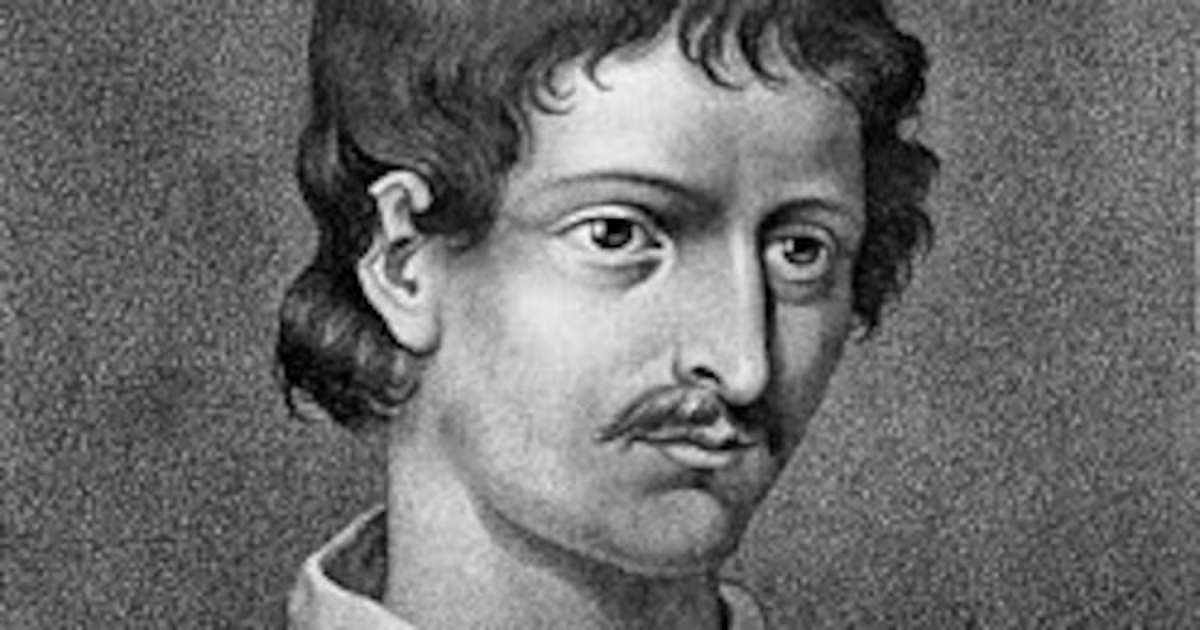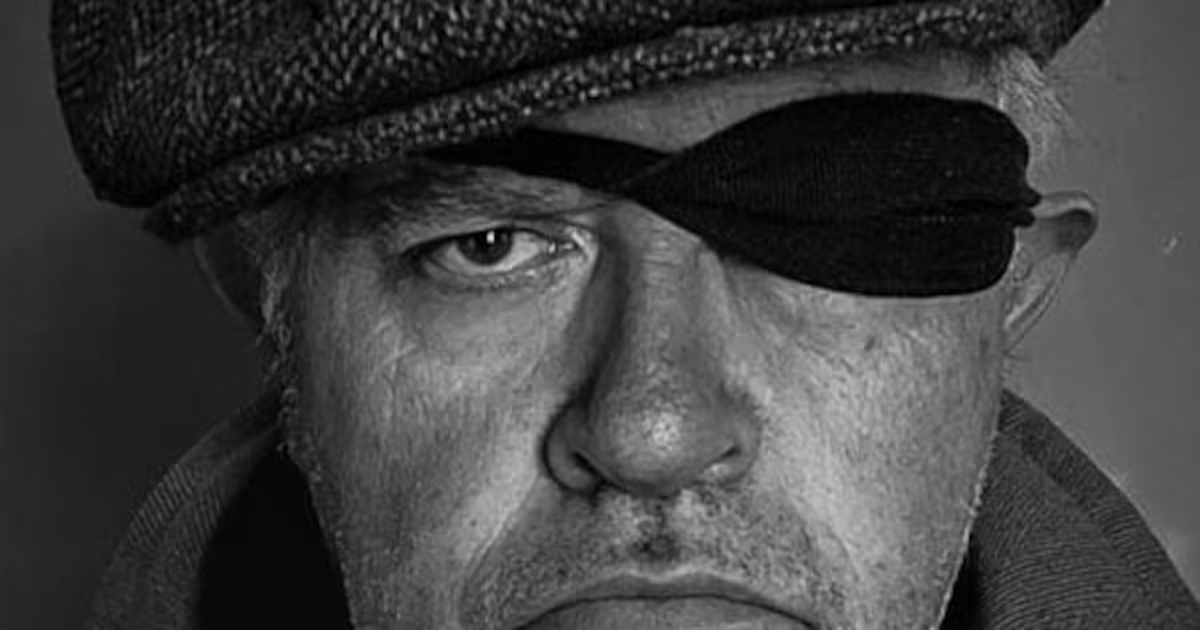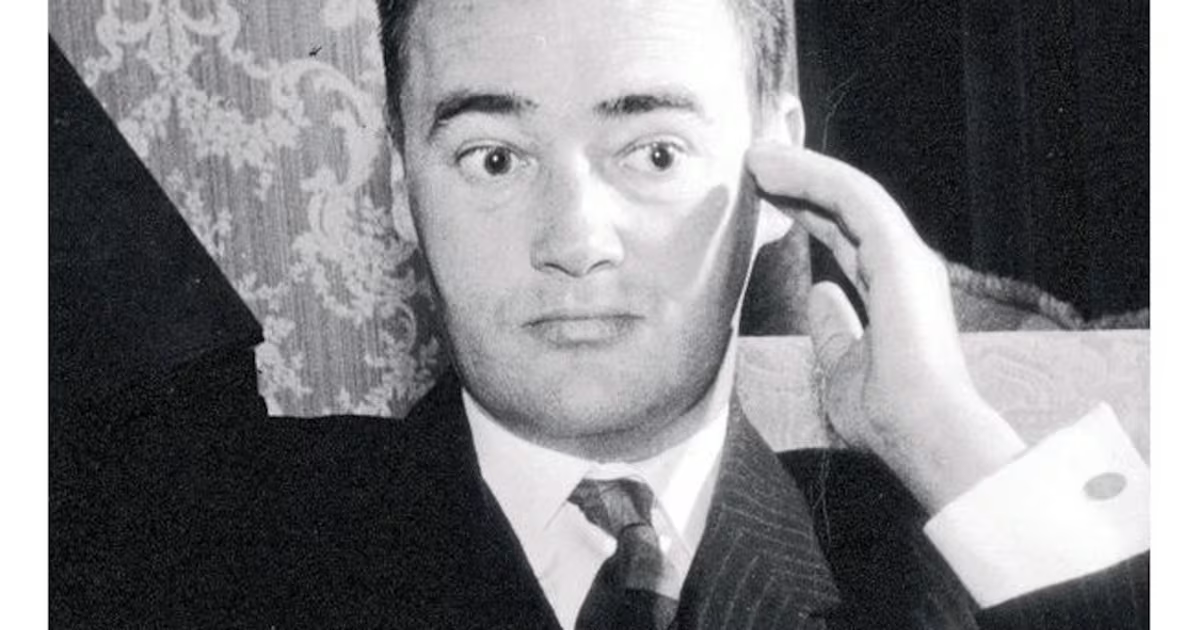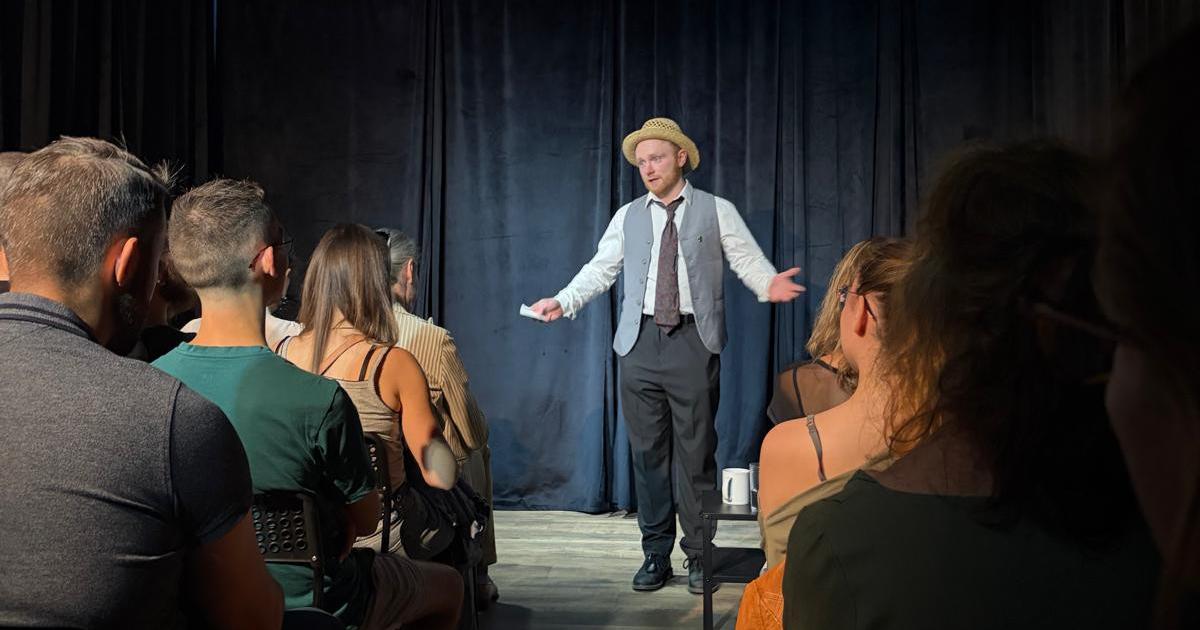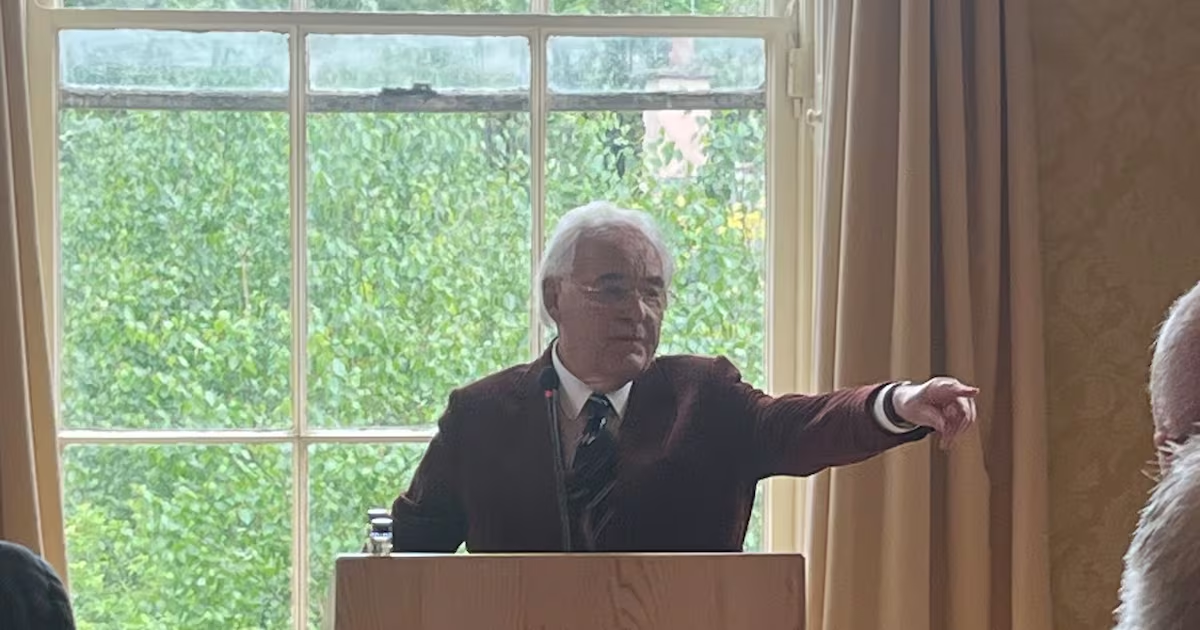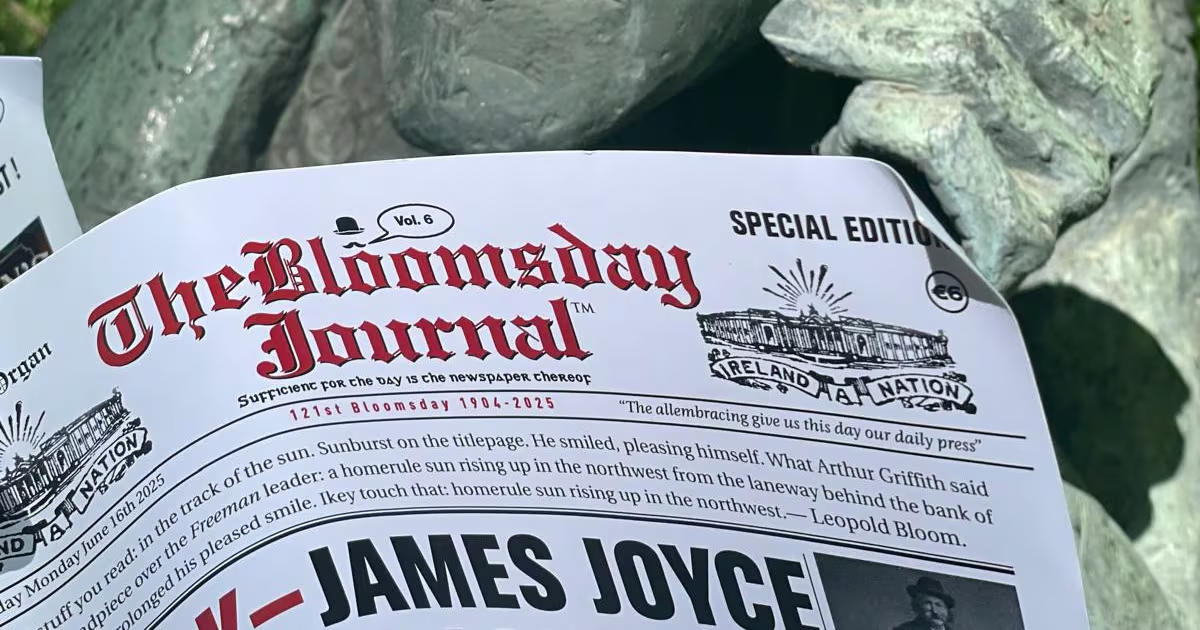
Visiting Zurich for the first time last weekend, I made the obligatory pilgrimage to Fluntern Cemetery to pay my respects to Mr Joyce. As depicted in bronze by sculptor Milton Hebald, the author of Ulysses sits by his own graveside, smoking and reading a book that he has temporarily put aside to peer off into the middle distance, deep in thought.He was rudely interrupted from his reverie on Friday last by a copy of The Bloomsday Journal, a quarterly mini-newspaper held open before him by my fellow traveller Senan Molony, a contributor to said organ.And for a moment, Joyce really did seem to be absorbed in the headlines, as well he might. But we couldn’t wait for him to read the whole thing, because we had to be back in town within the hour to speak at a literary event. An event that, as we had to tell the great man sheepishly, was not about him. Or not primarily, anyway. In fact, we were in Zurich to discuss Aldous Huxley, an English writer who never set foot in that city and with whom Joyce had strained relations.The odd circumstances that brought our visit about, even odder to say, were in part the influence of another Irish novelist: Flann O’Brien.For it so happens that there lives in Zurich these days one Oisín Ó Nualláin, son of “the Brother”, Micheál, and nephew of Brian Ó Nualláin (aka Flann and Myles). A latterday St Gallen, Oisín is now on a mission to spread enlightenment among the Swiss.Or at least he’s teaching English in a Zurich language school, while also serving as co-ordinator of the local Aldous Huxley Centre. That conjunction arises because the man who owns the school, Swiss-born Robin Hull, may also be the world’s leading Huxley expert and certainly owns the greatest collection of the writer’s work and memorabilia.It’s possible that one of Huxley’s novels helped suggest the anarchic structure of O’Brien’s debut, At Swim-Two-Birds, in which fictional characters drug the author and seize control of the plot. Joyce and Huxley had met a few times while alive, but not happily, as the Englishman later lamentedIf so, O’Brien repaid the compliment by having the narrator acknowledge that his bookshelves contain not just the works of “Mr Joyce” but also “the widely read books of Mr A Huxley”.Well, Hull has all those books, some of them the author’s personal copies. He has also attempted to recreate Huxley’s entire library, the original of which was destroyed in a Californian brush fire of 1961. It’s not just about Huxley, though. At a time when the humanities are in retreat everywhere, Hull is determined to get students reading and thinking about literature in general again. Meanwhile, given the proven 1,400-year-old track record of Irish educators in Switzerland, he has also had the good sense to hire a Corkman, James Cunningham from Ballincollig, as principal of his language school.For our event there, we were joined by two fine English academics, Toby Harris and Emily Reed. But the Hibernophile flavour was underscored by the presence of Ireland’s entire diplomatic mission to Switzerland, ambassador Aoife McGarry and her deputy David McDonnell, who’d both come up from Berne for the evening. [ Surprise(d) guest: Frank McNally on the mysteries of Irish-English and the story behind the world’s greatest collection of JoyceanaOpens in new window ]Furthermore, although the discussion was headlined “Visions of Huxley”, we somehow dragged the man from Fluntern Cemetery into it anyway, regardless of the risks.Joyce and Huxley had met a few times while alive, but not happily, as the Englishman later lamented. First, hosting him at a dinner party once in Paris, they served red wine, whereas Joyce liked only white. For this and other reasons, the conversation dragged: “Finally in despair my wife said something about the flowers on the table: to which he said laconically, ‘I hate flowers,’ and lapsed into silence.”Our event was more successful, I’m glad to say. Wine and conversation both flowed afterwards, perhaps to a fault.Although he spent much longer in Paris and Trieste, Joyce began and ended his exile in Zurich. He went there first in 1904, on a kind of honeymoon with his newly beloved Nora Barnacle, but with no money and what turned out to be the false promise of a job.They returned during the first World War when Zurich was full of fellow refugees, including Lenin, who like Joyce frequented the Cafe Odeon (where we also paid respects at the weekend, over a pint). And at the end of a precarious life together, the couple fled there again in December 1940 for what proved to be Joyce’s last weeks. As Richard Ellmann writes, he was back in the city where he had come 36 years before, “arrogant in the flush of his own genius”. Now, “he knew too much for arrogance; he arrived broken and sick, prematurely aged, among the scenes of his past strength”.He died on January 13th, 1941, and was buried at Fluntern “on a cold snowy day”. Sure enough, there were no flowers at the funeral. And maybe the single blossom that someone had left on the grave before our visit was for Nora rather than her husband. Forewarned by Huxley, however, we didn’t add to it.
Aldous and Joyce too: Frank McNally on a literary pilgrimage to Zurich
The odd circumstances that brought our visit about were in part the influence of another Irish novelist – Flann O’Brien
874 words~4 min read