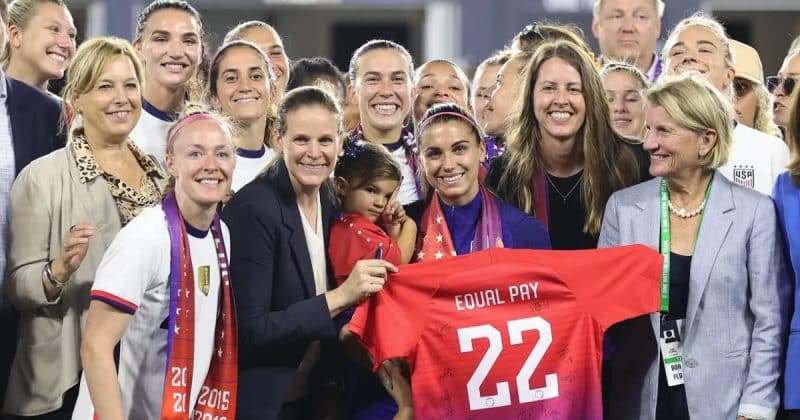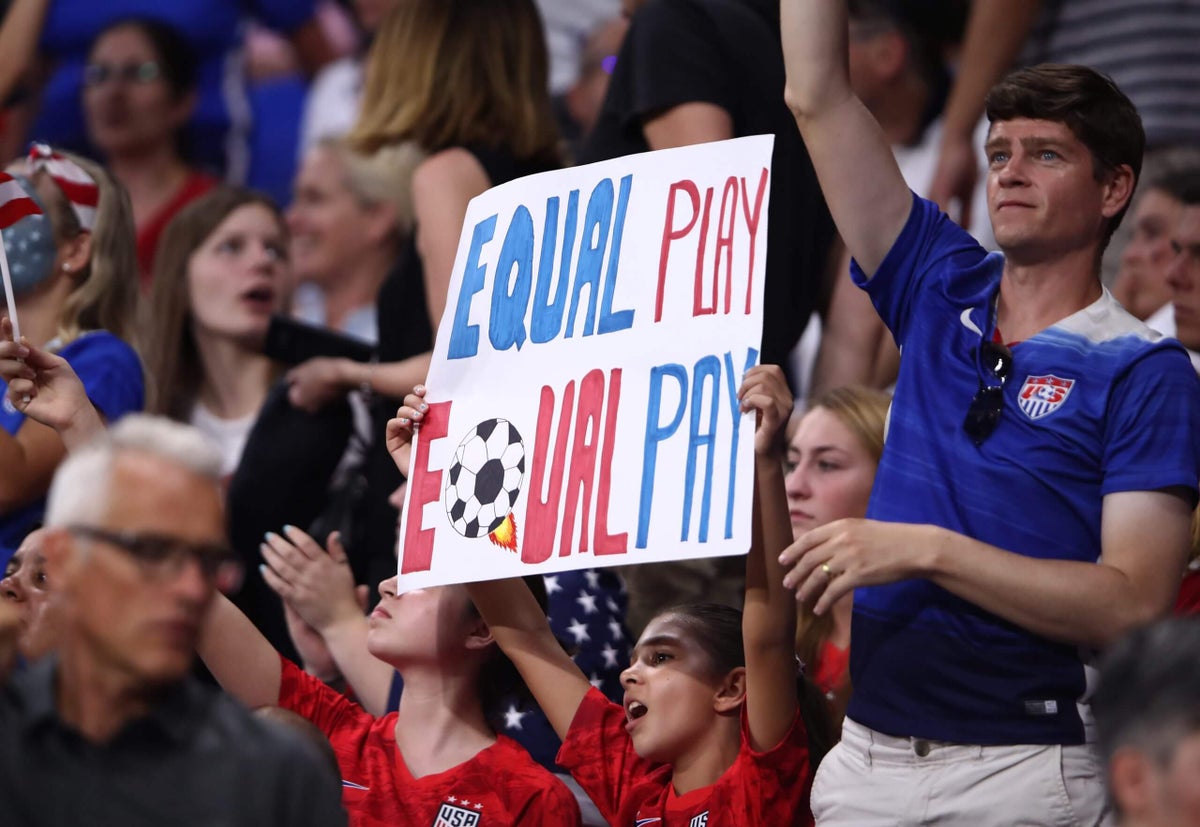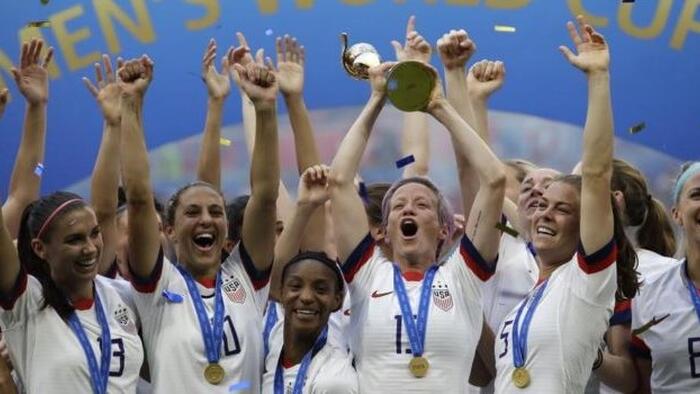
A decade ago, members of the U.S. Women’s National Team began their fight for equal pay. The team had won four World Cup titles, four Olympic gold medals, and spent six years ranked as FIFA’s No. 1. Meanwhile, the men had failed to even qualify for the 2017 World Cup—and the women only got bonuses of $110,000 for their win while the men would have raked in more than $400,000 each.
This was all part of a six-year lawsuit involving soccer’s biggest stars, like Alex Morgan and Megan Rapinoe. It got ugly at times. The U.S. Soccer Federation argued in filings that the pay disparities were valid because the women “do not perform equal work requiring equal skill [and] effort.” Since then, U.S. Soccer has overhauled its leadership.
In 2022, the two sides settled the lawsuit for $24 million. That year, the men’s and women’s teams also signed new collective-bargaining agreements with U.S. Soccer. The CBA determined that when both teams qualified for the World Cup, FIFA prize money would be split equally between men’s and women’s players, regardless of which team won it.
That split was first triggered later in 2022, when the men won $13 million in a round-of-16 exit in that year’s World Cup, and 2023, when the women earned $1.87 million for a same-stage exit in their competition.