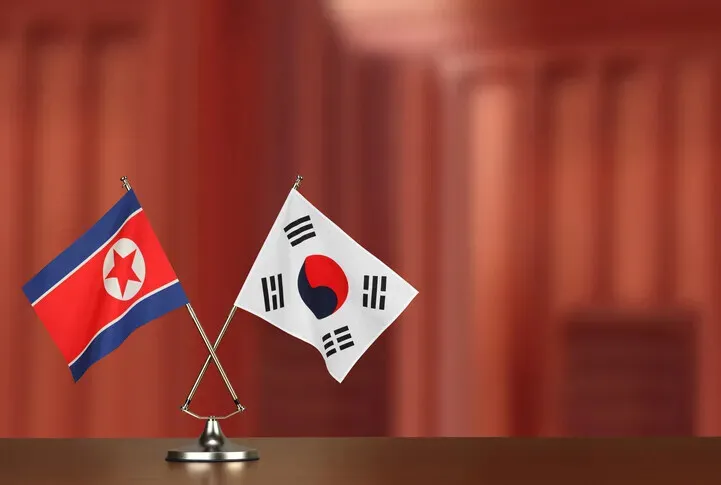
Illustration by Kim Dae-jung.
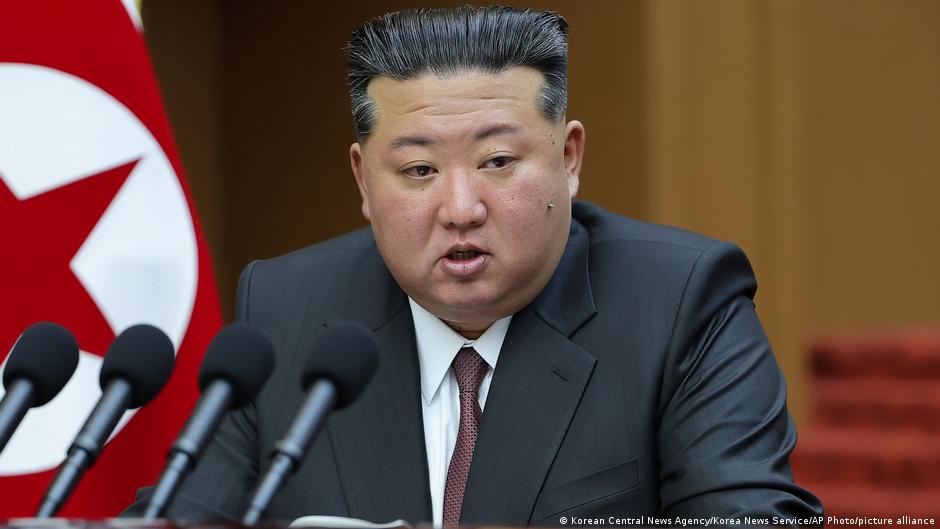
By Pak Noja (Vladimir Tikhonov), professor of Korean studies at the University of OsloNorth Korean leader Kim Jong-un recently decided to scrap the long-standing narrative of national reunification, declaring that inter-Korean relations are not fraternal but hostile in nature. While that declaration became a global talking point, it is curiously consistent with recent trends among South Korean young people, who tend to view Kim as being from another planet.According to a poll on attitudes toward unification carried out last October by the Institute for Peace and Unification Studies at Seoul National University, no fewer than 50.7% of South Koreans in their 20s regard unification as being “unnecessary,” while just 24.4% see it as “necessary.” In terms of their skepticism or outright rejection of unification and their tendency to regard Korea’s division as permanent, the younger generations on both sides of the 38th parallel are paralleling each other.But these similarities go beyond skepticism or rejection of the unification narrative. Notwithstanding massive inter-Korean differences ranging from their economic disparity to their conflicting geopolitical alignment, a peculiar parallel can be drawn between the two societies’ development trajectories not only in the period of modernization under the authoritarian leadership of Park Chung-hee in the South and Kim Il-sung in the North, but also more recently.South Korea has become a thoroughly capitalist society in which one-third of the population is preoccupied with maximizing personal profit through stock investments. North Korea has also undergone marketization and capitalization supported by a recent update to the constitution. Passages about “a country from which taxes have disappeared” (Article 25) and “workers who have never known unemployment” (Article 29) have been dropped, and a passage about “the reinforcement and development of a fully free medical system” (Article 56) has been revised to state “the reinforcement and development of a socialist public health system.”In short, the word “free” has been quietly dropped from the text. To be sure, the extent of capitalism varies between the two countries, including personal stock portfolios in the wealthy South and largely being limited to unofficial marketplaces in the poor North. But from a big-picture perspective, it seems clear that the two societies are moving in the same direction.The most notable commonality between South and North Korea is the two societies’ militarization in terms of their diplomacy and national security postures. Both countries emerged from the crucible of the Korean War as security-forward garrison states that continued to move along a similar trajectory despite their rivalry.Initially, these trends were more evident in North Korea, but arms industries grew up in both countries in the 1960s and 1970s. It was in the latter decade that both countries began exporting arms overseas, albeit on a modest scale. Both North and South chose the arms sector as the means of addressing their economic problems.When South Korea was weaker than the North in the 1960s, it kicked its development into high gear with the lucrative trade in supplying American troops fighting in the Vietnam War, as well as the equally lucrative deployment of South Korean troops on Vietnamese soil.Then in 2020, when North Korea found itself in a much weaker position than the South, it took advantage of economic demand from Russia in its war against Ukraine and deployed its own troops to the front, bringing in war profits estimated to be between 50%-80% of North Korea’s gross domestic product (GDP). For a garrison state, exporting weapons, war supplies and mercenary labor is the easiest way to solve economic challenges.Such solutions were available to both South and North Korea largely because of their posture vis-à-vis diplomacy and national security. Even though the US, as South Korea’s primary military partner, is gradually losing its hegemony, the two countries’ military and security relationship remains largely the same.Meanwhile, Russia is trapped in the quagmire of its war against Ukraine, which is comparable to the US’ position in the Vietnam War in the sense that Russia finds itself incapable of either winning or withdrawing without grievous losses. While Russia may also be tarnishing its reputation, it remains, at least for North Korea, the ideal military and security partner.Beyond the military domain, regional partners in Northeast Asia are absolutely essential for the economies of both South and North Korea. Today, Japan has fallen behind Vietnam to become Korea’s fourth-largest trading partner. But during the 1970s, when Korea’s industrial sector was growing by leaps and bounds, Japan accounted for nearly 40% of Korea’s total trade. During that same decade, around 60% of Korea’s foreign investment came from Japan. So while the US was Korea’s guardian, Japan was its bankroller.Today, China plays the same economic role for North Korea that Japan played for South Korea back in the 1970s. According to a 2022 study, around 57% of the cumulative investment in North Korea since 2000 has been made by Chinese capital. And given the factor of international sanctions (which South Korea did not face in the 1970s), China, which can disregard sanctions with relative impunity, accounts for 98% of North Korea’s total trade.North Korea also exhibits a remarkable dependence on China in the areas of technology and education. Just as economic and technical cooperation with Japan played a critical role in laying the foundation for South Korean capitalism under the leadership of Park Chung-hee and Chun Doo-hwan, China is now incorporating North Korea, as a diligent pupil in state capitalism, into the global capitalist system. This arrangement is enabling North Korea to rapidly move down the path of capitalism without any meaningful interaction with the US, Japan or South Korea, just as South Korea raced down the highway of economic development without engaging its northern neighbors until the early 1990s.But even if North Korea manages to accumulate capital without normalizing relations with the US, Japan or South Korea, the current state of hostile coexistence between the twin Koreas is exceedingly precarious. If anything, it’s even more precarious than it was in the Cold War.During the Cold War, at least, the two sides (starting in the 1960s) sought an understanding to avoid potentially disastrous clashes. But under the neoliberal crisis and every-man-for-himself mindset of the present day, rash moves from the great powers — exemplified by the US under Donald Trump — have become all too common.Consider how the Trump administration, with its illegal attack on Iran, exposed US junior partners in the Gulf region that host US bases to Iranian retaliation. In a crisis on the Korean Peninsula, would the Trump administration really pay more heed to South Korean interests than it has to the interests of the United Arab Emirates, Saudi Arabia or Qatar?That’s especially worrisome given the powder keg of tensions and conflict between Russia, the major player in the North Korean military-industrial complex, and Poland, a big buyer of South Korean weaponry.Since both South and North Korea, as major arms producers, are linked to a range of geopolitical conflicts, peace on the Korean Peninsula is fragile. That’s why there’s such a desperate need for communication between these twin adversaries, whether or not they’re the same nation. Restoring those lines of communication should surely be regarded as a top priority for the South Korean government.Please direct questions or comments to [english@hani.co.kr]