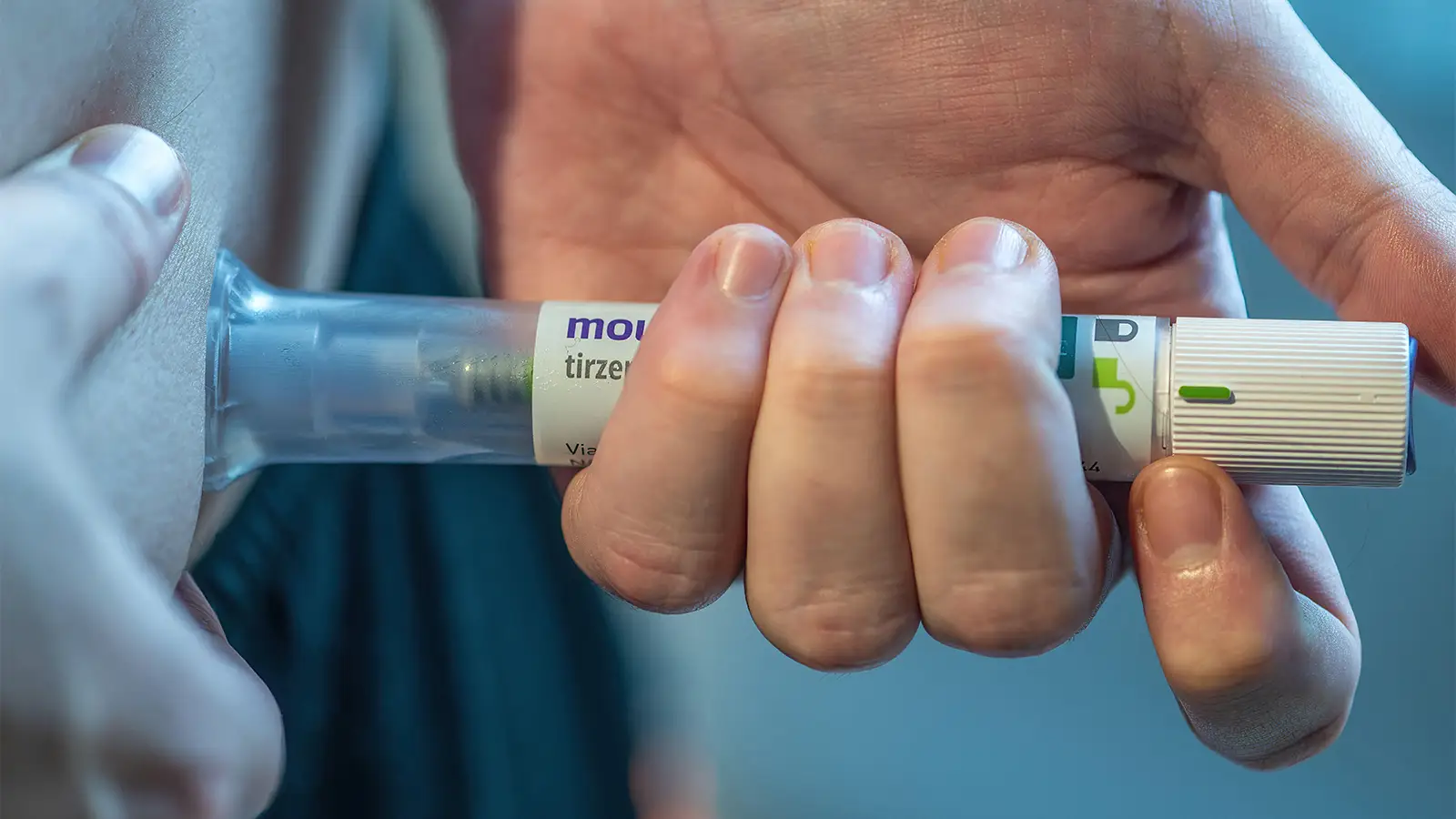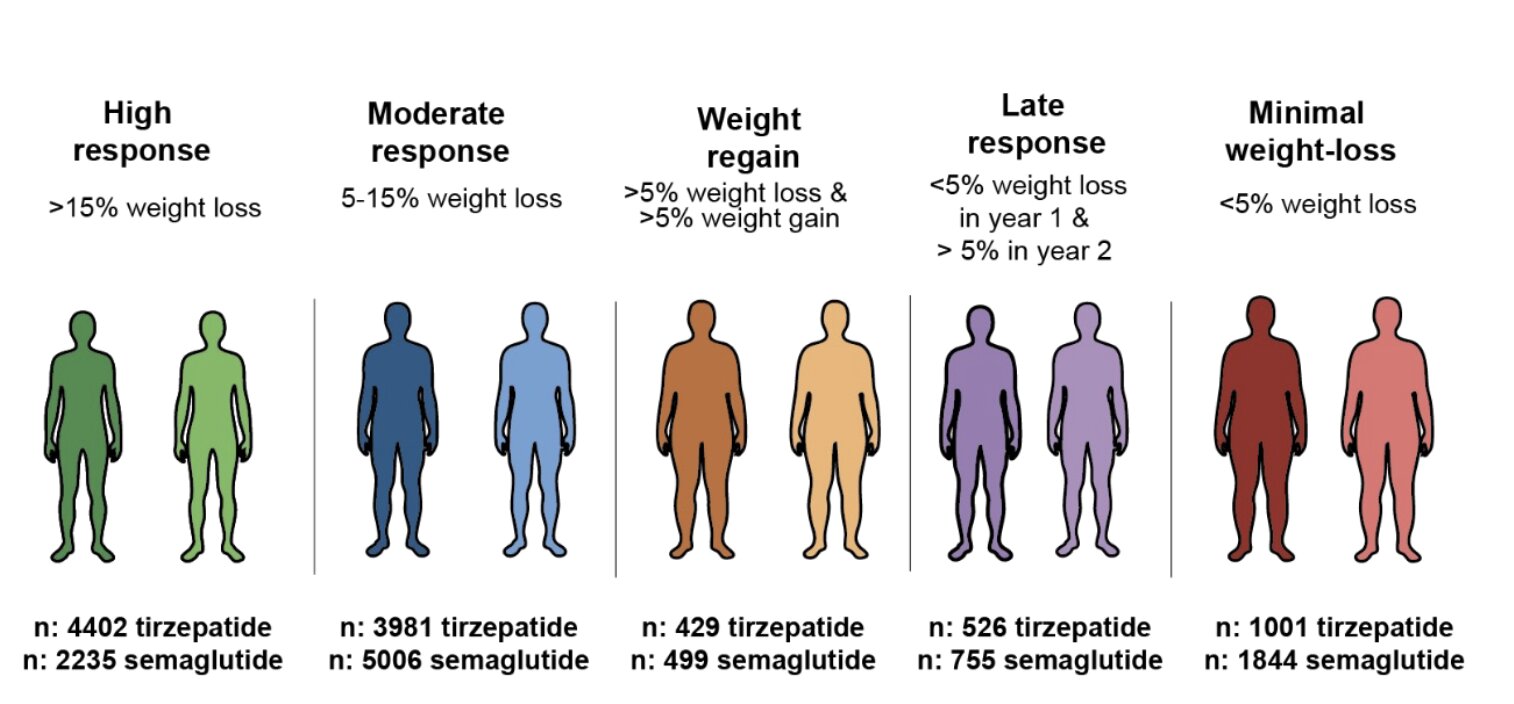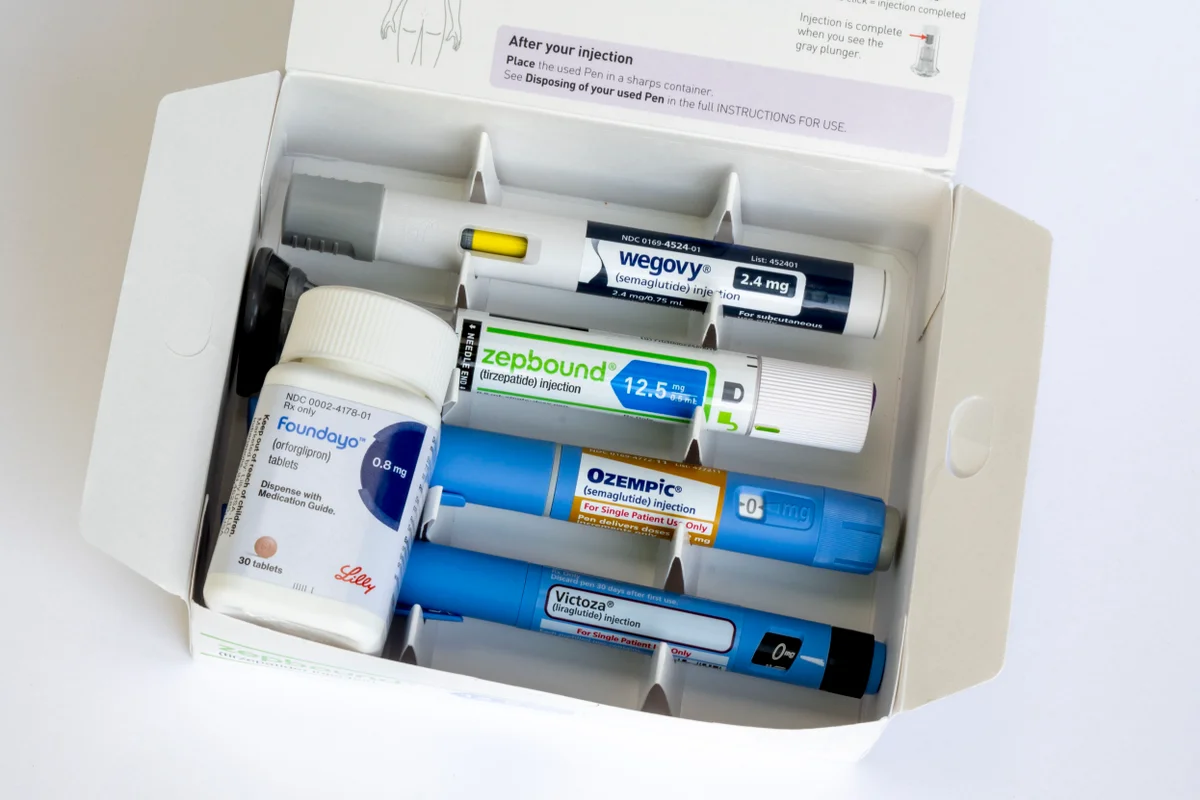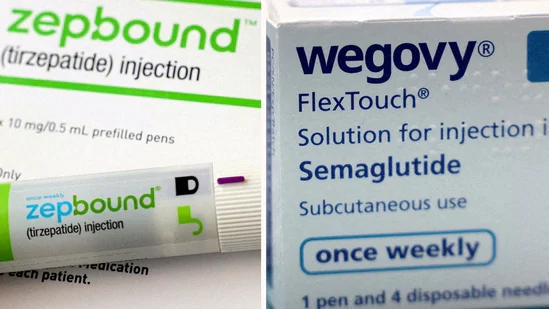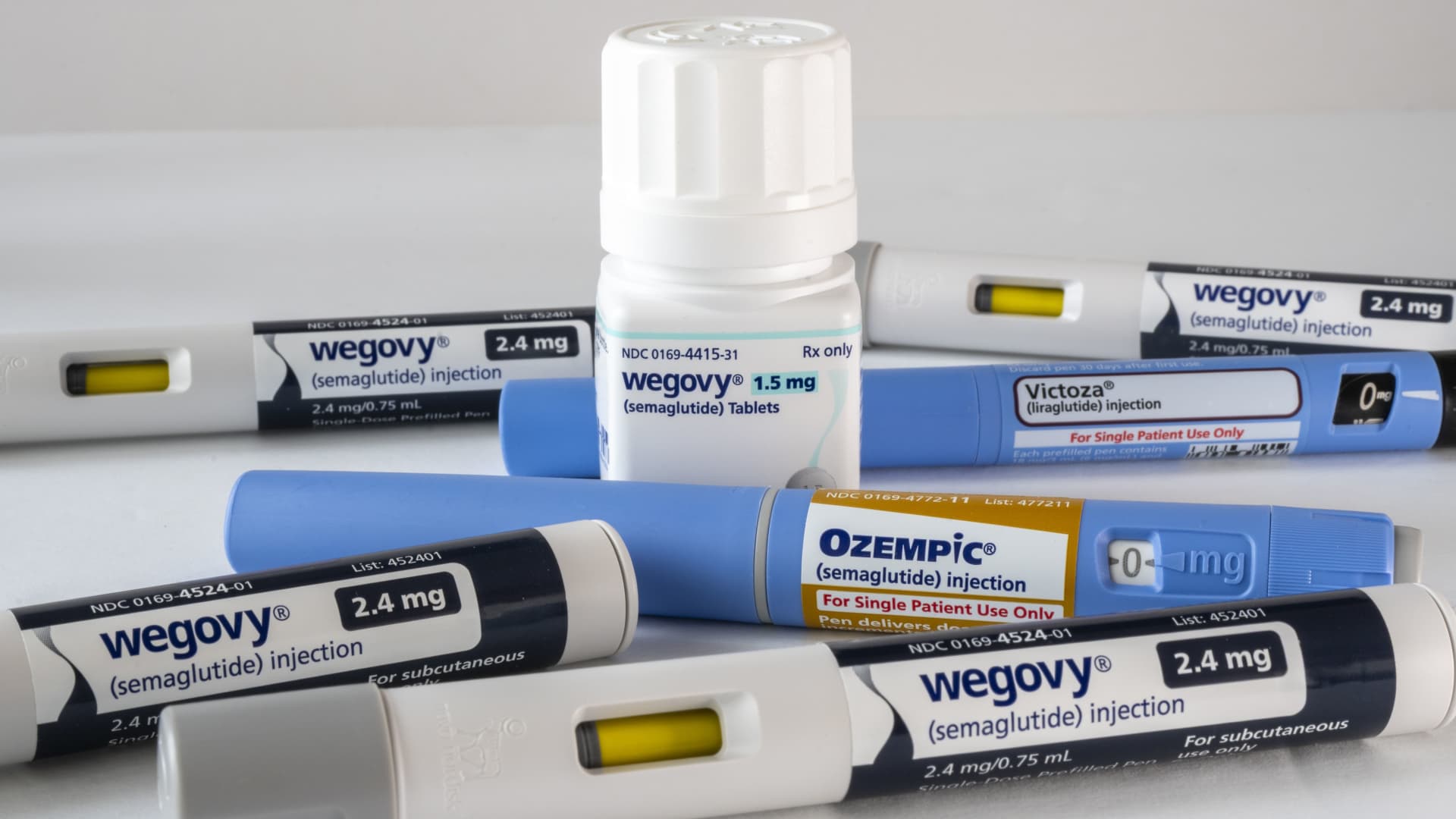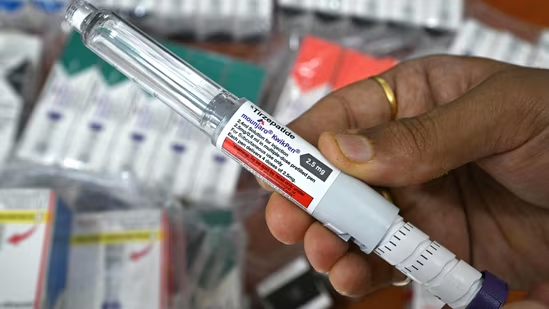
When a patient asks a doctor which GLP-1 to start, the conversation usually turns on one number: how much weight will come off. It is the number the prescription is chosen by, the number the patient tracks, the number that decides whether the drug is judged to be working.A distributor displays Mounjaro (tirzepatide) self-injecting GLP-1 prefilled pens at his office in Thane, Mumbai. (AFP)The most comprehensive comparison of obesity drugs to date complicates that approach. Published in The BMJ on Thursday, the analysis drawing on 262 trials covering nearly 100,000 patients has, for the first time, ranked GLP-1 weight-loss drugs not just on kilos lost, but on survival, heart risk, kidney health and quality of life.The findings suggest the drug that sheds the most weight is not the one with the strongest evidence of protecting the heart, and can also trigger the most lean mass loss and the most side effects. Semaglutide, a mid-table performer on weight, is the only drug shown to reduce death, heart attack and kidney disease risk.Indian doctors said the analysis was unlikely to change how these drugs are prescribed here in the short term — the practice still runs largely on a body mass index cut-off, not a comparison between drugs — but that the picture is set to change as evidence accumulates."It's broadly sweeping at the moment but will get stratified more and more by state of health," said Dr Ambrish Mithal, chairman and head of endocrinology and diabetes at Max Healthcare.For a patient weighing which drug to start on, the study offers something no earlier comparison has: a view of what each choice actually buys — and what it costs — across every outcome that matters, from weight and waistline to muscle, heart, kidneys and how a person feels.Also read: Medicine can treat obesity, but can’t agree on what obesity isWhat the drug does to your bodyTirzepatide, at just under 15% of body weight lost in one year, tops the ranking in terms of weight loss – the primary objective of these drugs. It is closely followed by CagriSema at 14.8%. Oral semaglutide, orforglipron and subcutaneous semaglutide cluster between 9.8% and 10.9%.Phentermine-topiramate — not sold in India — reaches 8.1%. Older drugs, including orlistat, liraglutide and metformin do not, on this evidence, clear the bar for a meaningful reductions in weight over lifestyle change alone.Fat mass tells much the same story: tirzepatide reduces it by a quarter, semaglutide by nearly a fifth. Waistlines shrink by up to 11 centimetres on tirzepatide and CagriSema, half that on the older drugs.But the catch shows up when the same measurement takes muscle into account.Tirzepatide, the biggest weight-loss performer, also produces the biggest reduction in lean mass — 8.3% in one year, more than one-and-a-half times semaglutide's. Some of the weight the drug removes is not fat.Whether that matters clinically depends on the patient. For a younger patient with muscle to spare, the trade may be acceptable. For an older one, or a patient already at risk of frailty, less so.The study’s data does not follow patients long enough to say what the muscle loss means over a decade of use. That is a question the trials, so far, cannot answer.Oral semaglutide and liraglutide, notably, show little to no lean mass loss.Also read: Less stress, addiction, brain fog: Ozempic, GLP-1 drugs may be impacting patients' brain, neural networksWhat the drug does to your riskSubcutaneous semaglutide is the only drug in the analysis with high-certainty evidence of reducing the risk of all-cause death (by roughly 19%) and myocardial infarction (by 28%). It is also the only drug shown to slow the progression of kidney disease, and one of two — with tirzepatide — that reduces the risk of heart failure.Other drugs in the study did not produce convincing evidence of these harder outcomes.That looks, at first, like the argument settles itself. It does not.Semaglutide's mortality and heart-attack findings come almost entirely from trials that recruited patients who already had cardiovascular disease. What the drug does for a person taking it purely for weight loss, with no such history, is a related but separate question — one on which the evidence is thinner.The gap is also, in part, a matter of time."Many of these drugs haven't done CVD trials yet," said Mithal. "It takes time."Tirzepatide, the newer entrant, is not being shown to be worse for the heart than semaglutide. It is being shown to be less tested. On heart failure specifically, it has evidence close behind semaglutide's. The same holds for the newest drugs in the pipeline, including CagriSema, retatrutide and the Chinese-developed mazdutide, whose weight-loss numbers rival tirzepatide's but whose long-term risk data is not yet in.Also read: Cancer will afflict one in five in our lifetime: WHO reportWhat the drug does to how you feelOn side effects, there are some direct correlations. The drugs that lose the most weight also produce the most gastrointestinal illness — nausea, vomiting, diarrhoea — and the highest rates of patients stopping treatment because they cannot tolerate it.Naltrexone-bupropion, oral semaglutide, orforglipron and tirzepatide top the list; naltrexone-bupropion also carries a fatigue risk nearly nine times higher than lifestyle change alone.Real-world data cited in the paper suggest roughly half of patients discontinue treatment within a year of starting it — a rate far higher than the trials, with their closer supervision, capture.“There are clear recommendations for who they work and for who they don't, especially when talking about weight loss in non-diabetics," said Dr Nikhil Tandon, interim director of AIIMS Delhi and former head of its endocrinology department. "The percentage of people who can tolerate the maximum dose is not 100%."Quality of life is where the finding stops being intuitive. Across all 19 drugs, measured against a standard scale of energy, pain, day-to-day function and mood, no drug produced a change large enough to count as a meaningful improvement at one year — not tirzepatide, not semaglutide, not any of the rest.But that result runs against what most clinicians report seeing."Most of the patients feel so much better after losing weight," Mithal said, "though there are some who feel fatigued or low."The gap has two possible readings. The scale used across the trials, the widely-used SF-36, was built to detect illness, not to capture whether someone feels better in their body after losing weight, so it may miss the improvement patients actually experience. It may also be picking up a real limit: that the sense of feeling better, once weighed against nausea, muscle loss and the burden of a long-term injectable, is smaller and less durable than it looks in the clinic.For all the granularity the study offers a prescriber, GLP-1 prescribing in India still runs on a much simpler test. “At the moment we are following the standard criteria for prescribing these drugs: people with a BMI of over 30 who have tried all other methods available, or those above BMI 27 with comorbidities,” Mithal said.Cost, in the meantime, is doing part of the choosing. Semaglutide's generic versions, sold at a fraction of the pre-patent price, are now the most widely available GLP-1s on the Indian market. That advantage owes nothing to the study's finding on survival — but the two happen, for now, to point in the same direction.
Weight loss, muscle mass, heart risk: Study decodes strengths & weaknesses of 19 GLP-1 drugs
Tirzepatide burns most fat and muscle; semaglutide cuts death, heart attack and kidney risk, and jury is out on whether they improve quality of life | India News
1,209 words~5 min read