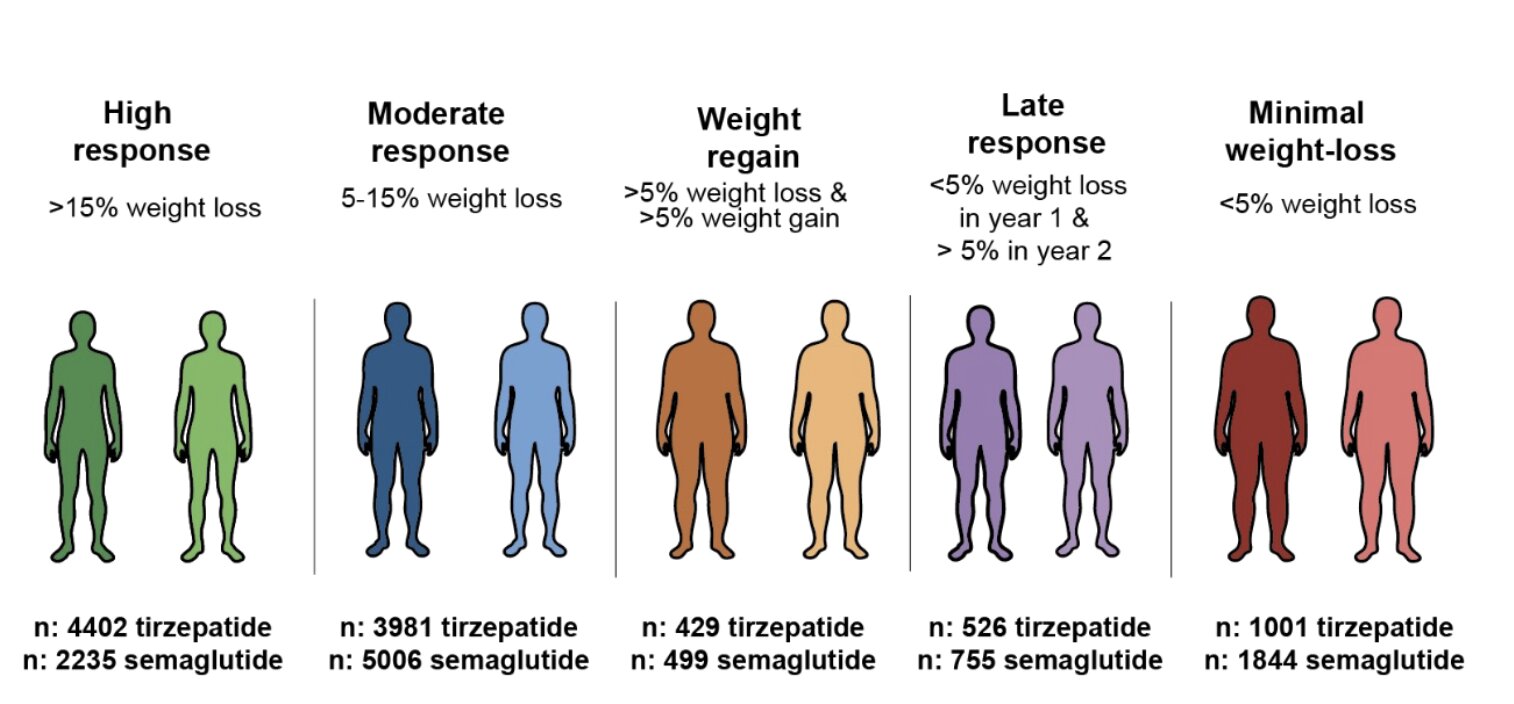
Weight-loss response groups defined by maximum weight loss in a two-year follow up period. Credit: Venkatakrishnan et al.
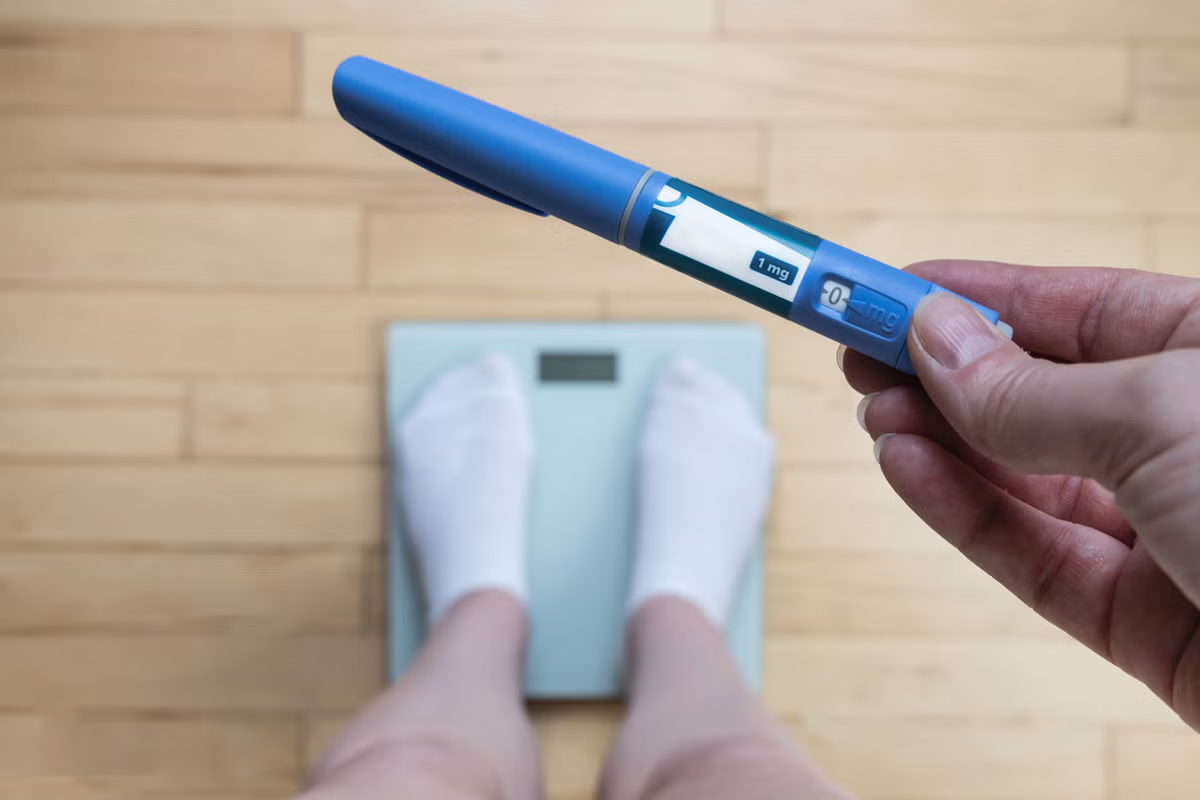
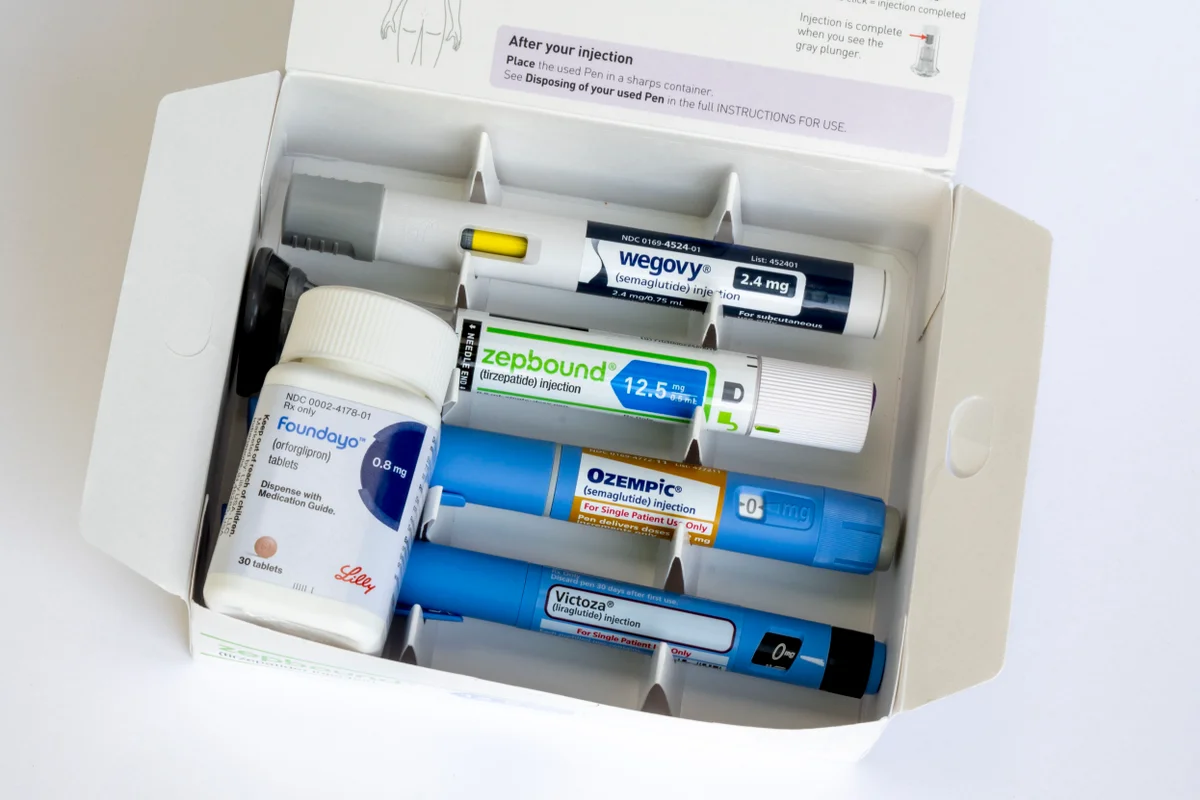
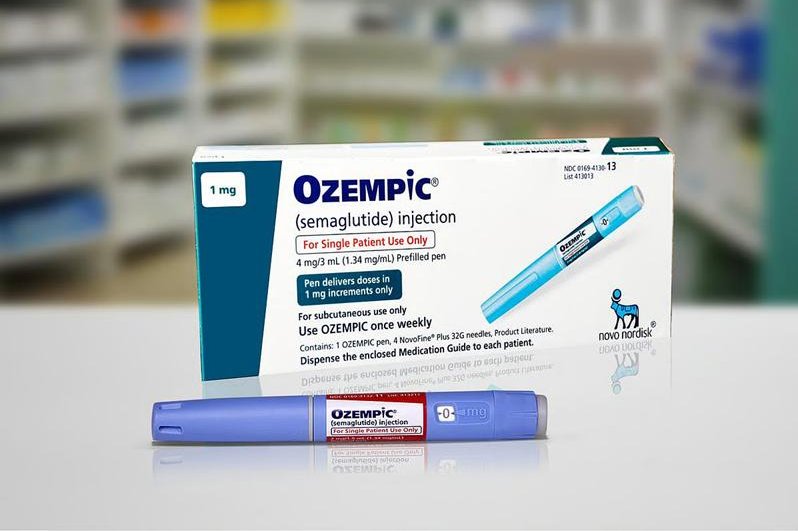
Glucagon-like peptide-1 receptor agonists (GLP-1RAs) have become popular for weight loss, but results vary from person to person and from drug to drug. Venky Soundararajan and colleagues explored the full range of responses to tirzepatide (e.g., Mounjaro or Zepbound) and semaglutide (e.g., Ozempic, Wegovy or Rybelsus) by analyzing de-identified electronic health records for matched cohorts of 10,339 tirzepatide-treated and 10,339 semaglutide-treated patients. In the real world, outcomes ranged from minimal weight loss to more than a 25% reduction in body weight.
Patients taking tirzepatide lost more weight than those taking semaglutide (mean reduction, 14.7% vs. 10.8% of body weight). The tirzepatide group had nearly twice as many "high responders," defined as people who lost more than 15% of their body weight in a year, as the semaglutide group. Tirzepatide patients also had fewer gastrointestinal, headache and fatigue adverse events than semaglutide patients.
Female and white patients taking either drug more frequently achieved significant weight loss than male, Black and Hispanic patients, who were more likely to lose less than 5% of their body weight in a year. According to the authors, the reasons for these demographic patterns are unknown and should be investigated.