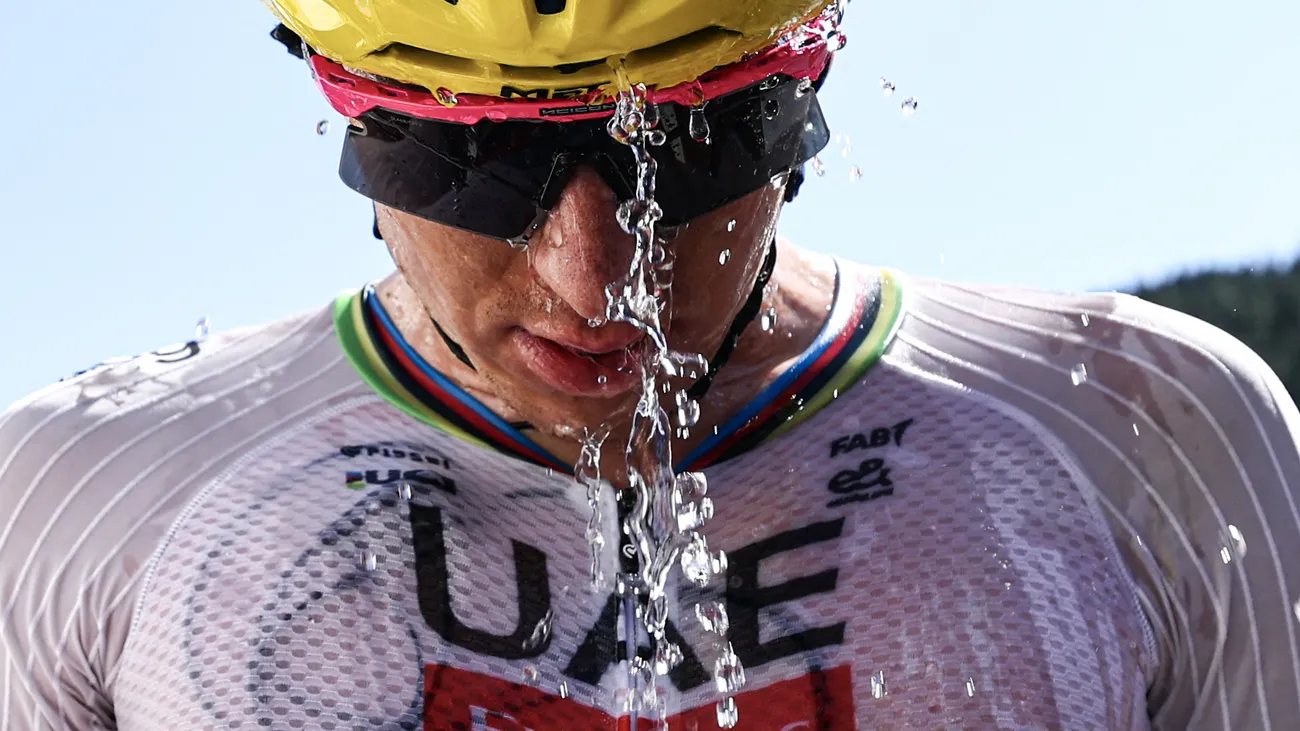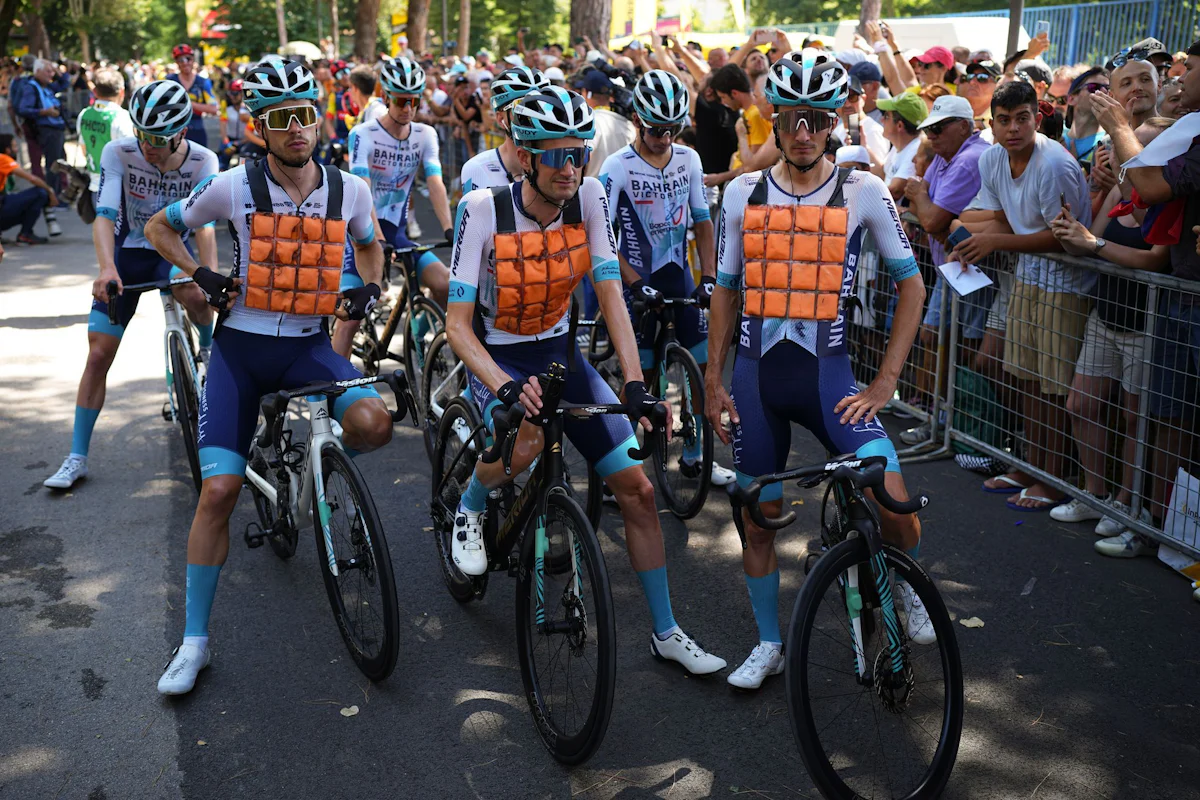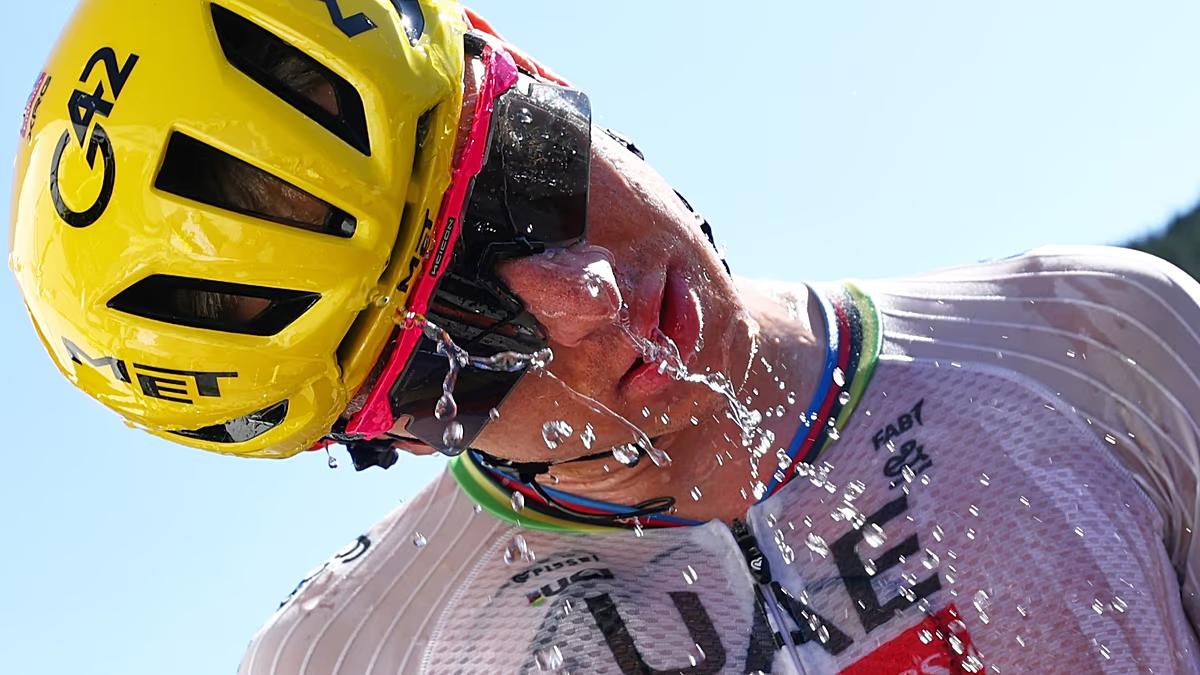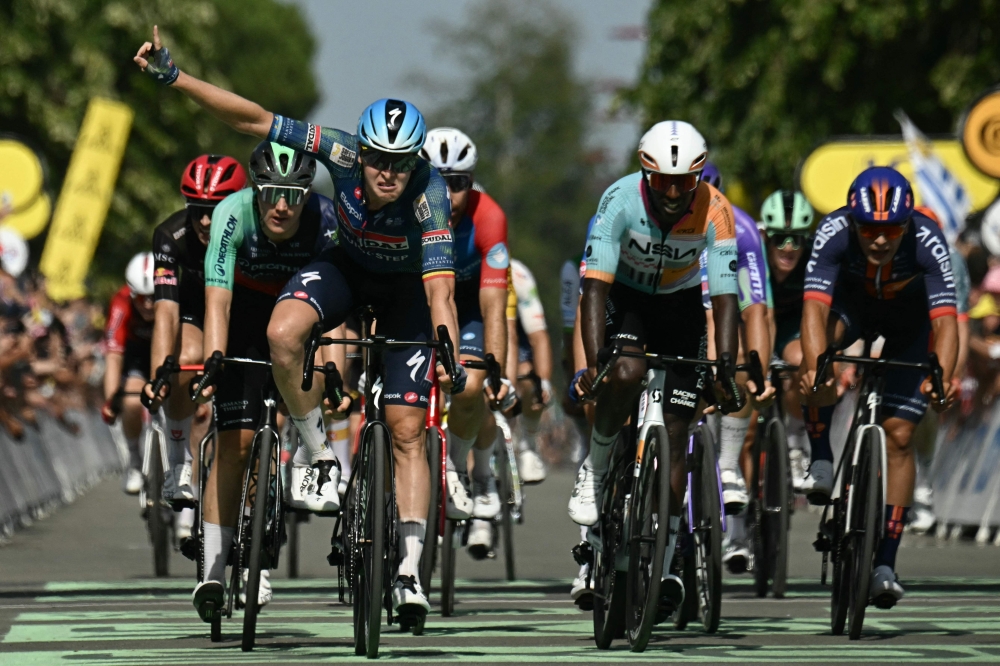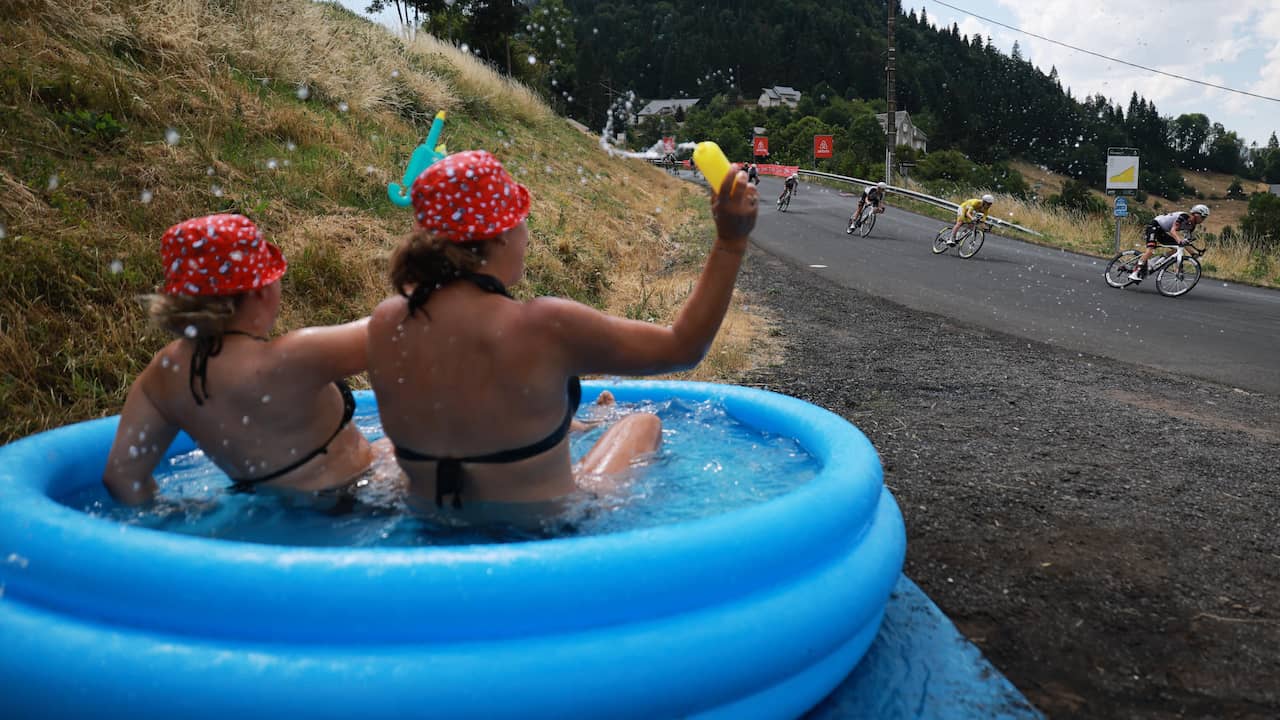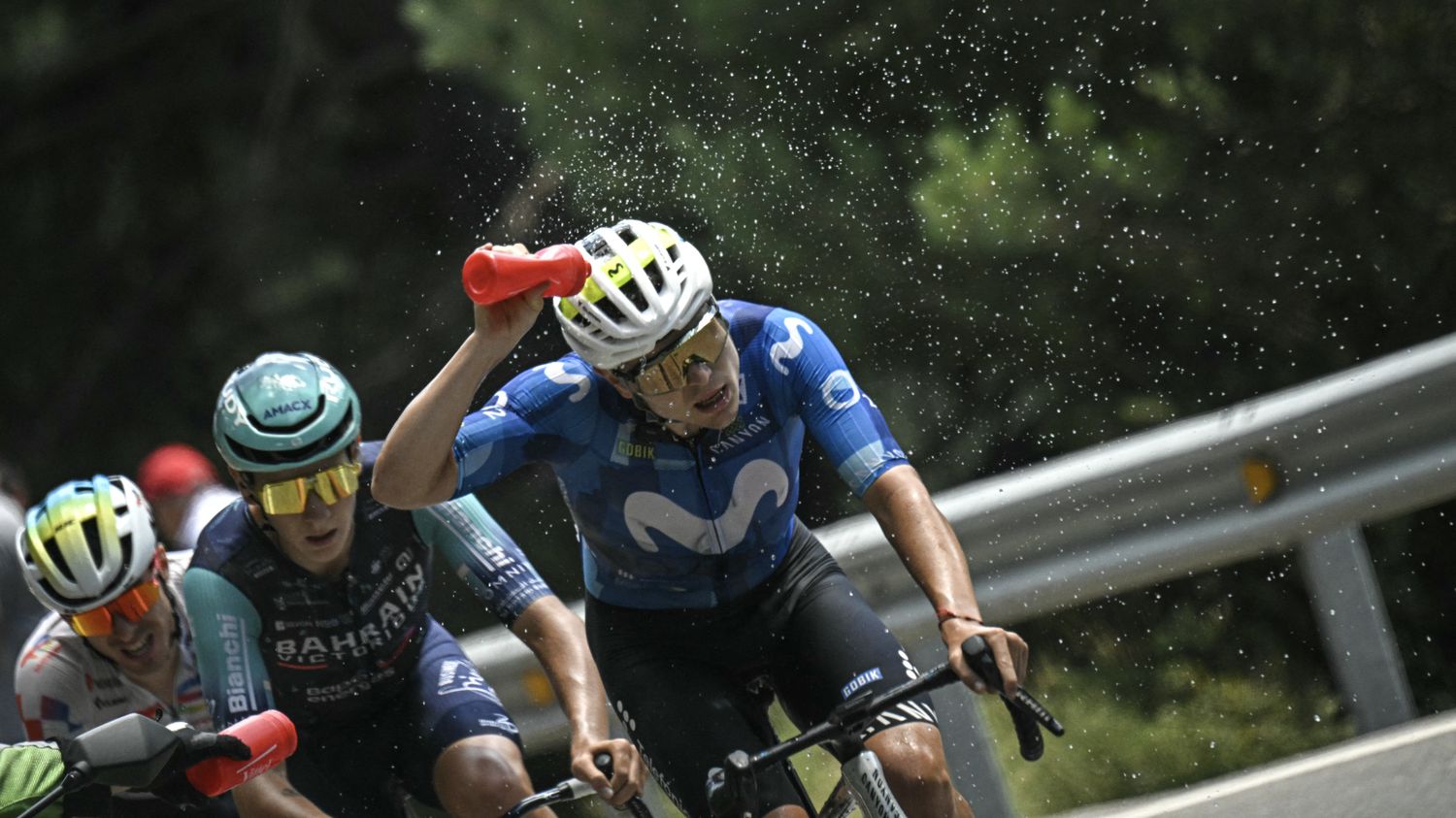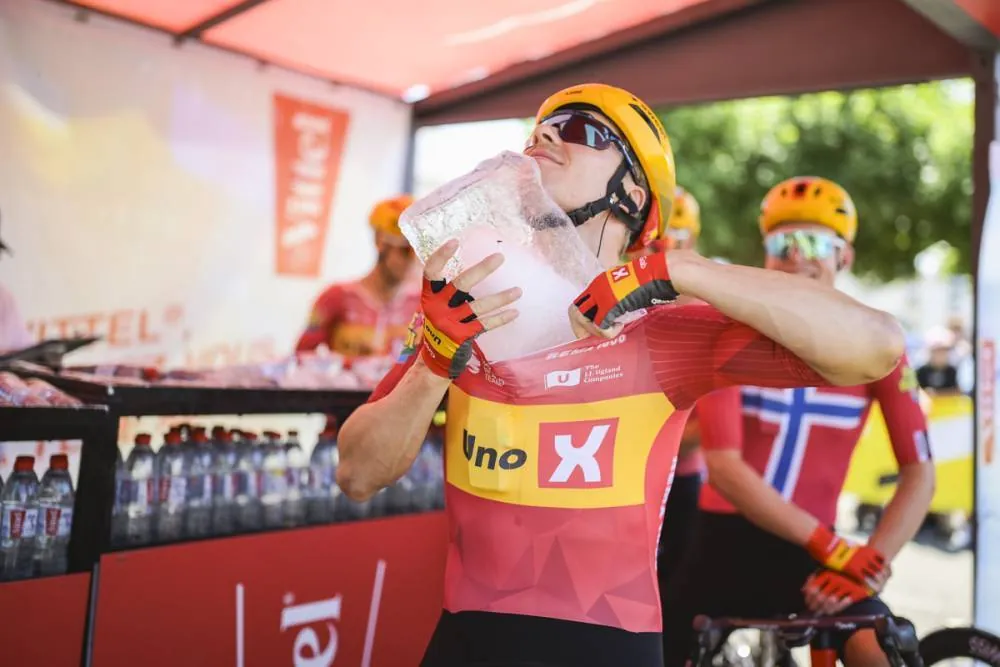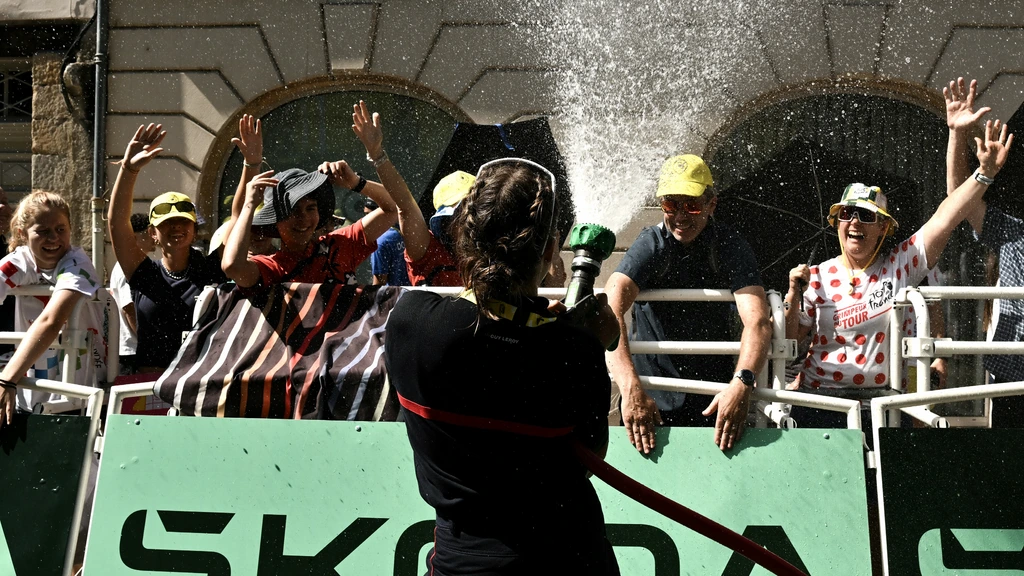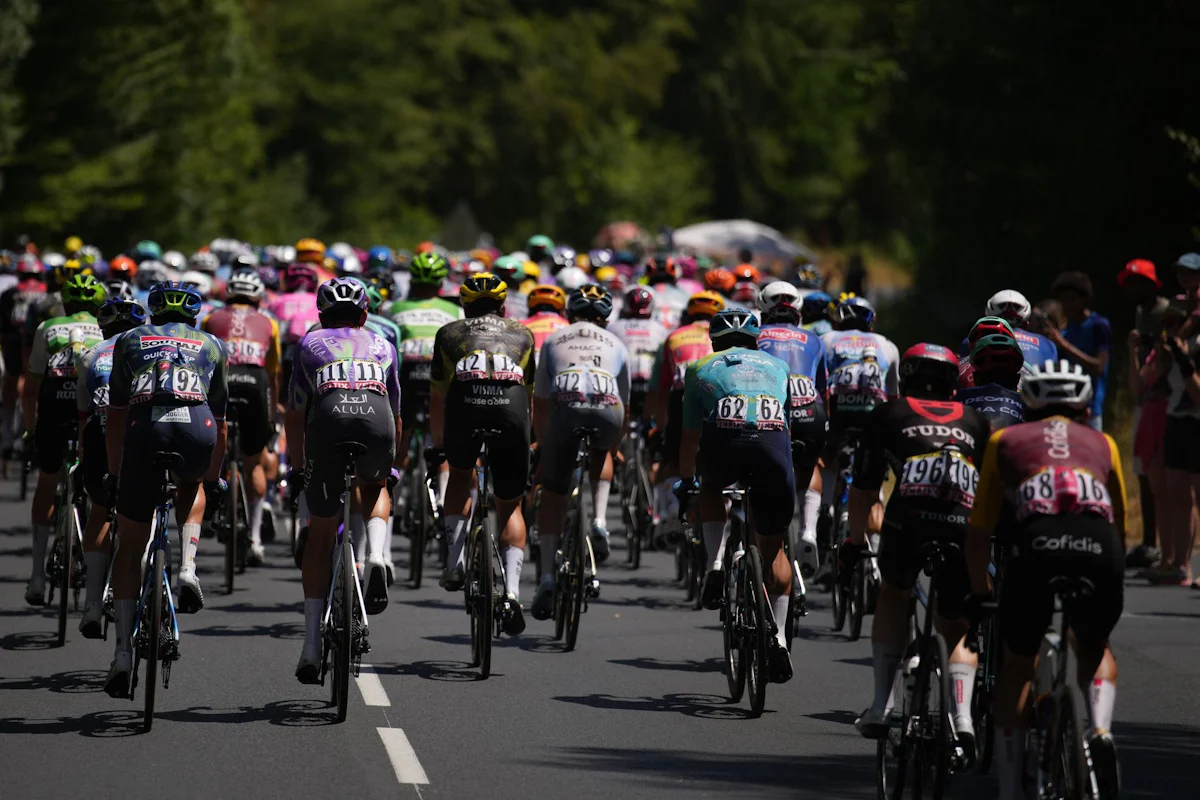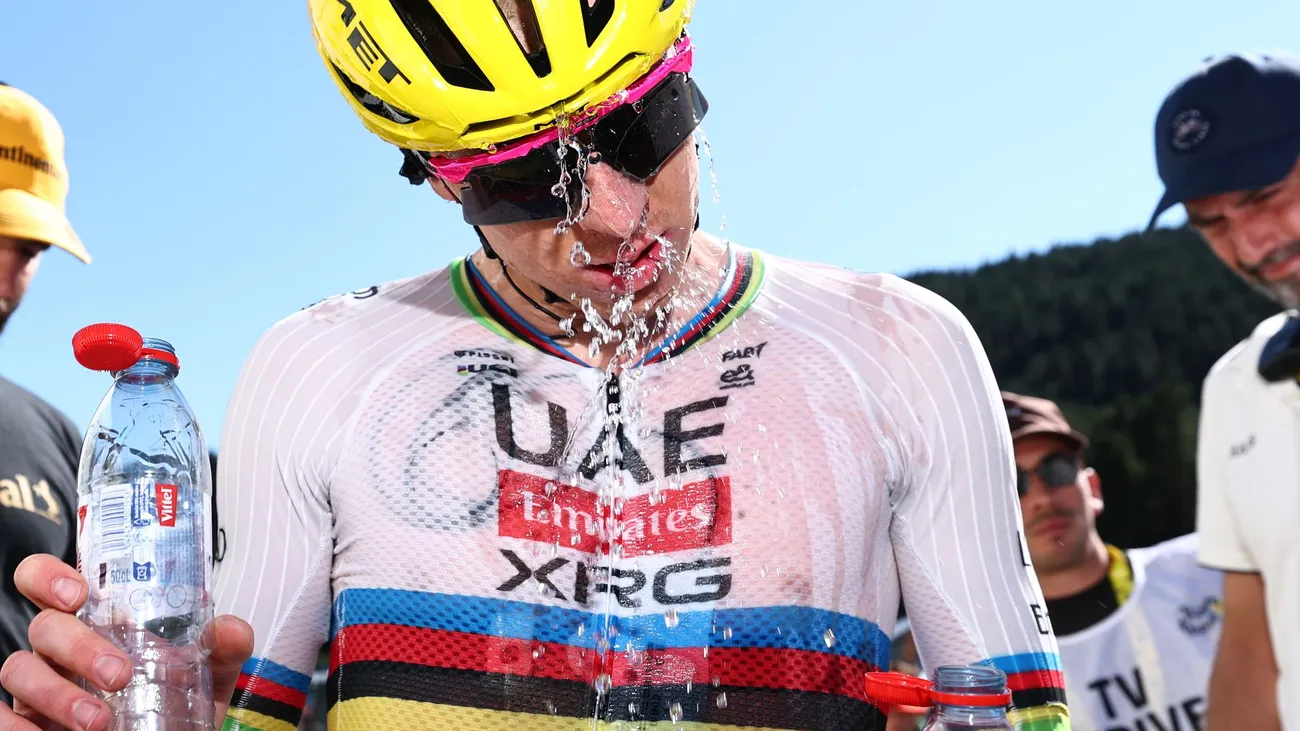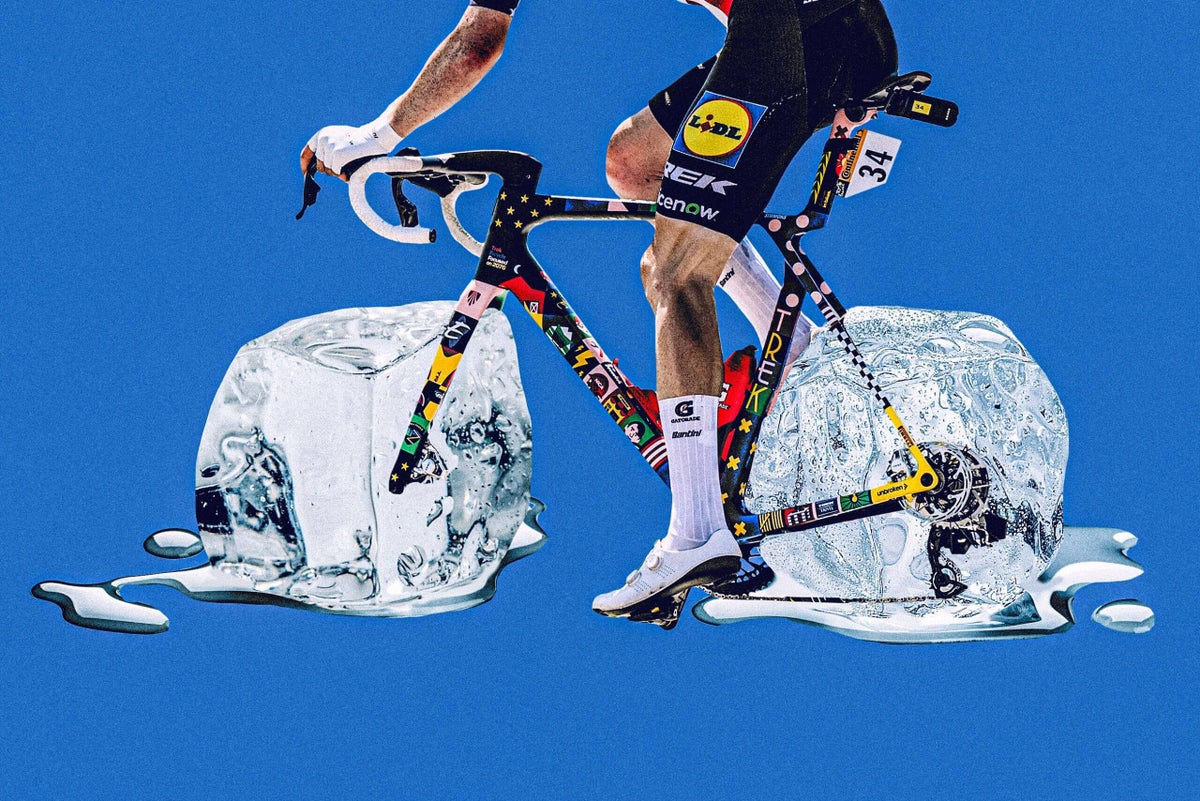
It is strange urinating with an iPad watching on. In 10 seconds, it will provide a rating.Outside, it is the hottest stage at the Tour de France since records began — a scorching 41C (105F). After finishing stage four, British rider Tom Pidcock describes it as a “warzone”. “I must have gone through 10,000 water bottles,” he added.But inside the air-conditioned bus of Spanish team Caja Rural, this bathroom is a cool oasis. Only one metre square, it is crammed behind the seats, opposite the kitchen where soigneurs are preparing post-stage snacks. Privacy is not really an option on a cycling team bus.The screen above the urinal whirs a loading bar, asking you to provide a sample. On clicking the touchscreen, a list of Caja Rural’s riders pops into view. I select star climber Abel Balderstone, but am quickly told that the team do not inadvertently want a metric entered onto his profile.Instead, The Athletic is allowed to use it in ‘anonymous mode’. The score that comes back, however, is still the tally of a professional athlete: 92 out of 100. Well-hydrated.A score of 92 for The Athletic, despite the extreme temperatures. (Jacob Whitehead / The Athletic)This futuristic technology automatically measures the biomarkers in users’ urine samples. Alongside a simple hydration score, which riders can use to inform their fluid intake rather than relying on feeling alone, it can also provide team doctors with metrics, including urine specific gravity (USG), urine colour, estimated total electrolyte concentration, urine volume and urinary frequency.Made by Kamleon, the technology is used by top soccer sides including Arsenal, Manchester United, Barcelona, and Manchester City — but Caja Rural are the first team in the professional peloton to have it.These ‘smart’ urinals are just one of the latest tools at the disposal of cycling teams, as they contend with what is expected to be the hottest Tour in history.“It’s a logistical nightmare when it’s hot like today,” reigning champion Tadej Pogačar said on stage three. “But five years ago, it was totally different to what we have now, and I’m happy it’s the way we have now — it’s dangerous if you don’t keep your body temperature down.”Cycling, as the wildfires that threatened stage three show, is unique among global sports for its dependence on the elements — and in turn, deeply vulnerable to climate change. This is already France’s third heatwave of the year.Heat management is an issue the sport is rapidly learning to embrace. The Athletic went inside the strategies of the peloton’s top teams to discover how they cope.Wildfires in southern France have already impacted this year’s Tour de France. (Jean-Christophe Milhet / AFP via Getty Images)The scienceOn Tuesday’s stage four, the hottest so far, Uno-X’s Torstein Traeen rode into the first yellow jersey of his career.The Norwegian-Danish squad have developed a reputation as the peloton’s masters of weather management. Typically, this has been seen in cold and wet conditions where, the prevailing wisdom goes, their Scandinavian hardiness helps them thrive. But they also excel in warm conditions, and head coach Olav Aleksander Bu rejects the premise that their frigid origins harm performance.“We don’t necessarily see a strong correlation between living in a warm climate and performing well in heat,” he says. “It’s how you prepare for the heat that is the critical part.“People who live in warmer climates normally have a higher plasma volume naturally — but in the same way that people who live at altitude have a higher haemoglobin mass naturally, it doesn’t mean that you’re going to perform well. It’s more about when you prioritise and how you do it.”Aleksander Bu and Uno-X try to make decisions based on science and objectivity, rather than prevailing wisdoms. “We take pride in being diligent,” he says. “We want to quantify it and use gold standard approaches.” Previously, he coached Norwegian Olympic and world champion triathlete Kristian Blummenfelt.One example is the squad’s interest in plasma volume. “The body is a smart system and when it starts to sense critical situations, like overheating, it will prioritise cooling over performance. Plasma is the fluid that runs around our veins, and when you get warmer, the body distributes more blood to the skin to cool it. That means less oxygen is going into the muscles.“But if you increase your plasma volume, you effectively have more blood in your body, so there’s more for cooling, but also more for performance. Then there’s other mechanisms too, like developing shock proteins, for one.”Helping them measure these metrics is their ‘CORE’ body temperature system, a tool used by several other teams in the peloton. Most riders attach the tiny device to their heart rate belt — it can also be taped straight onto the body — and it sends data directly to teams’ computers for analysis.“If you have a fever, you can go to a pharmacy and get tests for your core temperature,” says Aleksander Bu. “The difference with a CORE is it measures both heat flux (the rate at which heat moves through a given surface area) and skin temperature. It allows you to measure your heat output and, from that, infer the core temperature.“Let’s say that a rider has a quicker increase in core temperature than another, for example, at a certain power output — then you know in these cases to manage their temperature during racing. Sometimes you have to be a little more mindful about how hard you race.”Tadej Pogačar cools down after winning stage three of this year's race. (Tomas Sisk / Belga / AFP via Getty Images)During the raceAs Traeen takes yellow, Lidl-Trek’s Mads Pedersen sprints to his first Tour victory in three years. After finishing, the Dane is asked whether he felt that 41C was too hot for racing.“Every team is well prepared for days like this,” he replied. “It’s going to be hot when we go to France in July, it’s really hard, but we do really well at cooling down. At some point, you have to adapt and keep racing. If it’s unhealthy I’m sure we’ll stop.”The man in charge of proving those precautions is Koen de Kort, Lidl-Trek’s head of technical and innovation.“A lot happens in the preparation,” De Kort explains. “It's not very nice to do the heat training or heat adaptation. It's wearing a lot of clothing — including painter's suits and rain jackets, to really make sure you bring up your core body temperature. It's mostly done indoors, and Mads does a lot of that.”Pedersen is a relative outlier in the peloton. He rarely rides at altitude camps, preferring to focus on heat acclimation.“There’s also passive heat adaptation,” De Kort goes on. “It’s essentially sitting in a sauna or a really hot bath and the riders do a lot of that. Mads has made it a focal point, because he knows the heat has been difficult for him. Now he’s got it nailed.”With the help of team-mates, Pedersen can get over stage four’s key climb with the breakaway leaders.“During the day, he’ll do a lot of pre-cooling, especially before the race,” De Kort adds. “So you’ll see the riders always wear a cool vest (effectively a bib made up of ice cubes), and have slushies before the start. During the race, you may see riders with a round bottle, which is effectively a thermal bottle that keeps it cooler when they’re on the bike.“Post-race, they’ll do an ice bath to try and bring the core temperature down again as quickly as possible. It takes a lot of energy to cool the body before the body can actually start doing the recovery.”Paul Seixas wearing an ice vest, before a stage start. (Loic Venance / AFP via Getty Images)This year, there was a minor rules controversy when competitors were prevented by the UCI, cycling's world governing body, from wearing ice socks during the opening time trial, arguing that it “changes the morphology of the rider”.Teams lean on a wide range of metrics to inform their decision-making, but cannot directly monitor riders' temperatures during the race, with live telemetry data also banned. It means that, to an extent, teams have to rely on rider feel, and optimise their feeding strategies.“With the stress and the chaos in the race, you want them to pay attention to what is happening,” explains Koen Pelgrim, one of Soudal Quick-Step’s coaches. His team weigh riders before and after stages to inform their hydration strategy.“So if they’re not tracking everything they drink, that means feed zones are really important, especially on days where the roads are pretty twisty and you cannot follow them in the team car. For example, your sprinter may be dropped, your GC guy might be in the bunch, you have someone in the breakaway, and only two cars to cover. So you have to rely on those zones.”Owing to the soaring temperatures, the UCI has introduced a rule allowing riders to pick up musette bags filled with drinks in feed zones, providing extra bottles.He explains how more issues can be caused when a single rider in a team has to be prioritized, for example, the GC leader, which can sometimes cause domestiques to go without bottles in order to optimise their teammate’s performance. One example from last year’s Tour was EF Education EasyPost’s Harry Sweeny pouring bottle after bottle over then-yellow jersey Ben Healy, in a bid to allow him to follow the leaders up the Hautacam and preserve the maillot jaune.For Soudal Quick-Step, who do not have a GC contender after Remco Evenepoel’s departure to Red Bull-BORA-hansgrohe, Pelgrim admits that the logistics are somewhat simpler this season.“If the leader is short, some poor guy has to go without,” he says. “It’s probably easier now.”NutritionBack at UNO-X, high temperatures means that riders will eat differently throughout the day. High levels of heat inhibit the body’s ability to digest, with blood flow diverted away from the gut to cool down.“It means we have increased reliance on liquid carbohydrates rather than solids,” explains James Moran, the team’s head nutritionist. “So we’ve been light today with our choices — we don’t want extra fiber that will need more blood flow to digest.”The morning before winning his stage, Pedersen had a choice of cold rice pudding, pancakes, and smoothies — a departure from the traditional oatmeal porridge.These have to be eaten in vast quantities, with carbohydrates burned quicker in the heat. Uno-X’s team aims for a target of more than 120 grams per hour.Hydration also falls under Moran’s remit. “They’re drinking one-and-a-half litres per hour, plus extra water for cooling, to pour on the water and legs,” he counts. But unlike many teams, UNO-X do not provide slushie versions of their energy gels.“For me, the scientific evidence that they actually cool the core body temperature is lacking,” he says, also citing the difficulty of getting them to the right temperature and consistency on the roadside. Though their rivals sometimes give them as a placebo, “we just give them ice-pops like you’d give to kids.”Instead, their main preoccupation is cooling the water with plug-in freezers and fridges in the cars. “It’s a balance,” he explains. “We don’t want the water to be ice cold, because we find that it can cause gastrointestinal upsets, almost like a shock. So we want it cool but not icy cold, and that’s more of a challenge.”The treat, once riders have finished a stage, drunk their recovery shake, cherry juice, and rehydration mix, is a post-dinner treat or sorbet.“In the past we’ve used gazpachos and melon soups,” Moran laughs. “But they’ve not been that popular.”Michal Kwiatkowski grabs some ice before a stage begins. (Jasper Jacobs / Belga / AFP via Getty Images)OvernightFor the top teams, the need to acclimatise to heat does not stop at night — especially with recovery so important ahead of roughly 200km to follow the next day. In south-west France, it has sometimes not dipped below 25C (77F) overnight, but many riders do not like air-conditioning because of the feeling that it affects their respiratory system.Historically, Tour favourite Tadej Pogačar struggled in the heat — he said before stage four that he was dealing with a “full headache” because of the temperatures. In 2023, he lost the yellow jersey, and the Tour, to Jonas Vingegaard during high temperatures on the Col de la Loze.The appointment of Jeroen Swart as the team’s head of performance at the end of 2023 brought an increased focus on heat adaptation, as The Athletic explored last year as Pogačar won his fourth yellow jersey.But this year, UAE have a new weapon — working with a company named Eight Sleep to cool their riders overnight. Effectively, the device operates like a mattress cover under the bedsheets, measuring markers such as heart rate, heart rate variability, respiratory rate, and sleep stages, before adjusting the temperature of the mattress accordingly.Pogačar previously used it alone; now it has been extended across the entire squad, with a full-time bed tech travelling with UAE Team Emirates to calibrate every machine, at each hotel, for the full three weeks.The jerseyFor many, the essence of the Tour de France is a tiny climber weaving uphill under the July sun, jersey unzipped and flying loose. Over the past 15 years, jersey technology has exploded — not just for heat adaptations, but also for sprinters, time trialists, and in cold weather.“We use much lighter fabrics for the suits themselves, especially on the back and the chest” explains Lidl-Trek’s De Kort. “Aerodynamics are still very important so we have to use aerodynamic fabrics on the arms.”Jersey construction has advanced significantly in recent years. (Szymon Gruchalski / Belga / AFP via Getty Images)One common piece of knowledge is that darker jerseys absorb more heat than lighter ones. Visma-Lease a Bike’s jerseys have progressively become more yellow as a result, while teams such as Tudor Cycling (all black) and Q36.5 (dark blue but who have switched to a pale blue for this year's race) can also appear impacted. But for De Kort, whose Lidl-Trek team’s adherence to their sponsors’ palette means they wear a healthy dose of dark blue, the issue can be overblown.“It’s talked about and true, but it should be said that it’s only a third-level factor of heat absorption,” he says. “It’s more important to make sure the fabrics are breathable — it means we don’t have to take those colours too much into account.”“These technologies are a huge market,” says Aleksander Bu, whose UNO-X team often wear zipperless jerseys for aerodynamics, but have reintroduced the zips to allow them to better manage heat during the Tour.“On days like today (stage four), when it’s quite dry outside, it’s so important for the body to get rid of sweat because it’s one of the most powerful cooling systems that we have as humans. So that means we need a suit that does not block sweating — it can’t have a hydrophobic coating or anything that traps sweat inside.“Very, very thin garments will carry very little water, but slightly more woven, thicker garments, actually, can have a superior heat flux — because they can carry slightly more water, so the water passes through and actually has a higher evaporative power as well. It’s a balance.”The big pictureSweat, in itself, is a whole other area of investigation — with individuals typically having their sweat composition scientifically measured at the start of each season.“We do it at winter camp,” says Soudal-Quick-Step’s Pelgrim. “It’s to see what range they are — if they sweat a lot in terms of total amount, to see how much sodium they lose… If they’re on the extreme end of the range you can adapt to it. If we have someone who sweats a lot, and who is a really salty sweater, you have to be really careful to replace it — but equally if you have somebody that doesn’t sweat a lot, you want to encourage them to be able to do it more.”For many, this is why altitude camps are increasingly being selected based on whether teams want them to be heat acclimatisation camps as well — with Tenerife’s Mount Teide one popular location where both are possible, though increased indoor facilities means this can also be done in Sierra Nevada. Usually, because of the impact on the body, riders will wait a week before beginning heat training so they can adjust for the altitude first.Over recent years, there has effectively been an attitude shift in cycling — that just as riders’ muscular conditions can peak for a race, or their readiness for altitude, so can their tolerance of heat.“You don’t want to do it all year round,” explains Aleksander Bu. “But it is a good tool when you’re tapering, because it allows bring down the muscular load, get them a little bit more in a surplus, while keeping the central load — which means the heart, lungs, and other organs have to work the same. So it means the riders are fresh for the start, and adjusted to the heat.”Tour de France spectators have their own ways of keeping cool (Jeff Pachoud / AFP via Getty Images)For certain teams, it even plays a factor in recruitment. Jan-Niklas Droste is Red Bull-BORA-hansgrohe’s director of health and performance. With their parent company working across a cross-sport platform, they are known as one of the most inquisitive teams in the sport.“When you have a new rider, you do a full bunch of testing batteries — cardiological testing, performance testing, and heat — though it’s not only heat, it’s also the temperature and humidity.“So quite early on, you may even look at the experience of the rider, to draw up a chart based on their results, the temperatures, to see how they coped with heat in certain historical events. So when signing riders, at the least we’ll look at this element of their past, because you usually first get a rider in winter when it’s difficult to simulate that. So heat is a relevant factor.”Can riders improve, however? “It depends,” Droste replies. “You can deal with it, but personally I think there’s an individual ceiling which is a limiting factor.”So far, Droste is pleased with how his key GC men, Evenepoel and Florian Lipowitz, adjusted to the heat on the first hilly day to Les Angles. Thursday will see them climb the fearsome Col du Tourmalet in temperatures approaching 35C (95F), the Pyrenean mountain where Evenepoel abandoned last year’s Tour.Cycling burns your ego, they say. Sometimes literally too.
Smart beds, cold rice pudding and magic urinals: Adapting to the hottest Tour de France in history
With extreme temperatures impacting this year's race, The Athletic went to see how teams and riders are coping
3,075 words~14 min read