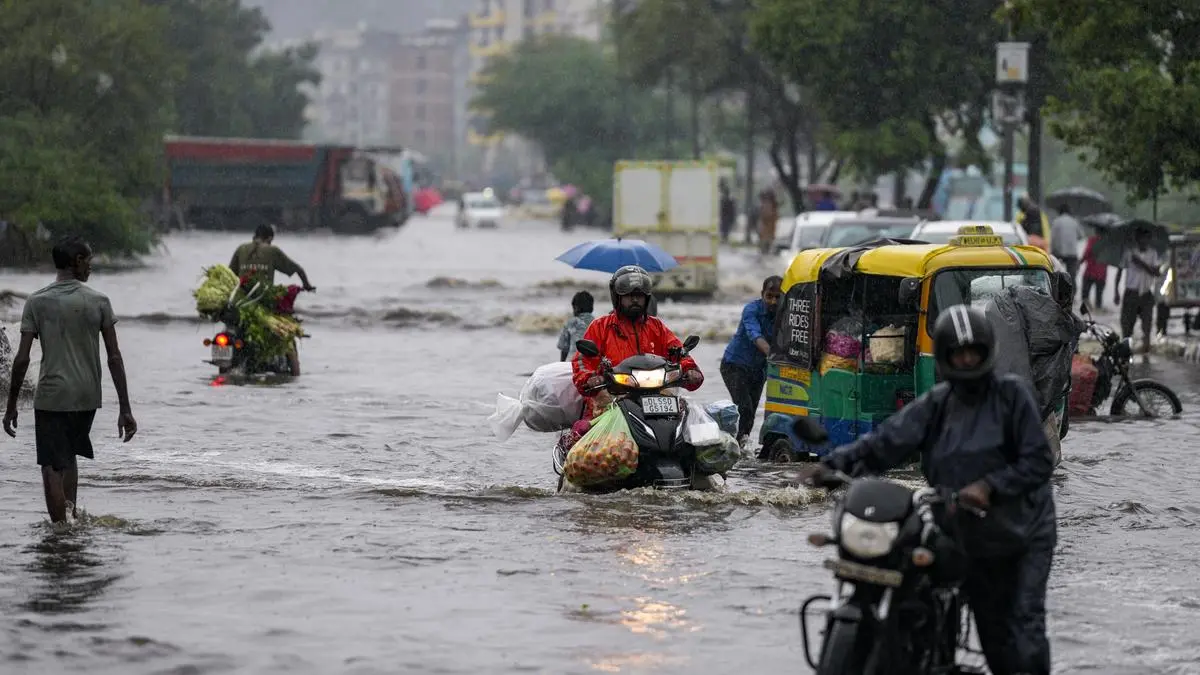
New Delhi: Commuters make their way through a waterlogged road following heavy rain, in the Gazipur area of New Delhi, on Thursday morning, July 9, 2026.
| Photo Credit:
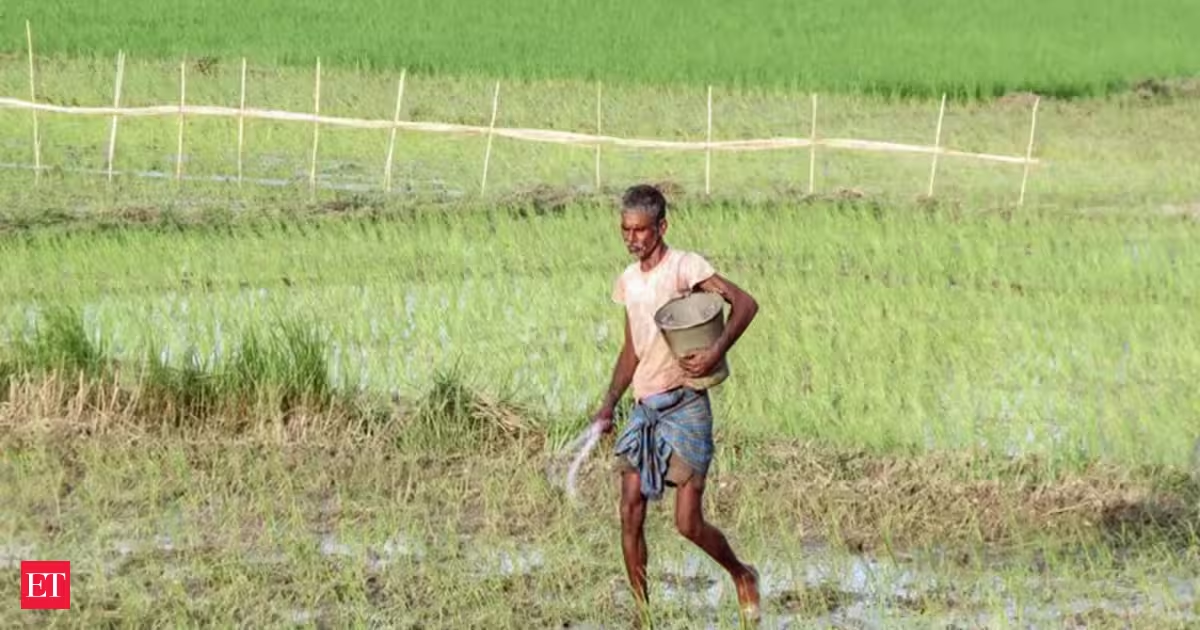
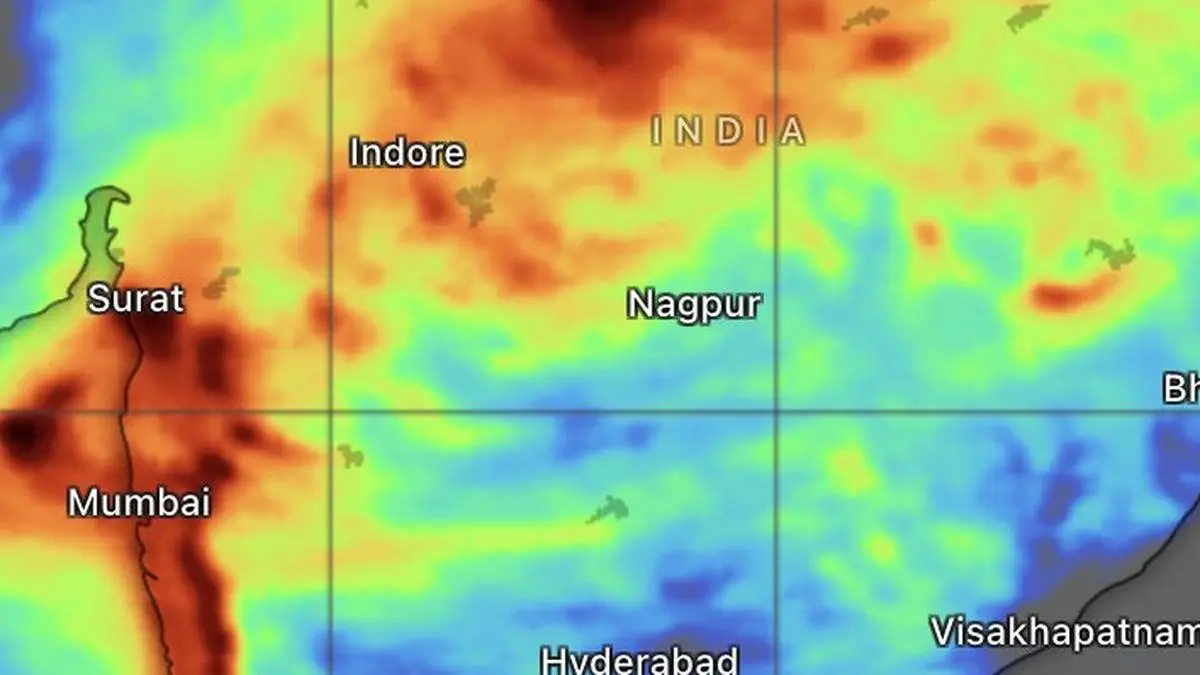
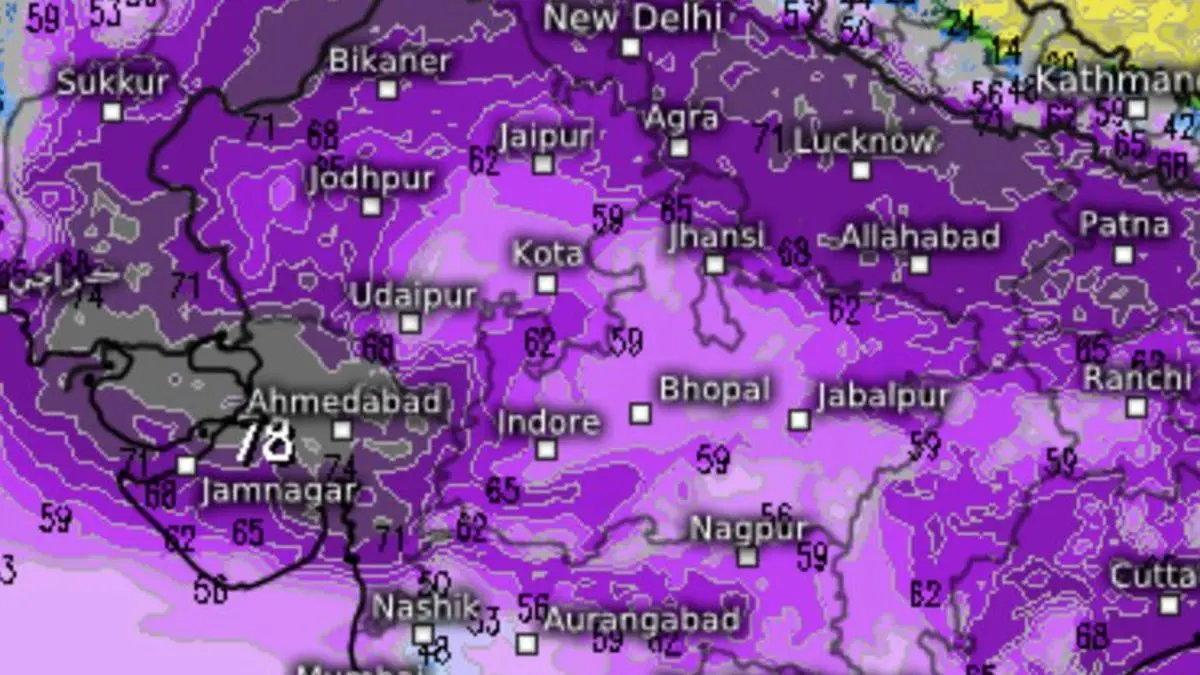
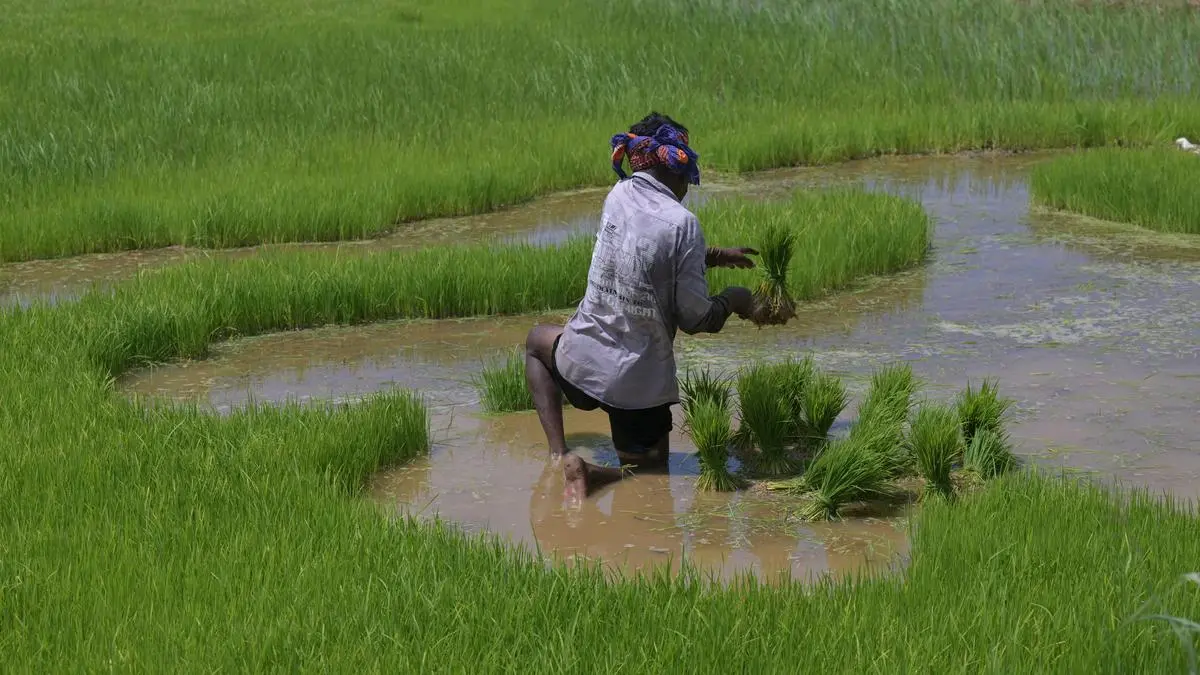
The monsoon rain belt may be shifting away from Central and West India, but a broader assessment of reservoir storage, crop sowing prospects and likelihood of another revival suggests there is little reason for undue concern for the country’s farmers or crops.Water reserves remain close to normal despite uneven progress of the season. Live storage in 166 major reservoirs monitored by Central Water Commission stood at 47.72 billion cubic metres (bcm) as on July 2, almost matching normal of 48.40bcm for the period. The figure, however, remains well below last year’s 78.07 bcm. Fresh ‘low’ soonKJ Ramesh, scientist, meteorologist and former director-general of India Meteorological Department (IMD), told businessline an added source of comfort is likelihood of another low-pressure area forming over north Bay of Bengal (head Bay) within the next five to six days. It may develop slightly farther north than previous rain-bearing ‘low’ that operated near Balasore in Odisha, but should still be well placed to trigger another spell of widespread rainfall across eastern and central parts of the country. Favourable for +ve IODMore importantly, its formation would signal that the larger ocean-atmosphere background remains favourable for sustaining the monsoon, Ramesh pointed out. Warming of the Arabian Sea and the Bay of Bengal, now reinforced by conditions over the western Pacific, is creating an environment conducive to the emergence of a positive Indian Ocean Dipole (IOD). A positive IOD has historically acted as a supportive companion to the monsoon and, if it develops during the current season, could help offset much of damage caused by disastrous June rainfall deficit.Options for farmersRamesh argued that judging the monsoon solely by rainfall departures often presents an incomplete picture. Reservoir storage and the progress of rain-fed sowing, he said, provides a far more reliable assessment of the season’s health. Even where June rainfall was scanty or absent, farmers still have options, including switching to short-duration crop varieties.Truer manifestationRecalling an earlier interview with businessline, Ramesh said: “True manifestation of monsoon is on ground. People tend to look at percentages and jump to conclusions. Instead, look at reservoir storage and rain-fed crop acreages. A meaningful assessment can be made from reservoir storage for irrigated crops and the sowing acreage of the rain-fed segment.”Sowing windowHe said the trajectory of kharif sowing between July 1 and mid-August would provide the clearest indication of how the season eventually unfolds. This is the principal sowing window for most rain-fed crops. Even in years of an excellent monsoon, around 15-20 per cent of the country’s geographical area typically remains rain deficient.“What matters is where the rain falls, not merely the statistics,” Ramesh said. “If rainfall occurs over the catchments feeding critical reservoirs, then the all-India rainfall percentage becomes much less important. The only caveat is it should not miss major river basins such as the Cauvery.These basins do not necessarily need above-normal rainfall because their climatological normals are already very high.”Normal break phaseDS Pai, former head of Climate Research and Services at the IMD, said a typical ‘monsoon break’ lasts between five and seven days. Whether the current lull develops into a full-fledged break will become clearer over the next few days, particularly if rainfall weakens further over the west coast and central India. Evolution of the next Bay ‘low’ assumes added significance, as it could determine whether rainfall revives quickly or a dry spell persists.Ramesh believes India may still finish with an overall rainfall deficit. Yet, emerging from what is widely projected to be a super El Niño year without major collateral damage would itself be noteworthy. Widespread rainfall received over past week has gone a long way towards easing concerns over drinking water availability.Deficits narrowFor instance, water tankers, once a familiar sight across drought-prone regions such as Marathwada and Vidarbha, are yet to make their presence in large numbers. Rainfall deficits have also narrowed considerably. Marathwada’s shortfall has eased to 28 per cent, while Vidarbha stands at 19 per cent, placing it within the IMD’s normal range of ±19 per cent.Decisive fortnightLarger deficits persist over parts of northern and eastern India, with East Uttar Pradesh recording a 51 per cent shortfall and Punjab29 per cent. But these are also among the regions expected to benefit from the approaching Bay weather system. The coming fortnight, therefore, could prove decisive - not because of the all-India rainfall tally, but because it will determine reservoir recharge, pace of kharif sowing and whether the monsoon can build on the recovery already underway. Published on July 9, 2026