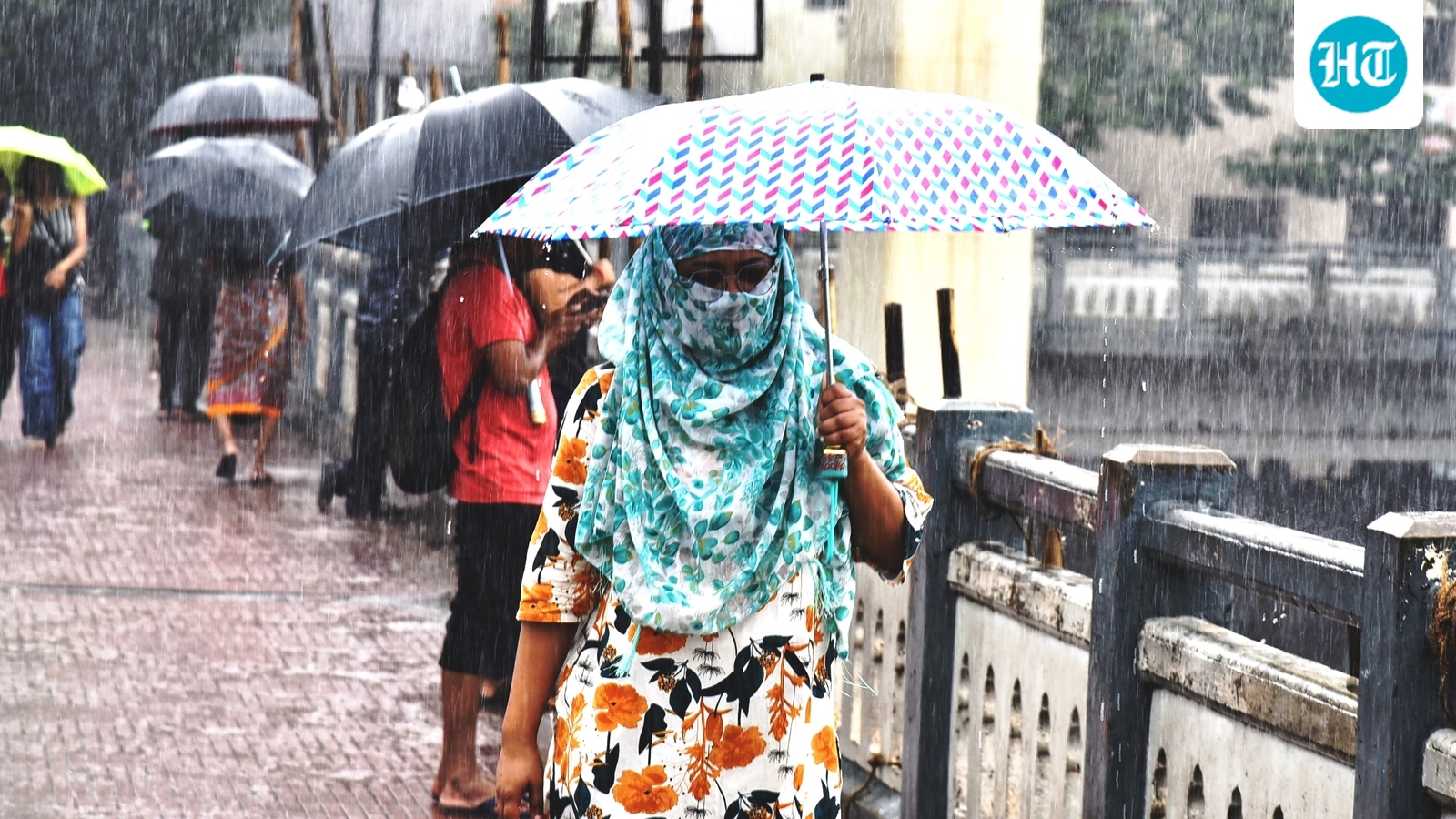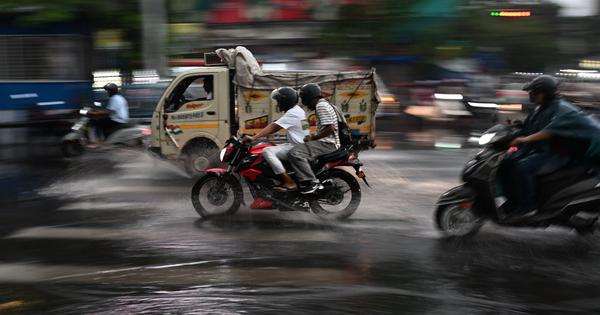
People take a walk in misty conditions amid monsoon rains at Bhimashankar in Pune district of Maharashtra on Friday
| Photo Credit:
After a 35 per cent deficit in June, India’s monsoon rainfall in July was 1 per cent above normal, helping the country reduce the overall shortfall during the first two months of the season to 13 per cent. However, 16 states accounting for 36 per cent of the country’s geographical area, including five in the north-east region that receive high rainfall in absolute numbers, have reported deficient precipitation.But the IMD’s prediction for below-normal rains in August could upset the hopes of farmers if they turn out correct, amid a forecast for a further strengthening of the El Nino, a global weather event in the Pacific Ocean, which normally reduces monsoon rainfall in India.Briefing media on the August outlook, IMD’s Director-General M Mohapatra said: “The country as a whole may receive ‘below normal’ rainfall in both August and August-September together as well.” But a moderate El Nino may continue in August, and it may move towards a strong El Nino in September, he said. Whereas, the Indian Ocean Dipole (IOD) may turn positive in September, he added. Experts said a positive IOD may negate the adverse impact of the El Nino on the monsoon.According to the latest official data, the country as a whole has received 389.8 mm rainfall during June-July, which is 13 per cent below its long period average (LPA) of 445.8 mm. The south peninsula meteorological subdivision comprising Tamil Nadu, Kerala, Karnataka, Telangana and Andhra Pradesh has reported 23 per cent deficiency at 280.1 mm, against 365.5 mm which is considered normal. During July the southern states for the first time in last eight years reported deficient rainfall, he said.The Central meteorological subdivision comprising Gujarat, Maharashtra, Madhya Pradesh, Chhattisgarh and Odisha reported a 4 per cent surplus at 511.4 mm, against 491.6 mm considered normal.The north-west meteorological subdivision comprising Punjab, Haryana, Rajasthan, Uttar Pradesh, Uttarakhand, Himachal Pradesh, Jammu and Kashmir and Ladakh reported a 12 per cent shortfall at 254.4 mm, against 287.8 mm considered normal.The east and north-east meteorological subdivision comprising West Bengal, Bihar, Jharkhand, Assam and other NE states has reported a 30 per cent shortfall at 529.3 mm, against 752.5 mm considered normal. India received 283.3 mm rainfall during July against the LPA of 280.5 mm, Mohapatra said, adding this year was an exceptional year as the rainfall has declined in July for the last few years. He attributed a record 24 (since 2017) low-pressure systems that developed in the month as a key factor in bringing more rains. But, despite surplus rains, the mean temperature in July 2026 was the third highest since 1901, he noted.Published on July 31, 2026