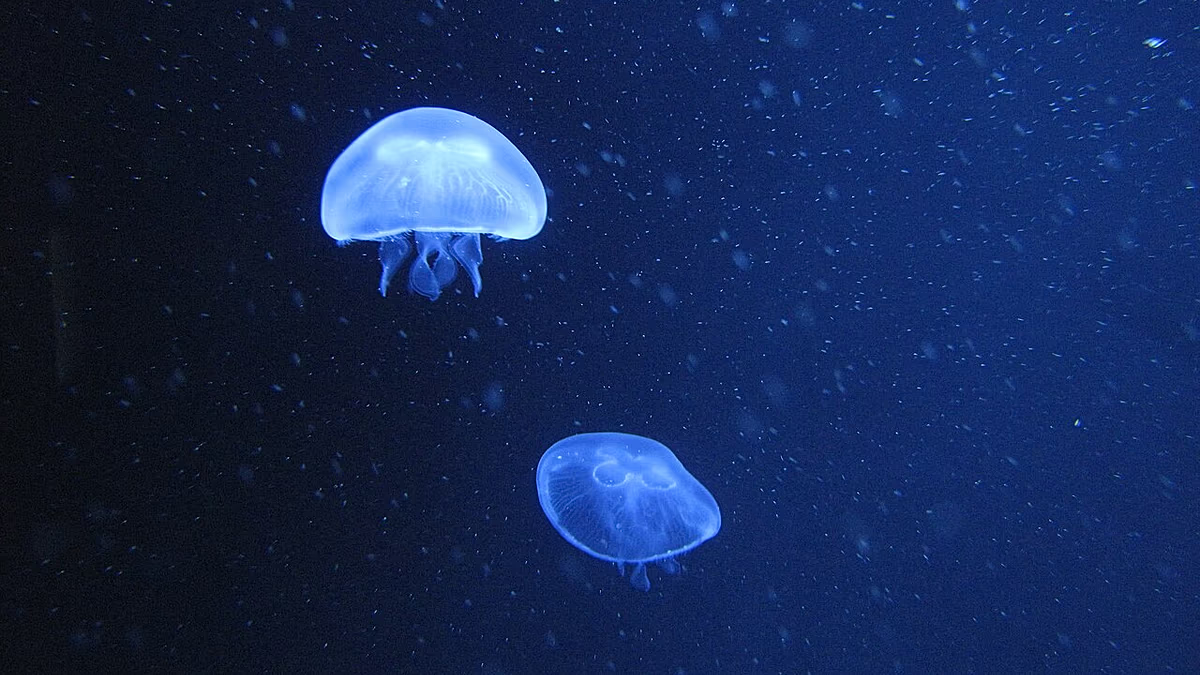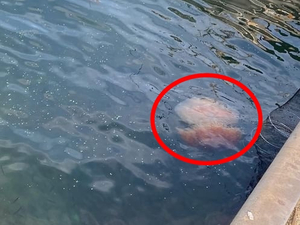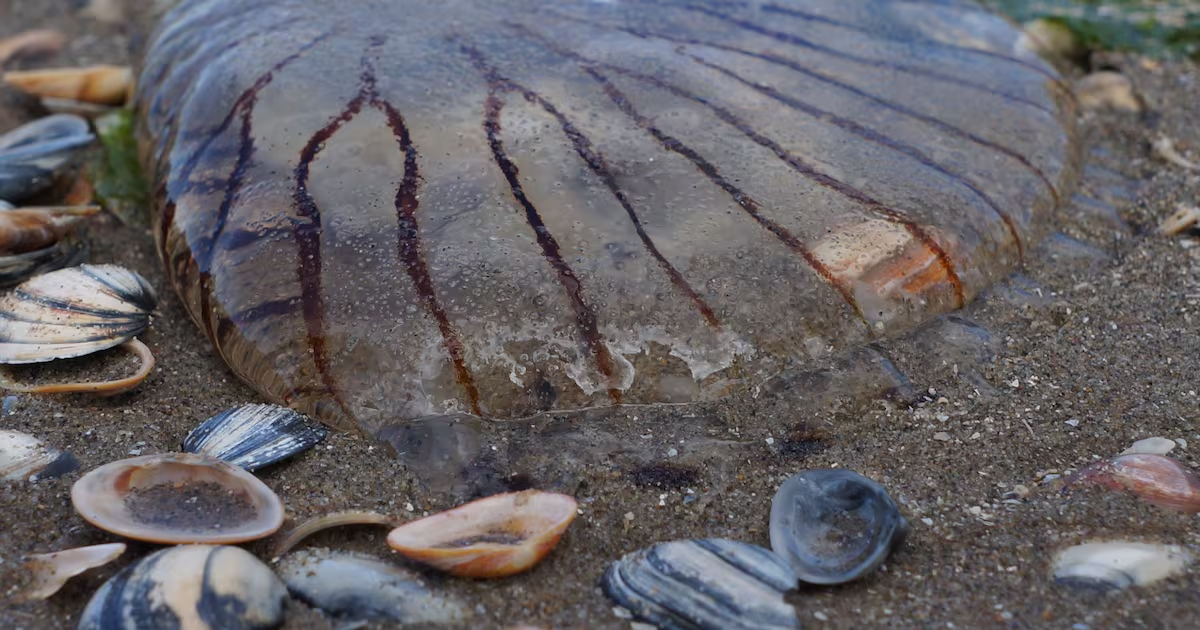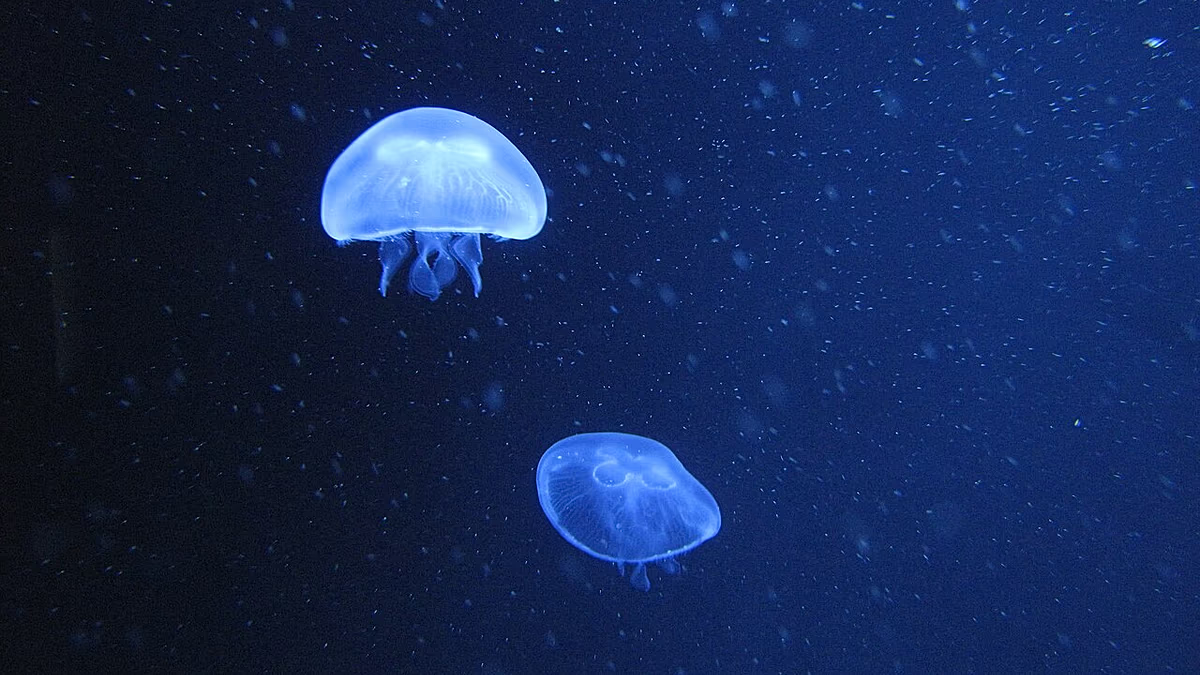
By far the most common jellyfish species in our waters in the Baltic and North Sea is the moon jellyfish (Aurelia aurita). It appears mainly in summer and early autumn and in some years can be seen in large swarms, known as jellyfish blooms.
The moon jellyfish is characterised by four ring-shaped sex organs in the centre of its transparent bell. They resemble small ears and gave the species its German name. The bell is around 5 to 40 cm across, and the tentacles can range from a few centimetres to about a metre in length.
For humans, the moon jellyfish is considered largely harmless because its stinging cells usually cause no more than mild skin irritation.
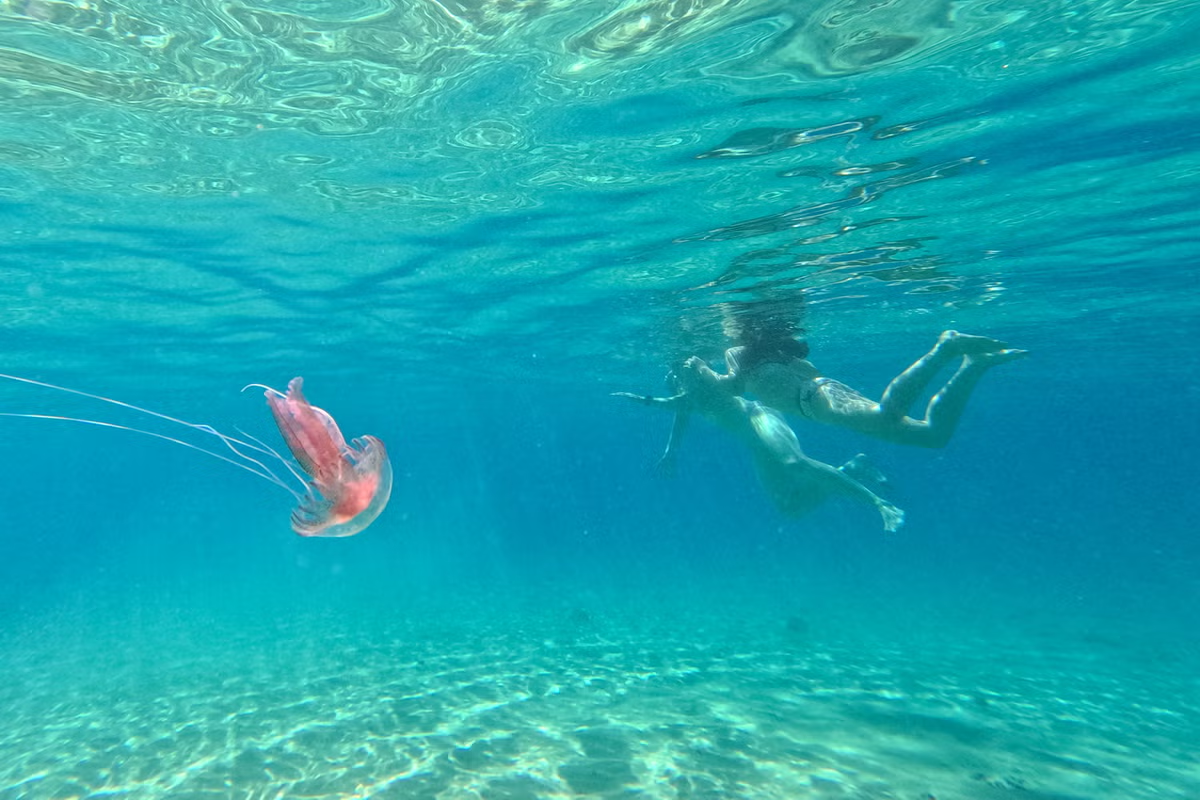
However, the lion’s mane jellyfish (Cyanea capillata) also lives in the Baltic and North Sea. It is also known as the yellow stinging jellyfish and is usually referred to by coastal residents as a "fire jellyfish". With its long tentacles it can cause painful stings. Even detached tentacles can continue to sting for some time.
Compared with the moon jellyfish, the fire jellyfish is significantly larger, with a bell diameter of about 20 to 50 cm, and tentacles that can reach 10 to 30 metres in length.