Academia
ASEAN can no longer afford to mistake the military junta in Naypyidaw as Myanmar: Doing so ignores a profound transformation where alternative governance is already becoming a lived reality.
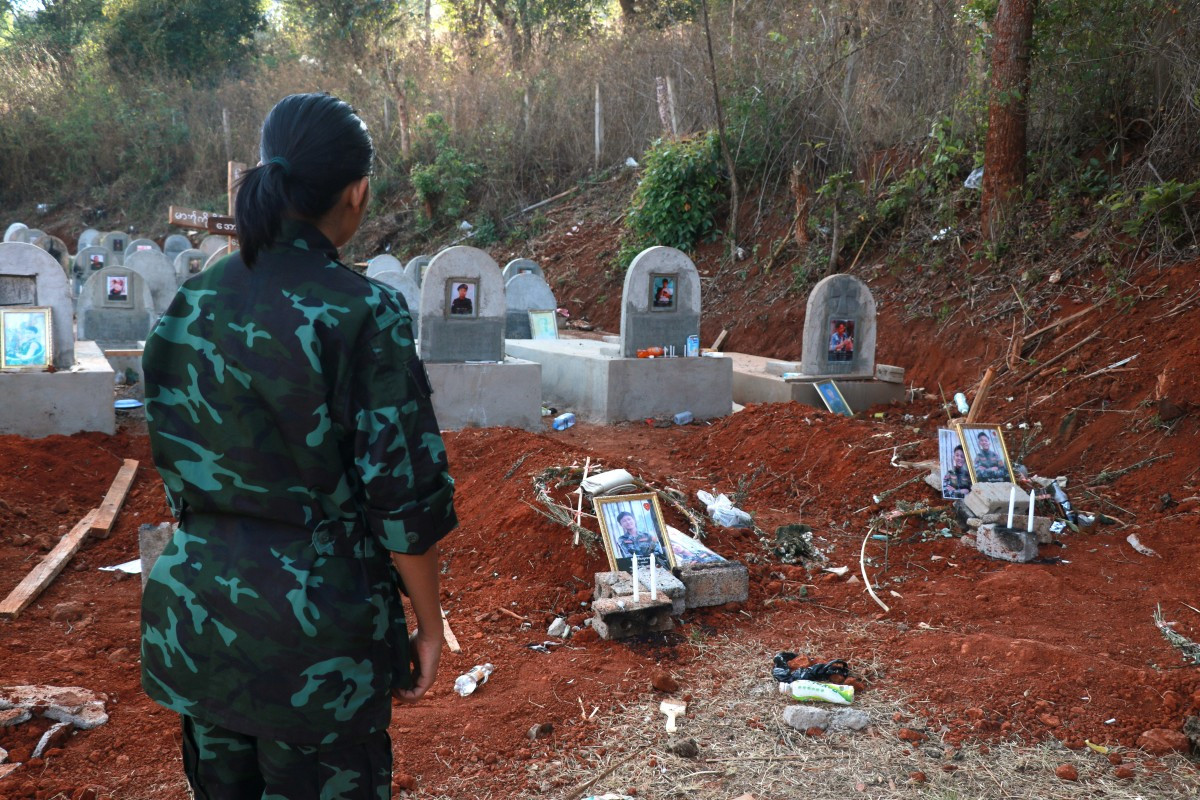
A member of the Urban Revolution Front (URF) stands in a cemetery on March 6, 2025, before the gravestones of two comrades killed in a Myanmar military drone attack in a forest near Moe Bye, eastern Shan state. (AFP/Stringer)
The Myanmar that ASEAN is attempting to reengage is no longer the state that existed before the 2021 coup. For decades, regional diplomacy operated on the assumption that influence in Naypyidaw equated to influence over Myanmar as a whole. Five years later, that assumption is increasingly untenable.Across much of the country, ethnic revolutionary organizations, resistance movements and local administrations are not only challenging military rule but also constructing alternative systems of governance. As several ASEAN member states renew engagement with Myanmar’s military authorities in a bid for stability, they risk overlooking a profound political transformation unfolding far beyond the capital.
This debate was recently sharpened by an exchange in The Jakarta Post following a May 15 op-ed titled “Normalizing Myanmar’s junta will not bring peace”, which drew a formal response from the Myanmar embassy on June 20.