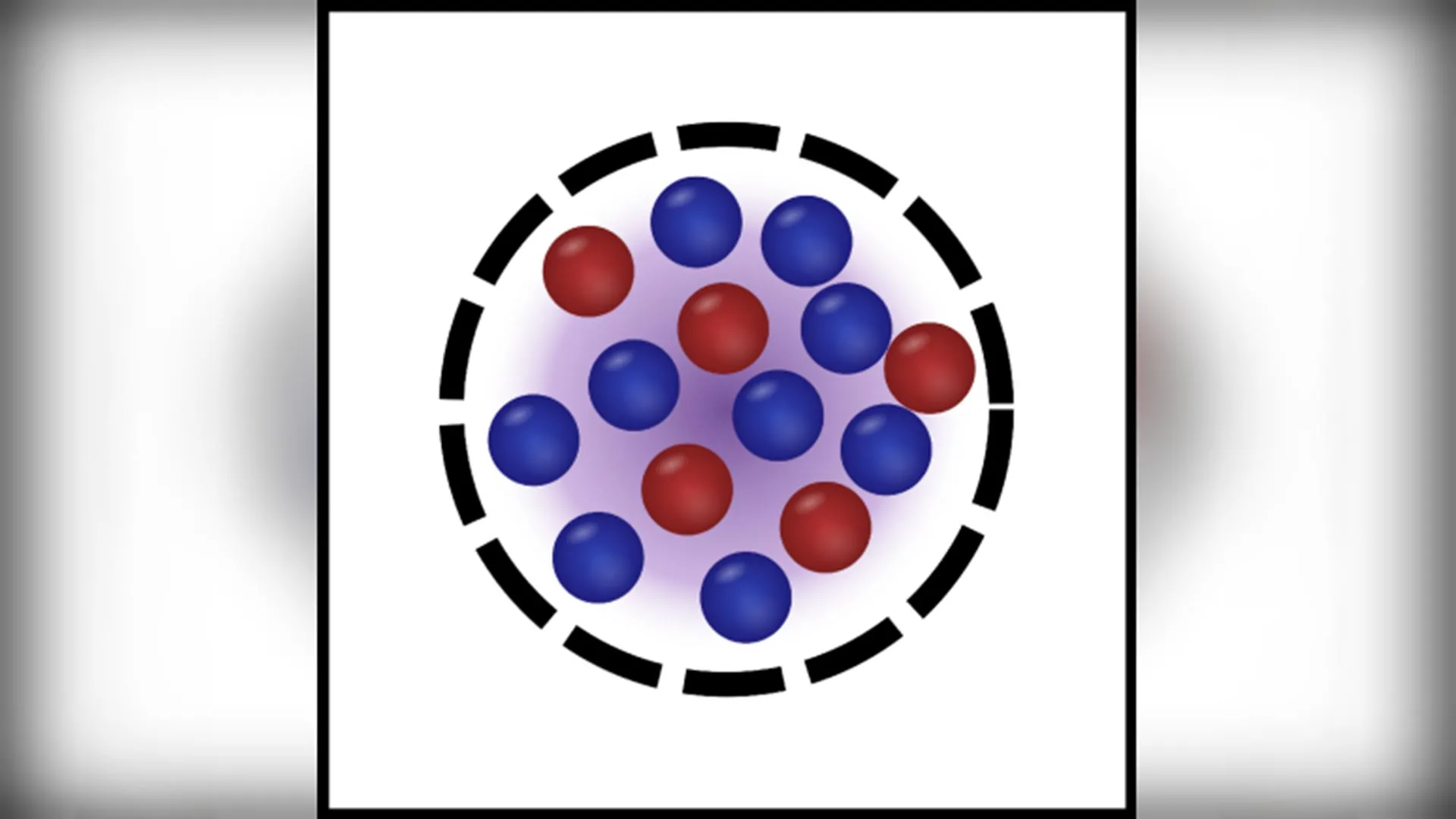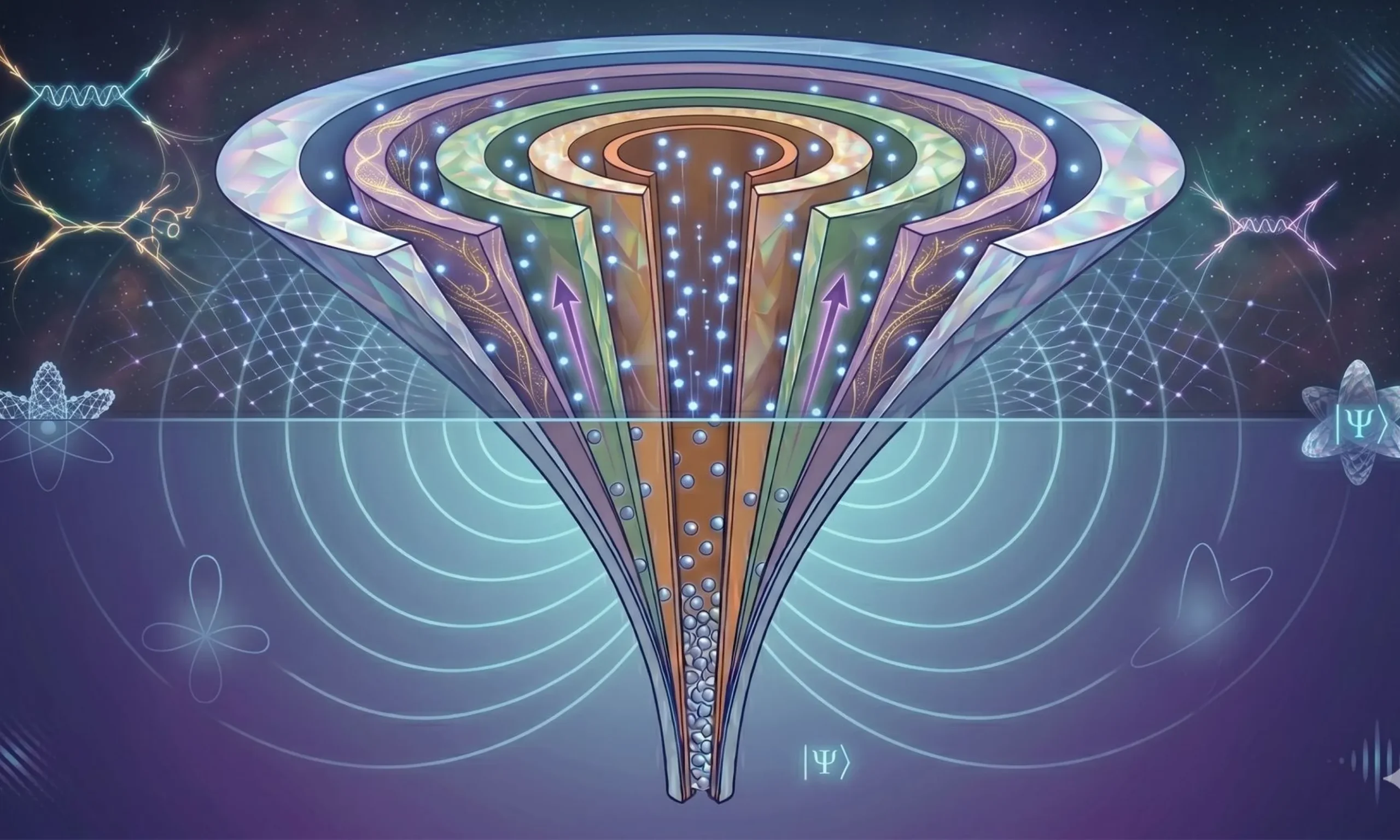
A new theory developed by physicists at Heidelberg University brings together two long competing ideas in quantum physics, offering a unified explanation for how an unusual particle behaves inside a crowded quantum environment. The work connects two seemingly opposite descriptions of a single impurity moving through or remaining nearly motionless within a large collection of fermions, a system known as a Fermi sea.
The framework, created by researchers at Heidelberg University's Institute for Theoretical Physics, explains how quasiparticles emerge and links two previously disconnected quantum states. The team says this advance could have important implications for experiments exploring quantum matter.
New theory unifies competing quantum models
Quantum many body physics has long relied on different models to explain how impurities, such as exotic electrons or atoms, interact with surrounding particles.
One well established picture is based on quasiparticles. In this model, a single impurity moves through a sea of fermions, including electrons, protons, or neutrons, while interacting with nearby particles. As it travels, it effectively carries those neighboring particles with it, creating a combined entity called a Fermi polaron. Although it behaves like a single particle, this quasiparticle actually arises from the collective motion of the impurity and the particles around it.