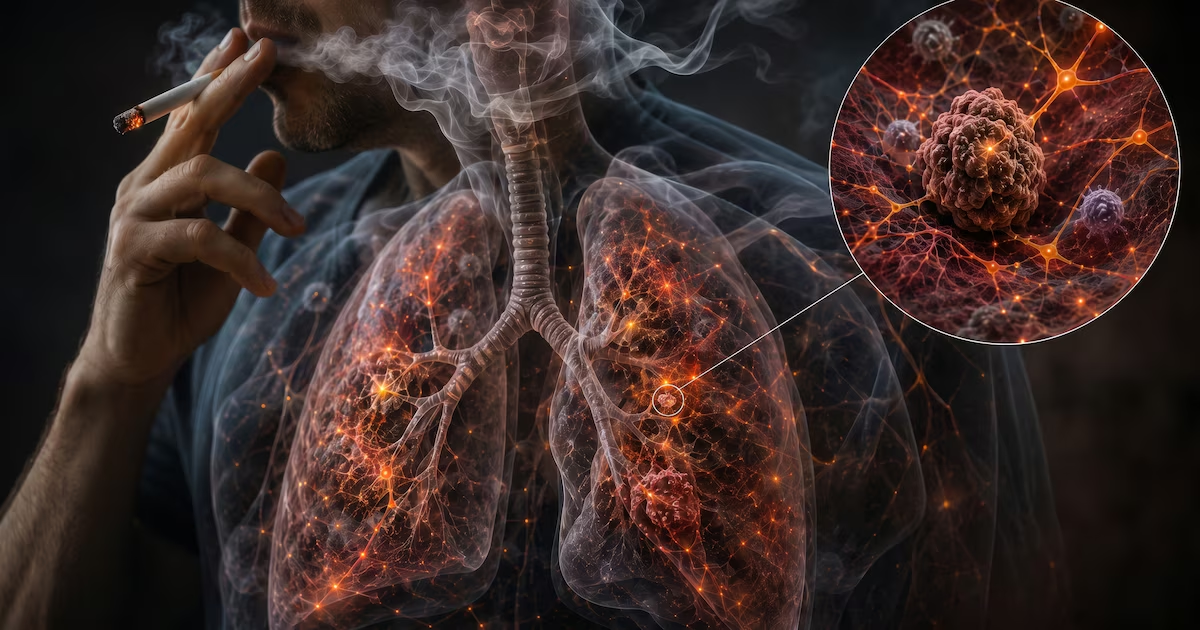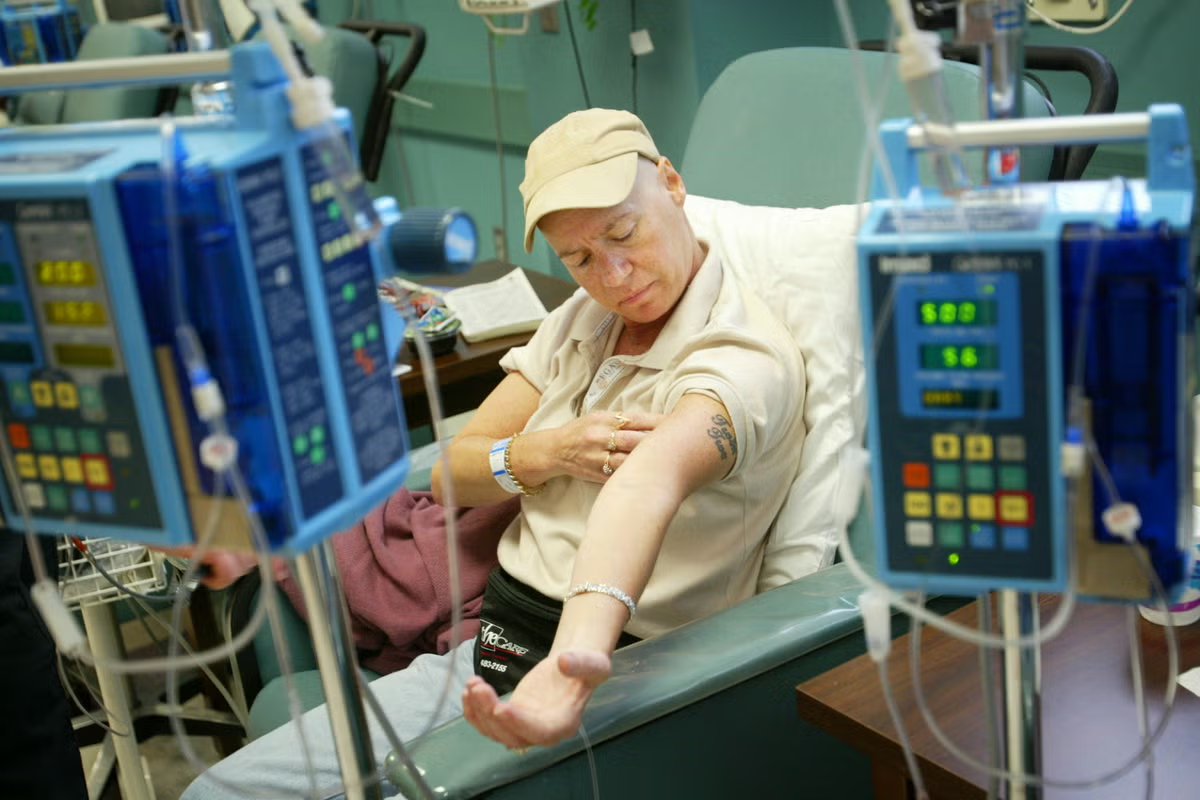
Cancer cases are projected to double in the next 25 years, the World Health Organization warned today, as medical progress hits the roadblock of financial costs. Cancer is the second leading cause of death in the United States with around 626,000 people expected to die of the disease this year, according to the National Cancer Institute.While there has been rapid advancement in treatments for many of the 200 types of cancer, survival rates are coming up against both the increased numbers of people being diagnosed and healthcare costs.Cancer cases around the world could reach 35 million by 2050 from 20.6 million today, WHO said. "Cancer is a deeply personal disease that touches nearly all of us. But whether a person survives cancer should never depend on where they were born or what they earn,” WHO Director-General Dr Tedros Adhanom Ghebreyesus said. “The inequities documented in this report are not inevitable; they are the consequence of choices, and they can be reversed through stronger and unified action."Participants attend an event aimed to raise awareness about colorectal cancer cases in March in Washington, D.C. A new report from the World Health Organization shows rates of cancer are projected to double by 2050 (Getty Images for Fight Colorectal Cancer)There are more than 2 million news cases in the U.S. each year. As a high-income country, the U.S. has better access to essential medicines and makes up a smaller share of global cancer deaths. But medical care also comes with a major financial burden that contributes to rising cases.The WHO report showed the U.S. was the country with the highest spending on cancer care, estimated at nearly $209 billion in 2020.Higher costs can mean that people who need long-term or specific treatment aren’t able to afford that care. Approximately 45-60 percent of people diagnosed with cancer experience what the WHO calls “catastrophic health expenditure” that can lead to debt, food insecurity and interrupted education for children.Poorer rural populations have significantly lower access to cancer diagnosis and treatment compared to urban areas, WHO notes.The number of HPV-related cancer cases was higher in rural America than in cities due to limited vaccinations and screenings between 2015-2019, the report highlighted.Expenses are not the only factor impacting rising case rates in the U.S.Cancer patient Ellen Walsh checks her arm during chemotherapy treatment in Fayetteville, North Carolina, in June 2003. The high costs of cancer care can prevent Americans from seeking treatment they need (Getty Images)America’s population is getting older. The number of people aged 65 and older will more than double over the next 40 years, according to the non-profit research group Urban Institute.An older population means rising risks of developing cancer for several reasons. As humans age, we are more exposed to pollution, sunlight and other cancer-causing sources, and people accumulate more DNA damage and inflammation that drive cancer growth, according to the Dana Farber Cancer Institute. Yet while the ravages of time cannot be stopped, sun exposure is something people can address, among other risk factors.For example, tobacco use causes 30 percent of all cancer deaths, the National Cancer Institute says.Diet and exercise are critical components to slowing biological aging and reducing cancer risk, as well. People should eat a varied diet and get at least 150 minutes of aerobic exercise and two strength training sessions in each week for optimal health, according to federal guidance.“Nearly 40 percent of new cancer cases are preventable by reducing exposure to modifiable risk factors,” the WHO said.But tackling costs or addressing pollution will take government action. That’s something the report says is worth it financially, too. “Investment in cancer prevention and care is warranted by the substantial and growing economic burden of cancer on societies globally, which extends far beyond direct health care costs, offering a full social return on investment of $9.50 for every dollar invested in cancer prevention and control,” it says.
Cancer cases to double in 25 years, WHO warns, as science can’t keep up with costs
Cancer cases around the world could reach 35 million by 2050
645 words~3 min read