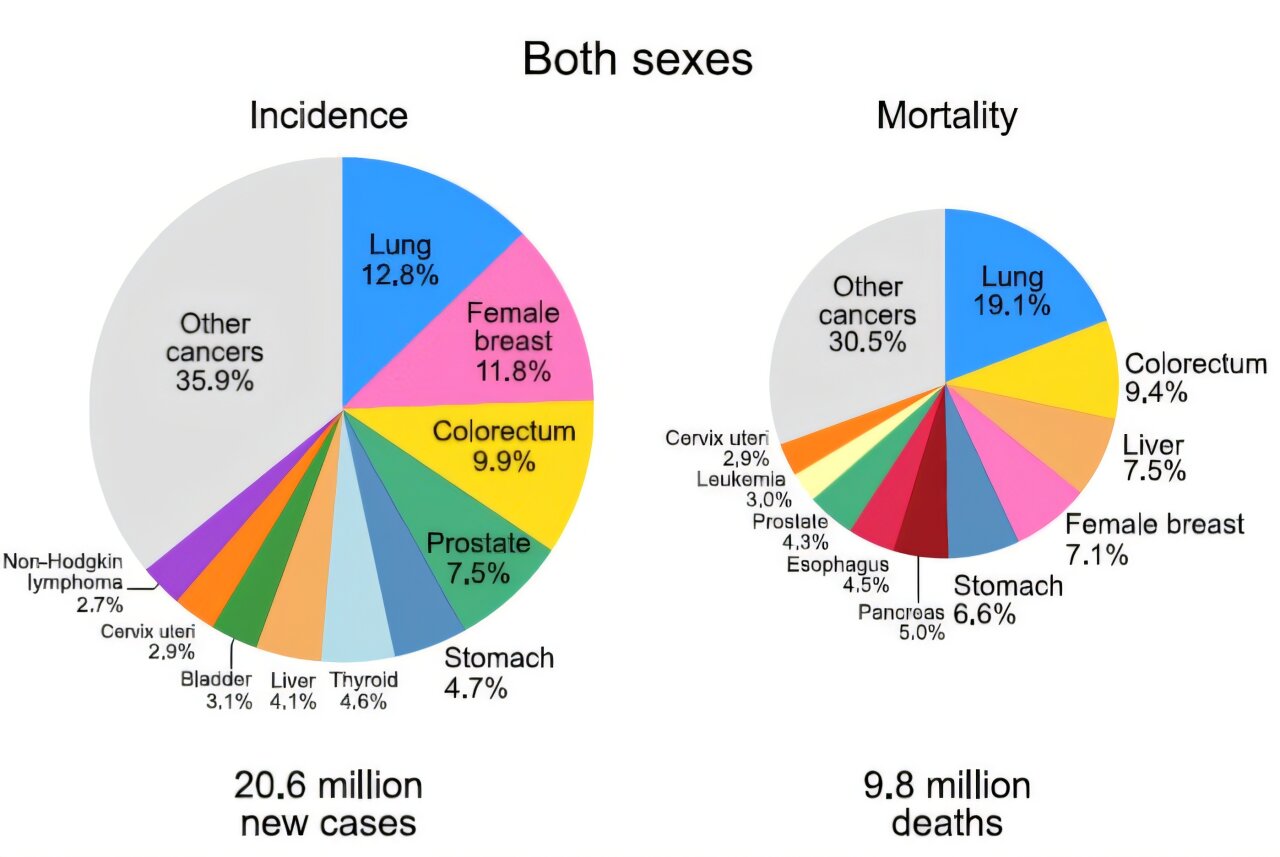
Cancer will afflict one in five of us in our lifetime and affect nearly all of us, according to World Health Organization (WHO)’s Global Status Report on Cancer 2026, released on Tuesday.Cancer is also a huge public health challenge in India“Our experience of the disease and chances of surviving now depend less on the stage or biology of our disease than on where we live and our economic circumstances,” said the report.Data show that 20.6 million people received a cancer diagnosis worldwide in 2024 (19.5 million new cancer diagnoses excluding non-melanoma skin cancer: 9.9 million in men and 9.6 million in women); the number of new cancer diagnoses is projected to reach 35 million a year by 2050.Cancer is also a huge public health challenge in India, with Indian Council of Medical Research-National Institute of Cancer Prevention and Research data estimating that around 2.5 million people are living with cancer in the country. Each year, around 700,000 new cancer cases are registered in the country, with nearly 556,400 cancer-related deaths. In addition, 71% of all cancer-related deaths occur in the 30-69 years age group.Looking at the impact of a cancer diagnosis on close family members, roughly 92% of all people globally will be affected by cancer at least once in their lifetime, says the WHO report. Across all settings, a cancer diagnosis often leads to substantial hardship, it adds. “The psychosocial burden of cancer is profound and prolonged: respondents to the global survey report significant disruptions to emotional well-being, interpersonal relationships, and social functioning; approximately 50% report having lost close relationships, 60% experience distress, and 50% of caregivers report symptoms of prolonged grief.”New WHO estimates of breast and childhood cancer survival reveal the extent of global inequalities: in high-income countries (HICs), where cancers are more likely to be diagnosed early, five-year net survival now exceeds 85%; in low-income countries (LICs), it drops below 30%. Cancer is increasingly a driver of premature mortality and, in 2021, was the leading cause of premature mortality in 41 countries, the second leading cause in 37 countries, and the third leading cause in 47 countries. Only 12 countries are on track to meet the target of reducing premature cancer mortality by one-third by 2030. In contrast, 48 countries have rising rates of premature mortality from cancer linked to increasing cancer burdens, said the report.Health system performance in cancer management can be a catalyst for change or a driver of human, financial and societal crises, says the report.“…this is something we choose together, through the actions we take, and don’t take, as stakeholders. Without accelerated action, the burden of cancer for individuals, families and societies will continue to worsen, with the steepest increases faced by LMICs, whose health systems are least equipped to respond,” read the report.“These increases are driven by population growth, ageing and rising exposure to lifestyle and environmental risk factors: nearly 40% of new cancer cases are preventable through risk factors we already have evidence-based measures to address,” it added.The report calls on all stakeholders to implement key actions, coordinated around seven recommendations, to deliver the three shifts needed in global cancer control: better capabilities, better protections and better value. The recommendations include embedding cancer control within health system strengthening and Universal Health Coverage; strengthening health system capacities for comprehensive, integrated cancer service delivery; enhancing community-level health promotion on cancer and strengthening social protections; unifying the cancer agenda around equity-based, system-wide solutions; and aligning research and innovation with public health priorities and the service needs of LMICs.The report said that the future of cancer control will be shaped by the choices we make together as we define what we value, what we measure, whom we listen to, and what we are willing to finance.“This report is an invitation to make those choices together; it provides the evidence base and the framework to guide us in those decisions and monitor their implementation and their impact,” it said.
Cancer will afflict one in five in our lifetime: WHO report
Health system performance in cancer management can be a catalyst for change or a driver of human, financial and societal crises, says the report | India News
653 words~3 min read