(Image credit: Shutterstock)
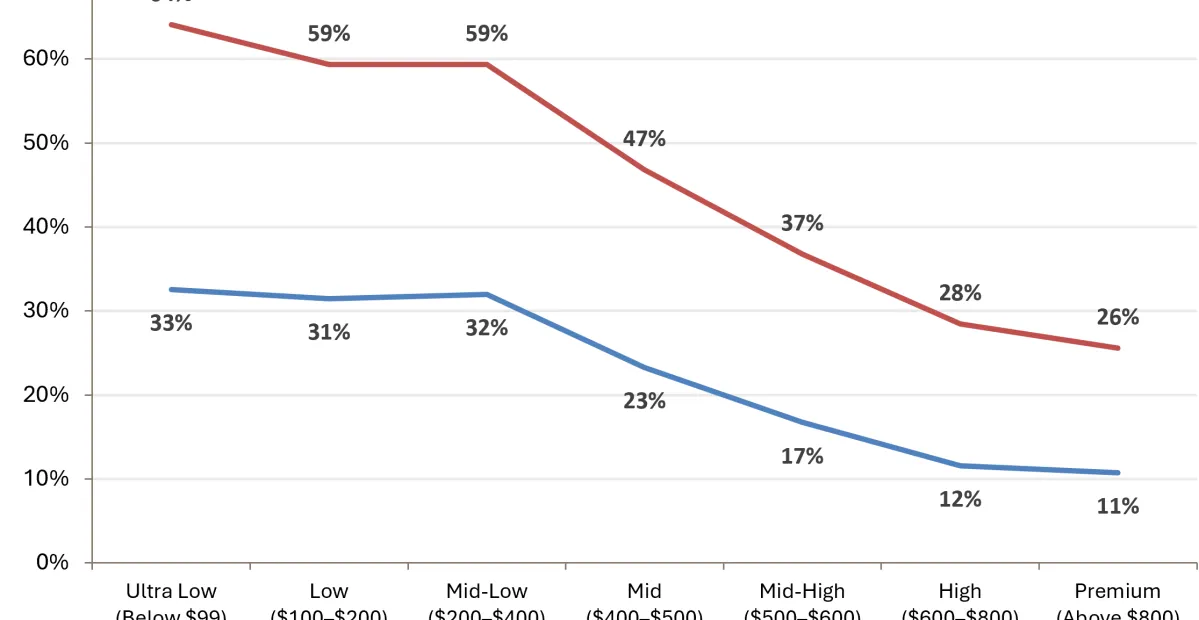
After ravaging the PC market for both DIY builders and OEM buyers, wrecking the game console ecosystem, and savaging the enterprise server landscape, the global memory shortage is officially claiming its next victim: the budget smartphone. According to new market analysis from tech research firm Omdia, the smartphone market, particularly the entry-level market, is on the brink of a massive contraction. Omdia projects that global shipments of smartphones priced below $400 will plummet by over 22% this year, dragging the entire global smartphone market down by 12% year-over-year. The culprit? Skyrocketing contract prices for DRAM and NAND flash memory, which have turned the razor-thin margins of budget phone manufacturing into an impossible financial math problem, especially given that memory alone now comprises up to 64% of the total cost of lower-tier smartphones.To understand why cheap phones are vanishing, you have to look at the Bill of Materials (BOM). That's the raw physical cost to manufacture a device. In the tech industry, this is governed by the "cost floor." Even if a manufacturer puts a low-capacity memory chip into a phone, the baseline cost to produce, test, and package that silicon has skyrocketed over the past four quarters because memory giants like SK hynix, Samsung, and Micron have aggressively redirected their manufacturing wafer starts away from standard commodity memory and toward High Bandwidth Memory (HBM) to feed the insatiable, high-margin demand of AI data centers. Commodity smartphone memory is effectively being starved out of existence.Omdia's latest Quarterly Smartphone Technology Trends report reveals just how destructive this conversion has been to phone BOMs. Between Q3 2025 and Q1 2026, the share of manufacturing costs dedicated to memory nearly doubled for sub-$400 devices, where memory chips now account for nearly 60% of the total physical manufacturing cost. In the sub-$99 ultra-budget phones, memory has apparently breached a staggering 64% of the entire BOM budget. When two-thirds of a budget phone's manufacturing cost is tied up in RAM and storage chips, there is simply no money left to pay for the processor, screen, battery, camera sensors, or chassis.