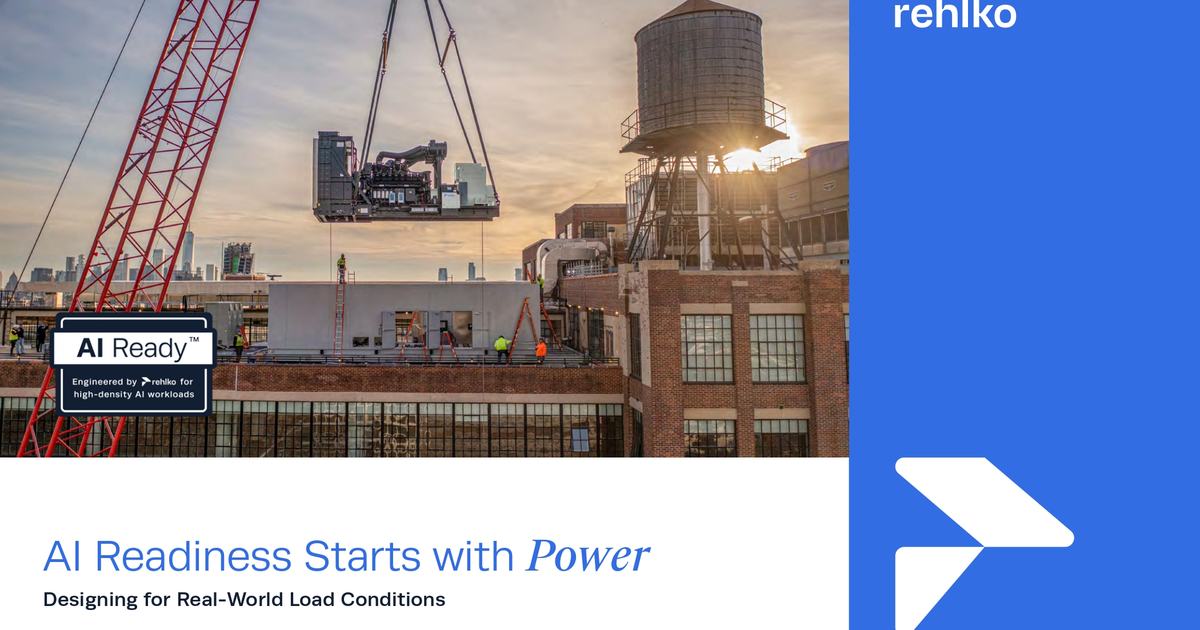
As AI inference and high-performance computing workloads migrate from centralized cloud environments toward edge-adjacent deployment models, legacy data centers are being repositioned as critical nodes in incremental compute expansion. However, most existing facilities were designed around relatively stable, constant-load electrical profiles, which are increasingly misaligned with the high-frequency, transient power characteristics introduced by AI systems.
For infrastructure decision-makers, the challenge is no longer nominal capacity expansion, but the engineering problem of delivering power stability within fixed structural and electrical constraints, while minimizing systemic retrofit risk across aging facilities.
Engineering friction defines retrofit viability
In legacy environments, UPS retrofit decision-making is increasingly governed by engineering friction rather than peak performance potential. Interventions that require deep changes to UPS control architectures, structural reinforcement beyond certified limits, or requalification of fire suppression systems tend to introduce higher compliance and delivery risk.
In practice, these “hidden” engineering dependencies often cascade into extended permitting cycles, higher indirect Capex exposure, and increased operational uncertainty during deployment.