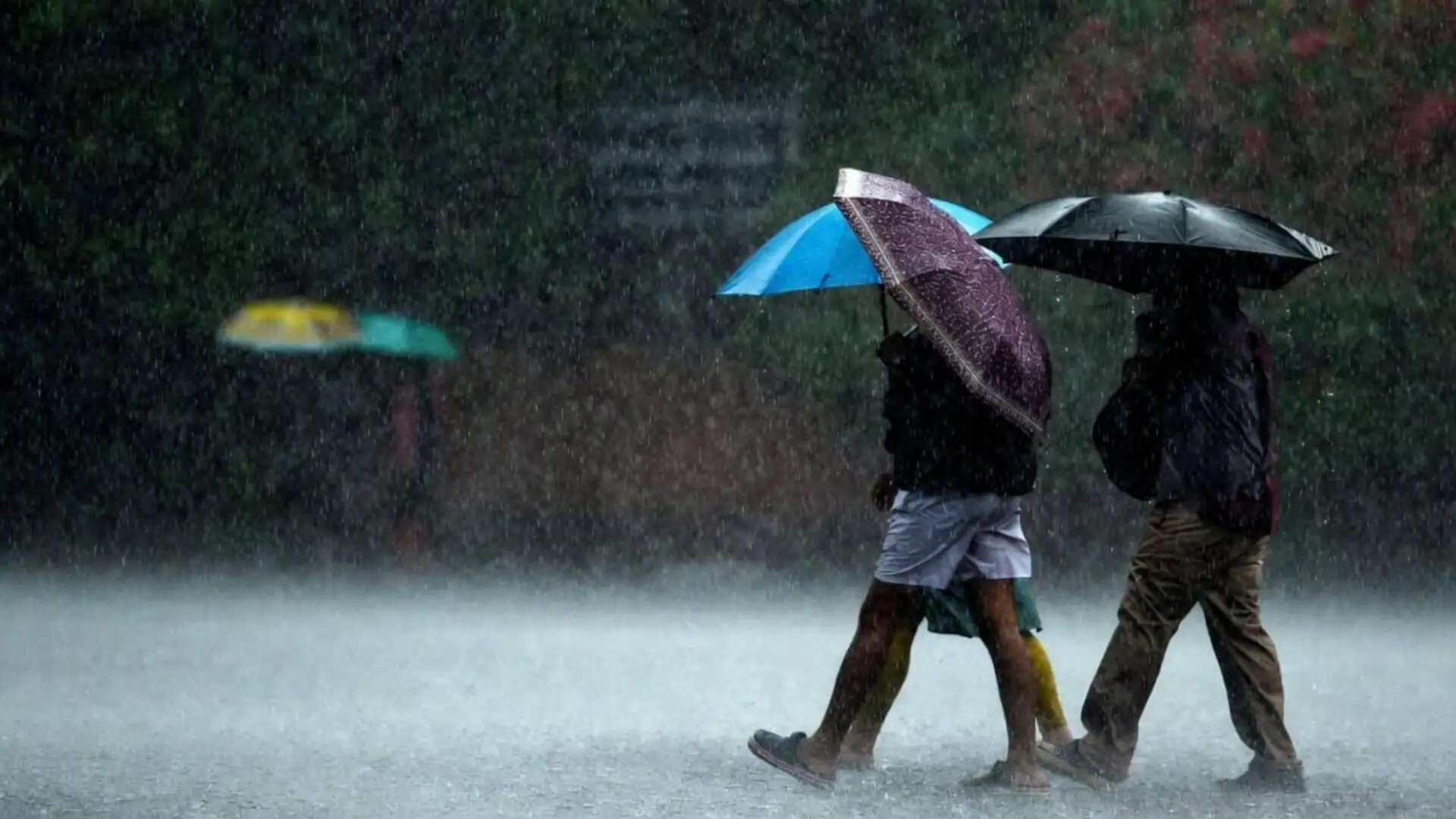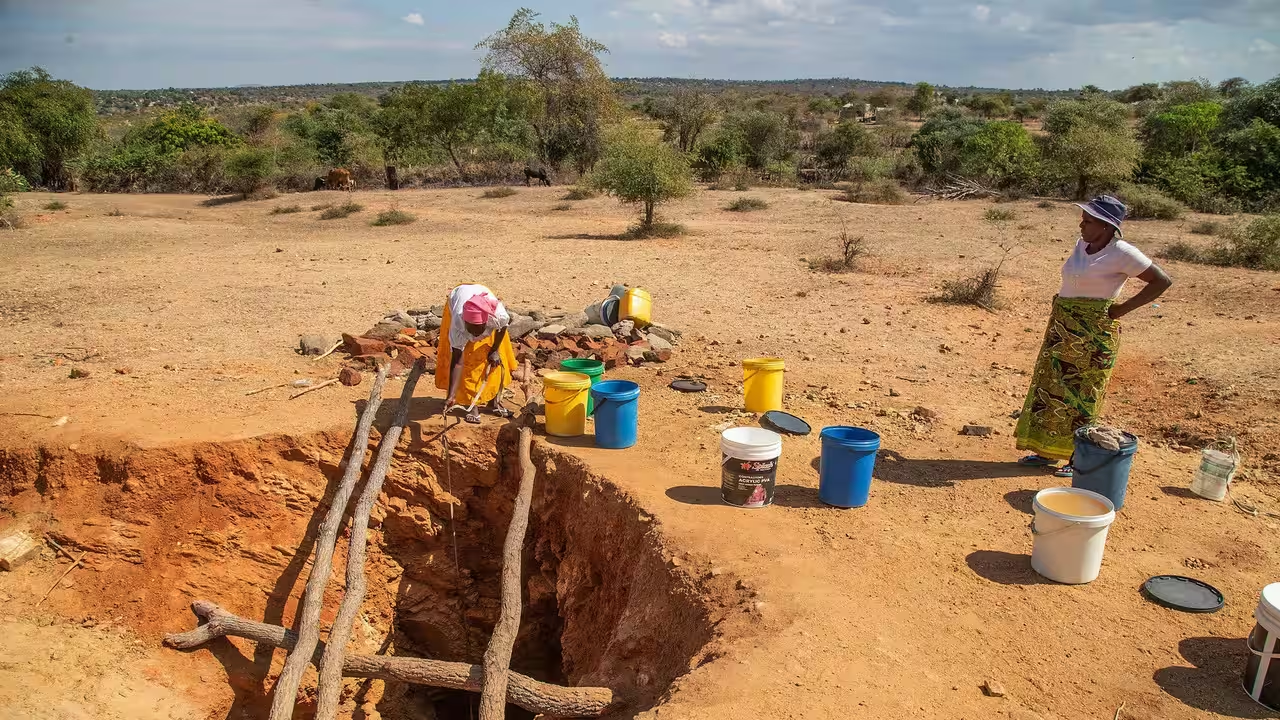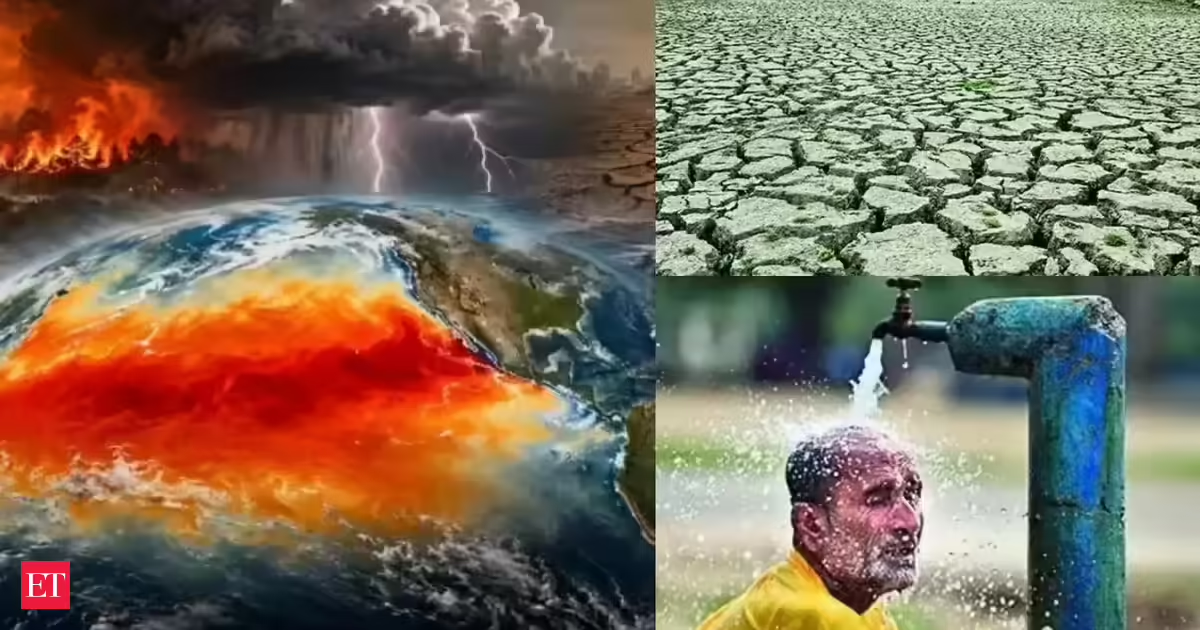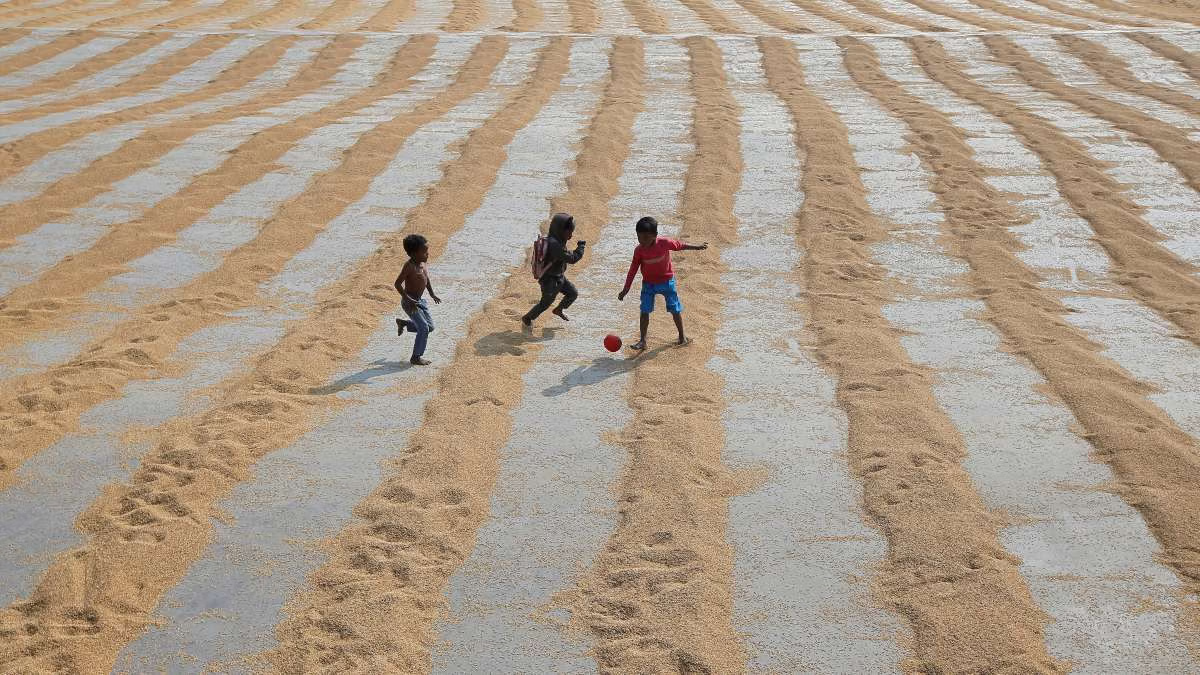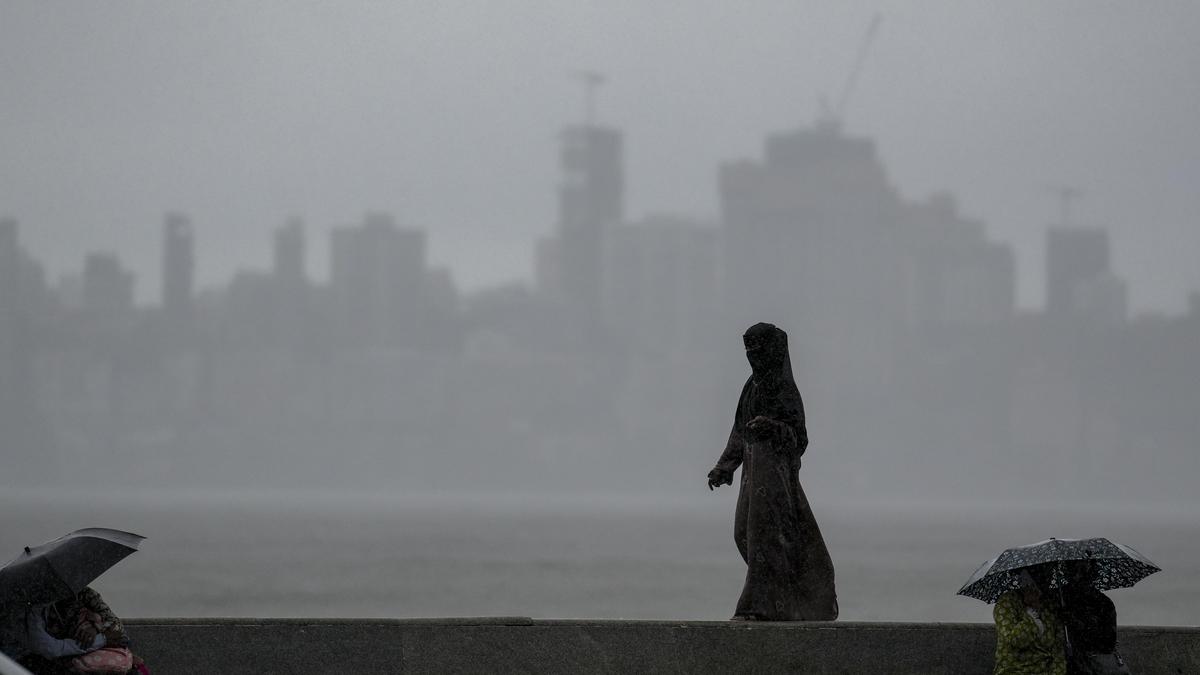
Every few years, the Pacific Ocean runs a fever. Warm surface water that normally pools in the west, near Asia, slides eastward toward the Americas. This was given the name, El Niño in the 1600s–1800s by Peruvian fishermen who noticed a warm ocean current appearing off the coast of Peru and Ecuador. El Niño means little boy in Spanish, but its reach is long. As that warm water shifts, the winds that carry moisture toward India weaken, and the monsoon tends to arrive lighter than usual. It is one of the planet’s older rhythms, and India has lived with it for as long as there have been farmers here to watch the sky. We are in such a year now. The India Meteorological Department expects this season’s rains to be below normal — around 90% of the long-term average — with a real chance of a shortfall.Rain due to El Nino (PTI)It is tempting to read that as a drought warning and respond to that. We absolutely should, but after considering an even more important point that happens to be quieter. A weak monsoon is rarely a steady, gentle shortfall spread evenly across the country. It is uneven. The rains may come late, pause for longer dry spells, and then fall in sudden, heavy bursts that flood fields rather than feed them. In the same season, one district can face drought while its neighbour is battered by flash floods. This is why a single national rainfall figure, however accurate, tells a farmer very little about what to expect on their own few acres. An average can hide a great deal of hardship.And timing is everything. A delay of a fortnight in the first rains can decide whether a season of labour pays off or is lost. Sow too early and the seed may wither before the rains come; sow too late and the crop may not ripen in time. So, the effects of a poor monsoon move quickly through everyday life. Farmers sow late, switch to hardier crops, or, in the worst cases, leave fields unplanted. Reservoirs run low, straining both irrigation and drinking water. More electricity is needed to pump water and run fans and coolers, even as hydropower dwindles. And when harvests fall, food prices rise and rural families spend less — something eventually felt in markets and factories far from any field.Here is the more hopeful half of the story, and it deserves to be said plainly: India is far better placed to weather a weak monsoon than it was a generation ago. Forecasts are sharper and now reach down to the district level. The country holds reasonable grain reserves — enough to keep food on the table through a bad year — alongside a public distribution system, welfare support for hundreds of millions of people, and rural employment guarantees that cushion lost wages. The shift to clean energy helps too: solar and wind reduce reliance on rain-fed hydropower, and growing more millets, pulses and oilseeds — crops that ask less of the water from the soil and the sky — spreads the risk. None of this happened by accident; it is the quiet dividend of decades of investment in forecasting, food systems and rural support. Increasingly, good climate policy and good drought policy turn out to be the same thing.None of this makes the country immune, and the people who remain exposed are often the ones the national numbers overlook. The shops may be well stocked while the farmer’s income still declines. A shortage of fodder can quietly hurt the dairy and livestock families who depend on healthy animals, and where the loss of a single buffalo can undo a family’s savings. Flash floods and landslides take lives and damage homes and roads even in a dry year. And beyond the farms and cities lie India’s forests and coasts, where drought brings a higher risk of fire and lower regeneration and the slow loss of fishing livelihoods that rarely reach the headlines.The task, then, is not simply to brace for less rain. It is to turn good forecasts into timely, local action. That means getting weather warnings and crop advice to the village in time to act on — not to the district in general, but to this field, with its particular soil and its particular crop. It means making sure the right seeds, fodder and support reach farmers before stress sets in, not after. It means managing water and electricity together, so that the rush to pump groundwater in a dry year does not empty the wells we will need the next. It means protecting rural incomes when rains fail. And as India builds new roads, drains and dams, it means designing them for the climate we will have, not the one we used to have.India has already begun to move from reacting to crises toward preparing for them, and that shift has spared millions real hardship. The unfinished work is precision: making sure that better forecasts and stronger systems reach the specific people still in harm’s way, before a difficult season turns into a personal one. El Niño will do what it will. Our task is to ensure that fewer people face it alone — and that, far more than any rainfall figure, is the true measure of how ready we are.(The views expressed are personal)This article is authored by Hisham Mundol, chief advisor, India and Vinay Kumar Dadhwal, lead advisor-science, Environmental Defence Fund (EDF).
What an El Niño year means for India’s monsoon
This article is authored by Hisham Mundol, chief advisor, India and Vinay Kumar Dadhwal, lead advisor-science, Environmental Defence Fund (EDF).
911 words~4 min read