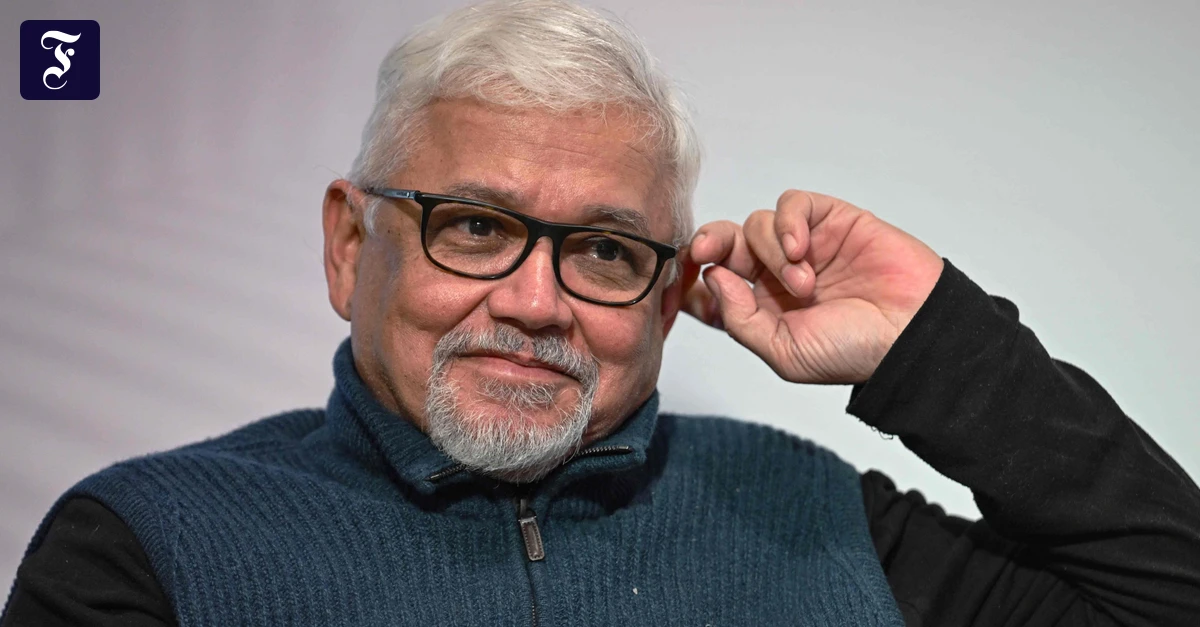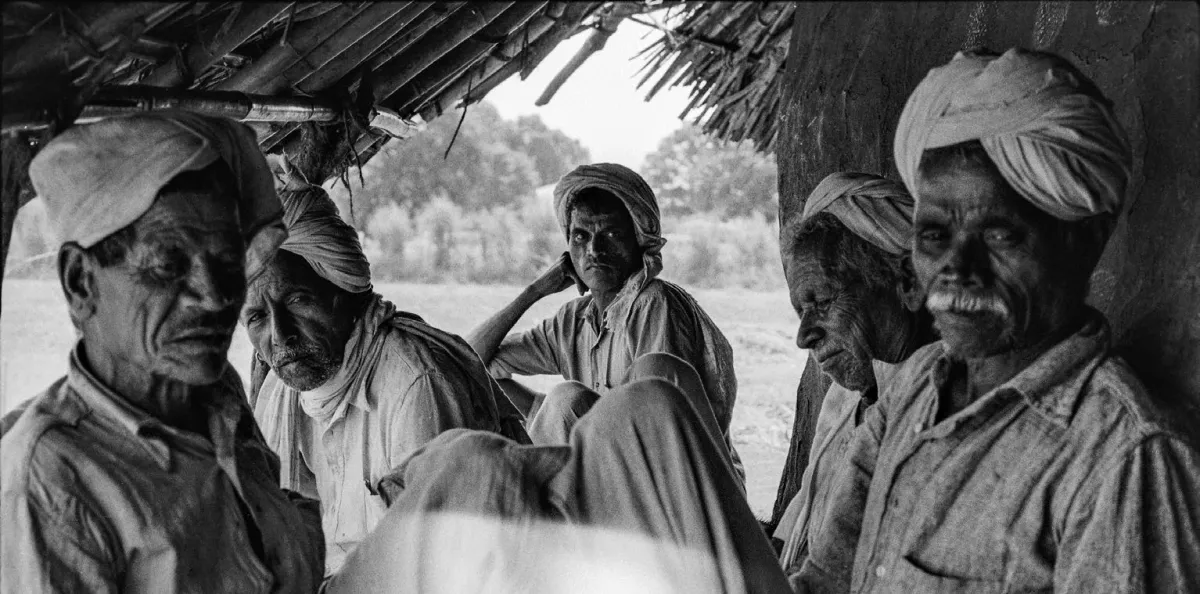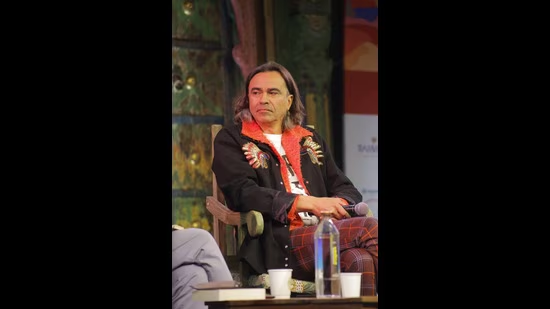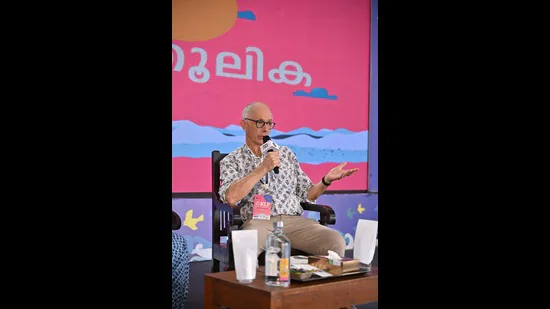
You have written a book about a community that you are not a part of. Often, when people work on such projects, there are questions about the power dynamics between the researcher and the subject. What did you do to ensure that it was done in a respectful way?Author Martin Goodman at the Kerala Literature Festival in January 2026. (Kerala Literature Festival)Thank you for this question. When a book goes out into the wider world, concerns about cultural appropriation need to be addressed. I see myself as a cultural translator. When I go to a group, I make an effort to understand their culture and listen to the stories they have to tell. I interpret what I learn from them for people from a different culture. This is how I see my role.I did not go to the Bishnoi community asking, “Please, may I write this story?” I went to them saying, “I have heard a lot about you. I think of myself as an environmentalist, so I have come to learn from you.” To be frank, that was the only objective I went with. After four days of intense learning, I ended up on a platform where a big Bishnoi festival was being held to honour a beautiful young man who had been killed while trying to protect a chinkara from a poacher.All of a sudden, I heard my name being announced. When I put “Professor Goodman” and “kitaab” together in my head, I realized what was happening. They asked me to write a book about them. It was quite unexpected. Everyone was getting really excited about the idea.It sounds like the Bishnoi community placed their trust in you and commissioned you to write. What was your immediate response?Much of their conversation with each other was in Marwari, a language that I did not know. I was asked to write the book, and share it with the world because they wanted their story to be heard. I could have chosen to refuse it but I did not. I just folded my hands into a namaste and said yes. I was told that I must take the task very seriously, read widely to learn more about the life and teachings of Jambhoji, the guru of the Bishnoi community in Rajasthan, and visit all the holy places that are important to them. Therefore, I decided not to tell my story apart from the travel journey, and focus on telling the stories of the people I visited and learnt from.You look at an aspect of Rajasthan that is not widely discussed by international visitors. The place is often reduced to forts, palaces, and destination weddings. What led you to dedicate so much time and energy towards learning about the Bishnoi community?There is a tradition in England of coming to India to actually learn. Being English, that was certainly on my mind. My interest in the spiritual traditions of Rajasthan is linked to my broader interest in the spiritual traditions of India. I read a book called A Search in Secret India, written by Paul Brunton, when I was very young. That’s what led me to India. Brunton had met the sage Ramana Maharishi in Tiruvannamalai. When I read about it, I was deeply inspired by the man who took a mountain (Arunachala) as his spiritual guide. I wanted to be there myself.My book On Sacred Mountains came out of journeys around sacred mountains in Turkey, India, Sri Lanka, Ireland, and the American South West. This includes Arunachala, which is worshipped as an embodiment of Lord Shiva himself. When I went and honoured all these mountains in the traditions of the local communities, I wanted to see if I would change as a result. I felt like a piece of litmus paper, being acted upon by the mountains and their energies.The common thread that I see running through both these books is a desire to deepen one’s relationship with nature. What can environmentalists, who are not from the Bishnoi community, gain from Jambhoji’s teachings and integrate into their work?One of the teachings of Jambhoji is that you should take action when you are young. You must not wait until you are too old to do good things. When I spent time with the Bishnoi community in Rajasthan, I found plenty of examples of young people taking action. Looking after animals and trees is ingrained into their lives as a religious duty. They are very committed.Some of the young Bishnois that I met were curious to know what I thought of Greta Thunberg. I, in turn, wanted to know what they thought of her. They said that she gets too angry too often, and that she should direct her energy towards doing something more constructive. The Bishnois believe that young people are not powerless. They are even willing to risk their lives. Even in Britain, older people are drawn to environmental action because their children are more aware.In fact, the word ‘Bishnoi’ itself comes from ‘Bish’ meaning 20, and ‘noi’ meaning 9. Jambhoji laid down 29 principles that the Bishnois follow. Those who are not from the community can go through them, and figure out which ones resonate. Some of them have to do with one’s personal conduct, for instance, not speaking negatively of others when they are not with you, and not arguing for argument’s sake. These are principles that environmentalists could benefit from.How do young Bishnois make sense of the teachings that they’ve received? To what extent are they willing to carry forward the traditions that they have inherited?It was a young boy in a school who first told me about the story of Amrita Devi and the 363 martyrs from Khejarli in Rajasthan who hugged and saved khejri trees from being cut down by Maharaja Abhay Singh’s men way back in 1730. I asked him, “Would you give your life for a tree?” He said, “Yes, I would.” He did not have to pause and think about it. When I asked him why, he said, “Because a tree is for everybody. I am for just one family.” I was so moved! Young Bishnois are very committed to protecting trees and animals. They grow up listening to inspiring stories that fill them with a strong sense of duty. They also take very good care of chinkaras.What I found really stunning was the fact that there are several instances of Bishnoi women breastfeeding orphaned baby chinkaras. This is a whole new level of caring for another species. How did you feel when you heard about this for the first time?There are many things about the Bishnoi community that make you really think about how you are leading your own life. For them, there is no difference between a human’s life and a chinkara’s life. Their thought process is quite straightforward. If a chinkara is orphaned, what do you do? Let it die? Or give it what it needs? So, they’ll feed it their own milk. This is huge! They have a different mindset. It is not easy environmentalism, like, you know, let us go plant a tree or buy ethical fashion. It is very much about putting your own life on the line, and taking action.LISTEN: A people willing to sacrifice their lives to save nature - Martin Goodman on the Books & Authors podcastHow would you describe your own spiritual journey? How did it help you appreciate the faith of the Bishnois, which is deeply engaged with their surroundings?When I was a child at school, we were shown a picture of Hindus worshipping a tree. That made absolute sense to me because a tree is part of God’s creation. Later, I started having conversations with mountains and taking guidance from them. An Indian spiritual master called Mother Meera has also played a significant role in my life. My book, In Search of the Divine Mother, is a biography of her. I visited her ashram in Madanapalle, Andhra Pradesh, and liked her teachings because she taught through silence. There was no dogma, no telling you what to do. She now lives in a village in Germany, and has thousands of followers. She is seen as God on earth in female form. Transcendental meditation and Sufism have also been part of my journey. I do not see myself as an atheist but I also find it hard to fit myself into any institution or tradition.Vegetarianism is another topic that comes up for discussion in My Head for A Tree. It can become divisive in a country like India, where people have different associations with vegetarianism, be it religion, animal rights, or caste. How can we talk about it in a way that benefits animals, also keeping in mind the cultural context?According to the Bishnois, eating animals, harming animals, killing animals, all of this is wrong. Every animal must live out its natural life. But the question that you are asking is a broader one, and the answer for it may or may not be found within the Bishnoi realism. People are on different journeys, and they find what is comfortable for themselves. Not everyone might want to switch to vegetarianism but they might be willing to eat more consciously. A great place to begin is by learning to acknowledge that eating red meat is one of the most damaging things on the planet because of the land and water resources it takes to produce meat, and the methane emissions from animals. People can take small steps like reducing their consumption of red meat, or slowly increasing the number of vegetarian meals they have per week. If your ambition is to live more lightly on the earth, you can figure out how to. It doesn’t have to be all or nothing.Chintan Girish Modi curated the fiction/non-fiction segment of the Green Literature Awards 2025. He is @chintanwriting on Instagram and X.
Martin Goodman: “I see myself as a cultural translator”
The author of My Head for A Tree on his own spiritual journey, and on the environmentalism and beliefs of the Bishnois, who are the subject of his book
1,645 words~7 min read