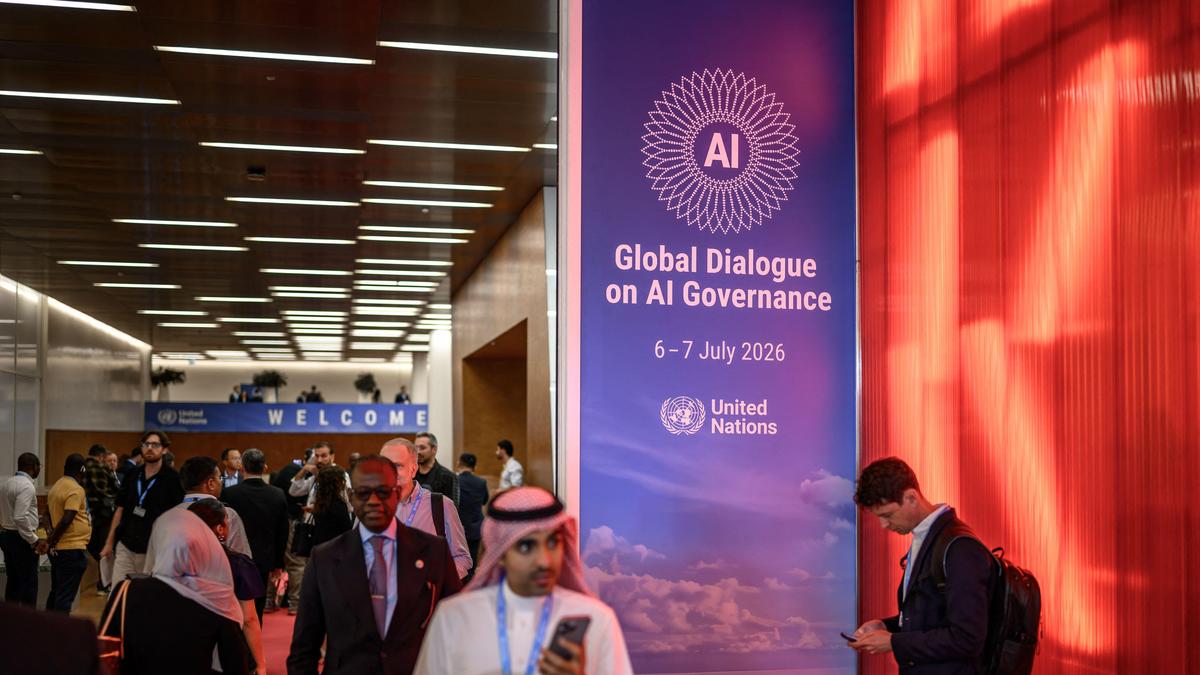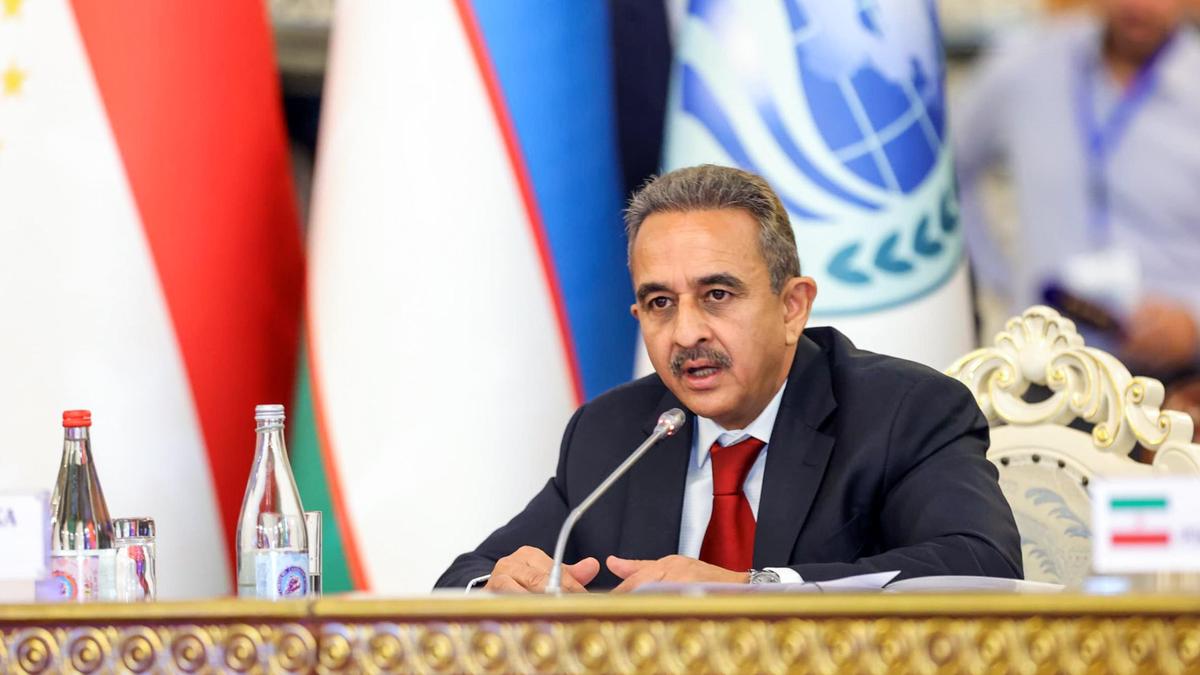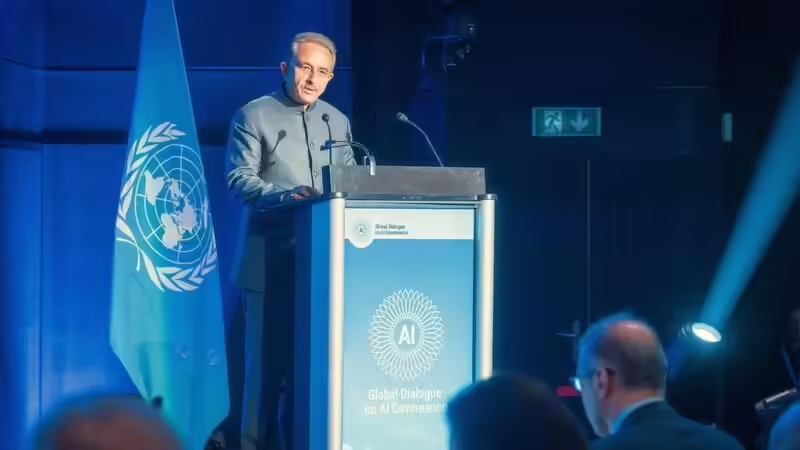
Photo credit: X/@KVSinghMPGondaIndia used its platform at the first ever UN Global Dialogue on AI Governance in Geneva to make a clear pitch: artificial intelligence needs to be governed in a way that's inclusive, secure and genuinely responsible, not just for a handful of powerful nations but for everyone. The country's core message was simple, AI has to stay human centric, and its benefits shouldn't end up concentrated among a select few countries.At the gathering, India’s top diplomat for the meeting, Minister of State for External Affairs and Minister of State for Environment, Forest and Climate Change, Kirti Vardhan Singh declared that all valid AI governance systems should contain “several inviolable prerequisites.” These are human control, respect for human rights and genuine safeguards against malicious use of the tech, he explained. He additionally urged for bridging the “AI capacity gap that limits the capacity of developing countries.” The UN, he stressed, “is best placed to rally the world to some common understanding,” he stated, part of New Delhi's “AI for All” strategy, a blend of oversight that doesn’t curb innovation, and holding developers liable.What Happened At The DialogueTalking to a room full of government officials, representatives from international bodies and also industry leaders, Singh laid out what India thinks responsible AI governance should be like. His whole point came down to a few base principles, humans have to remain firmly in the loop, individual rights really need to be guarded, and abuse has to be actively blocked, not merely frowned on or discouraged. He tied these themes straight to concrete things India has already moved on domestically, saying they’re necessary so that AI systems can operate in a way that is ethical and transparent, regardless of which nation they end up deployed in.For the record, this back and forth was organized under UN General Assembly Resolution 79/325. It comes after the 2024 adoption of the Global Digital Compact, and in practice it is meant to push countries to cooperate more seriously on how AI gets governed across the world, in a coordinated manner.Why India is pushing for inclusive AI governance India's argument boils down to this: the rules around AI shouldn't be written exclusively by the countries that already have the most advanced tech. Developing nations, in India's view, deserve an equal seat at the table when these global rules are being shaped, along with real support to actually build their own AI capabilities.Left unchecked, India warned, AI risks widening the gaps that already exist between richer and poorer economies, both digitally and financially. That's why the country has been vocal about the need for capacity building, better access to computing infrastructure, more knowledge sharing, and AI tools that are actually affordable, so the upside of this technology doesn't stay locked up in a handful of wealthy nations while the Global South gets left behind.How India plans to govern AIIndia also used the forum to walk through its own domestic approach, one that tries to strike a balance between encouraging innovation and still holding developers accountable. According to Singh, the country's National Strategy for AI, alongside its National AI Governance Guidelines, is built entirely around that "AI for All" idea, prioritizing inclusive growth without smothering innovation with excessive red tape.The framework, as India describes it, is meant to encourage ethical deployment of AI while keeping things transparent, fair, secure and genuinely responsible. India was also clear that governance needs to move at the same pace as the technology itself rather than lagging behind or getting in its way. Going forward, the country plans to keep refining its own policies while working with other nations to build AI standards that actually work across borders.Why India's position matters globallyIndia's broader point is that AI governance simply can't stay the exclusive domain of technologically advanced economies, it has to reflect what the Global South actually needs too. Singh made the case that developing countries need real capacity building, technical support and infrastructure access if they're going to participate meaningfully in shaping the rules that will eventually govern this technology worldwide.Left unaddressed, the Indian delegation warned, the digital and AI divide between nations could deepen even further. India continues to view the UN as the natural home for building consensus here, arguing that since AI doesn't respect borders, no single country or bloc should be setting the rules alone. Singh's underlying warning was pretty direct too, diplomacy needs to keep pace with how fast the technology is moving, otherwise AI risks becoming a tool that deepens inequality rather than fixing it.This all happens as many nations are adopting remarkably different ways of going about managing the technology. Whereas a few have embraced tough restrictions, others have gambled on an innovation-first framework of less restrictive regulation, the proposal India offers attempts to bridge this divide by calling for both innovation and genuine safeguards for its development. According to dialogue participants, the decisions taken over the next several years by governments, international institutions, and private firms would determine if AI’s ultimate impact would be to foster inclusive development or to exacerbate divisions between nations.Over the two-day dialogue in Geneva, issues concerning the socio-economic impacts of AI, its effect on human rights, its potential for reliable and secure use, and solutions to narrow the digital divides related to AI were discussed. Among the participants in the forum was the newly launched Independent International Scientific Panel on AI which released a report outlining risks and benefits of the burgeoning tech. “The two-day Geneva dialogue is an important juncture and I believe, as leaders, nations as whole can rise to this occasion by choosing cooperation over conflict,” said Singh before concluding, emphasizing New Delhi's commitment to nurturing a safe, secure and responsible AI ecosystem. In a statement, India’s Ministry of External Affairs (MEA) said that participation in the event comes “under a comprehensive effort to promote transparency, accountability and development-oriented AI governance at the national and global levels”.FAQsWhy was India part of UN Global Dialogue on AI Governance? India wanted to support the idea of having inclusive, safe and ethical human-rights-based governance for AI which would lead to distribution of its benefits amongst the nations and not only in few countries.What is India’s approach on AI Governance?India pursues ‘AI for All’ ethos and wants a healthy mix of innovation and regulation through National Strategy for AI and National AI Governance Guidelines.What did Kirti Vardhan Singh highlight in his speech to the UN?He emphasized that human-centricity should remain at the core of AI development, protection of rights should be done and that malicious use should be prevented, while at the same time allowing and fostering equal development.Why does India believe the UN should play a central role in AI Governance?India recognizes that the UN as the largest international institution is the best suited forum to achieve the broad consensus on AI norms given the cross-border nature of technology.What were the key themes of discussions in the Geneva Dialogue?Discussion was focused on themes including responsible AI, human rights, AI safety, building capacities of developing countries, bridging AI divide, transparency and accountability, and the broader societal and economic impact of AI.end of article
India pushes for inclusive AI governance at UN Global Dialogue In Geneva, calls for human-centric global framework
During the UN Global Dialogue in Geneva, India underscored the importance of inclusive AI governance. It championed the notion that artificial intelligence should prioritize humanity across nations. India advocated for international partnerships in establishing AI standards and enhancing capabilities, introducing its 'AI for All' framework designed to harmonize innovation with ethical responsibility. The overarching goal of this dialogue was to ensure responsible AI advancement worldwide.
1,191 words~5 min read