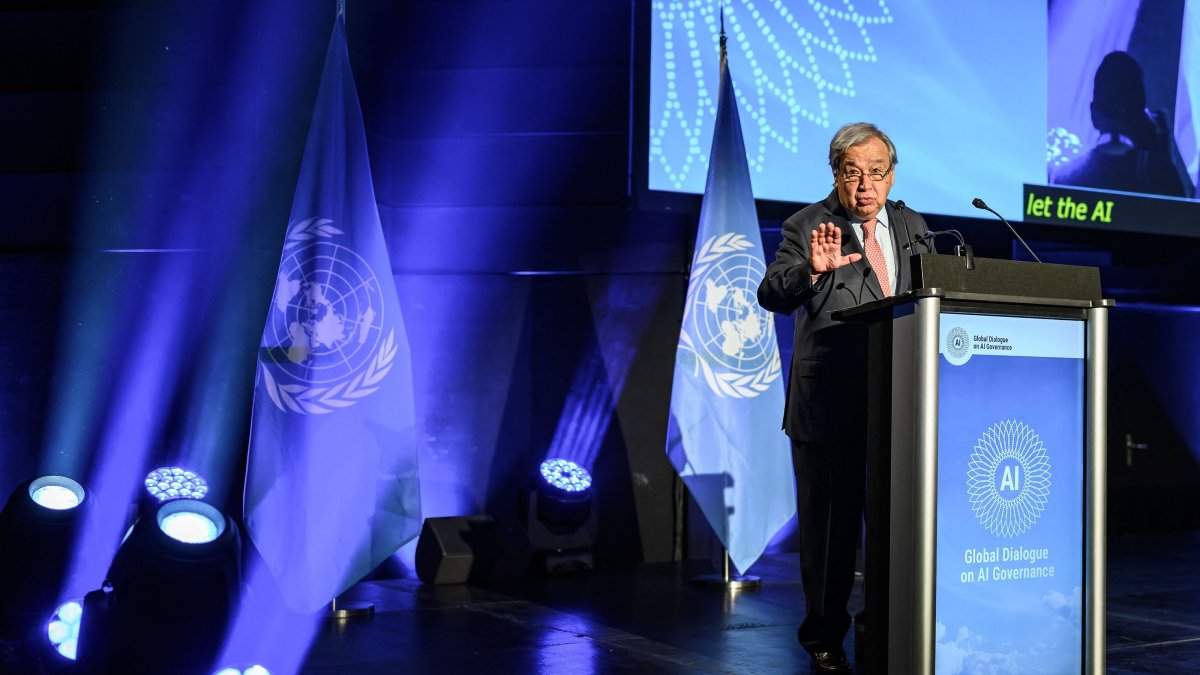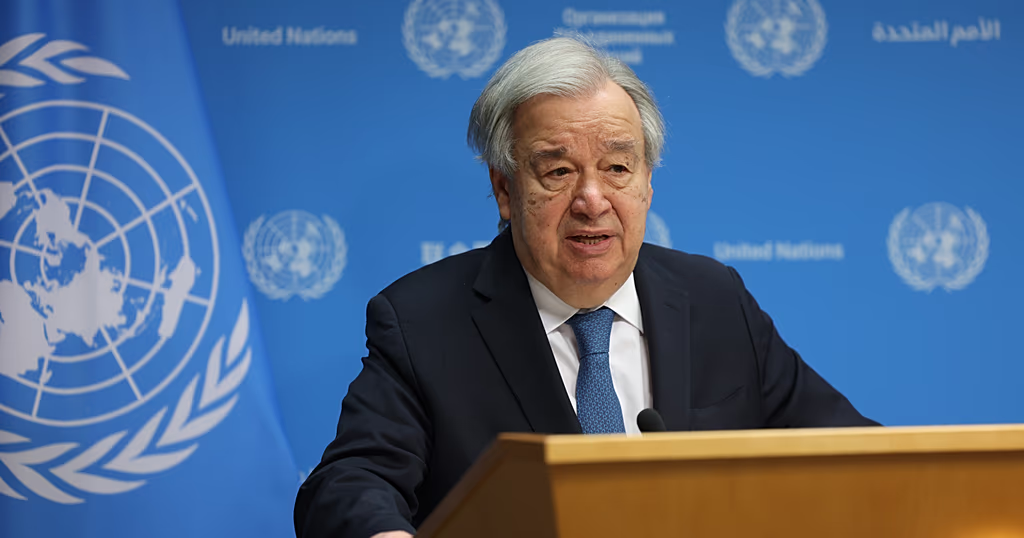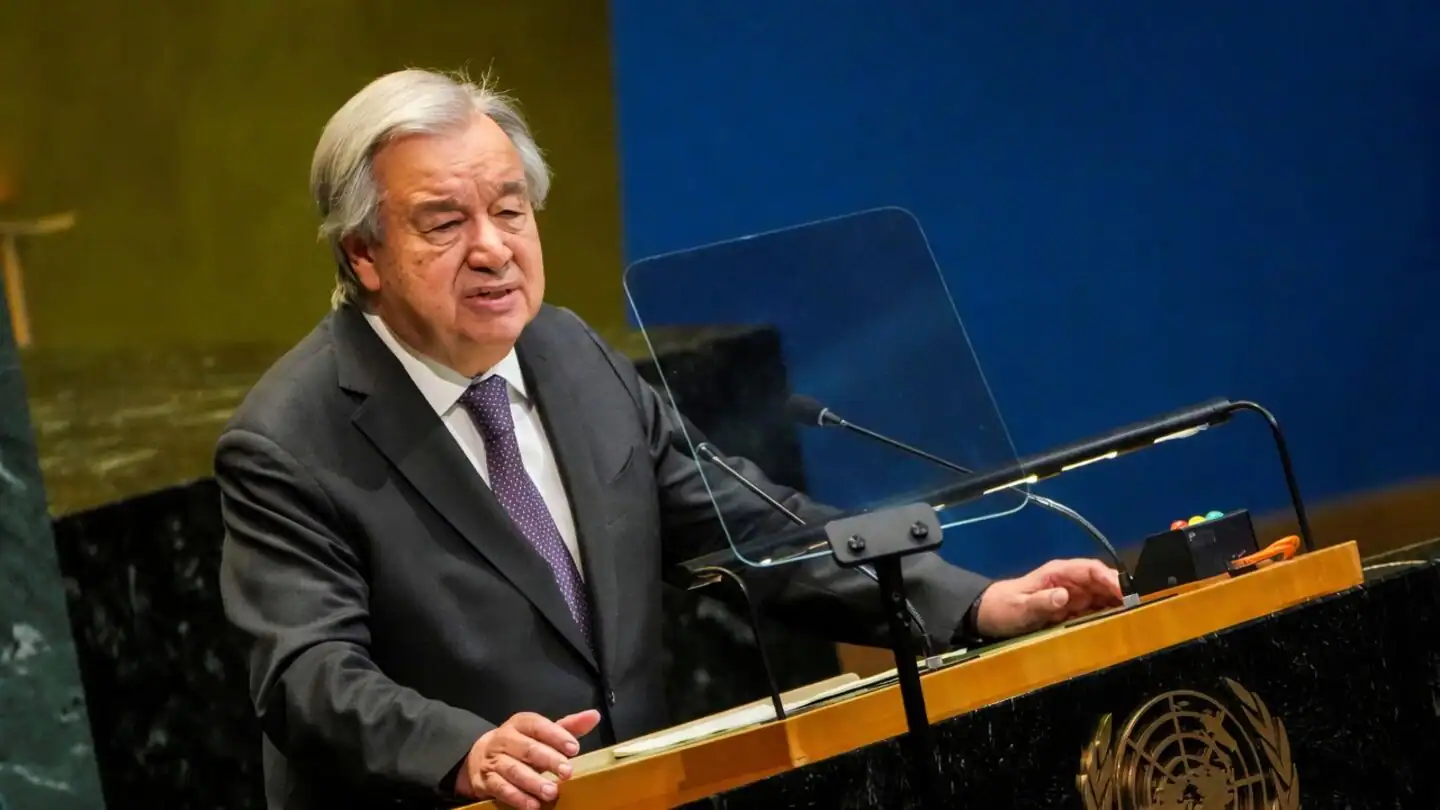
With AI advancing at "runaway speed", UN Secretary-General Antonio Guterres cautioned that "an experiment is being run on our own societies, without a plan and without consent"."That is not sustainable," he insisted, speaking in Geneva at the opening of the first Global Dialogue on AI Governance.The two-day event is bringing together more than 4,000 participants, representing governments, tech companies, academia and civil society, to launch an inclusive discussion on how best to harness a technology that is already rapidly transforming our world."The question is whether we will shape this transformation together, or let it shape us," Guterres told the gathering.He warned that AI systems were "no longer tools awaiting instruction".
Antonio Guterres delivered the opening speech at the first Global Dialogue on AI Governance © Fabrice COFFRINI / AFP
"They are writing code, acting online and making choices with less and less human oversight," he said."Our institutions were built to govern machines that follow commands. They are not ready for machines that decide." Guterres voiced concern at how AI was obscuring what is true and false.He also warned there was a growing tendency to leave important tasks up to the technology and blindly trust the results.So-called "vibe-coding", or using AI to tell a machine what you want instead of coding it yourself, "can do wonders", he acknowledged."But we cannot vibe-code the truth. We cannot vibe-code the future of humanity."Major risksAnother risk flagged by Guterres was the concentration of power in a handful of AI companies and in a handful of countries.Most countries "have had no say in decisions that will shape their futures", he warned.Countries, he said, now faced a stark choice, "between governing by design and drifting by default".The UN chief highlighted the potential of AI technologies for everything from accelerating development to improving healthcare and providing broader access to education.