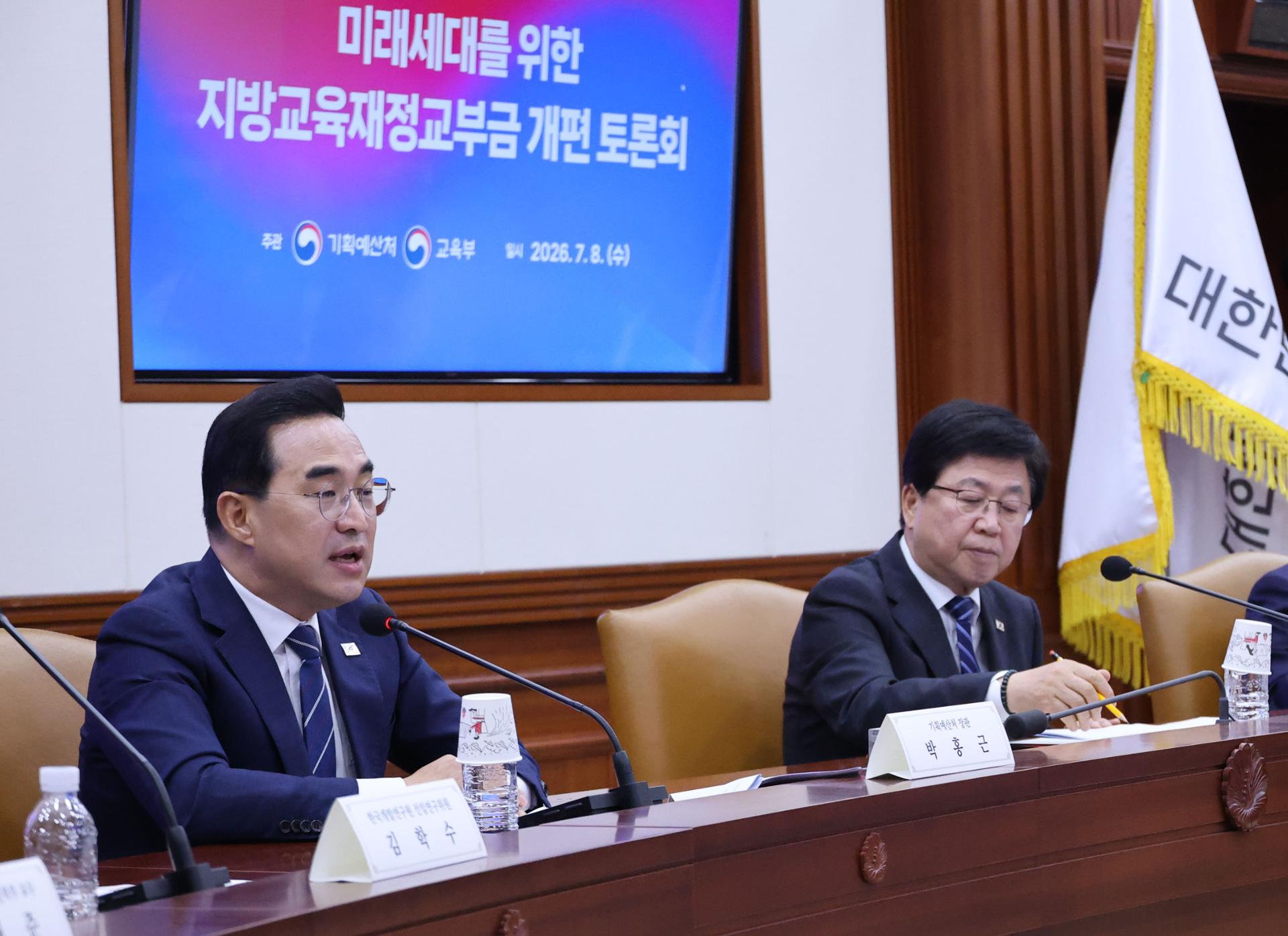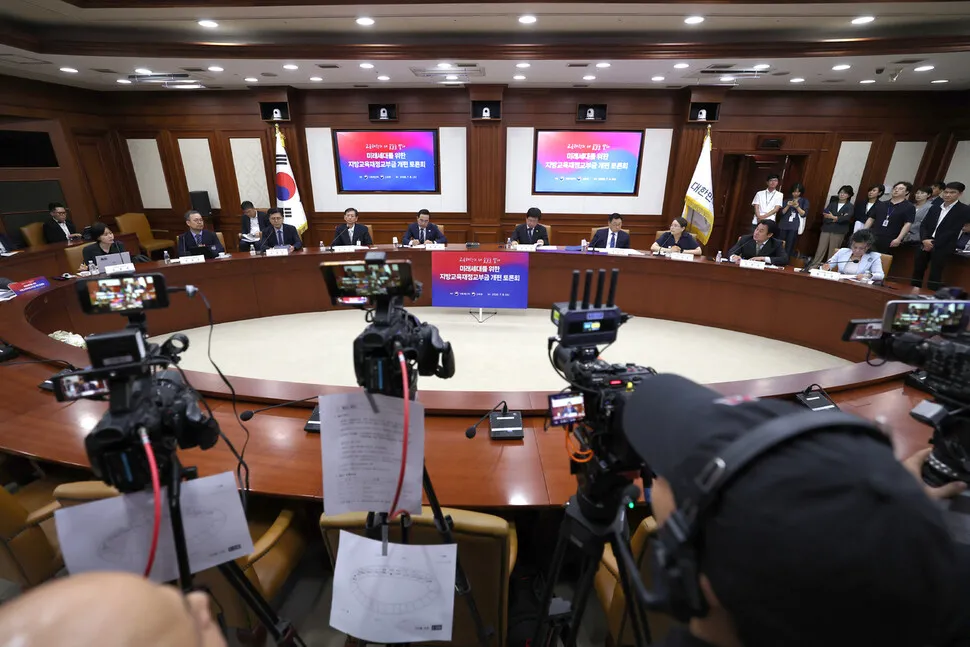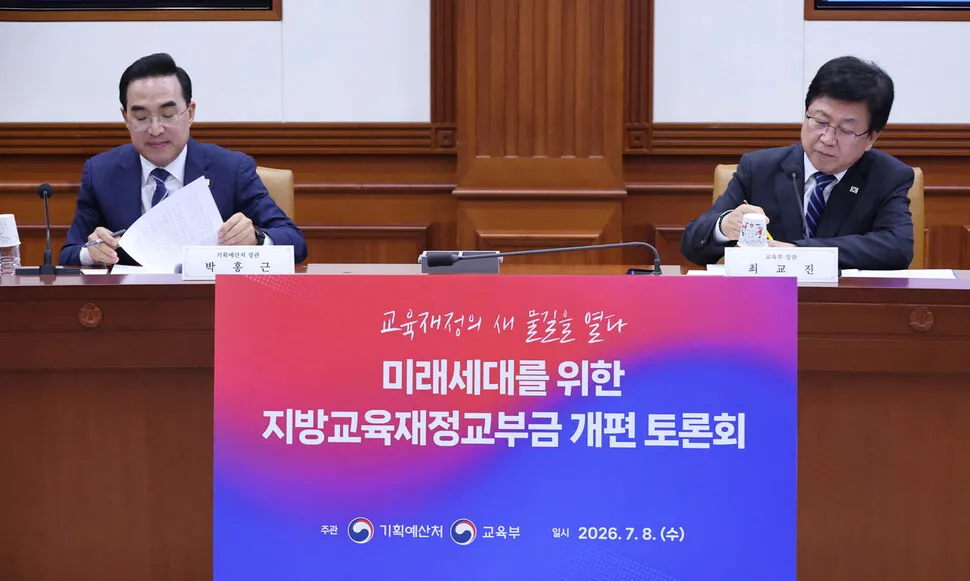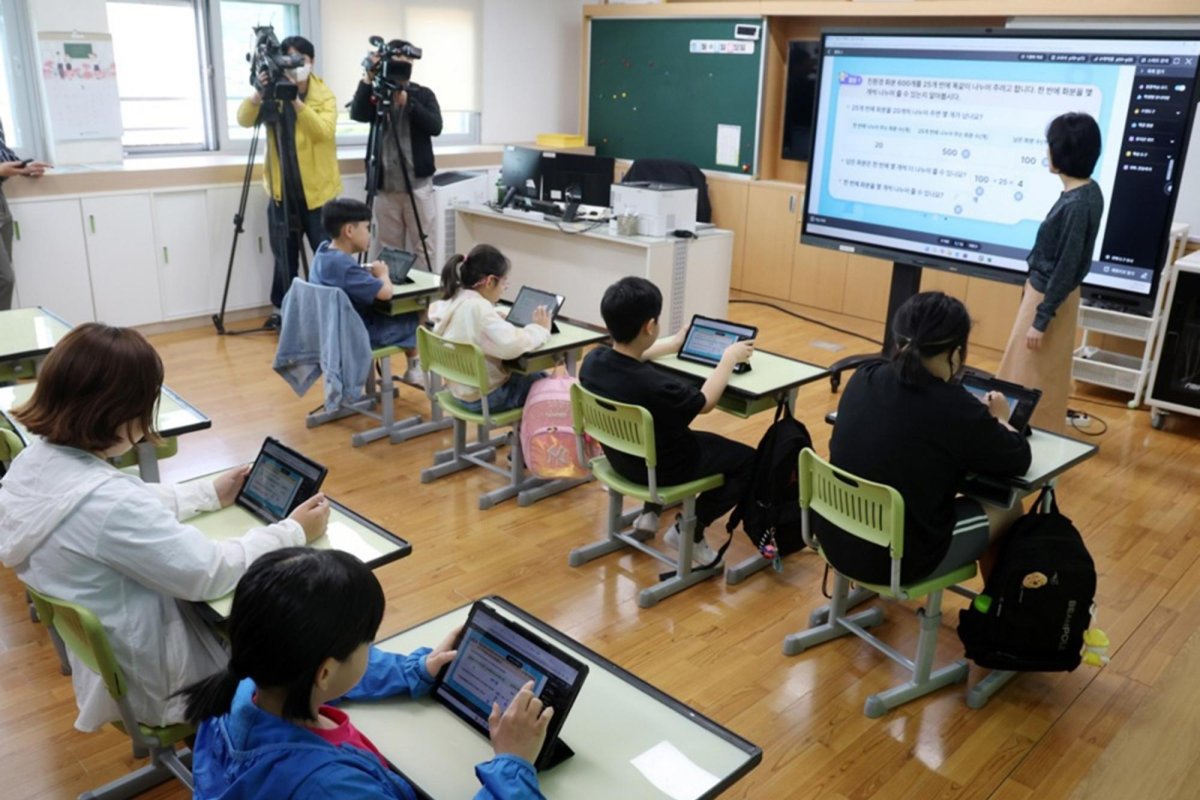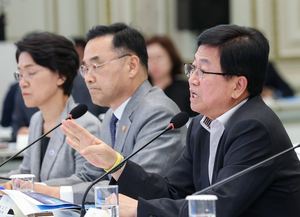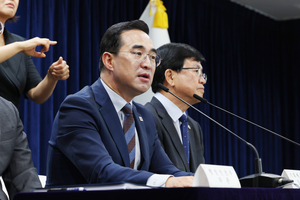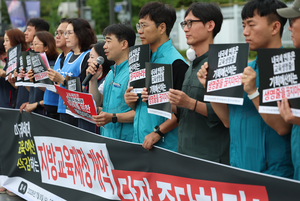
Budget Ministry calls for ending tax-linked formula amid falling student numbers, while education officials warn against weakening school funding Education Minister Choi Kyo-jin (right) and Planning and Budget Minister Park Hong-keun sit next to each other during a public forum held on Wednesday at the Government Complex Seoul to discuss reforms to a tax-linked grant system that serves as the main revenue of local education offices. (Ministry of Education) South Korea’s education and budget ministries shared contrasting views Wednesday on whether to overhaul a tax-linked grant system that serves as the main source of funding for elementary and secondary education.The two ministries held a televised public forum at the Government Complex Seoul under the theme “Opening a new path for education finance: Reforming the local education finance grant for future generations.”The grant, which funds elementary, middle and high schools as well as some kindergartens, accounts for about 70 percent of provincial and metropolitan education offices’ revenue.Under the current system, 20.79 percent of domestic tax revenue is automatically allocated to the grant, meaning education funding rises when tax revenue increases.This year, the grant is expected to exceed 80 trillion won ($53 billion) for the first time, as stronger corporate tax revenue, helped by the chip industry’s rebound, increases the amount automatically allocated under the current formula.It is unusual for two ministries to hold a public forum on a policy issue over which they have clear differences. President Lee Jae Myung proposed an interministerial public debate on education grant reform during a Cabinet meeting on June 30.Falling student numbers drive calls for overhaulThe Planning and Budget Ministry says the issue is not simply whether to cut school funding, but whether Korea should keep a rigid formula that automatically channels a fixed share of domestic tax revenue into elementary and secondary education.Planning and Budget Minister Park Hong-keun said during Wednesday’s debate that the system had helped improve Korea’s education for half a century, but that it no longer fully reflects the country’s demographic and fiscal reality.“The school-age population is declining, while investment needs are growing across the entire education sector, including higher education, lifelong education such as job retraining and early childhood education under the planned integration of kindergarten and childcare,” Park said.Park also said limited public resources should be used more efficiently and more flexibly, while pushing back against claims that the government is seeking to reduce education funding. He said the total grant amount and per-student spending would continue to increase to meet future education needs.Kim Hak-soo, a senior research fellow at the Korea Development Institute who also participated in the forum, said the system was designed for a very different demographic and fiscal environment.“When this system was first introduced in 1972, the number of elementary, middle and high school students exceeded 10 million,” Kim said. “At the time, there were shortages of both schools and teachers.”Kim said Korea has about 5 million such students today, with the number projected to fall below 2 million by 2070. He added that while student numbers have been cut in half, the number of schools has increased and education conditions have improved significantly.Kim also said tax revenue has grown sharply over the past half century, while the grant allocation rate has risen from 11.8 percent in 1972 to 20.79 percent today.Education officials warn against funding cuts Teachers groups hold a press conference in front of the Government Complex Seoul on Wednesday, urging the government to halt discussions on reducing local education finance grants, as the education and budget ministries hold a public debate on the issue. (Yonhap) Education Minister Choi Kyo-jin agreed that the education finance structure needs to be revised, but voiced concern that changing the tax-linked system could reduce funding for schools.“It is deeply concerning that recent discussions are being led by a one-sided economic logic centered on numerical efficiency,” Choi said.“Viewing education simply as expenditure could lead to dangerous consequences, damaging the education safety net we have built with difficulty and undermining the future growth engine,” he added.The Education Ministry has proposed keeping the tax linkage while allowing part of the grant to be used for early childhood and university education.Seoul Education Superintendent Jung Geun-sik, who also joined the forum as a panelist, said it would be the wrong approach to address new education needs simply by reallocating existing funds for elementary and secondary education.“Trying to meet new education needs only by redistributing existing elementary and secondary education funding is the wrong direction,” Jung said.“Improving the quality of early childhood, elementary and secondary education, while building cooperative governance with higher education, would be most effective when pursued by the Education Ministry and education offices based on their expertise,” he added.
Should fewer students mean less automatic school funding?
South Korea’s education and budget ministries shared contrasting views Wednesday on whether to overhaul a tax-linked grant system that serves as the main source
780 words~4 min read