Story audio is generated using AI
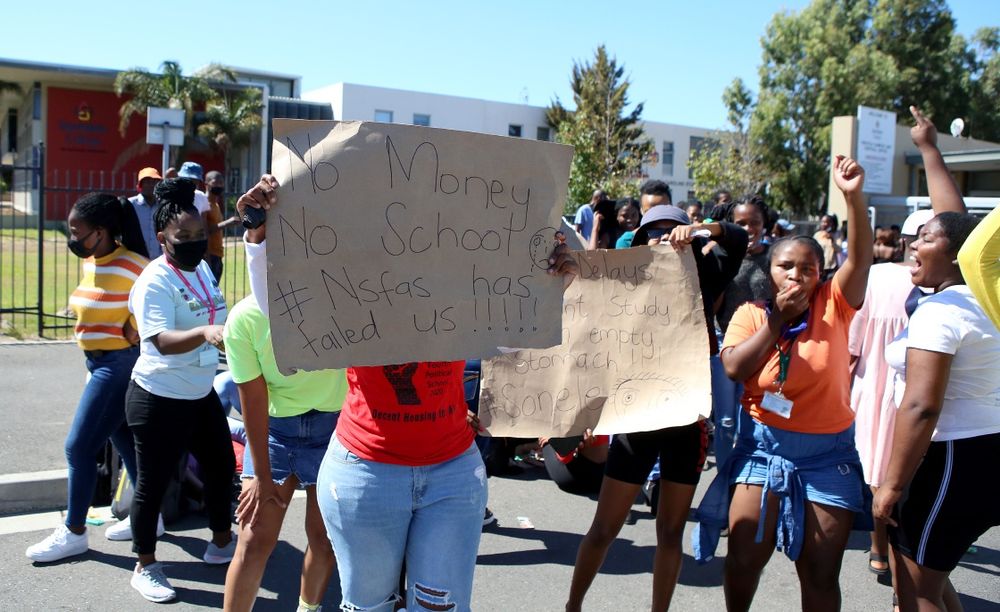
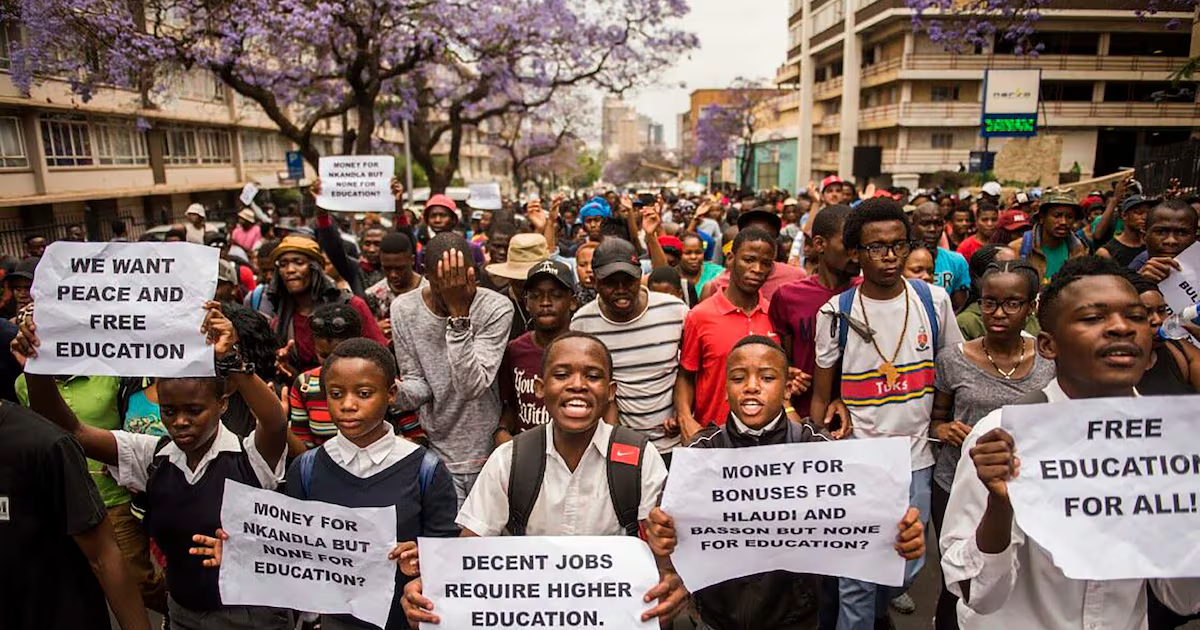
The dysfunction at the National Student Financial Aid Scheme (NSFAS) has highlighted the need for more public-private partnerships to step in and help the hundreds of thousands of South African students who often fail to further their education after high school because of financial constraints, an industry executive has said.Responding to a question in parliament recently, higher education minister Buti Manamela said the government is exploring ways to fund higher education as it seeks to expand university and college enrolments despite the current funding model being under increasing financial strain.The rapid growth in demand for financial aid had placed “severe financial constraints” on NSFAS and the national fiscus, despite the scheme’s budget increasing to R55.4bn to support about 700,000 students, Manamela said. A funding gap nevertheless remains.Read: As NSFAS fails, government is looking for a new planFeenix, a public benefit organisation established after the Fees Must Fall protests a decade ago, in which students demanded access to free tertiary education, has tried to plug some of that gap since 2017, helping more than 6,000 students access crowdfunding.With seed funding from Standard Bank and more than 400 corporate partners across different industries, the entity has over the past nine years built a tech-based platform where students are able to create a fundraising profile, similar to BackaBuddy but specialising in tertiary education, Feenix CEO Cara-Jean Petersen said.“They create a profile, we verify it, and they are able to raise funds for their outstanding debt amongst their community,” she told Business Day in an interview.“Whatever they raise, we pay directly to the institution. We also partner with the private sector to administer their CSI [corporate social investment] funding, their skills development funding and their social grants in order to support students through holistic bursaries.“Over the last nine years, we’ve supported more than 6,000 students … and raised more than R150m from these donors. Our goal this year is to raise more than R65m and support more than 1,000 students. At the moment we’ve supported just more than 600, so at the mid-year mark we’re on track.”Petersen said the model should be replicated across South Africa to support students in need, as efforts continue to get NSFAS back on track.Manamela placed NSFAS under administration in May, saying the intervention was necessary to stabilise the organisation before broader student funding reforms could be implemented. Work is under way on a new student funding model, which is due to be phased in next year, he said. NSFAS is central to the government’s efforts to widen access to tertiary education to students from poor and working-class households. “It would be absolutely catastrophic if NSFAS ceased to exist. They need greater support and intervention,” Petersen said.“There are so many students who need NSFAS and the private sector does not have sufficient alignment or preparation to be able to carry the burden of the hole that NSFAS would leave. But while that is being resolved and students are being supported by a needed government structure, the rest of us can’t wait on that.“Feenix is an example of a successful model of what happens when there is that public-private partnership. But there can’t be only one Feenix; there need to be multiple organisations. It’s not about replacing [NSFAS]; it’s about being a complementary support.”Initially, Feenix raised funds for tuition and accommodation but has now expanded to pay for learning devices, access to mental health services and financial literacy.“It’s now more robust and holistic, and our donors have been supportive in covering those costs. During inception, about 8% of our students had access to holistic support, and we’ve now been able to get it close to 20%,” Petersen said.Over the past nine years, more than 20,000 young people have created fundraising campaigns on the Feenix platform, but only 6,000 have secured funding. “There’s a huge gap between the need and the success of fundraising or matching funding. One of the challenges is that there’s greater investment in certain skills and certain degrees, and not enough in others,” Petersen said.“The majority of our students who are doing engineering, mathematics, science — your Stem students — tend to be well catered for. But students studying arts, humanities and education are less funded; even medicine is less funded.“It’s the alignment between what young people are studying and how it relates to the job market. That’s where we’re calling on TVETS [technical and vocational education and training colleges] and universities to relook at their curriculum and say, ‘Are you upskilling young people for the place of work?’”