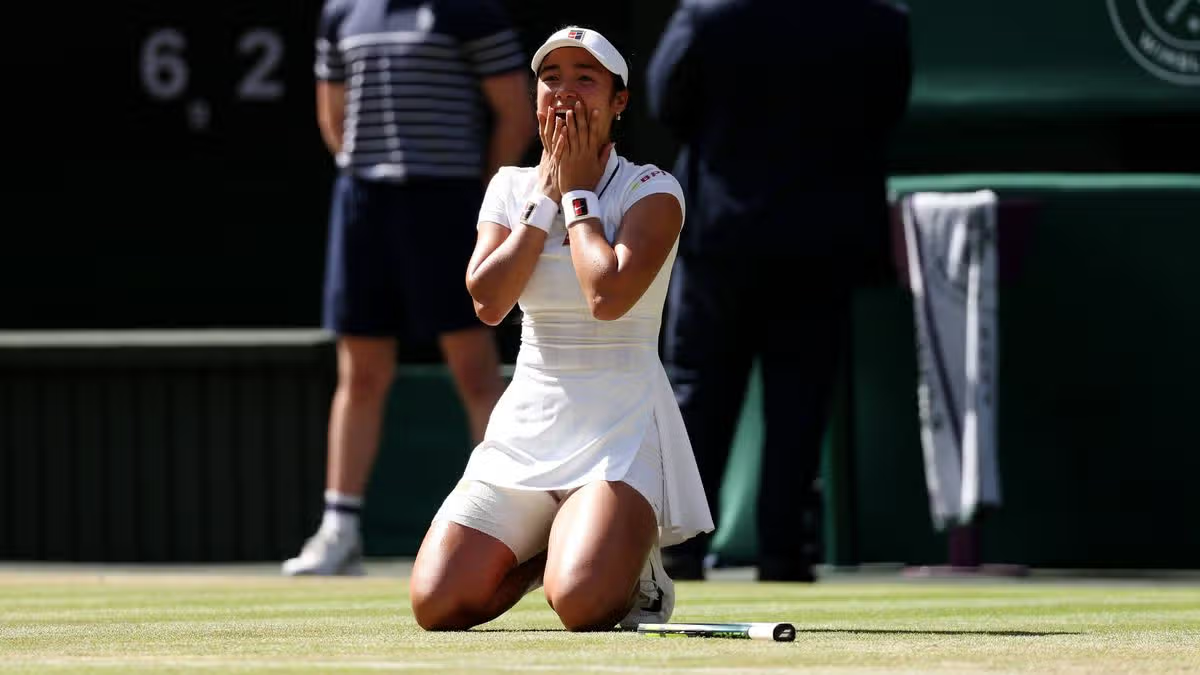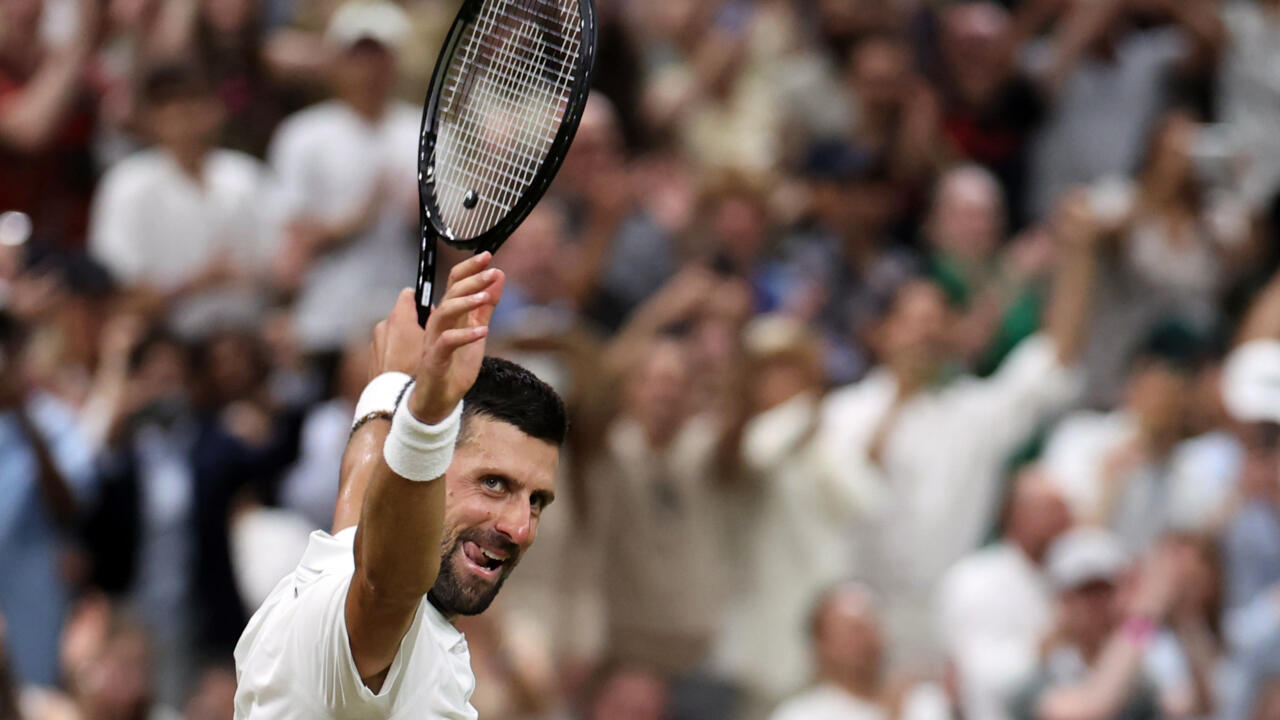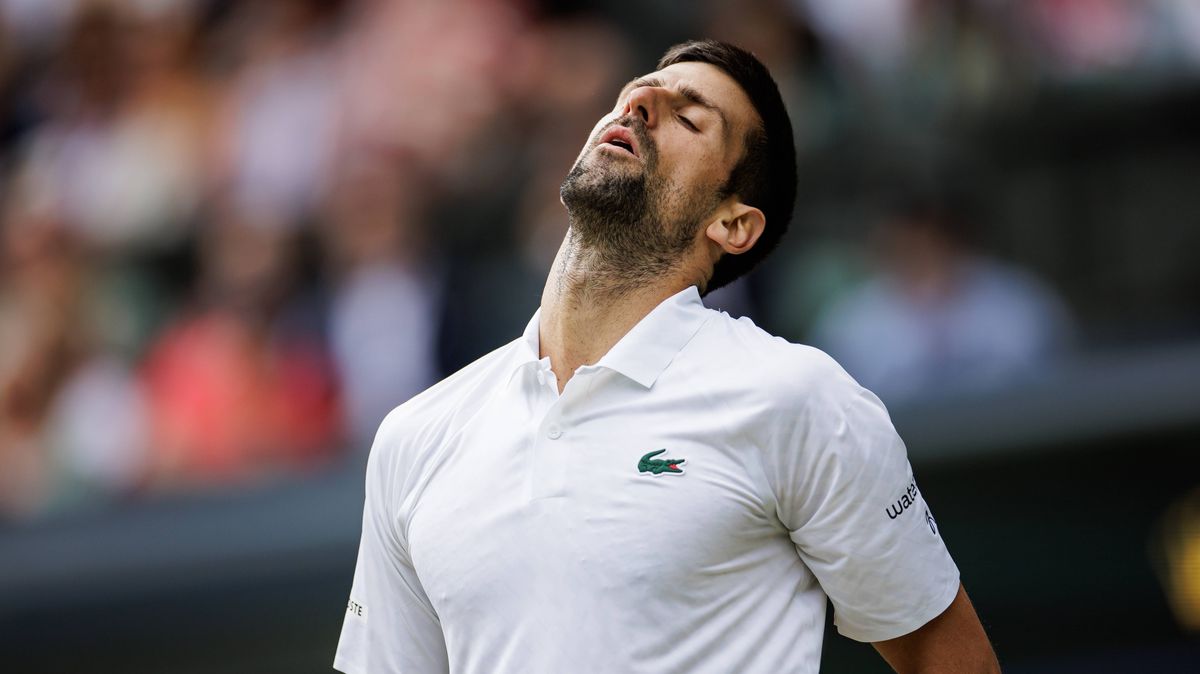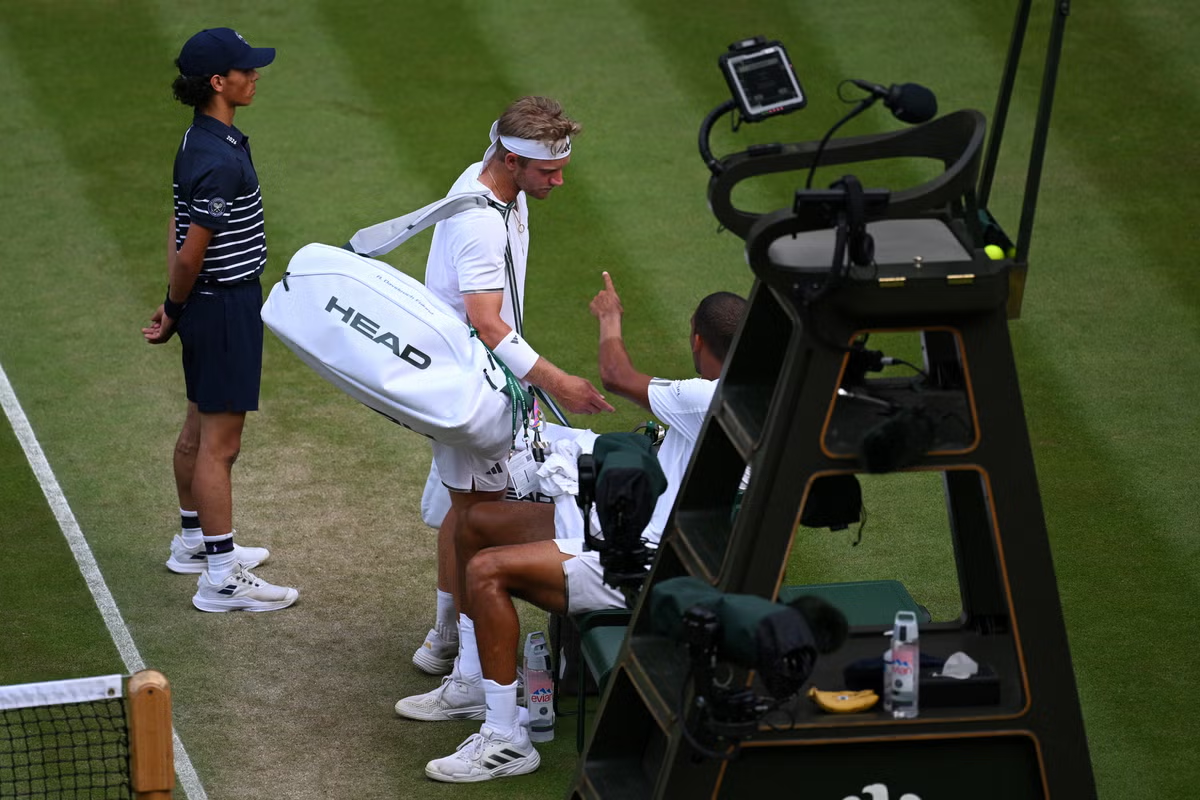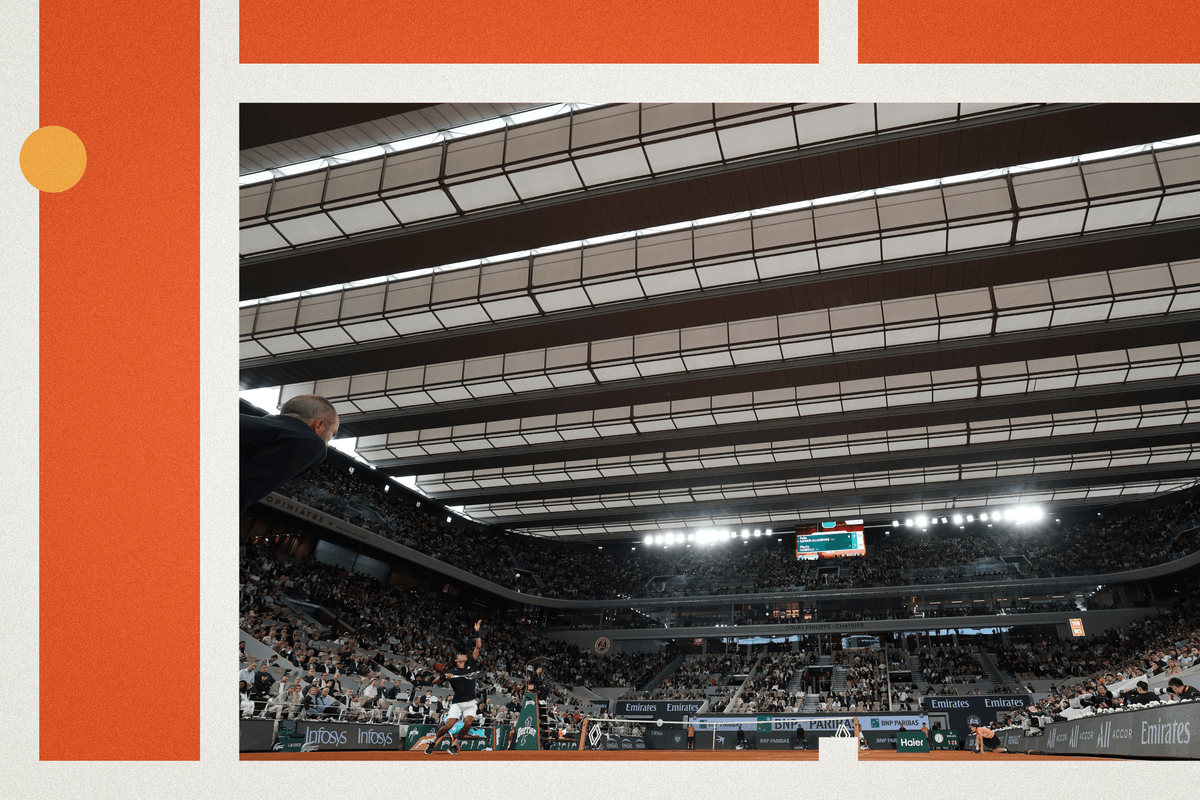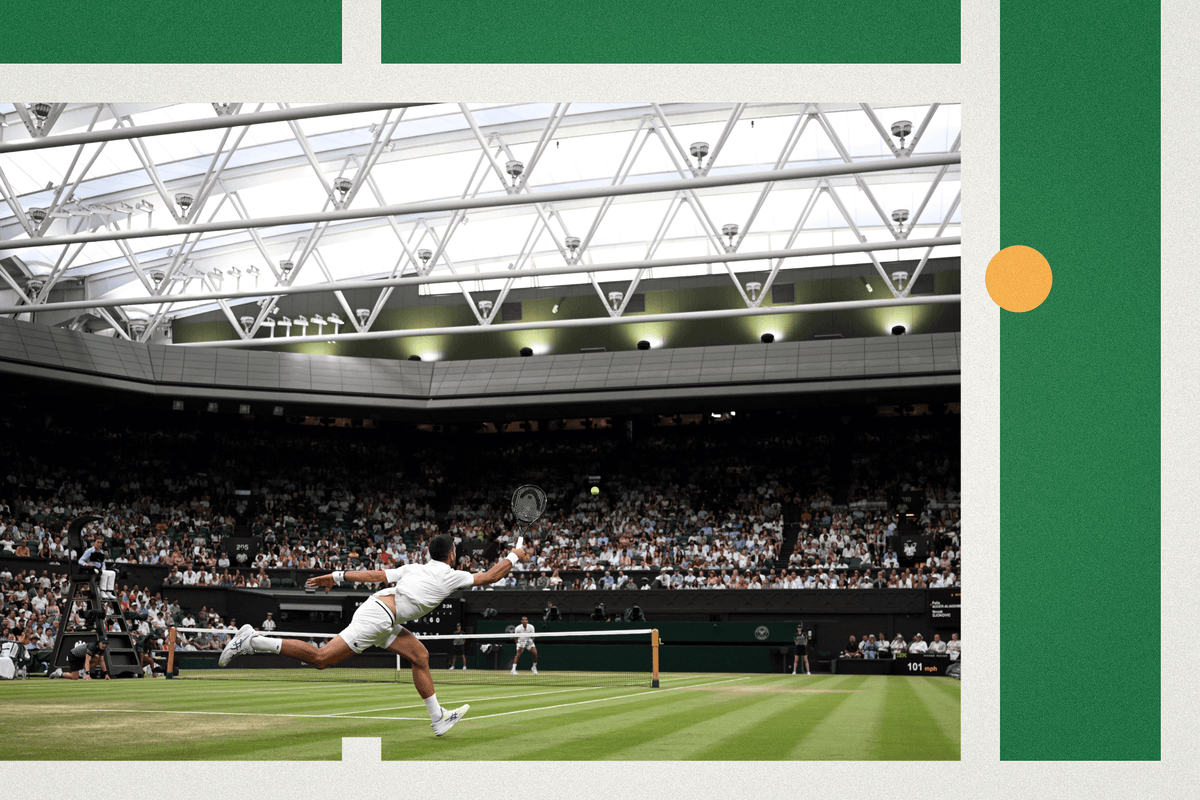
Follow The Athletic‘s Wimbledon coverageWelcome to the Wimbledon briefing, where The Athletic will explain the stories behind the stories on each day of the tournament.On the first day of the quarterfinals, a player recognized where they had gone wrong, a holdover caused issues and recovery came under the spotlight.How did the Wimbledon roof become a point of argument again?During No. 7 seed Novak Djokovic’s epic 7-6(10), 3-6, 6-3, 6-7(4), 7-6(4) win over Félix Auger-Aliassime (3), which set up another Grand Slam meeting with world No. 1 Jannik Sinner, the Wimbledon roof got in the way.With the score level at 1-1 between sets, at around 7:40 p.m., the evening sun was slanting over London — and, tournament officials decided, it was time to close the roof.Djokovic, the 39-year-old seven-time champion, was not impressed. Nor was Auger-Aliassime, the 25-year-old Canadian.“The other day you didn’t want to close it until 8:20 p.m., 8:30 p.m., and now you want to close it at 7:40 p.m.? “We can play a whole other set, we’re an outdoor tournament,” Djokovic said, before Auger-Aliassime interjected to say “we can play until 9 without a problem.”They were speaking to tournament referee Denise Parnell, who had come on to the court to inform them that the roof would close, leading to a break in play.A spokesperson for the All England Club said that by 8:20 p.m. to 8:30 p.m. on Centre Court, players have been complaining about light. There is no hard and fast rule for roof closures.If Parnell considers that the players may not be able to get through a full set without needing to close the roof, then the tournament may make the decision to shut it.In an interview earlier this week, Neil Stubley, the head of courts and horticulture at the All England Club, said roof closures often occur not because of light but because of increased moisture on the grass, known as the dew point.The temperature often drops quickly in the evenings in London. Warm days don’t bleed into warm evenings. When the air above the grass becomes significantly cooler than the air within the grass, the dew point rises, jeopardizing the safety of the players.That didn’t happen Tuesday evening. The temperature was going to remain stable through the sunset. And despite the argument, and a marathon game to start the third set, Djokovic still won it well before the time play normally stops on the outdoor courts, around 9:15 p.m.— Matt FuttermanWhy did Jessica Pegula step back from her winning grass formula?Coco Gauff said something in her on-court interview Tuesday, after reaching her first Wimbledon semifinal with a 4-6, 6-3, 6-3 win against Jessica Pegula, that should’ve perked up the ears of anyone who’d watched the match.She said she wasn’t nervous throughout the day. It was a statement that at first surprised, given the stakes of the match and Pegula’s 5-3 record against her heading into the quarterfinal.But it also made perfect sense. Gauff, 22, is a two-time Grand Slam champion. Although Pegula, 32, knows how to beat her in a WTA tournament, they were in Gauff’s arena — on a big stage at a major. Pegula had never before played on Centre Court and was aiming to finally make a semifinal at the only Grand Slam where she hasn’t reached that stage. After she won the first set — and even during it — she looked tight.When Gauff grew more confident in the second set, relishing the opportunity to fight for her win, Pegula grew hesitant. She backed off the usual patterns that help her beat her former doubles partner and, literally and repeatedly, took a step back.Jessica Pegula did not play as close to the baseline as she would have liked against Coco Gauff. (Glyn Kirk / AFP via Getty Images)Pegula too often let Gauff push her back off the baseline in rallies, where she nullified two of the things Pegula does best: absorb power and dictate from the back of the court.Pegula stood too far behind the baseline to begin with, but her first step also appeared to be backward, not forward, forcing an awkward return high above her strike zone that allowed Gauff to put away balls or drag Pegula out of position. Pegula said she’d been working on being more athletic lately in her career, and while that showed in her perfectly timed volleys against Iva Jovic in the fourth round, her short game was just off Tuesday.Gauff fed off that defensive positioning and hesitation as she started to serve better. She played with verve, going for bigger shots more often but keeping her celebrations low-key, as if letting Pegula know that she would scrap all day if she needed.“She stepped up on pressure points, I thought, really well. When she needs to lock in and just not miss a ball, that’s what she did. But that’s I think vintage Coco,” Pegula said in her news conference. “I think that’s happened in all of our matches. It’s just whether I’m able to capitalize on it or not.”Pegula knows the patterns that are effective against Gauff. But Gauff knows her vulnerabilities, too, and in a high-stakes match on Centre Court, Gauff had Pegula playing on her heels.— Ava WallaceWant to recover like a Wimbledon pro? That will be $170,000“The Ammortal Chamber” might sound like something out of a science-fiction movie, but tennis stars competing at Wimbledon the past eight days have become familiar with its qualities.The $169,500 “zero-gravity” bed sits in the corner of a new players’ recovery room, which is located inside the Millennium Building at the All England Club. It delivers red and infrared light, sound and electromagnetic pulses while guiding its occupant through breathing exercises, all in the service of helping elite athletes recover. Players will also breathe in molecular hydrogen — used to lower stress and lactate levels — through a nasal cannula.Also in the room are reclining chairs, weighted blankets, compression boots, heated eye masks and Ohm lamps, which are another breathwork tool.Players use the chamber to recover from the intensity of Grand Slam matches. (Charlie Kent / AELTC)Wimbledon is the first major sporting facility in the United Kingdom to use one of the chambers, Marc Violone, co-founder of New York-based company Recover which helped design the room, said during an interview at the All England Club. It also works with the French and U.S. Opens. The chamber can also be used as a pre-match tool.“We do have some athletes that are using it as a system before they go on court,” Violone said. “The bulbs are red light and infrared light, which is helping with muscle tissue regeneration and blood flow.Former British tennis player Laura Robson is on the player relations team at the All England Club, and is responsible for keeping Wimbledon up to date when it comes to the art of rest and recovery. But what if a player is in the room with an opponent they are about to face? Can they truly relax?“They’re so used to that. You see each other in the locker room and your locker might be next to each other,” Robson said during an interview. “You would just put the eye mask on, wouldn’t you?”— Caoimhe O’NeillHow did Naomi Osaka make good on grass?Osaka, the four-time Grand Slam champion, had failed to go beyond the round of 32 at Wimbledon before this year.But after this tournament, her opinion of grass may be starting to change.On the whole, the 29-year-old had an impressive tournament. She secured her most significant victory since returning to tennis in 2024 following the birth of her daughter, beating world No.1 Aryna Sabalenka in straight sets to make the quarterfinals for the first time.Despite losing to Karolína Muchová 7-6(4), 6-4, Osaka looked more stable on grass, moved more fluidly than she has ever done and counterpunched, particularly against Sabalenka’s power, to great effect.She could not consolidate, however, upon that imperious display against Muchová, a natural on grass with her slice and net play. The four-time Grand Slam champion’s serve was not as consistent nor effective. Whereas she won 87 percent of her first serve points against Sabalenka, that dropped to 67 percent against the Czech.Osaka said the accumulation of matches in the lead up to the championships, the quantity of which were different from her usual preparation, left her feeling depleted of energy. “It was a really weird feeling,” she said in a news conference. “Like my legs were disconnected from the upper half of my body.”Osaka sensed the fatigue was coming, but she wanted to try a different rhythm heading into Wimbledon. “It worked out well,” she said. “But I probably won’t do that again.”Late on in the match, the Japanese player seemed to be in some discomfort, and she thinks it is plantar fasciitis, a condition which affects the bottom of the foot when the tissue becomes inflamed. Osaka suffered with the pain in the off-season last year and believes it has returned on grass because she is pushing more off her toes to move forward. “I don’t think it will bother me on hard courts,” she said.This tournament performance is Osaka’s most promising since last year’s 2025 US Open semifinal run and has, in her words, given her a confidence boost. She has shown she can modify her game to be effective on grass. As she moves onto hard courts, her favourite surface, it could provide a springboard.“In my head I think there’s still an opportunity to win a Slam,” she said. — Charlotte Harpur Other notable results on Day 9:
Wimbledon quarterfinal recap: How the roof loomed over another day of drama
The whys and wherefores of closing the Centre Court roof have perplexed fans — and now players — at this edition.
2,077 words~9 min read