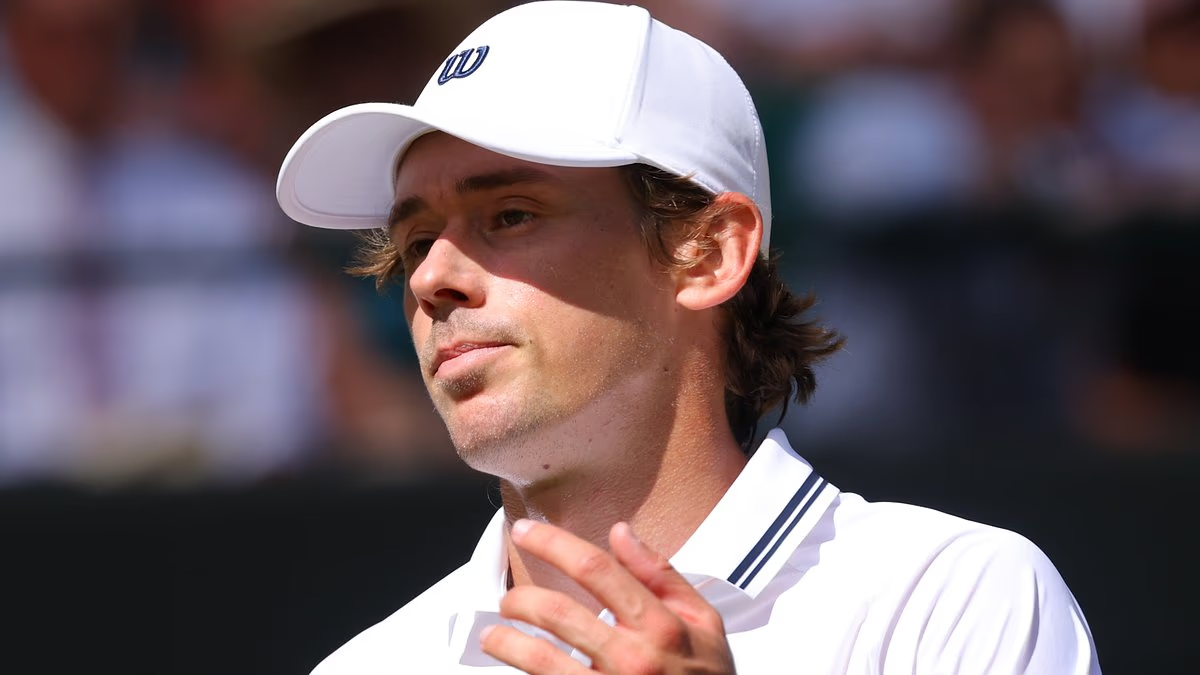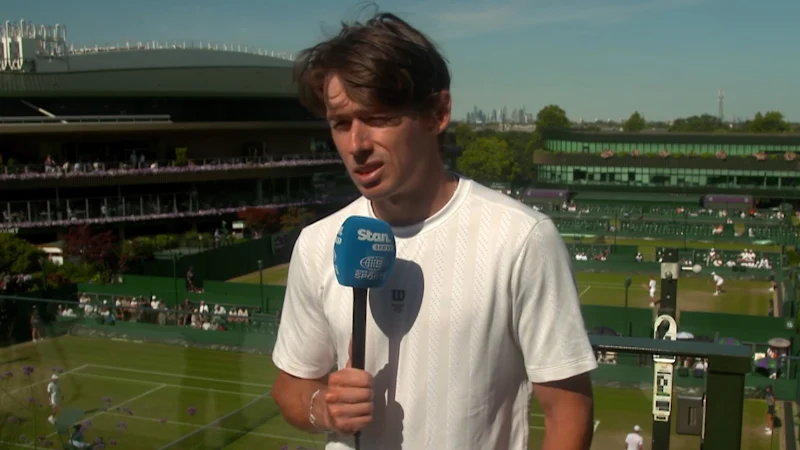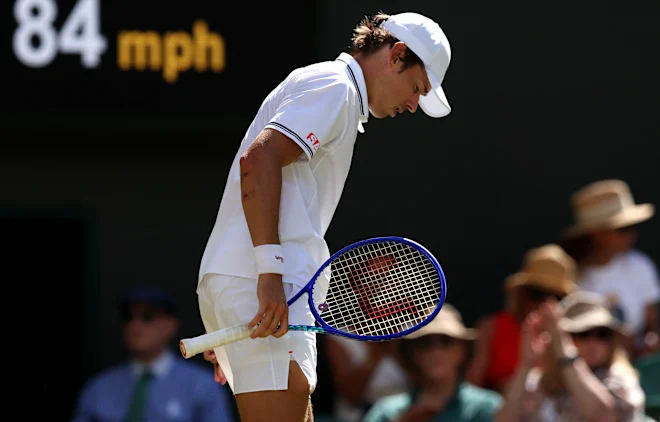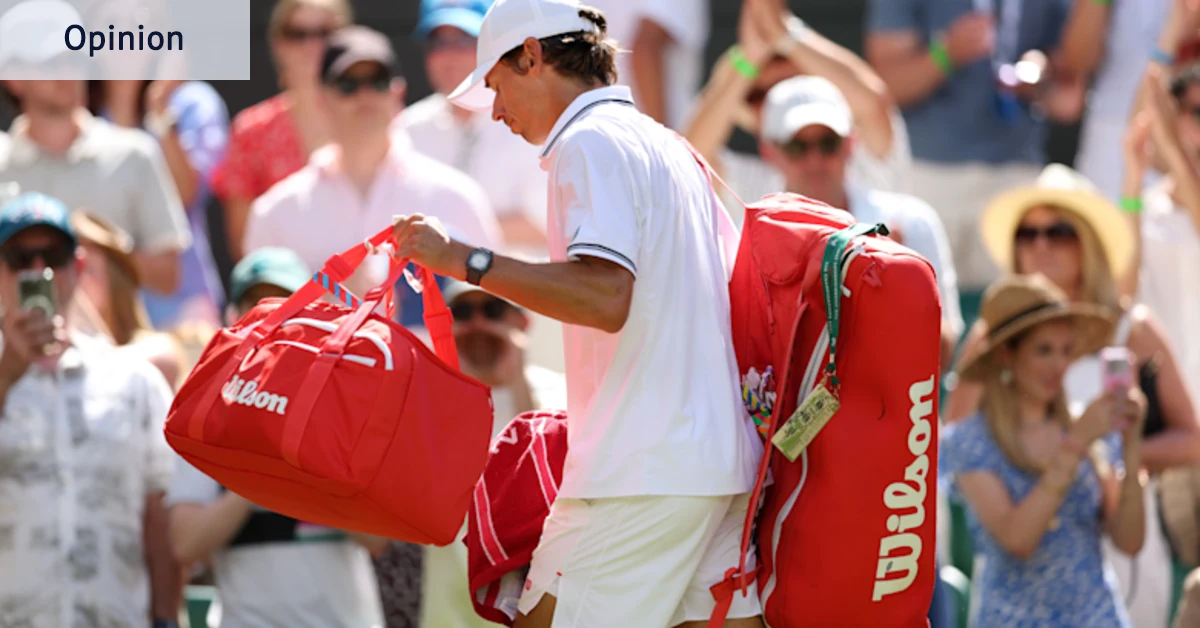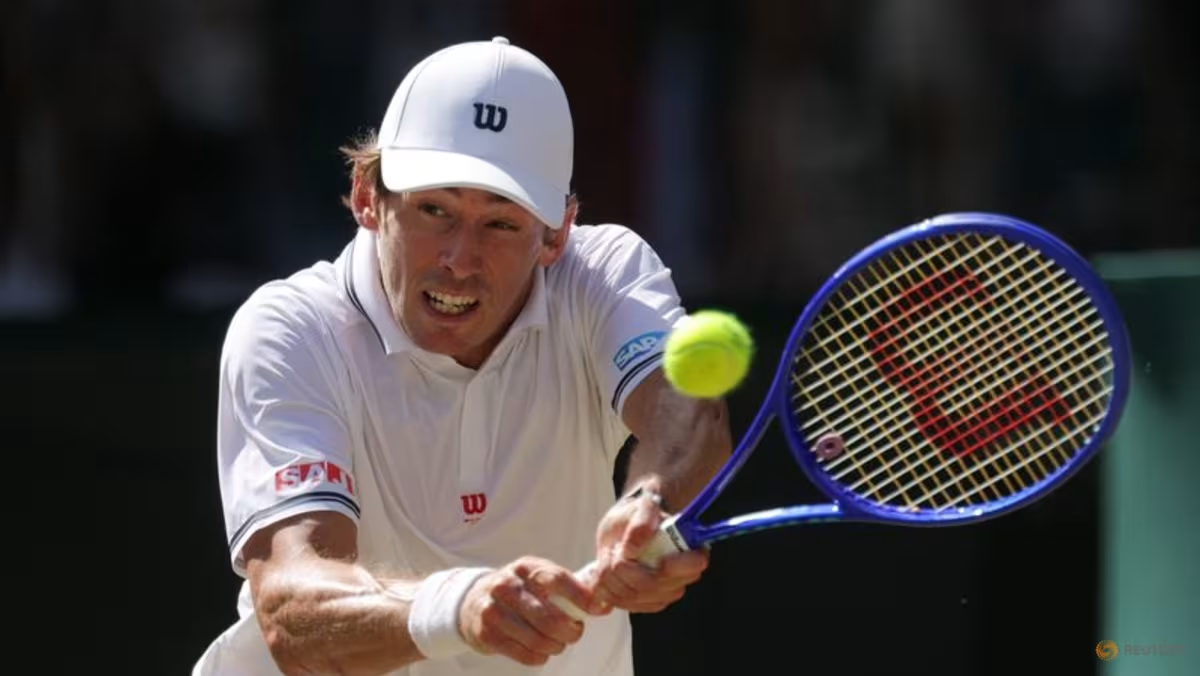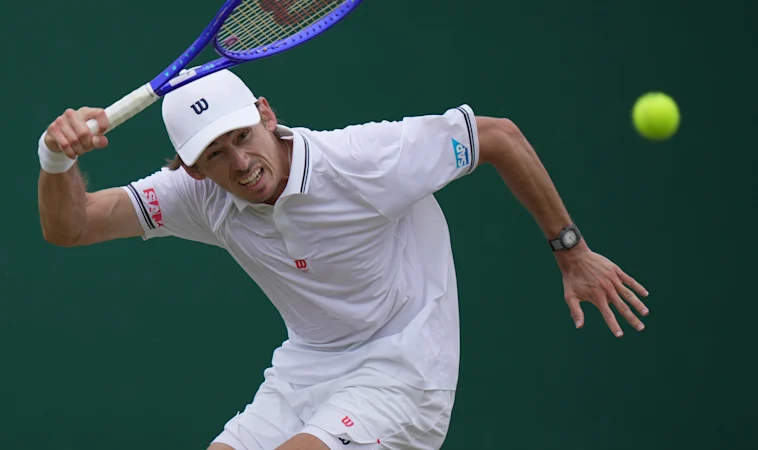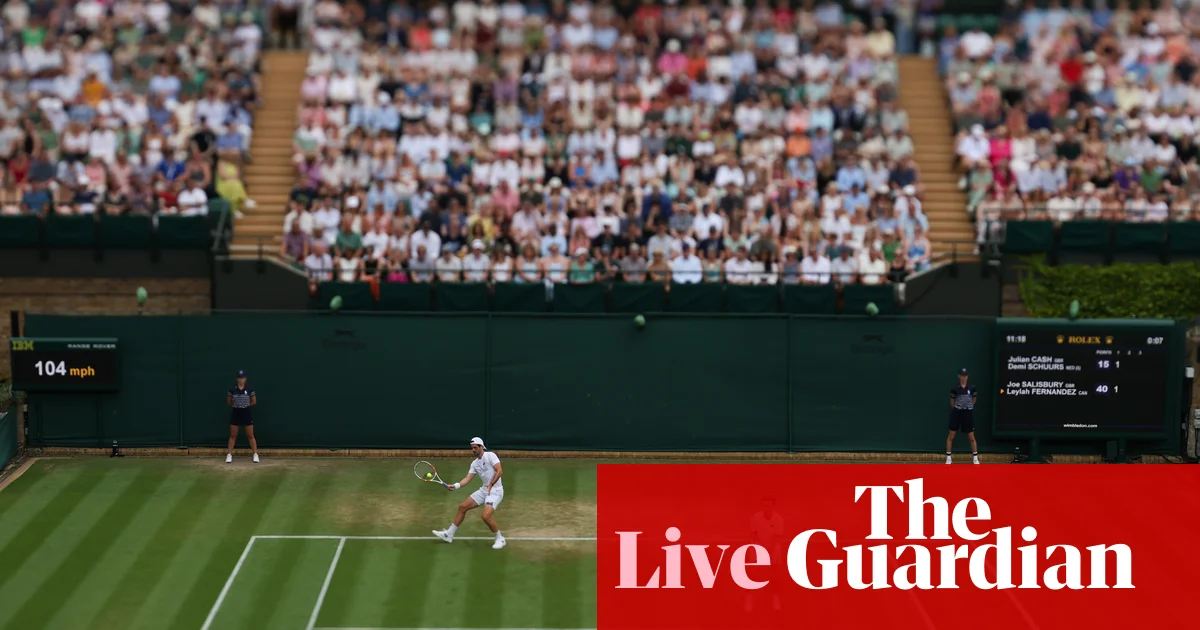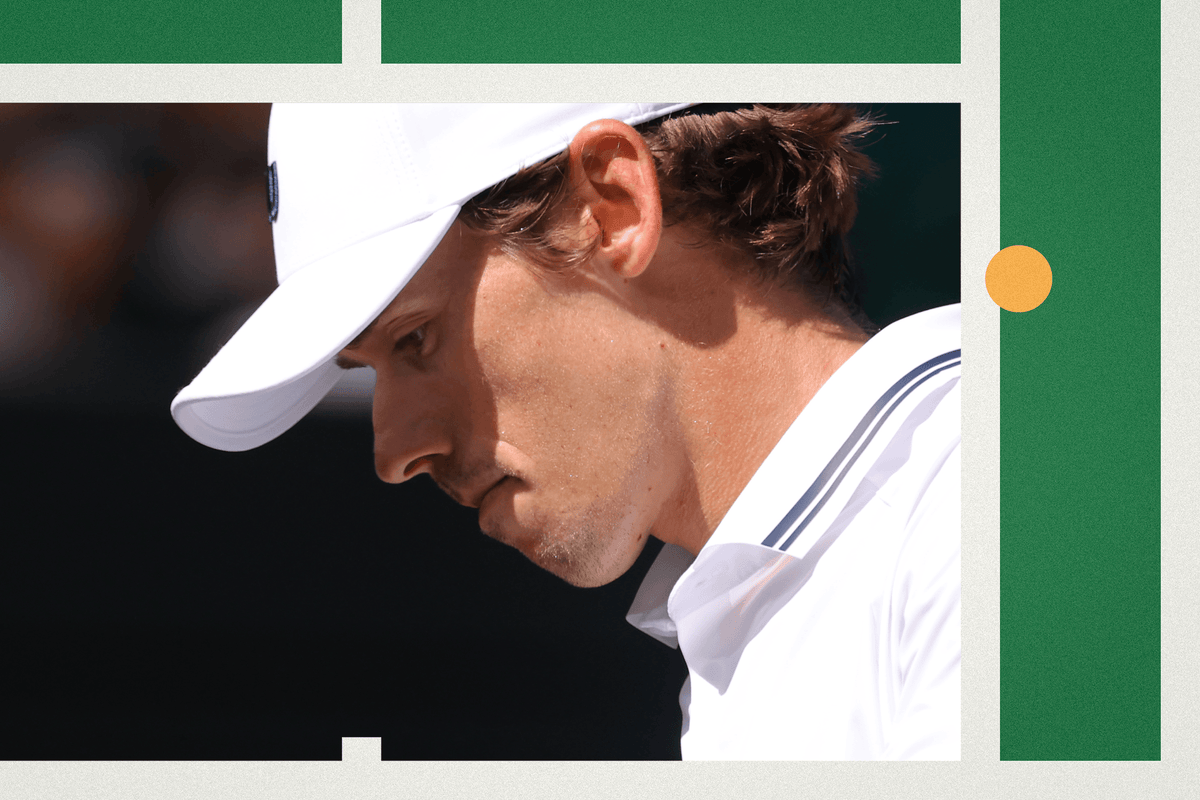
Follow The Athletic’s Wimbledon coverageWelcome to the Wimbledon briefing, where The Athletic will explain the stories behind the stories on each day of the tournament.On Day 8, the devastation and joy of elite sport, a finalist finding her way again and a rising Czech talent keeping it real.How did a top-5 player express the devastation of elite sport?When the fourth round of a Grand Slam rolls around and there have been upsets in the first week, there can be equal parts joy and agony. Players who are achieving dreams they thought might never be realized scarcely know how to keep their feet on the ground. Top players who see a window of opportunity, and then can’t squeeze through it, can be left disconsolate.At the French Open it was Canada’s Félix Auger-Aliassime, the No. 3 seed at Wimbledon, who was left disconsolate after a loss to Flavio Cobolli, the No. 9 seed here from Italy.Come Monday, it was the turn of Alex de Minaur, the No. 5 seed from Australia, to lose to Cobolli and then express the devastation of elite sport. Auger-Aliassime said he was not the player he wanted to be in Paris. In London, de Minaur went a few fathoms deeper.“I think one of us went out to win the match, and the other went out not to lose the match,” de Minaur said in his news conference after a 7-5, 7-6(4), 6-3 loss.“I think it’s pretty self-explanatory who was who.“It breaks me inside. That’s the reality of it. Many, many hours gets put into my craft, and countless years to kind of have moments like these. To not step up to the plate, it’s truly gut wrenching. Yeah, it’s very tough,” he said.Why do players wear white at Wimbledon?Ava Wallace and Madison EadesAnd did not stop. When asked about some of his close-run defeats, especially at Grand Slams, he said that “sadly it feels like they just keep on coming.”“You go through moments in your career, times where you feel that there’s, you know, opportunities to be taken, to take the next step, to make it to the next level, to become an even better version of yourself. And to fall short constantly, you start doubting yourself. You start doubting whether you’re going to be able to break through and kind of take it to the next step.”At a quick glance, it could have been hard to figure out who was who during the fourth-round match between de Minaur and Cobolli Monday. They’re about the same height, with similar builds. They have the same floppy brown hair. It’s Wimbledon, so everyone’s in all-white.But a more considered look revealed one player raised to play one kind of tennis who may spend the rest of his career playing catch-up, and another who has come of age in the first-strike era.De Minaur, 27, is a speedy, grinding player who lives for trying to work points around in his favor. Cobolli is 24, but emerged as a professional after Carlos Alcaraz and Jannik Sinner had already shown the tennis world a new way.De Minaur appears to be undergoing the realization that many 1990s ATP players have had to undergo these past couple of years. Their version of tennis does not cut it at the top any longer. The Australian can not shear winners through the court, and while his first serve is potent, his in percentage is too often too low to allow him to profit from it.He said he would take some time, and go again. That’s what tennis does.— Matt FuttermanHow did a wild card create history — and joy?Arthur Féry drops his racket, turns to his box shaking his head, and mouths to them: “What the f–––?”The 23-year-old Wimbledon wild card cannot believe what is happening. He will surely wake up from this dream on Centre Court where Roger Federer watched him battle back from two sets down to beat three-time Grand Slam semifinalist, and fellow wild card Grigor Dimitrov 5-7, 6-3, 6-4, 4-6, 7-6 (7).Féry sent a message to his team telling them he felt tight when he realized before the match that Federer was in the Royal Box. There were question marks as to how the world No. 114, who played his previous two matches on Court 18, would cope with the increased pressure and attention that comes with playing on the iconic show court with the hopes of a British crowd on his shoulders.If there were any nerves, however, he did not reveal them, settling into his rhythm quickly against a far more experienced opponent.Although Dimitrov hit 72 winners to Féry’s 36 and won 81 percent of his first serve points, Féry just never went away, forcing the Bulgarian to play one more shot and consequently make unforced errors.It is not in the 23-year-old’s nature to interact with the crowd too much, conscious that expending too much energy may negatively affect his tennis. But at 5-4 up in the fifth set, the fatigued Féry gestured to the crowd, hoping to inject some life into his weary muscles while also putting pressure on Dimitrov, who had to serve to stay in the match.For his second consecutive five-set match decided by a 10-point tiebreak, Féry managed the occasion very well.Arthur Féry made British tennis history on Centre Court. (Glyn Kirk / AFP via Getty Images)No-one would have predicted it would be the world No.114 flying the flag for the home nation in front of 14,979 fans, least of all himself. On the eve of the tournament, British players were dropping like flies, as Emma Raducanu and Jack Draper withdrew with injuries. By the second round, just four of the 19 British men’s and women’s players remained. By the third, Féry was the only Brit left standing.
Wimbledon recap Day 8: Alex de Minaur and the devastation that comes with elite sport
The No. 5 seed from Australia outlined how windows of opportunity at Grand Slams can quickly — and painfully — slam shut.
2,661 words~12 min read