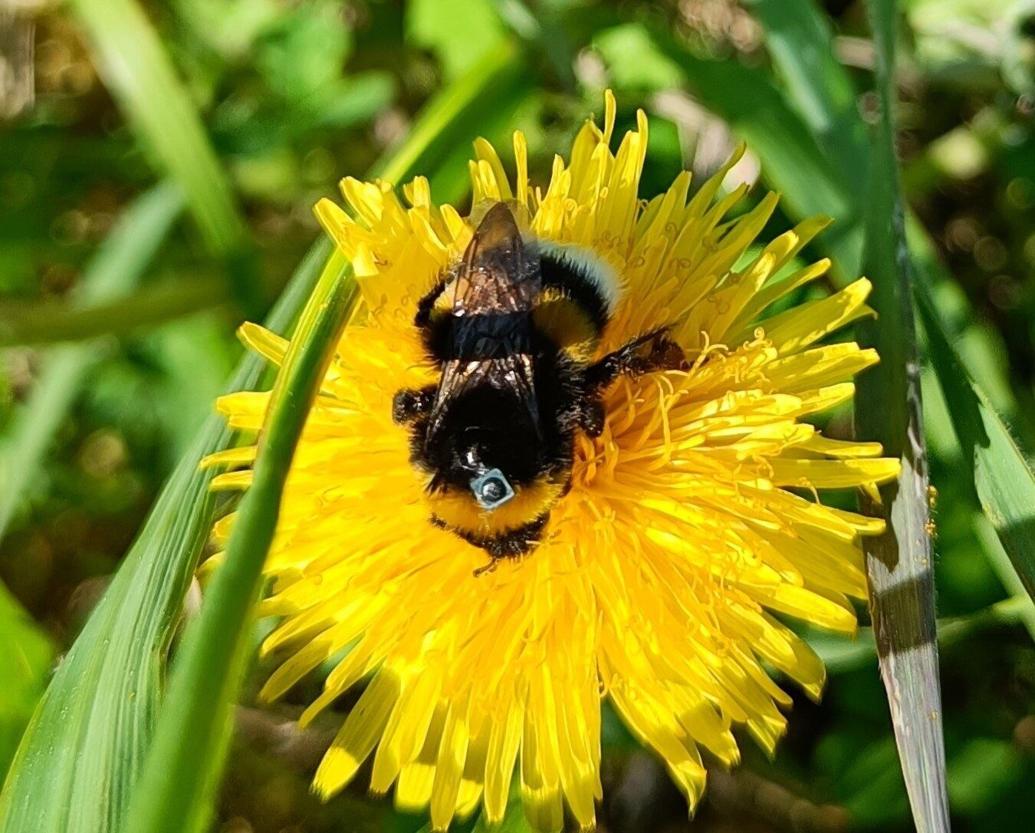
Bumblebees can accumulate dramatically higher levels of toxic heavy metals than honeybees, even when both species forage in the same area, according to new research from the University of Cambridge. Scientists found that bumblebees collected up to seven times more heavy metals in their pollen, raising concerns about how hidden pollution could affect their health, survival, and ability to reproduce.
Heavy metal pollution is common around industrial sites, mining regions, cities, and towns, but contaminants can also spread into rural landscapes through the air, sewage sludge, fertilizers, and other agricultural products.
How Bees Pick Up Heavy Metals
As bees gather nectar and pollen, they are also exposed to contaminated soil, dust, and pollen that may contain heavy metals. Even relatively small amounts of these elements can interfere with learning and memory, making it harder for bees to navigate and find food. Previous studies have also linked metal exposure to lower reproductive success, fewer offspring, and disrupted brood development.
Honeybees have long been used as biological indicators of environmental contamination in heavily polluted locations. However, the new study, published in Ecological Entomology, the journal of the Royal Entomological Society, shows that different bee species accumulate toxic metals in very different ways, with bumblebees appearing to be especially vulnerable.